The first mid-term report of listed rural commercial banks: Changshu Bank shows "double-digit" growth

Wallstreetcn
2025.07.21 13:00
portai
I'm PortAI, I can summarize articles.

The first performance forecast for the rural commercial banking industry in the first half of the year has been released. On July 21, Changshu Bank disclosed that the company achieved a total revenue and net profit attributable to shareholders of 60.6

The first performance forecast for the rural commercial banking industry in the first half of the year has been released.

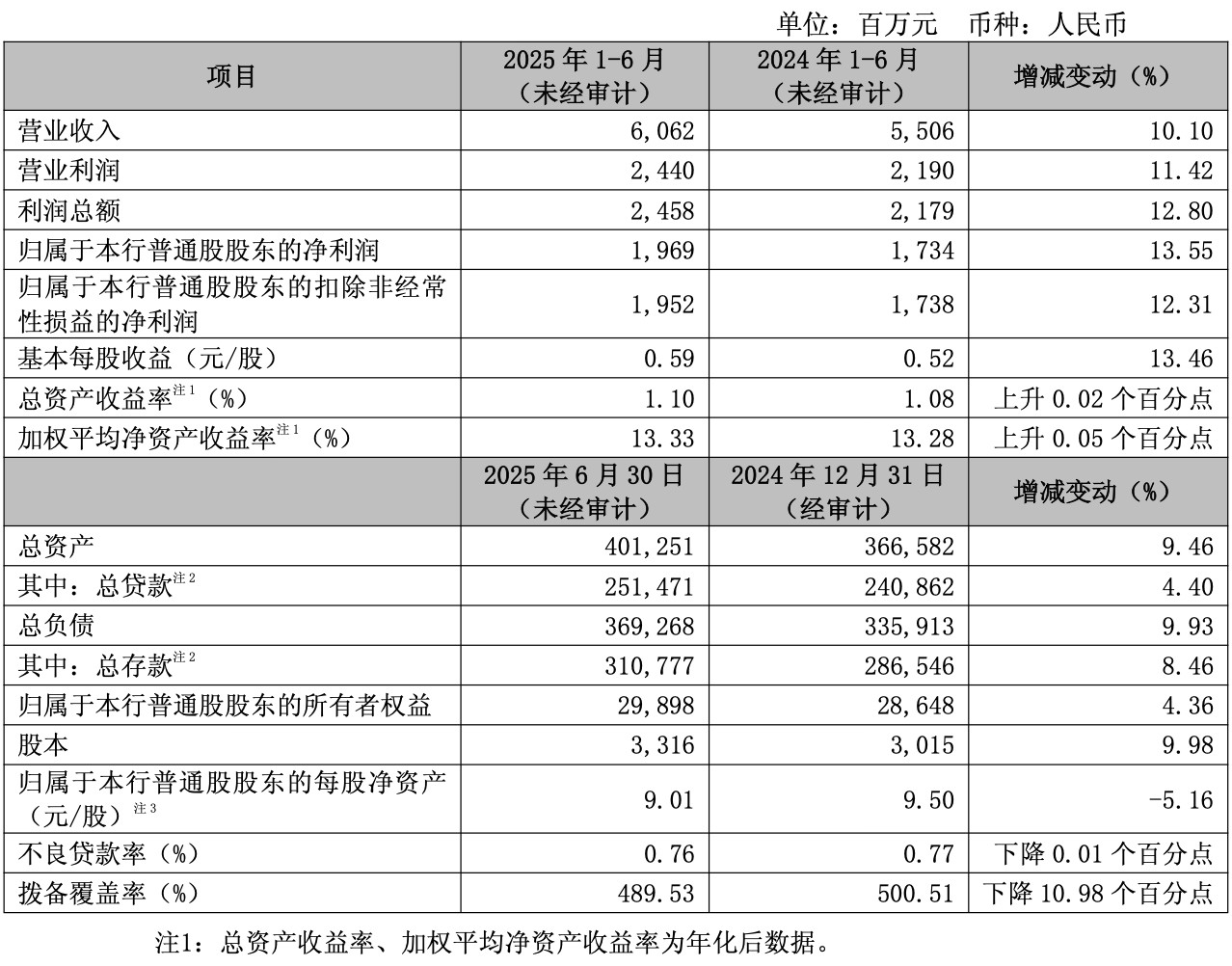
On July 21, Changshu Bank disclosed that the company achieved a total revenue of 6.062 billion yuan and a net profit attributable to shareholders of 1.969 billion yuan in the first half of the year, with both figures showing double-digit year-on-year growth rates of 10.1% and 13.55%, respectively.

At the same time, the overall asset quality remained stable, with the non-performing loan ratio decreasing by 0.01 percentage points from the beginning of the year to 0.76%, and the provision coverage ratio dropping by 10.98 percentage points to 489.53%.

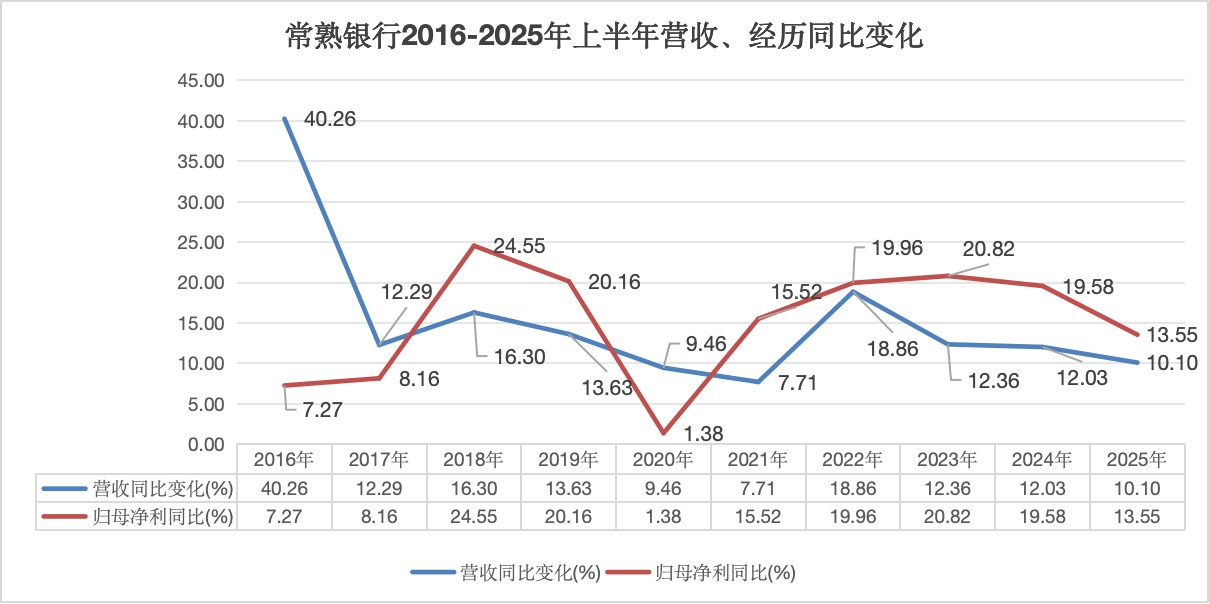
In the "cold winter" of the banking industry, characterized by weak credit demand and pressure on intermediary income, it is unusual for both revenue and net profit to maintain double-digit growth. However, considering the historical growth rates in the first half of previous years, Changshu Bank's performance growth has also shown signs of slowing down.

In the second half of 2024, the bank's profit growth is expected to slow down, with the final 16% annual profit growth largely coming from the replenishment of provisions.

In the first half of 2025, although the provision coverage ratio remains high at 489.53%, it has declined by nearly 11 percentage points from the beginning of the year.

As for the key indicator of net interest margin, which represents profitability in the first half of the year, the performance report has not yet disclosed this information.

As of the first quarter, the bank's net interest margin had not stabilized, with the quarter-end data showing a decrease of 0.1 percentage points compared to the end of the previous year, and the decline compared to the same period last year is still expanding.

From the limited information disclosed, Changshu Bank's annualized return on total assets and weighted average return on assets increased by 0.02 and 0.05 percentage points, respectively, while also stating that "the cost of liabilities continues to decline"; overall, the decline in net interest margin may stabilize.

However, at the same time, the total loan growth of Changshu Bank in the first half of the year was 4.4%, which is 4.06 percentage points lower than the growth in deposits. If the increase in interest-bearing liabilities far exceeds that of interest-earning assets, it may also drag down the performance of the net interest margin.

The performance forecast did not disclose the scale of assets and liabilities or specific business income. Based on past performance, the bank's growth in the first half of the year may be related to corporate business.

In the first quarter, the proportion of corporate and retail loans at Changshu Bank was 38.6% and 54.18%, respectively.

However, the corporate credit, which has a smaller business share, continued to gain momentum, with the corporate loan balance growing by 7.3% compared to the end of the previous year, while the retail balance only increased by 0.24% during the same period.

Changshu Bank has stated that its market positioning of "three rural issues and two small enterprises" has formed a competitive moat.

For example, it has developed the "Changyin Microfinance Model," which centers on "IPC (International Project Consulting Company) technology + credit factory + mobile platform," aiming to solve the "impossible triangle" of efficiency, scale, and risk in microfinance through standardized technical processes.

As of the end of 2024, this model has cumulatively served over 1.5 million microcredit clients, with a long-term non-performing loan ratio of less than 1%