


Counterpoint Research: In Q2 2025, China's smartphone shipments decreased by 2% year-on-year

According to a report by Counterpoint, China's smartphone shipments in the second quarter of 2025 decreased by 2.4% year-on-year. Seasonal factors and subsidy policies affected market performance, and some OEMs began to destock. Huawei accounted for 18.1% of the market share in shipments, followed closely by vivo and OPPO, which achieved growth through mid-range models and the stylish design of the Reno 14 series. OnePlus focused on young users and launched gaming experience optimization technology
According to preliminary data from Counterpoint's market monitoring report, smartphone shipments in China decreased by 2.4% year-on-year in the second quarter of 2025. The domestic smartphone market performed weakly in Q2 due to seasonal factors and demand being brought forward by subsidies. Some OEMs have shifted from raising channel inventory to destocking, which has also impacted smartphone shipments for the season. Although some local governments have narrowed the scope of subsidies or delayed the issuance of subsidy amounts, national subsidy policies are expected to continue until the end of 2025.
In Q2 2025, Huawei maintained its lead for the second consecutive quarter, with a shipment share rising from 15% in the same period last year to 18.1%. This growth is mainly attributed to the continued strong sales of the mid-range nova 14 series and significant price reductions on high-end models.
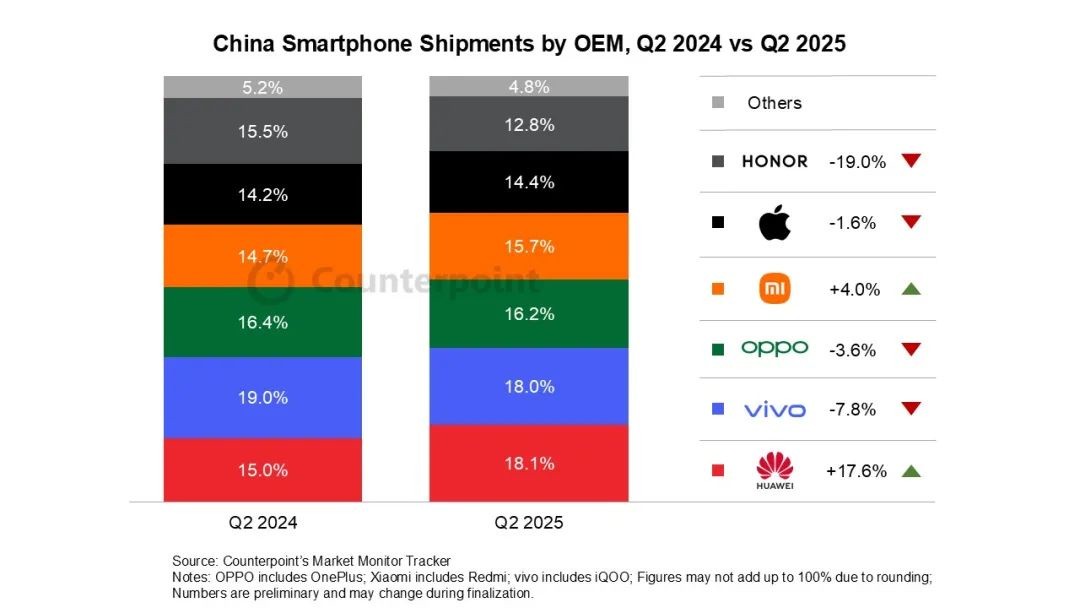
Vivo ranked second in shipments, thanks to the strong performance of its mid-to-low-end models. The brand's robust offline channel network continues to support the steady performance of its Y series products in lower-tier cities. Meanwhile, driven by back-to-school promotional activities, the newly launched S30 series saw a surge in summer demand, with its distinctive design style and portrait photography features successfully winning over young consumers.
OPPO timely launched the Reno 14 series before the 618 shopping festival, successfully continuing the strong sales momentum of the Reno 13. The Reno 14 stands out with its fashionable appearance tailored for young female users. OPPO's sub-brand OnePlus achieved remarkable growth this year, increasingly focusing on meeting the needs of male tech enthusiasts and young consumers, with its gaming experience becoming one of the key selling points. To enhance the gaming experience, OnePlus developed the industry's first chip-level technology "Wind Speed Gaming Kernel," which can delve into the chip's underlying architecture to improve gaming performance from the source. This technology has been first applied to OPPO's best-selling Ace 5 series and will be expanded to other product lines in the future.
Xiaomi (01810) is the second fastest-growing brand in Q2 2025, with a market share of 15.7%. Although no new mid-range products were launched during the promotional period, Xiaomi maintained its growth momentum by reducing prices on popular models such as the Redmi K80 and Xiaomi 15. Additionally, Xiaomi launched its first self-developed application processor Xring O1, which is equipped in the Xiaomi 15S Pro model.
Apple (AAPL.US) performed strongly during the 618 shopping festival with unprecedented price reductions on the iPhone 16 series, especially the Pro models, which are more favored by Chinese consumers. Although the price cuts stimulated iOS users to upgrade their devices early, this may put pressure on the sales of the iPhone 17 base model in the second half of the year.
Honor is facing intense market competition and hopes to regain growth momentum by expanding its product lineup. The mid-range HONOR 400 series, launched at the end of May, has made a good start, featuring highlights such as a 200-megapixel main camera, a 7200mAh large-capacity battery, and a competitive pricing strategy Summary and Outlook
In the second quarter of 2025, demand for smartphones in China remained weak, consistent with Counterpoint's previous expectations. Although promotions and subsidies failed to create new demand, they played a supportive role in stabilizing sales. Looking ahead, Counterpoint still expects the Chinese market to achieve year-on-year growth in 2025, but the growth rate will slow down. The summer promotional activities, combined with the early launch of flagship new products in the third quarter of 2025, are expected to boost sales and lay a solid foundation for market performance in the fourth quarter. At the same time, Counterpoint will continue to closely monitor the changing landscape of the global market, particularly regarding tariff policies, rising component costs, and changes in consumer demand
