


August Economy: Policy Signals Breaking Through Adverse Winds

Economic data for August shows that industrial production, investment, and consumption are all under pressure, with economic growth maintaining around 5%. The risks of fixed asset investment are increasing, youth unemployment is rising, the effect of consumption subsidies is weakening, and expectations for policy easing are heating up. Negative growth in manufacturing investment urgently needs improvement, and real estate and infrastructure investment are significantly affected by weather conditions. Overall, economic growth in the third quarter faces headwinds, and policies need to focus on "stabilizing investment" and "promoting consumption."
The economic data for August shows characteristics of "industrial slowdown, weak investment, and subdued consumption." Although the transformation of new and old economic drivers still shows promise in terms of growth rates, and the industrial production (5.2%) and service production index (5.6%) indicate that GDP growth in the third quarter remains around 5%, the adverse effects of severe weather, tariff uncertainties, and the cumulative impact of "anti-involution" policies have concentrated the downward pressure on the economy in the third quarter, particularly reflected in the "loss of momentum" risk in fixed asset investment. Considering the rising youth unemployment rate and the diminishing effect of consumption subsidies, we believe that expectations for a new round of policy easing are likely to continue to heat up, especially with the imminent rollout of policy financial tools, and the coordination of fiscal and monetary policies in the fourth quarter will focus more on "stabilizing investment" and "promoting consumption."
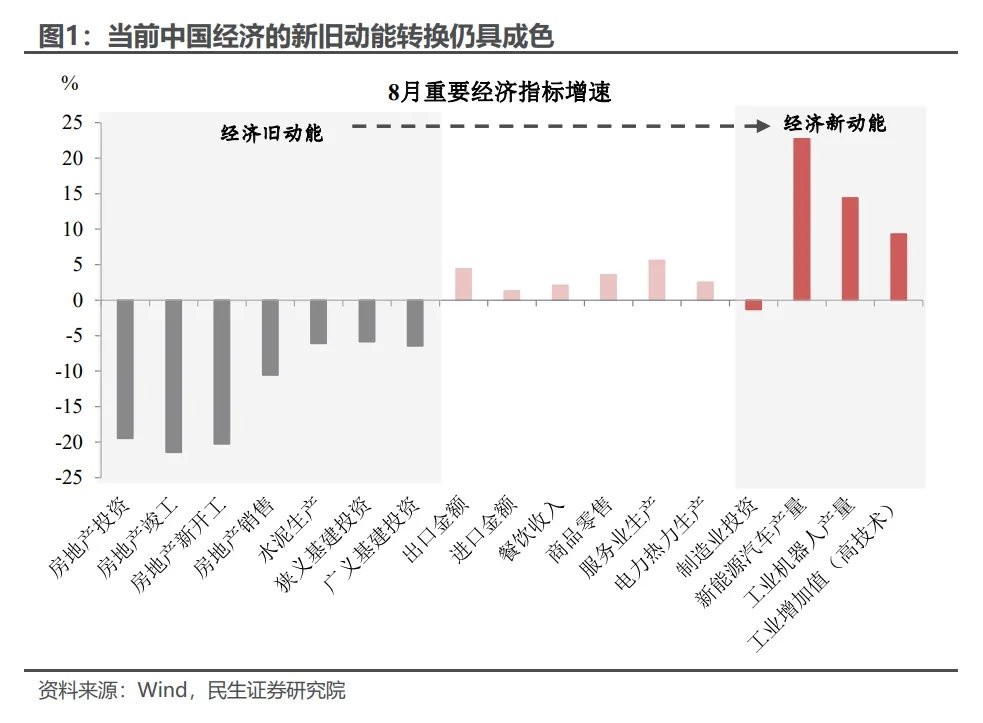
From the August data, the economy in the third quarter faces certain headwinds in investment, consumption, and employment:
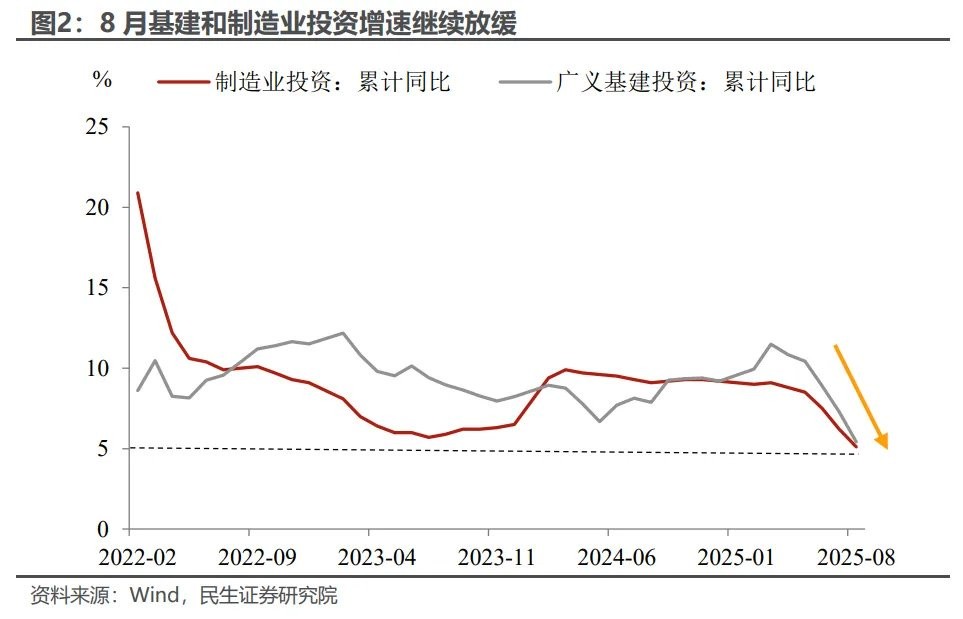
First, in terms of investment, manufacturing investment, as a key balancing point in the transformation of new and old economic drivers in China, urgently needs to break the negative growth in July and August. Meanwhile, the pressure on real estate has not fundamentally eased, and with weather disturbances such as high temperatures and heavy rainfall, infrastructure investment was also significantly under pressure in August. Overall, the impact of investment on economic growth in the third quarter is particularly prominent, and "stabilizing investment" policies need to be urgently implemented.
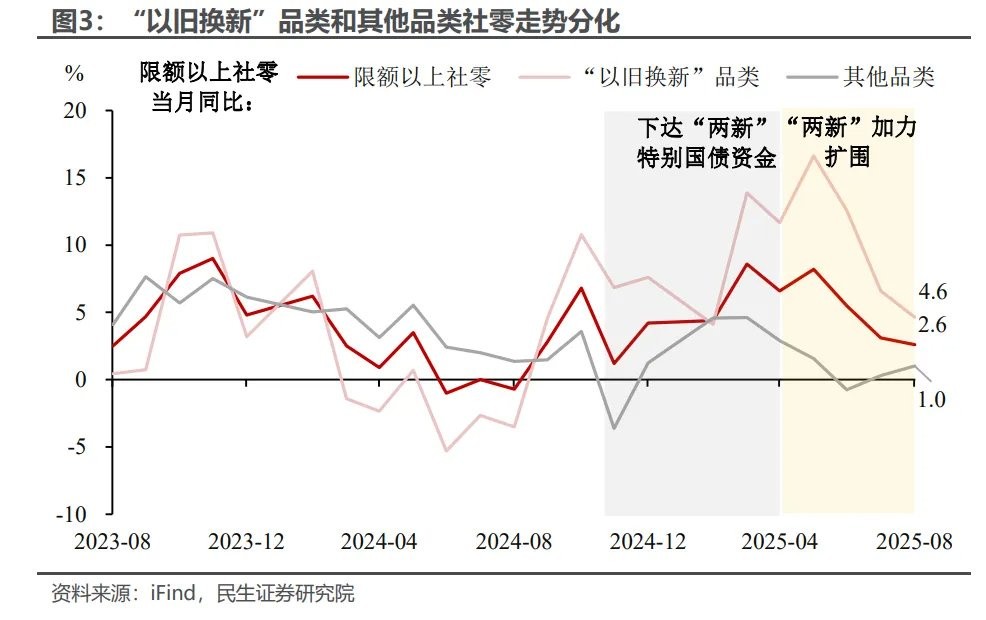
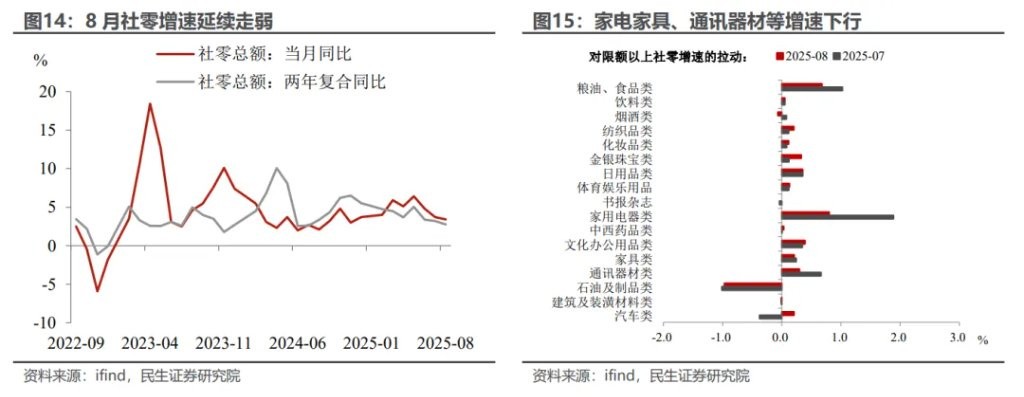
Second, the diminishing effect of the "trade-in" policy is further evident. The growth rate of retail sales in August relied on the support of goods outside of the "trade-in" category, while most "trade-in" categories have dragged down overall retail sales. As the "national subsidy" funds approach their conclusion, the layout of incremental consumption policies is already "on the verge of being launched."
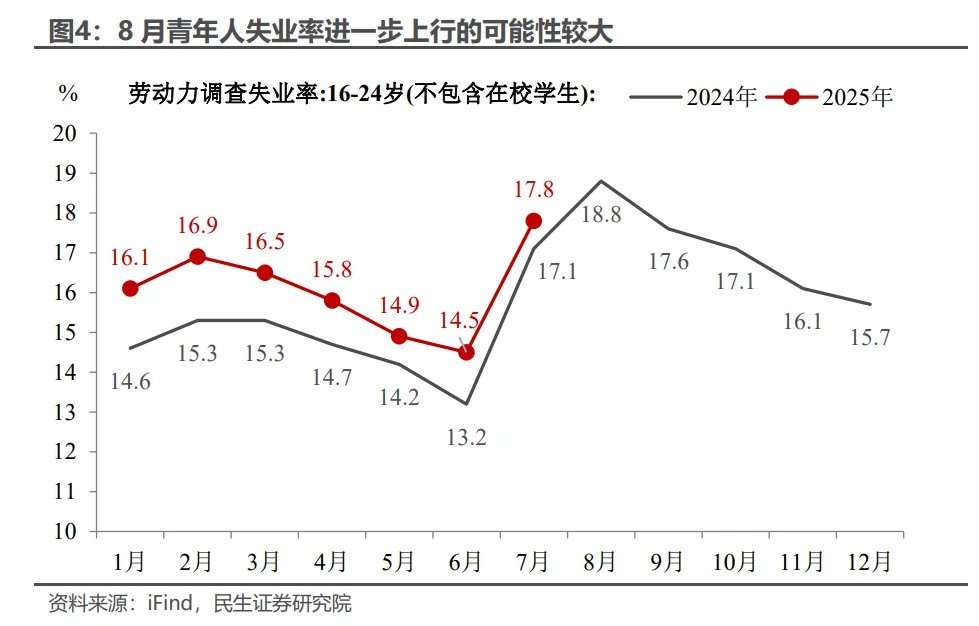
Finally, the rise in the urban surveyed unemployment rate in August indicates that youth unemployment pressure is emerging. The urban surveyed unemployment rate in August continues to follow the seasonal pattern of rising in the third quarter. Given that this year's 12.22 million college graduates exceed last year's (11.79 million), the youth unemployment rate for ages 16-24, to be announced in 2-3 days, may further reflect the current employment pressure in the labor market.
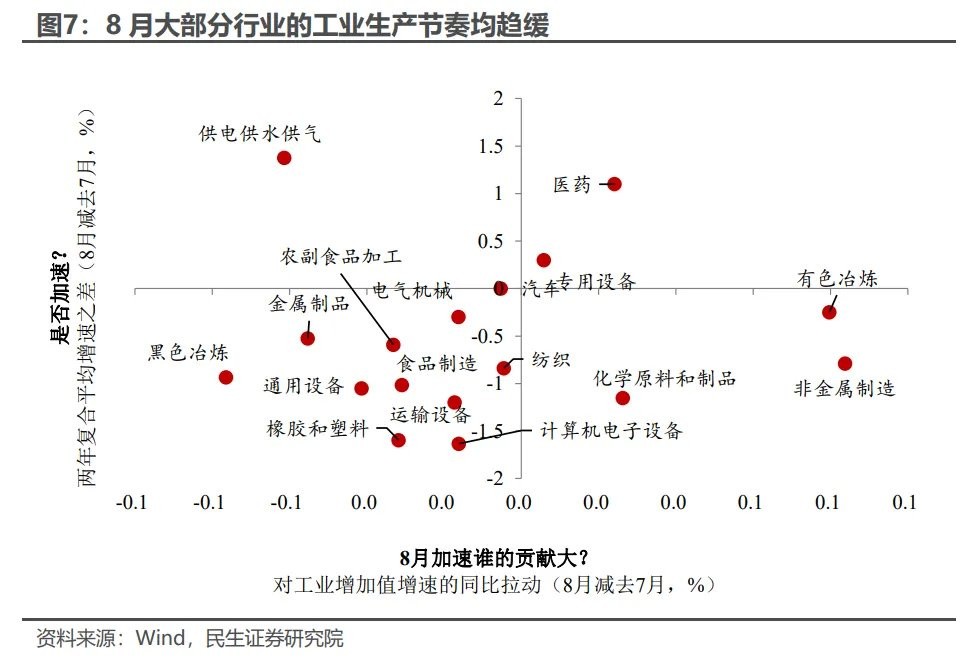
 Industry: Overall production slows down, while high-tech industries show relative resilience. In August, the year-on-year growth rate of industrial added value further declined from 5.7% in July to 5.2%, and the month-on-month growth rate also decreased from 0.38% to 0.37%. Most industries' industrial production in August are in a slowdown phase, including but not limited to rubber and plastics, electronic equipment, and transportation equipment. However, in contrast, high-tech industries demonstrate certain resilience, with their industrial added value year-on-year still maintaining at 9.3%.
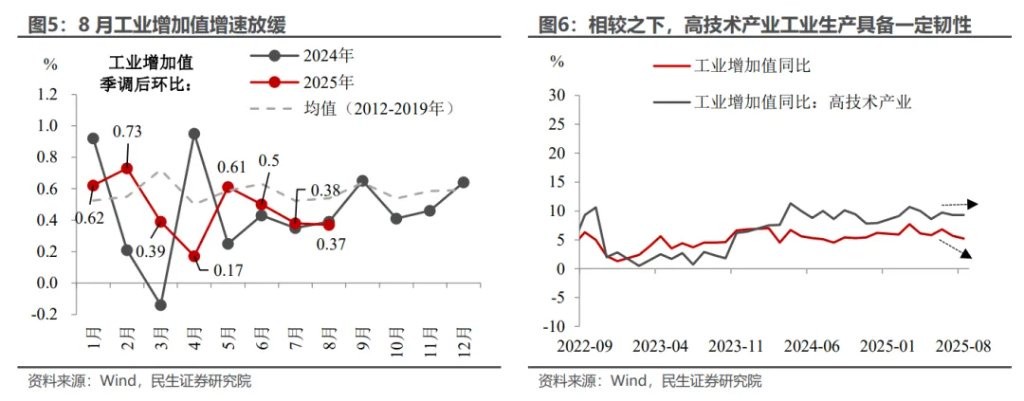
Overall, the pressures of "anti-involution" and "stabilizing foreign trade" will continue to suppress enterprises' willingness to produce. In addition to the "anti-involution" policy promoting supply-side structural optimization and suppressing enterprises' willingness to expand production, the decline in export growth in August indicates that the "stabilizing foreign trade" pressure faced by enterprises under high tariffs also makes them cautious about expanding production. Against this backdrop, we expect the growth rate of industrial added value to stabilize and trend downwards in the short term.
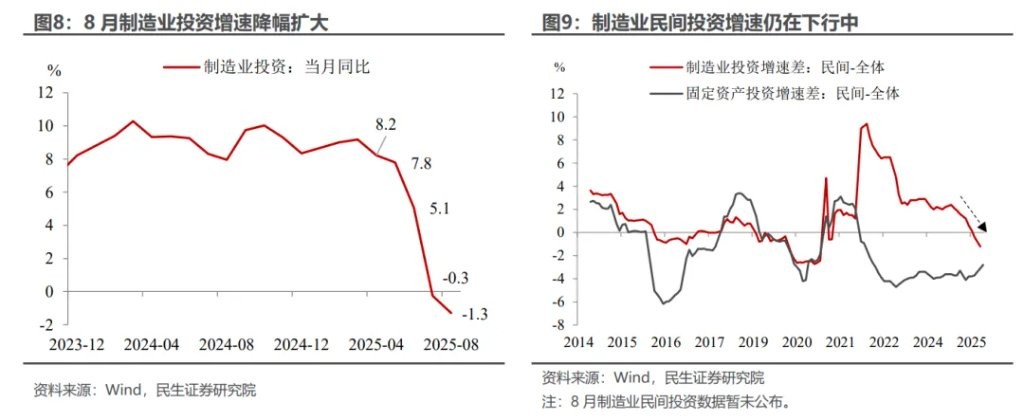
Manufacturing: Weak investment momentum among enterprises. Since the U.S. imposed additional tariffs in April, the year-on-year growth rate of manufacturing investment has been in a downward trend, with the decline in August expanding from -0.3% in July to -1.3%. Considering the declining activity of private investment in manufacturing, the core factors affecting the growth rate of manufacturing investment currently are insufficient expectations recovery and confidence restoration. Both internal "anti-involution" and external trade disputes will suppress enterprises' investment momentum in the short term.
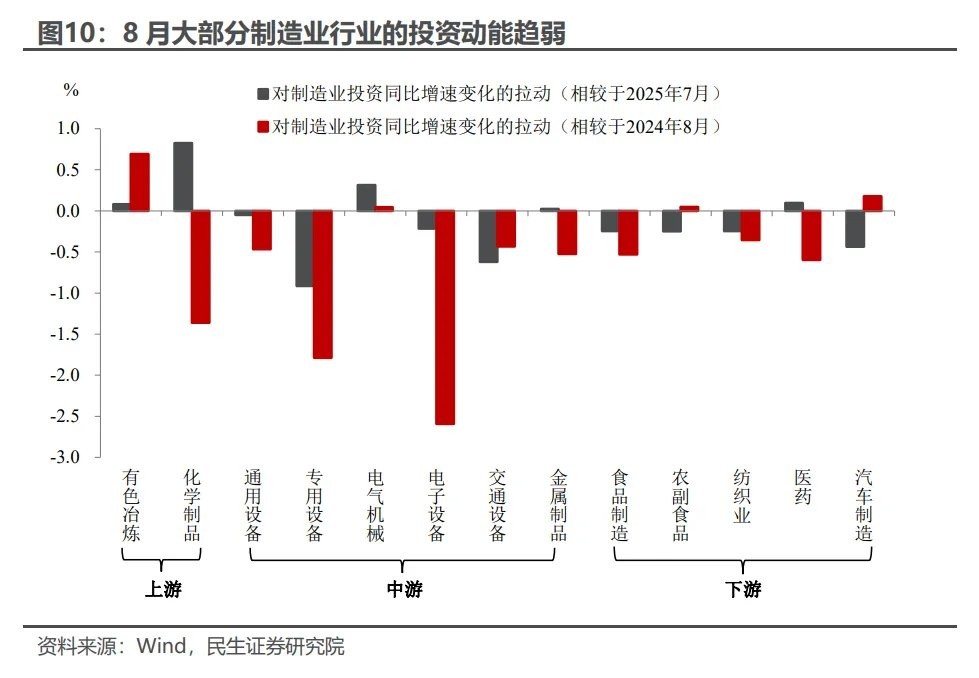
From the perspective of different industries, compared to July, the investment momentum in most manufacturing industries weakened in August (especially in mid- and downstream industries), with noticeable trends of investment slowdown in specialized equipment, transportation equipment, and automobile manufacturing.
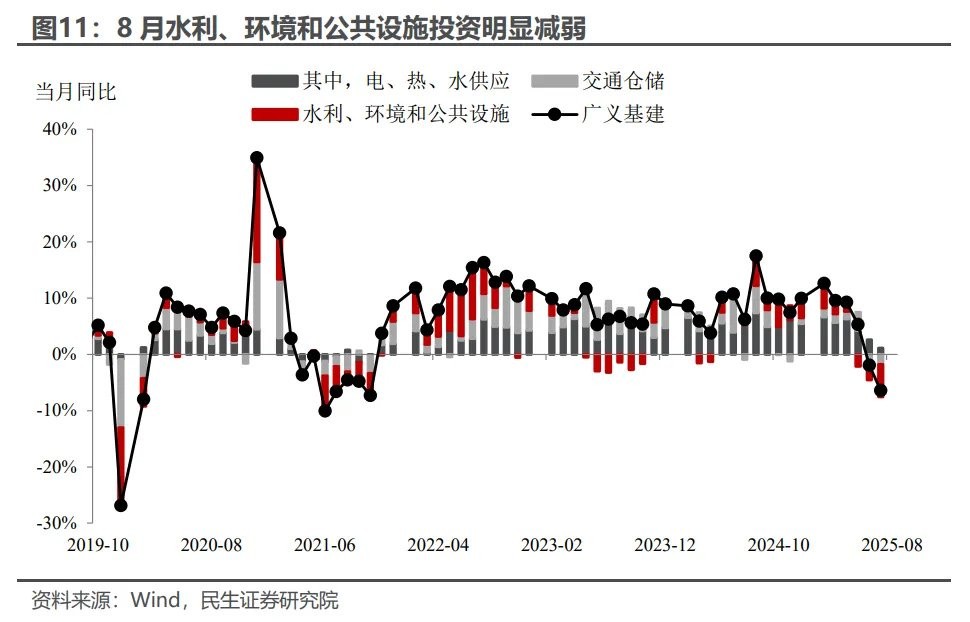
Infrastructure: High temperatures and heavy rainfall led to renewed pressure on infrastructure in August. Affected by continuous adverse weather (high temperatures and heavy rainfall) in the first half of August, infrastructure investment once again slowed down, with the year-on-year growth rate of broad infrastructure declining from -2.0% in July to -6.4%, and the growth rate of narrow infrastructure decreasing from -5.1% to -5.9%. Among the three major sectors of infrastructure, the trigger for the expanded decline in infrastructure investment in August was water conservancy, environment, and public facilities, with their year-on-year growth rate dropping from -2.8% in July to -5.8%
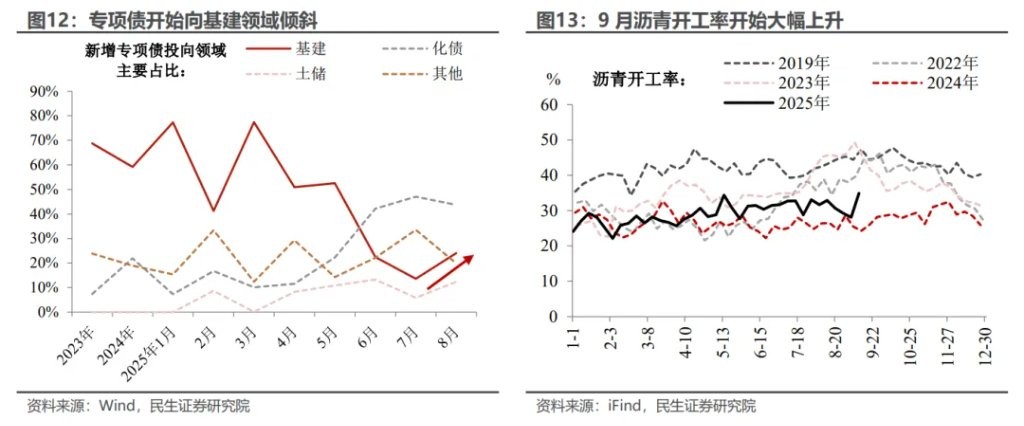
However, looking at the investment side, the downward pressure on infrastructure is relatively controllable. The core reason is that infrastructure investment is relatively less closely tied to private enterprises, and the recovery momentum is relatively stronger. This year's special bond quota has reached its limit, and the current proportion of special bonds directed towards infrastructure has begun to rise again. At the same time, considering the high-frequency asphalt operating rate, after the gradual dissipation of the summer heat, the asphalt operating rate significantly increased in September, indicating that the infrastructure sector is releasing positive signals of marginal improvement.
Consumption: The marginal effect of "trade-in" subsidies is weakening, dragging down consumption growth. In July, the growth rate of retail sales continued to decline to 3.4%, where the consumption of "national subsidies" funds and the recent suspension of subsidies in some regions have weakened the driving effect of the "trade-in" policy, while previous subsidies have also led to some demand being brought forward, resulting in a depletion of future growth. The growth rates of "enhanced and expanded" products such as home appliances, furniture, and communication equipment have all declined, but automotive consumption shows signs of marginal recovery.
With demand slowing, consumption promotion policies are expected to be intensified within the year. The last batch of "national subsidy" funds will be allocated in October, and the "trade-in" program is entering its final stage, with domestic demand pressure gradually increasing. The focus in the coming period will be on promoting the existing consumption promotion policies to continue to take effect, while new policies should be introduced in a timely manner, such as promoting reasonable wage growth, reducing consumption restrictions, and cultivating new growth points in service consumption, which may accelerate implementation to unleash consumption potential and solidify the foundation for economic growth.
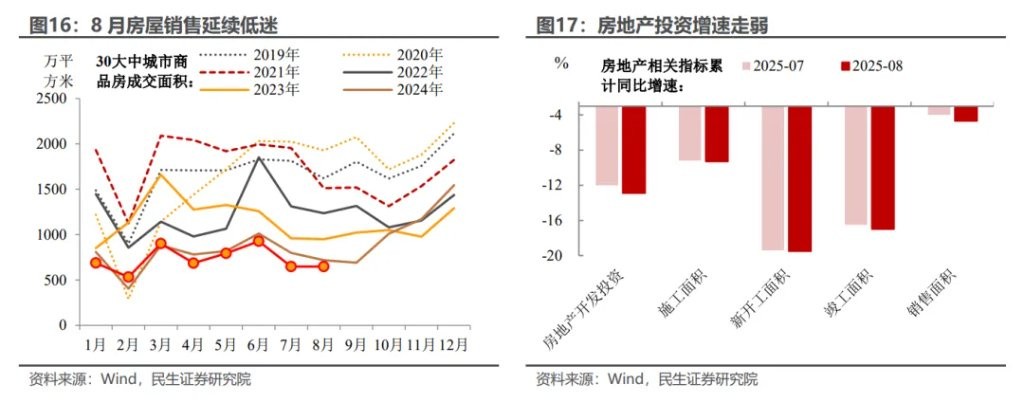
Real Estate: The sales off-season combined with demand being brought forward has weakened the real estate market. From January to August, the cumulative growth rate of real estate investment continued to decline to -12.9%, with the demand side being a significant drag. In the first half of this year, housing sales showed a phase of continuous improvement, but since July, the growth momentum has significantly decreased, with some demand being overdrawn due to previous policy support. The recent statement from the State Council's ninth plenary session to "take strong measures to consolidate the stabilization of the real estate market" has also released a more urgent signal, indicating that the strength of policies to stabilize the housing market needs to be further enhanced, focusing on optimizing housing supply and releasing improvement demand through multiple channels, thereby continuously accumulating momentum for the stabilization of the real estate market.
 Author of this article: Zhong Yumei, Wu Shuo, Source: Chuan Yue Global Macro, Original title: "August Economy: Policy Signals Breaking Through Headwinds (Minsheng Macro Tao Chuan Team)"
Risk Warning and Disclaimer
The market has risks, and investment requires caution. This article does not constitute personal investment advice and does not take into account the specific investment objectives, financial conditions, or needs of individual users. Users should consider whether any opinions, views, or conclusions in this article are suitable for their specific circumstances. Investment based on this is at one's own risk
