Hedge funds have shorted US stocks to the greatest extent in the past six months, and after the last intense shorting, US stocks have rebounded strongly.

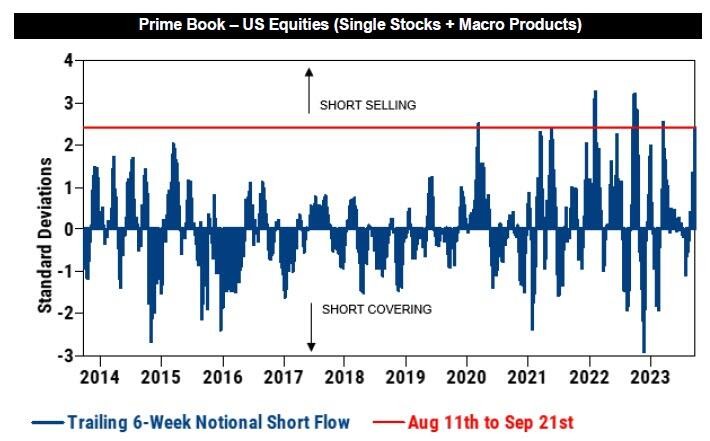
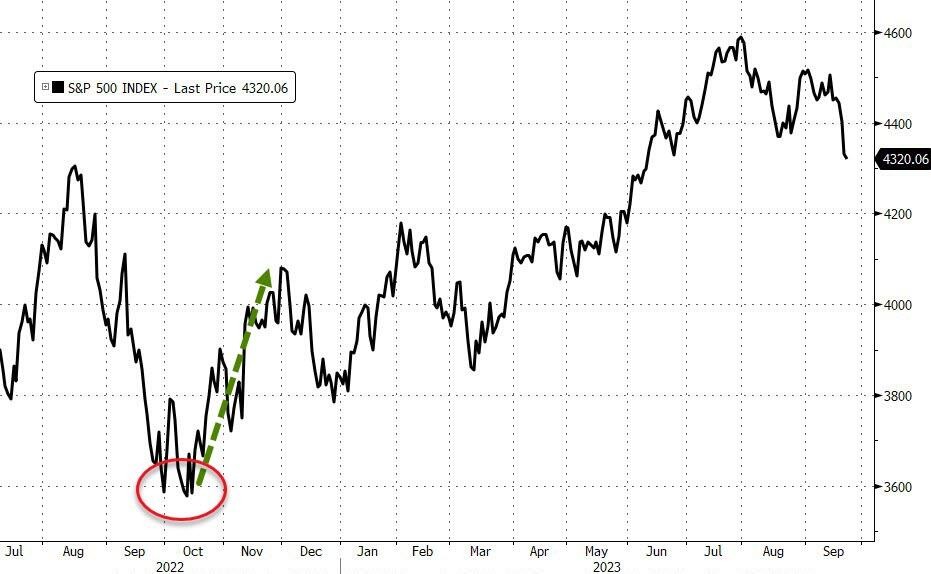
Hedge funds have been net short on US stocks for five out of the past six weeks, marking a three-week consecutive streak. In terms of cumulative nominal value over a six-week period, the bearish sentiment in the US stock market since mid-August is the largest in six months. Looking at the six-week cycle, the period from September to October 2022 was the most intense short-selling period recently, after which the S&P 500 index surged 14% within six weeks from its low point.
Due to the "long-term upward trend" that scared investors in US stocks and bonds, the US stock market experienced a significant net sell-off last week.
As a group known for making bold bets in the market, hedge funds took advantage of the stock market pullback to increase their holdings. Goldman Sachs data shows that net selling of US stocks reached its highest level since January 2022. At Morgan Stanley, clients increased their short positions in expensive tech stocks, consumer retail, and artificial intelligence concepts.
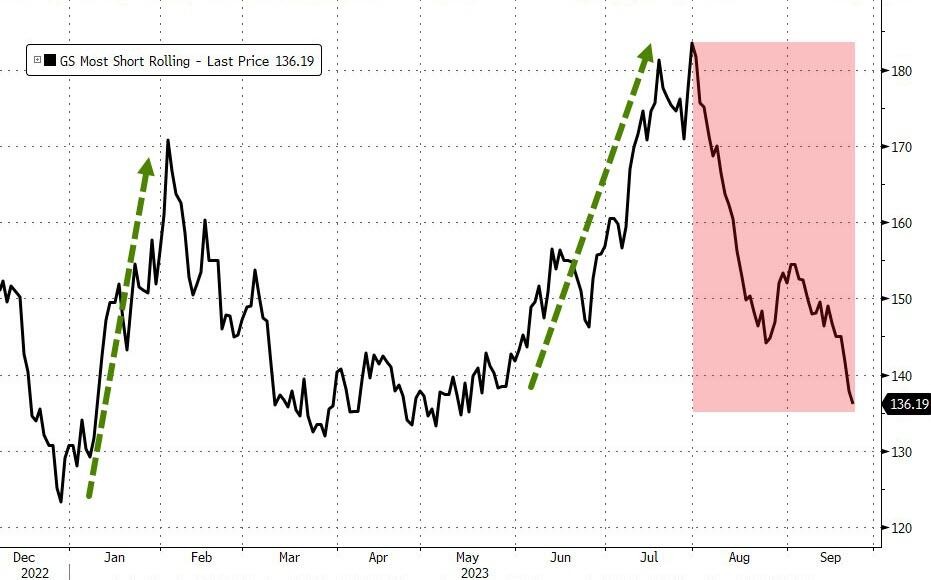
A basket of stocks heavily shorted by Goldman Sachs fell more than 10% this month, bringing substantial profits to the short sellers.
John Flood of Goldman Sachs pointed out that this decline was largely driven by short selling. In nominal terms, the current short selling in the overall market is the largest since September 2022, driven by macro hedge fund products and individual stocks.

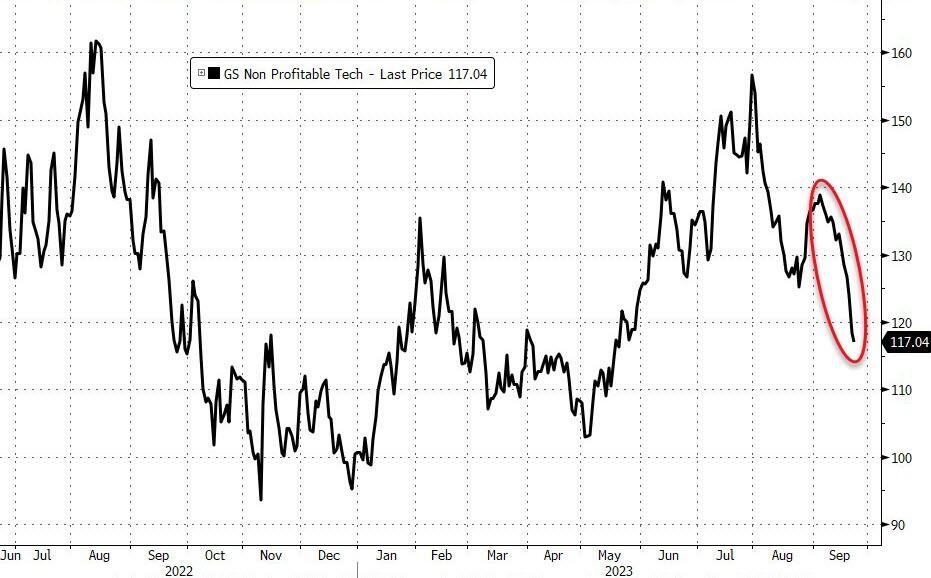
In terms of individual stocks, low-quality tech stocks were the most heavily shorted area, with non-profitable tech stocks falling by 9% last week.

Flood emphasized that hedge funds are shorting these types of stocks according to Goldman Sachs' statistics.
Currently, the long/short ratio in the US stock market is 1.57, compared to 1.60 in early August this year. The current ratio is approaching the lowest point in five years.
Hedge funds have been net short on US stocks for three consecutive weeks, with five out of the past six weeks showing net short positions. Calculated by the cumulative nominal value over a six-week period, the short position in the US stock market since mid-August is the largest in six months.

According to Goldman Sachs, looking at a six-week cycle, September to October 2022 was the most intense period of short selling recently. The market remembers what happened next: the S&P 500 index surged 14% in six weeks.

Of course, determining the timing of such a reversal is a tricky question, as the market entered a "negative" feedback loop after last week's Federal Reserve interest rate meeting.
SpotGamma predicts that this Friday, the S&P 500 index may fall to the 4200 level, with the removal of a significant position by JPMorgan Chase potentially providing upward momentum for a rebound.
Wall Street Continues to Increase Short Bets on US Stocks
Data from Goldman Sachs, a major brokerage firm, shows that savvy investors have increased their bearish bets, reducing the net leverage ratio (a risk preference indicator measuring the ratio of long positions to short positions) by 4.2 percentage points to 50.1%. This marks the largest month-on-month decline in this index since the stock market crash triggered by the outbreak of the COVID-19 pandemic in March 2020.
Driven by the frenzy of artificial intelligence, interest in US stocks is waning among both retail and institutional investors, despite a 20% increase in the stock market this year.
Tony Pasquariello, head of hedge fund business at Goldman Sachs, expressed that it is difficult to be excited about the performance of US stocks next year.
The decline in net leverage ratio indicates a weakening bullish stance on US stocks by the so-called "smart money."
JPMorgan Chase believes that shorting US stocks still carries risks, as short sellers may incur losses if the market rebounds rapidly.