Behind the rebound in revenue and net profit, what are the hidden concerns for Kangshifu?

Performance and stock price are going in opposite directions, what's happening with Kangshifu?
In the first half of 2023, after two years of declining performance, Kangshifu (00322) finally regained growth and emerged from the slump.
According to Kangshifu's latest mid-year performance report for 2023, the company achieved revenue of approximately RMB 40.907 billion, a year-on-year increase of 7.04%. The net profit attributable to shareholders was approximately RMB 1.638 billion, a year-on-year increase of 30.66%.
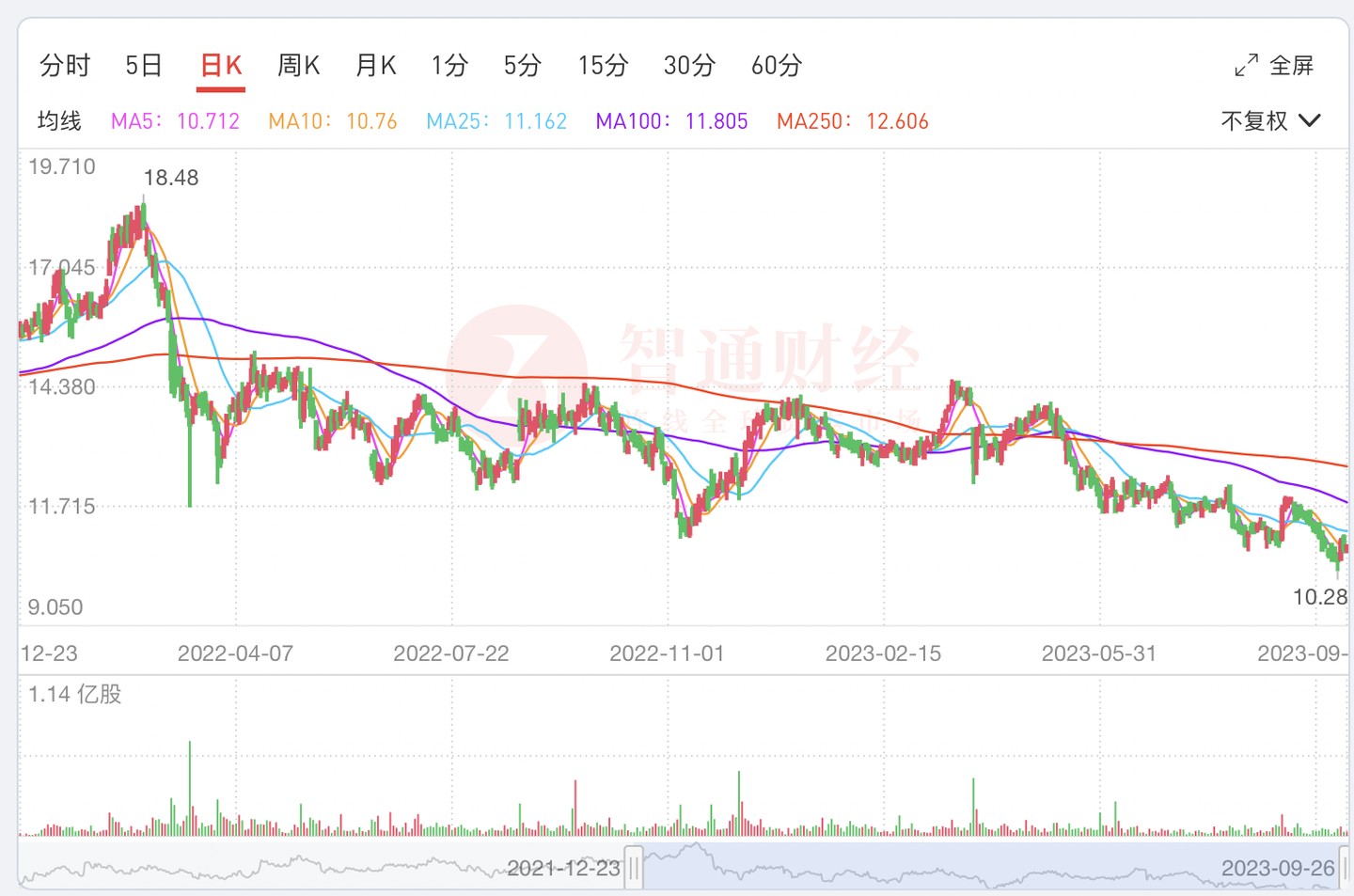
However, while revenue and net profit rebounded, the company's stock price continued to fluctuate. In September, the company recorded declines on 11 out of 15 trading days, with a cumulative decline of 6.42%. Looking at a longer time frame, after reaching a recent high of HKD 18.48 in February 2022, Kangshifu's stock price began to decline. As of the close on September 26, 2023, Kangshifu's stock price was HKD 10.80, a decrease of over 40% from the recent high.

Why did Kangshifu's performance and stock price diverge?
Turning the tide, performance rebounds
In the first half of this year, the company continued its "consolidation, innovation, and development" strategy, achieving both revenue and net profit growth, as well as positive improvements in profitability.
In terms of products, the company's business can be divided into two major segments: beverages and instant noodles. Among them, beverages can be further divided into tea drinks, fruit juice, water, carbonated drinks, and others, while instant noodles can be divided into cup noodles, high-priced bagged noodles, medium-priced bagged noodles, crispy noodles, and others.
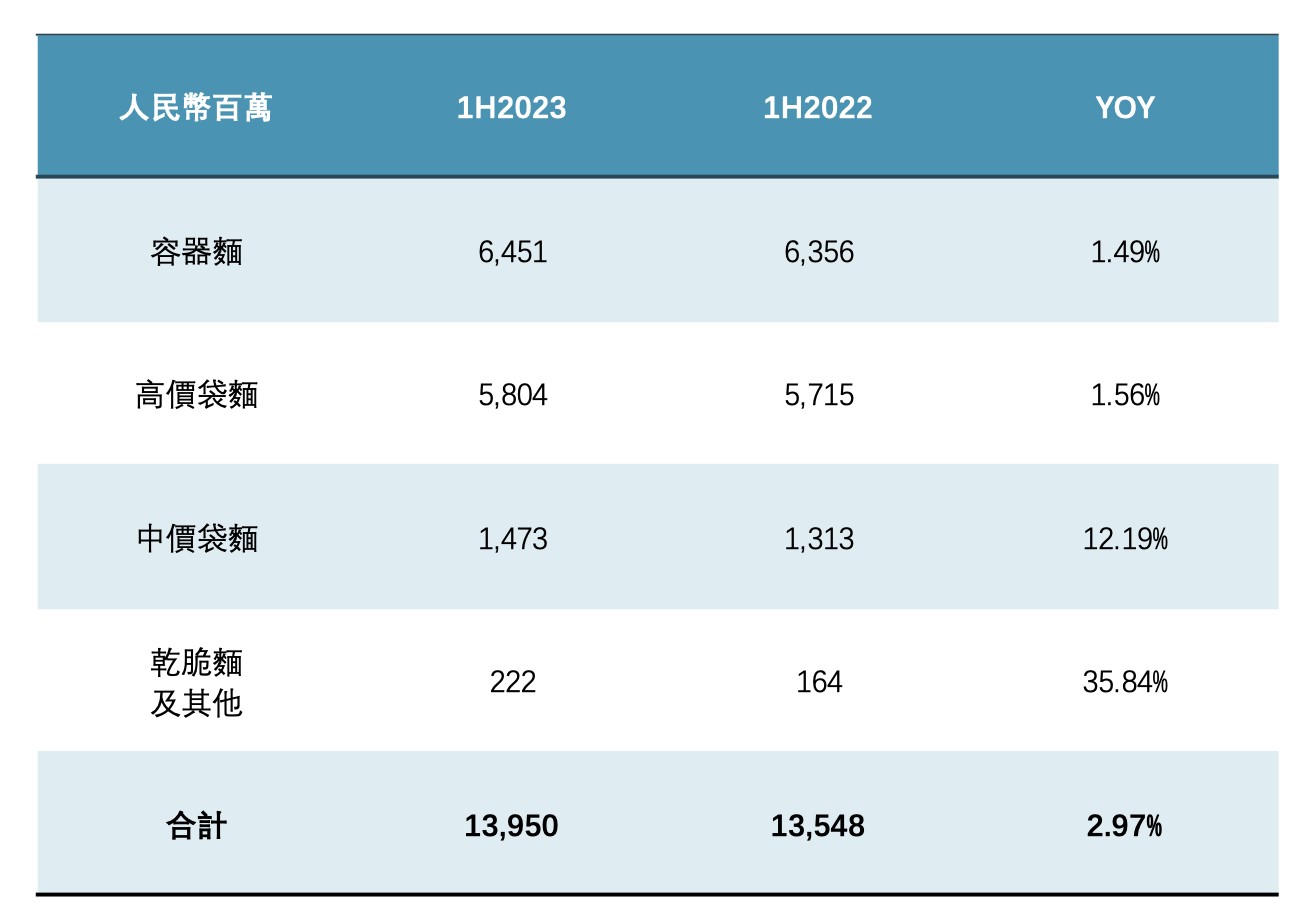
Looking at the instant noodle business first, the company's instant noodle revenue in the first half of this year was RMB 13.95 billion, a year-on-year increase of 2.97%. Instant noodle revenue accounted for 34.1% of the total, further declining compared to the same period last year.
According to the Zhitong Finance APP, in recent years, in response to rising costs and other factors, Kangshifu has implemented two rounds of price increases since 2021. The first round took place in the third quarter of 2021, when Kangshifu raised prices for 20% of its instant noodle products to varying degrees. The second round occurred in the first half of 2022, when the instant noodle industry saw its first coordinated price increase in a decade due to sustained increases in raw material costs. As part of this, Kangshifu increased the price of its classic bagged noodles from RMB 2.5 to RMB 2.8, a 12% increase, and the price of its classic bucket noodles from RMB 4 to RMB 4.5, a 12.5% increase. The effectiveness of this strategy is beginning to show in terms of profitability. At the same time, the company's process of upgrading its instant noodle products continues, actively launching products such as Soup Master, Royal Feast, Soul Stirring Noodles, and Speedy Noodle House.
However, it is worth noting that in the first half of this year, as the macroeconomic downturn occurred, there were changes in consumer purchasing behavior, which led to a significant increase in sales of crispy noodles and medium-priced noodles, with year-on-year growth rates of 35.84% and 12.19% respectively. In particular, the product line of large-sized noodles, which emphasizes high cost-effectiveness, performed well. On the other hand, high-priced bagged noodles and bucket noodles faced challenges in a sluggish consumption environment, with year-on-year growth rates of only 1.56% and 1.49% respectively. However, Huatai Securities pointed out that from a medium to long-term perspective, the instant noodle business will continue to be driven by the increase in per capita consumption. Therefore, Kangshifu's product portfolio, which includes a full range of prices and various packaging options, can meet the needs of consumers in various specific scenarios.
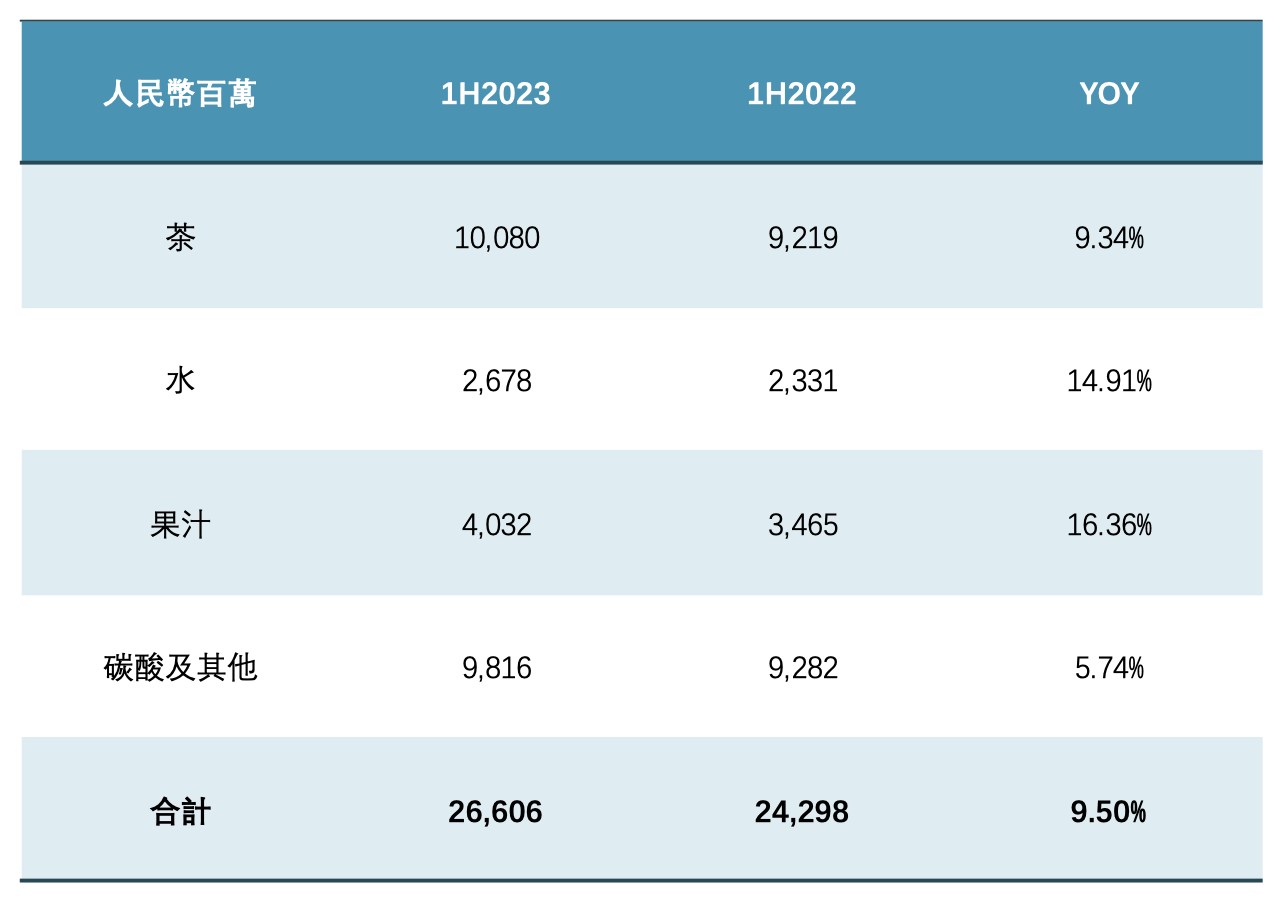
In terms of the beverage business, benefiting from increased travel flow and penetration into the catering channel, Kangshifu's beverage business revenue in the first half of 2023 reached 26.606 billion yuan, a year-on-year increase of 9.5%, further increasing its revenue share to 65.04%.
In order to meet changing consumer demands, the company's beverage products have been steadily moving towards a healthier and sugar-free direction in recent years, gradually achieving sugar-free across all product categories. At the same time, the company actively promotes beverage innovation, launching new mixed-flavor juices such as "Drinking Mineral Water" and "Golden Kumquat Lemon", as well as strengthening the sales of sugar-free products and drinking water, further consolidating the growth momentum of the beverage sector.
In terms of specific segments, the tea beverage segment, which accounts for the largest proportion of the company's revenue, achieved revenue of 10.08 billion yuan during the period, a year-on-year increase of 9.34%. At the same time, the revenue of carbonated beverages and other businesses increased by 5.74% to 9.816 billion yuan, becoming another major source of revenue for the company. In addition, juice revenue was 4.032 billion yuan, a significant increase of 16.36%, and packaged water revenue was 2.678 billion yuan, a year-on-year increase of 14.91%.

Improvement in cost pressure, profitability resumes growth
While revenue remains stable and growing, the company's profitability has improved as the pressure of raw material costs gradually eases.
It is understood that palm oil, as the main raw material for instant noodles, has been continuously rising in price since the first half of 2021, reaching 1.51 times the benchmark in the first half of 2022, and then turning downward. In the first half of 2023, its price has dropped to 0.99 times the benchmark. According to Wind data, the average domestic prices of palm oil, PET resin, and flour in the first half of this year decreased by 41.7%, 8.1%, and 4.9% respectively compared to the same period last year, while the price of white sugar increased by 10.0%.
Benefiting from this, Kangshifu's gross profit margin increased by 2.25 percentage points year-on-year to 30.47% during the period. Specifically, the gross profit margin of instant noodles in the first half of this year benefited from the significant drop in palm oil prices, expanding by 5.2 percentage points year-on-year to 25.8%. And due to the increase in the price of white sugar and the decrease in the price of PET resin, the beverage sector only saw a slight increase of 0.5 percentage points to 32.7% YoY.
If we look at a longer time frame, it can be seen that Kangshifu's profitability has been on a clear downward trend since 2020. In 2020, 2021, the first half of 2022, and the first half of 2023, the company's gross profit margin was 33.17%, 30.39%, 29.09%, and 30.47% respectively, indicating that the company's profitability has not fully recovered.
Furthermore, Kangshifu's total assets reached 59.308 billion yuan in the first half of 2023, which is at a low level in recent years. At the same time, the company's liabilities reached 43.654 billion yuan, creating a historical high for the company. Against this backdrop, Kangshifu's debt ratio in the first half of 2023 reached 73.61%, the highest level in the company's recorded history.
Caught in a public opinion dilemma
It is worth noting that in recent years, with the improvement of China's food manufacturing industry and changes in consumer behavior, the "solo dining, lazy economy, new home life" group has been growing, driving the rapid growth of convenience and fast food. However, as the categories of convenience food in China become more specialized and diversified, with the emergence of new categories such as convenient hot pot, convenient rice, Nanchang mixed noodles, lazy skewers, convenient barbecue, instant vegetarian soup, and instant chicken soup, the number of brands in the convenience food market has also increased, posing a great challenge to traditional brands like Kangshifu.
At the same time, the market for pre-packaged meals has also become increasingly hot. As of now, there are more than 64,000 companies related to pre-packaged meals in China, with 46.8% of them established within the past 1 to 5 years. According to the "Pre-packaged Meal Industry Development Report," the market size of pre-packaged meals in China was 419.6 billion yuan in 2022, and it is expected to reach 510 billion yuan in 2023 and 1.072 trillion yuan in 2026. The pre-packaged meal industry is expected to become the next trillion-level market.
Under the pressure from various markets, the instant noodle industry is facing a growth dilemma. Overall, the first half of this year did not see the expected economic rebound and growth, with a gap between high expectations at the beginning of the year and low growth in the first and second quarters. According to data from the National Bureau of Statistics, the cumulative production of instant noodles in the first half of this year was 2.095 million tons, an increase of only 1.44% YoY on a low base; the operating income was 39.102 billion yuan, achieving a mere 0.81% YoY growth.
In order to gain more attention, Kangshifu is trying to leverage the internet and actively keep up with the pace of young consumers. As of September 26th, Kangshifu's official Douyin account has reached 375,000 followers. In addition, Kangshifu has also made efforts in marketing, not only collaborating with popular IPs such as "Mario," "Pokemon," and "Minions," but also signing popular celebrities such as Wang Yibo and Wu Lei as spokespersons, attempting to bridge the gap with consumers. The previously controversial "China's Good Voice" is also one of the programs that the company invested in as a title sponsor.
Earlier, with the exposure of Li Wen's intense accusations against "China's Good Voice" before his death, the behind-the-scenes manipulation and power games were exposed, and the show was instantly thrust into the spotlight. The sponsors of "China's Good Voice" were also repeatedly criticized by netizens, being seen as "accomplices to the tiger." Kangshifu, as the title sponsor, also faced intense resistance. This may be one of the reasons why the company's stock price has been declining recently.
Overall, as the market environment gradually recovers, Kangshifu has emerged from the shadow of the "pickled cabbage in a pit" and regained growth. However, the short-term public opinion turmoil has once again suppressed the company's stock price. In addition, with the rise of the ready-to-eat market, the instant noodle industry is facing growth challenges. In the increasingly competitive market, Kangshifu, which has been deeply rooted in the industry for decades, may face concerns about whether it can continue to maintain high growth in the future.
However, several securities firms are optimistic about the development in the second half of this year. Huatai Securities pointed out that since July of this year, the average domestic prices of palm oil, PET resin, and flour have further declined by 20.6%, 5.5%, and 7.4% respectively, while the price of white sugar has increased by 22.6% year-on-year. It is expected that Kangshifu's gross profit margin will continue to expand in the second half of the year, but the magnitude will be smaller than that in the first half.
CICC stated that according to research, the sales growth rate of instant noodles has improved compared to the first half of the year since July and August. With the normalization of the base in the second half of the year and the continuous recovery of consumer scenarios, it is expected that the revenue growth rate of the instant noodle business in the second half of this year will be higher than that in the first half. In addition, the beverage business is expected to continue the trend of the first half of the year in the second half of this year, driven by the recovery of travel and dining, as well as hot summer weather. CICC also considers that the purchase price of PET resin may further decline in the second half of the year, so the improvement in the gross profit margin of the beverage business in the second half of the year is expected to drive overall profit margin improvement.