


Call is not just a game for the brave - 4 typical application scenarios

This is the second article in the options series: Introduction to Call Options, aiming to be the best beginner-friendly guide to Call Options
If you're new to options, we recommend reading the first article first.
What is a Call Option?
A Call Option is a contract that grants the buyer the right to purchase the underlying asset at a specified price within a specific timeframe.
For example, on March 31, TSMC's stock price is 130 yuan, and you buy an option for 5 yuan with a strike price of 140 yuan expiring on September 30.
The buyer has the right to purchase TSMC at 140 yuan anytime before September 30, even if TSMC's price rises to 200 yuan.
The buyer can also choose to forfeit this right, such as if TSMC's price drops to 130 yuan.
Why Buy Call Options?
<1> High Leverage
Options provide high leverage, allowing significant profits even with small upward movements in the underlying asset.
For example, if the stock price is 100 and the option price is 10, a 1 yuan increase in the stock may lead to a 0.5 yuan increase in the option. This means a 1% stock gain translates to a 5% option gain—a 5x leverage. Of course, if the stock drops 1%, the option loses 5%.
The more out-of-the-money the option, the higher the leverage—and the higher the risk.
Common scenarios include buying Calls before earnings reports when bullish on a stock, or buying Calls during market bottoms to hedge against missing a rebound. The most extreme example is weekly options.
<2> Deep In-the-Money Calls as Stock Substitutes
A classic case is Jensen Huang buying long-term Nvidia Calls: using deep in-the-money long Calls to achieve low-cost exposure to the underlying stock.
On November 22, 2023, Nvidia's stock price was 487, and Jensen Huang bought Nvidia Calls expiring December 20, 2024, with a strike price of 120, paying around 378. This strategy effectively allowed spending 378 yuan to achieve exposure worth 480 yuan.
<3> Adding Potential Upside While Controlling Risk
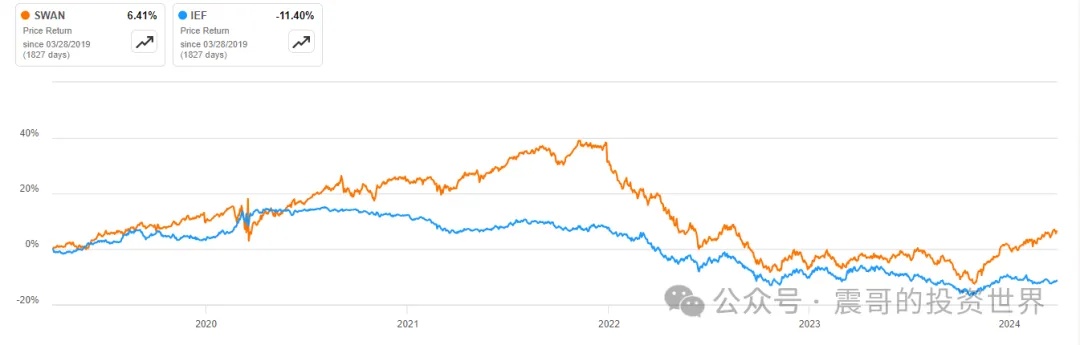
For example, the U.S. Swan Fund allocates 90% to Treasury bonds (IEF) and 10% to long-term S&P 500 Calls. Historically, SWAN has outperformed IEF significantly.
<4> Hedging: Options can also serve as hedging tools. For example, buying UVXY Calls to hedge systemic risk.
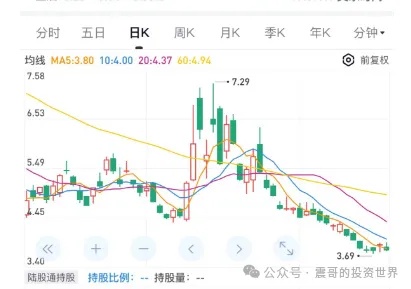
During the Silicon Valley Bank crisis in March 2023, UVXY surged 100% in three trading days, and out-of-the-money UVXY options multiplied in value. Larger black swan events could yield even greater returns.
Profit & Loss Diagram
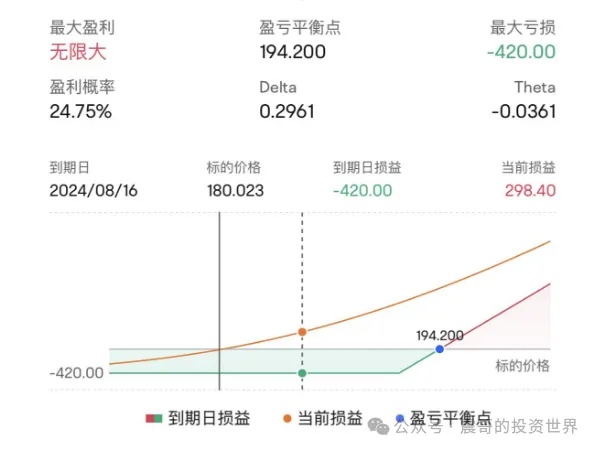
Assume today is April 1, 2024, with AAPL at 171.48. You buy an August 16, 2024 Call with a strike price of 190 for 4.2 yuan.
The P&L diagram is as follows (most brokers provide this tool):
<1> Premium
The price paid for the Call is called the premium. Here, the premium is 4.2 yuan per share (420 yuan for 100 shares). Buying Calls offers limited loss (the premium paid) and unlimited profit potential.
<2> Break-Even Point at Expiry
Break-even = Strike price + Premium. Here, it's 190 + 4.2 = 194.2. With AAPL at 171.48, the stock must rise to 194.2 to profit. The probability of this strategy succeeding is 24.75%, so Call buyers generally face low win rates unless the stock rises significantly.
<3> Current P&L
The orange curve above shows the current P&L relationship between the stock price and Call returns. For example, at 171.48, the strategy breaks even. If AAPL rises to 180.02, the Call gains 298.4. Most Call buyers exit before expiry upon hitting profit targets.
<4> Maximum Profit
As the stock price rises, Call profits increase indefinitely. Thus, Call buying offers unlimited upside.
Summary: Buying Calls offers limited loss (premium paid) and unlimited profit potential. Winning requires significant stock appreciation, making success probabilities low. Most traders exit early with profit targets.
Price Composition
Option price = Intrinsic value + Time value.
<1> Intrinsic Value
Intrinsic value = Current stock price - Strike price (for in-the-money options). It reflects immediate profit if exercised. Only in-the-money options have intrinsic value; out-of-the-money or at-the-money options have zero intrinsic value.
<2> Time Value
Time value = Option price - Intrinsic value.
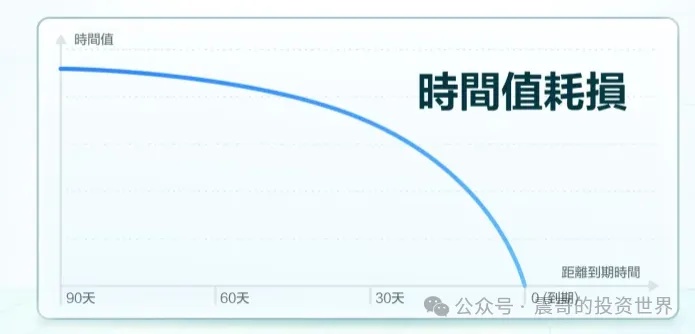
It represents the premium paid for potential price movements before expiry. Time decay is the enemy of Call buyers: time value erodes fastest in the final 30 days.
Example: On April 1, 2024, AAPL is at 170. You buy an August 16, 2024 Call with a 160 strike for 15 yuan.
Intrinsic value = 170 - 160 = 10 yuan. Time value = 15 - 10 = 5 yuan.
Factors Affecting Call Prices
Six key factors: Underlying price; Strike price; Implied volatility; Time to expiry; Risk-free rate; Underlying dividends.
<1> Underlying Price
Higher underlying prices increase Call values (strong positive correlation).
<2> Strike Price
Lower strikes increase intrinsic value, making Calls more expensive. Lower-strike Calls offer less leverage; higher-strike Calls are cheaper but riskier.
<3> Implied Volatility
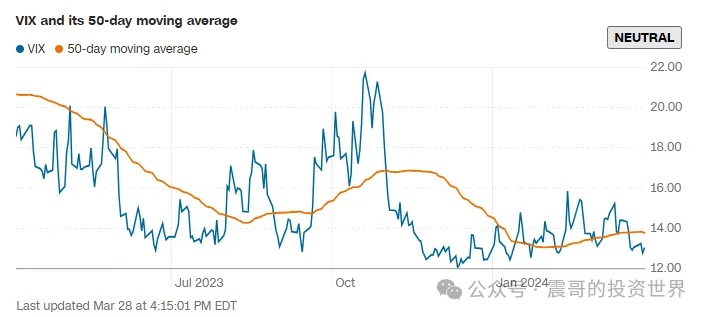
Higher implied volatility (IV) raises option prices, reflecting greater expected price swings. For example, IV spikes before earnings and collapses afterward.
<4> Time to Expiry
Longer durations mean higher time value. Decay accelerates sharply in the final 30 days.
<5> Risk-Free Rate
Higher rates slightly reduce time value, but the impact is minimal.
<6> Dividends
Dividends may adjust strike prices (except for instruments like TLT).
Summary: Focus on volatility and directional bias—the other factors are fixed or marginal.
Settlement at Expiry
U.S. stocks/ETFs use physical settlement: In-the-money options (even by 0.01) auto-exercise unless margin is insufficient, triggering forced liquidation.
FAQs
<1> Are cheaper Calls better?
No. Deep out-of-the-money or near-expiry Calls are cheaper but have lower success rates (e.g., weekly options). Only gamble what you can afford to lose, or balance probability/payout.
<2> What Calls make sense?
Buy Calls when trends are emerging (rapid upside likely) and IV is relatively low.
<3> Do Calls require margin?
No, buying Calls uses premium only.
<4> Can Calls be exercised early?
Yes, but closing the position is usually better to retain time value—unless dividends justify early exercise.
<5> What if I lack cash to exercise?
Brokers auto-liquidate in-the-money options if margin is insufficient.
<6> How do value investors use Calls?
Long-dated, deep in-the-money Calls (like Jensen Huang’s Nvidia trade) can replace stock ownership.
The copyright of this article belongs to the original author/organization.
The views expressed herein are solely those of the author and do not reflect the stance of the platform. The content is intended for investment reference purposes only and shall not be considered as investment advice. Please contact us if you have any questions or suggestions regarding the content services provided by the platform.
