



Spent 10 yuan during Qingming Festival, I used AI to resurrect grandma.

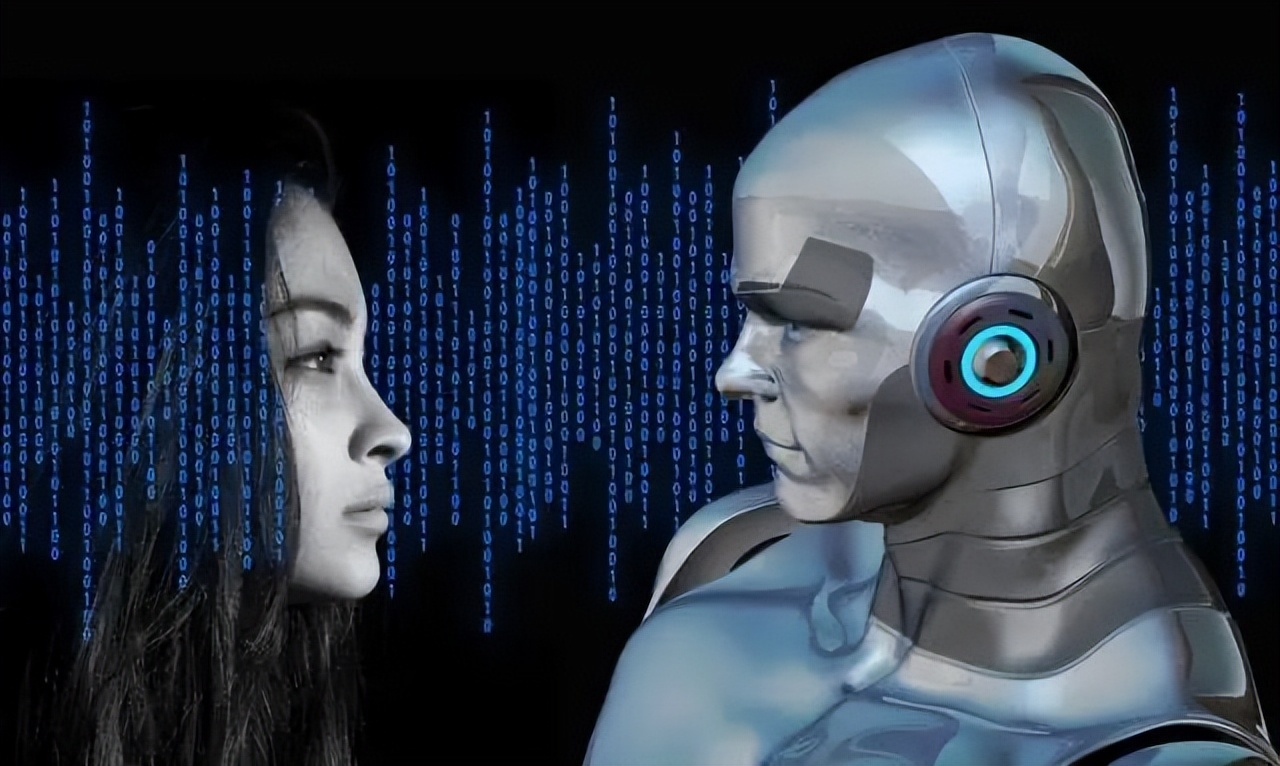
Imagine what it would be like to make a video call with a deceased loved one in another world?
During the Qingming Festival, when people burn paper offerings, they often say a few words to their departed loved ones at the gravesite, hoping the ashes will carry their thoughts to the other side. However, with the rise of AI technology, more and more people are no longer satisfied with one-way communication.
Human affairs are driven by profit, and where there is demand, there is a market. Thus, AI "resurrection" videos of the deceased have emerged.
AI-generated videos of Leslie Cheung, Coco Lee, Qiao Renliang, and Godfrey Gao have made headlines, with countless people inquiring about production methods and pricing in the comments. Some industry insiders even claim that AI resurrection videos are a "trillion-dollar market of the future."
This phenomenon, dubbed "AI resurrection," has not only drawn widespread attention but also sparked debates about life, memory, and commercial interests.
But can video regeneration through AI truly be called an extension of life? Is AI "resurrection" summoning spirits or profits?
1. AI Erects Digital Tombstones
AI "resurrection" videos are rapidly becoming a new form of digital tombstones online.
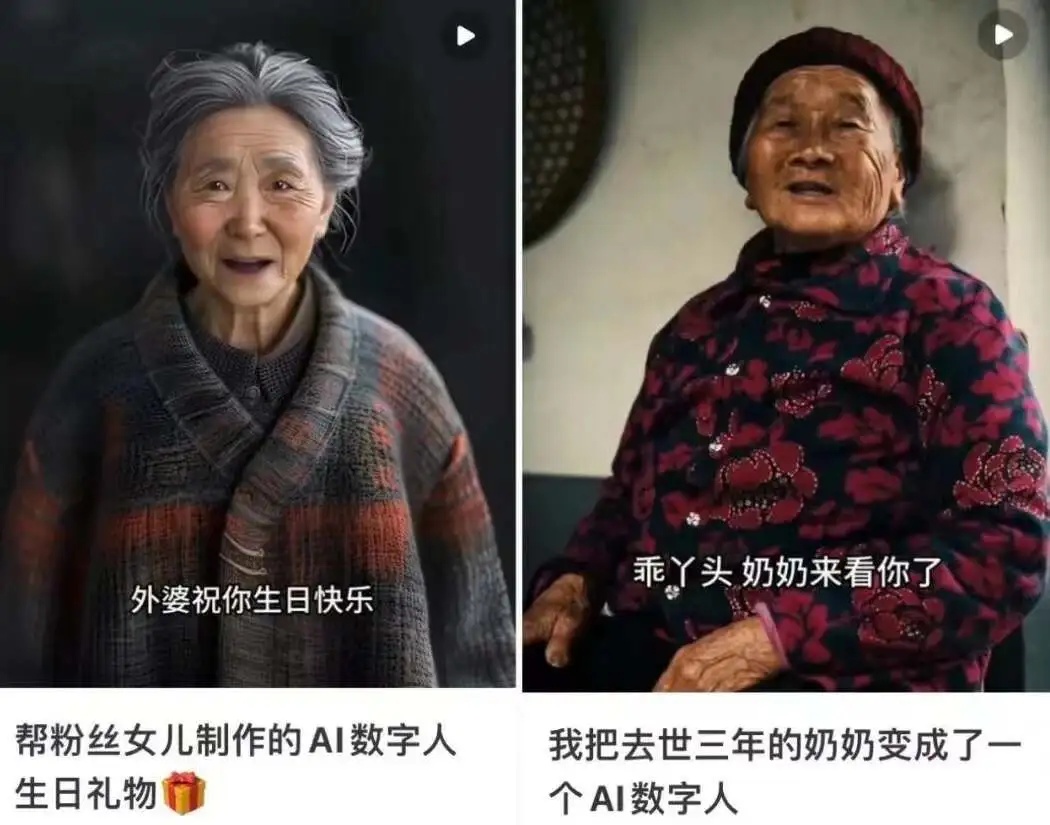
The so-called "resurrection" involves feeding the deceased's text descriptions, photos, videos, and audio into AI algorithms to train a digital model that mimics their speech patterns and background. The trained AI then interacts with the living in a prescribed tone.
One of the earliest AI "resurrection" videos to gain public attention in China was created by Bilibili UP 主 Wu Wuliu, who showcased his AI-generated grandmother. Using her phone recordings for voice synthesis and ChatGPT to learn her speech habits, Wu called the result a "digital life." The video of the digital grandmother speaking in dialect garnered nearly a million views.
"Tears in my eyes," "I miss my grandma too," "Cherish the living." Comments quickly split into two camps: one hopeful about AI's potential to heal regrets, the other condemning the technology as unethical, arguing that forced digital immortality would be tragic.
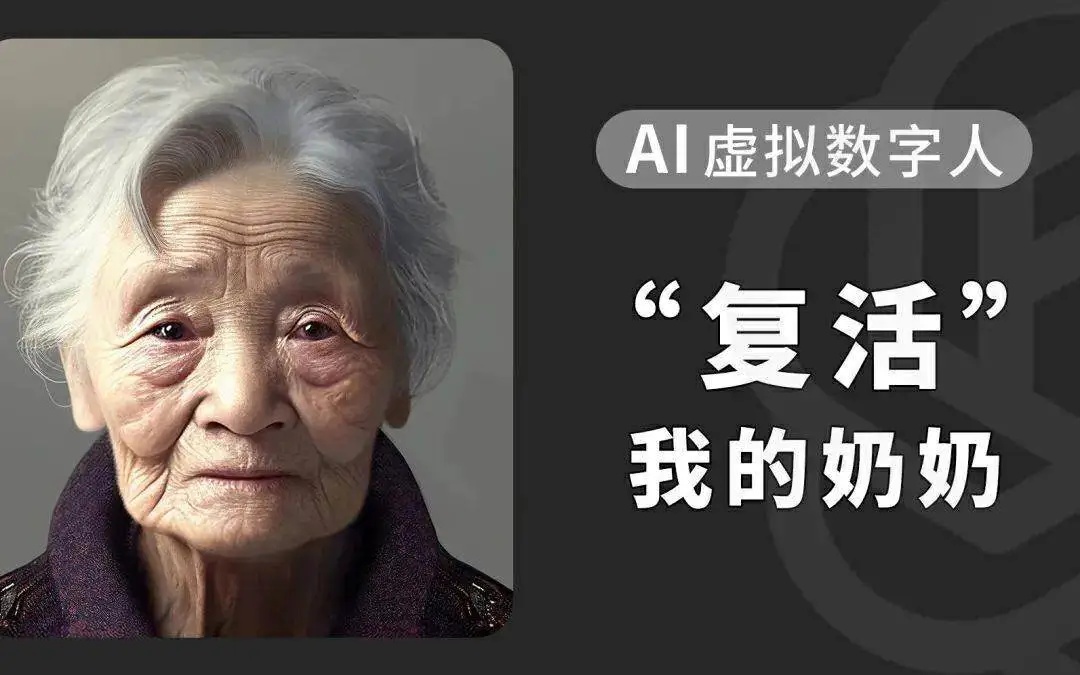
Regardless of public opinion, many have already sought AI resurrection services. Xiao Wu, who ordered a video from an e-commerce platform, told LingTai LT (ID: LingTai_LT) that prices ranged from 50 yuan for a 13-second silent clip to 10 yuan per second for speech (with optional Mandarin dubbing).
For Qingming, Xiao Wu commissioned a video of his late grandfather saying, "I'm doing well here. Don't worry—live your lives fully." Though his grandmother knew it was fake, seeing her loved one blink and speak again brought immense comfort.
2. The Business Behind Grief
A wave of emotional commodification has surged.
At its core, AI "resurrection" employs the same technology as AI scams—less about summoning spirits, more about summoning profits.
Vendors say most requests mirror Xiao Wu's: buyers seek comforting messages from the departed. Sellers monetize deep grief, while viral celebrity "resurrections" serve as marketing to attract customers.
Platforms like Taobao and JD.com facilitate sales for self-styled "AI resurrectionists," leveraging existing user bases and payment systems. What began as novelty now intertwines with daily life.
Entrepreneurs are expanding into tutorials. A 1,980-yuan "AI monetization course" promises one-on-one training and tools, with commissions for referrals. Some "AI monetization communities" have hit member limits.
No current vendor offers true interactive dialogue. Most "resurrections" are low-quality templates devoid of the deceased's consciousness or lifelike qualities.
Between technical limitations, ethical backlash, and tightening regulations, profitable and responsible AI memorialization remains distant.
3. Blurred Lines: Ethics vs. Technology
This commercial frontier blurs boundaries between life/death and ethics/law, often exploiting grief for profit.
For families like Coco Lee's, unauthorized AI videos reopen wounds. On March 28, Lee's mother demanded takedowns within seven days, citing severe emotional harm.
China's Civil Code Article 994 protects posthumous 肖像权 (image rights). Without family consent, AI resurrection risks violating the law.
Digital identity theft is another danger. AI scams succeed because victims see familiar faces. Stolen biometric data harms both families and the public—like deepfake livestreams of Yang Mi and Dilraba endorsing products.
Ethically, does commercializing digital 逝者 violate their wishes? If true digital consciousness emerges, who can terminate it? How are its rights protected? These questions loom.
AI conversations about reunion only highlight loss. As Wu Wuliu pinned in his comments: cherish the present, for real companionship is priceless.
Author|Li Youqing
Editor|Hu Zhanjia
Operations|Chen Jiahui
Producer|LingTai LT (ID: LingTai_LT)
The copyright of this article belongs to the original author/organization.
The views expressed herein are solely those of the author and do not reflect the stance of the platform. The content is intended for investment reference purposes only and shall not be considered as investment advice. Please contact us if you have any questions or suggestions regarding the content services provided by the platform.
