


Famous coser shades the male lead of Love and Deep Space, where is the wildly growing cosplay heading?

Just three months after its launch, "Love and Deep Space" has already faced continuous twists and turns, and this time it has clashed with the cosplay community.
However, it wasn't the players of "Love and Deep Space" who started the trouble. The well-known coser Xiong Qi made sarcastic remarks about one of the male protagonists, Li Shen, in her fan group. The inappropriate comments were screenshotted and made public, which angered the players.
A coser who gained fame by cosplaying anime characters for years insulting an anime character—this behavior can be described as "biting the hand that feeds you." It also led to a heated online dispute between Xiong Qi's fans and Li Shen's fans.
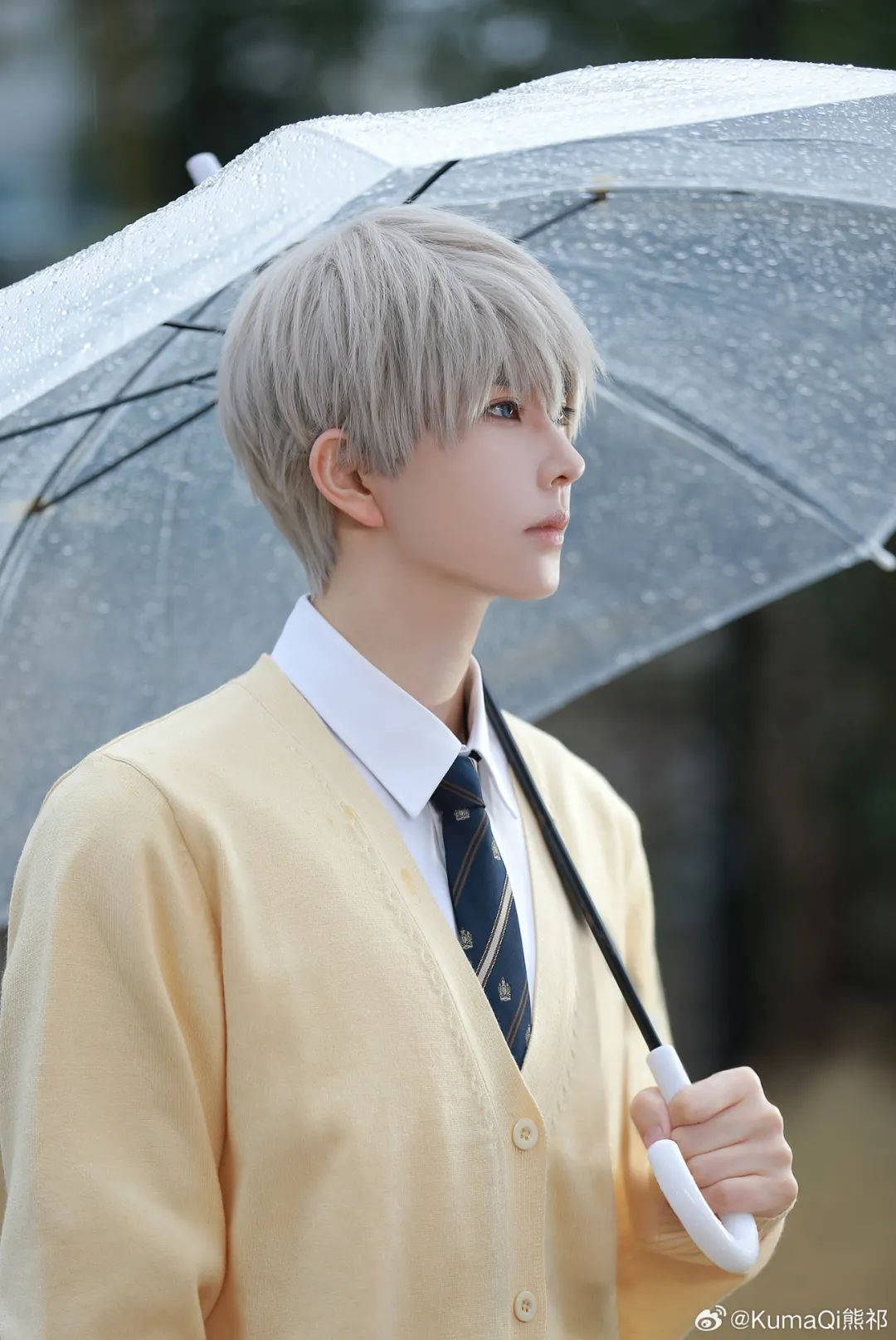
In fact, there is some overlap between Xiong Qi's fans and "Love and Deep Space" players, with both groups primarily consisting of female anime fans. The issue lies in the fact that while cosers attract fans by cosplaying anime characters, they are essentially real-life individuals. Chasing cosers is more like seeking a substitute for anime characters in the real world.
This conflict has sparked a new reflection among anime enthusiasts: Is the unchecked growth of cosplay, bringing anime into the real world, really a good thing?
When Cosplay Meets Otome Games
Making sarcastic remarks about anime characters doesn't seem like something a veteran coser with years of experience would do.
Most anime fans have heard of Xiong Qi. She is one of the early female cosers to gain fame in the community, with over a decade of cosplay experience and more than 5 million Weibo followers. It can be said that she has transitioned from an anime coser to a real-life influencer.
Xiong Qi's connection with otome game players dates back to 2018 when Papergames' "Mr. Love: Queen's Choice" became a hit. She cosplayed one of the male protagonists, Bai Qi, which earned her the affection and attention of many players and significantly boosted her popularity.
After the launch of "Love and Deep Space," Xiong Qi also cosplayed the male protagonists Shen Xinghui and Qi Yu. While she is a loyal player of the game, she seems to harbor strong animosity toward another male protagonist, Li Shen.
The incident began when one of Xiong Qi's fans expressed their fondness for Li Shen in the fan group, only to be questioned by Xiong Qi: "Li Shen is the least attractive. Why do you like him?"
She even went so far as to doubt the fan's taste: "If you think Li Shen is the most attractive, then you're really not my fan."
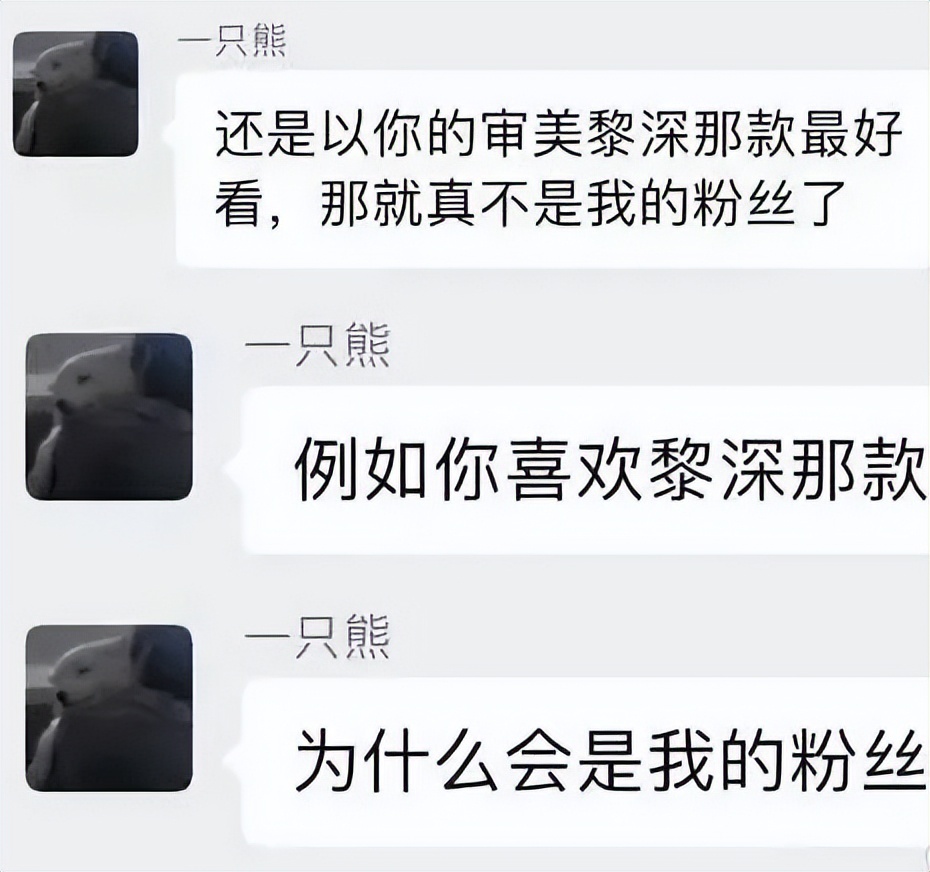
Belittling Li Shen's appearance in front of his fans is disrespectful, especially for a coser who owes her career to anime. It's hard to imagine why she would say such things.
What's worse, Xiong Qi outright dismissed Li Shen's role as a protagonist in the game: "Deep Space is about Xiao Yu (Qi Yu), Xingxing (Shen Xinghui), and Xiao Yu Xingxing... There's no such person as Li Shen."
It's understandable to have preferences in otome games—single or dual preferences are common, and fan disputes are frequent. However, it's inappropriate to benefit from the popularity of "Love and Deep Space" while mocking its male protagonists.
Moreover, she didn't just insult Li Shen but also made sarcastic remarks about Lu Chen, one of the male protagonists in "Light and Night," further angering otome game players.

As a well-known coser, Xiong Qi owes her career to anime, yet she harbors such malice toward anime characters. Even after issuing a public apology, she privately posted, "Whatever," showing no sincerity.
Xiong Qi's actions have disillusioned many anime fans about cosers. Making a living off anime while disrespecting it is not uncommon in the cosplay community—cross-dressing, scamming, and clout-chasing are rampant. At its core, cosplay has shifted from a hobby to a business.
In the early days, anime and cosplay were niche hobbies. Cosers were driven by passion, buying costumes, styling wigs, and hiring photographers—all out of love for anime and its characters, with no concern for profit. Back then, the cosplay community was mostly genuine anime enthusiasts.
But now, cosplay has become a business. The increasing commercialization has led to the rise of professional cosers, where fame and profit are the main goals. Without genuine interest, it's hard to truly understand and respect the culture.

Cosplay: From Anime to Reality
The shift of cosplay from a hobby to a business is essentially a manifestation of its increasing proximity to the real world.
Cosplay can be simply understood as role-playing, a byproduct of the ACG industry. Due to the slower development of the ACG industry in China, cosplay emerged relatively late, with offline activities beginning around the turn of the millennium.
At the time, cosplay was more like a form of "self-indulgence" for anime fans. Offline events were small-scale and had limited influence, as ACG and anime lacked social recognition and were confined to small circles.
However, with the rapid growth of China's ACG industry, the subculture of anime expanded dramatically, and cosplay gained greater development. The most noticeable changes were the expansion of online influence and the increase in offline events.
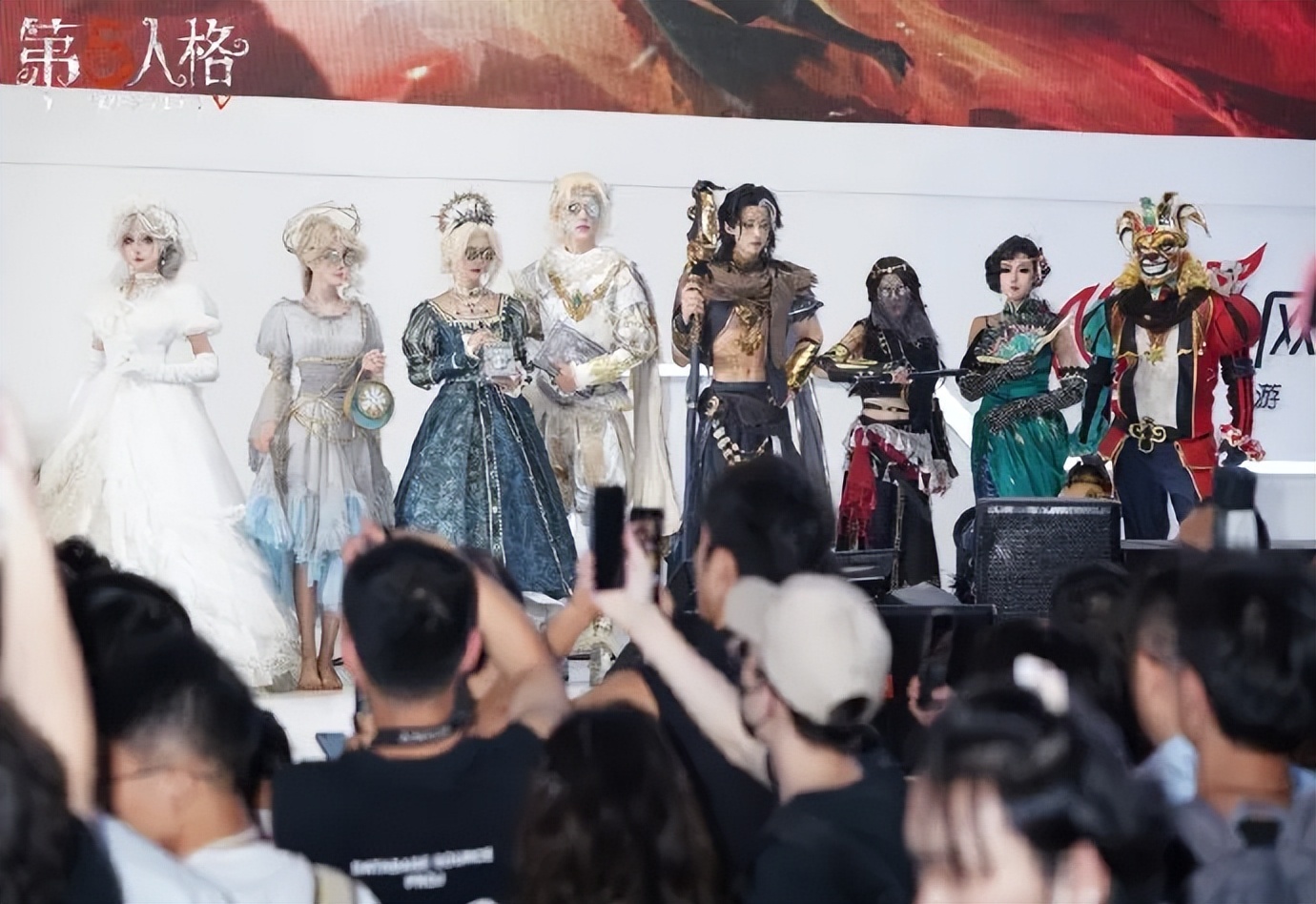
Early cosplay mainly revolved around offline role-playing events. However, the development of social media provided cosplay with a broader platform. Anime fans could showcase their cosplay works online, reaching a wider audience.
This online form of cosplay helped gather anime communities, amplifying their influence and further fueling the surge in offline events.
In 2015, China hosted over 200 cosplay events and comic conventions, a 17.7% increase from the previous year. In 2017, cosplay events saw another boom, with over 300 conventions held nationwide during the seven-day National Day holiday—an average of 43 per day.
By the 2019 May Day holiday, 200 comic conventions were held in just four days, matching the total number of cosplay events in all of 2015.
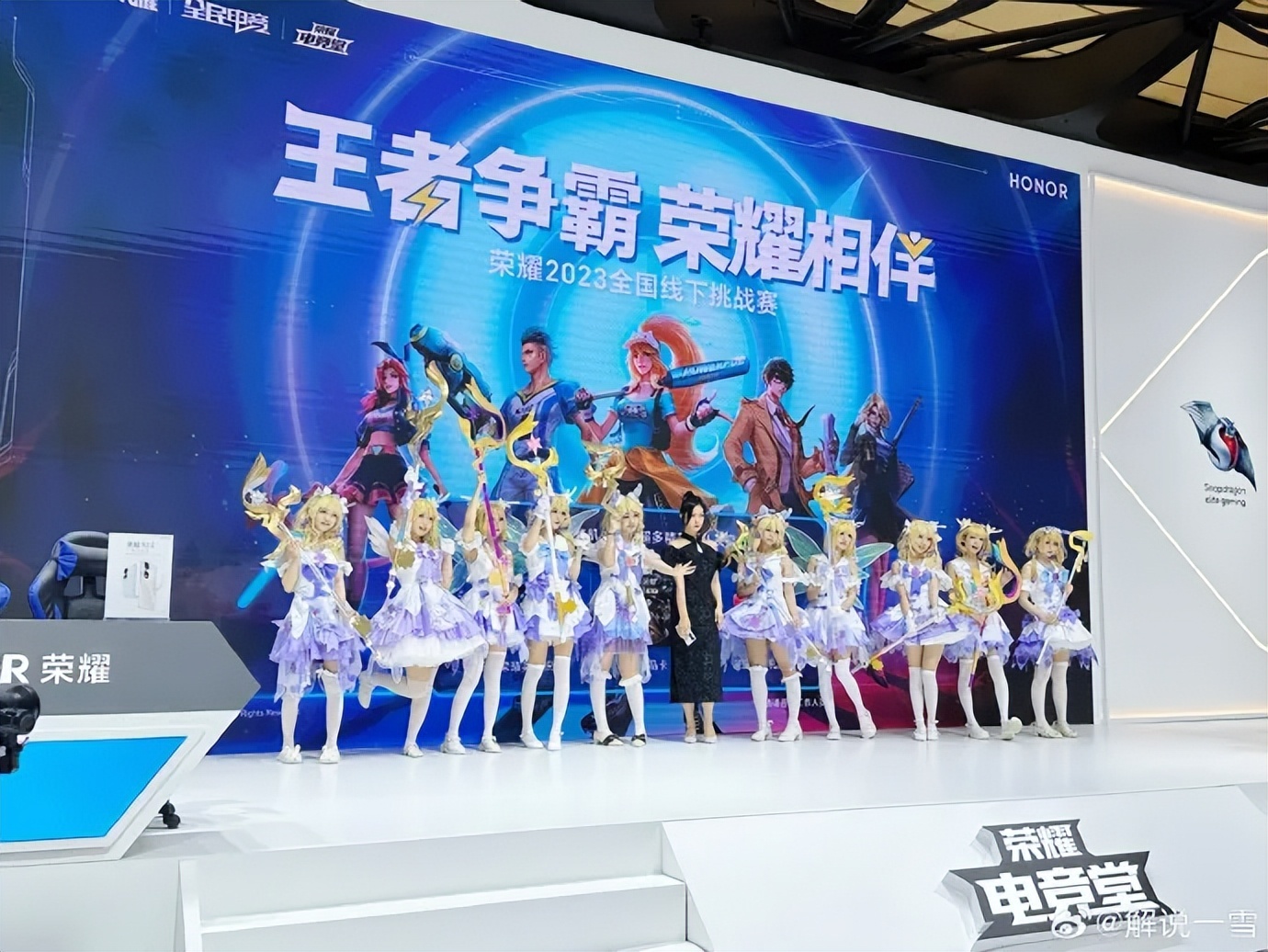
As its influence and audience grew, the spending power and willingness of anime fans provided cosplay events with diverse monetization channels and strong profitability, attracting more game and anime companies.
In 2018, ChinaJoy's sponsors included six companies like NetEase and Perfect World. The offline event for "Shining Nikki" received funding from Papergames' CEO Yao Runhao, though the money was later embezzled by a fan leader.
In fact, the monetization of cosplay events goes beyond ticket and merchandise sales. The ACG industry values these events for testing IP value and reaching a broader anime audience.
It's no surprise that cosplay has become increasingly commercialized, with more business activities turning it from a hobby into a trade and giving rise to professional cosers.
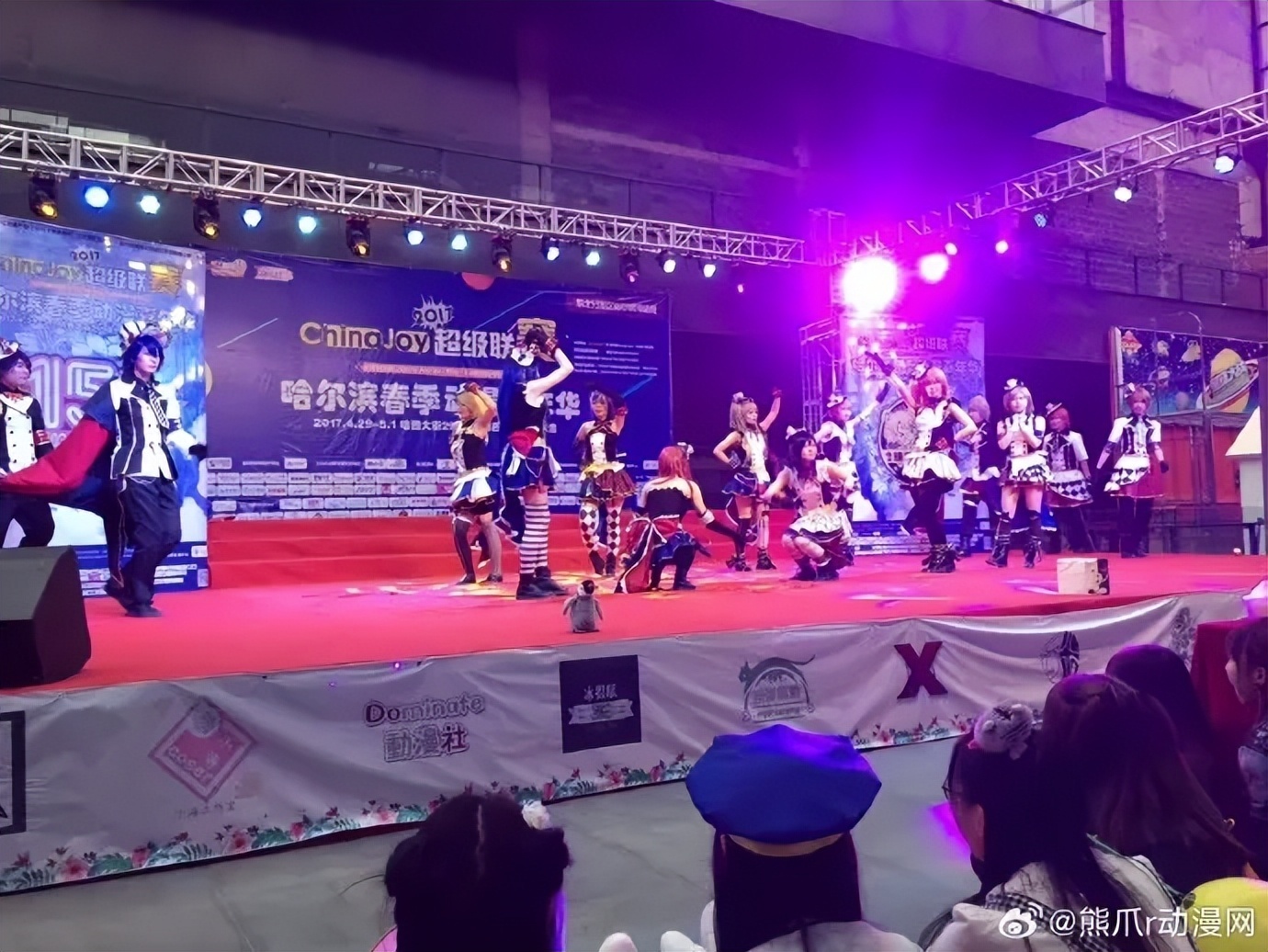
Generally, cosers professionalize by attracting anime fans with high-quality cosplay. After gaining some fame and influence, they receive invitations for commercial activities like promotions and conventions, earning financial returns.
The commercial value of professional cosers isn't limited to anime. They also venture into the real world as actors, streamers, or variety show guests, gradually bringing cosplay from anime into reality.
Objectively speaking, anime and cosplay are niche subcultures. To achieve long-term growth and break into the mainstream, moving closer to the real world is an inevitable trend.

Cosplay Commissions: A Growing Market
Another sign of cosplay's shift into the real world is the booming business of offline cosplay commissions.
Cosplay commissions emerged alongside the popularity of otome games. Clients are usually otome game players who hire cosers to portray their favorite anime characters for a day-long offline date.
Typically, clients post orders on social media, specifying the anime character they want the coser to portray and other requirements, such as height, weight, appearance, and the level of intimacy.
Clients must also pay the coser a fee and cover all expenses incurred during the date, including transportation, meals, and costume rentals.
In simple terms, it's like renting a "one-day boyfriend," though most "boyfriends" are female cosers, as clients are often young women who feel safer with female cosers.
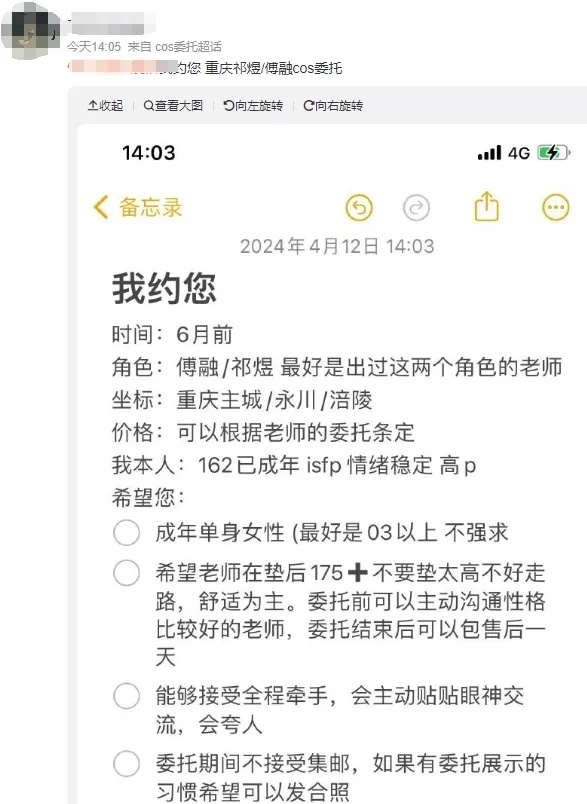
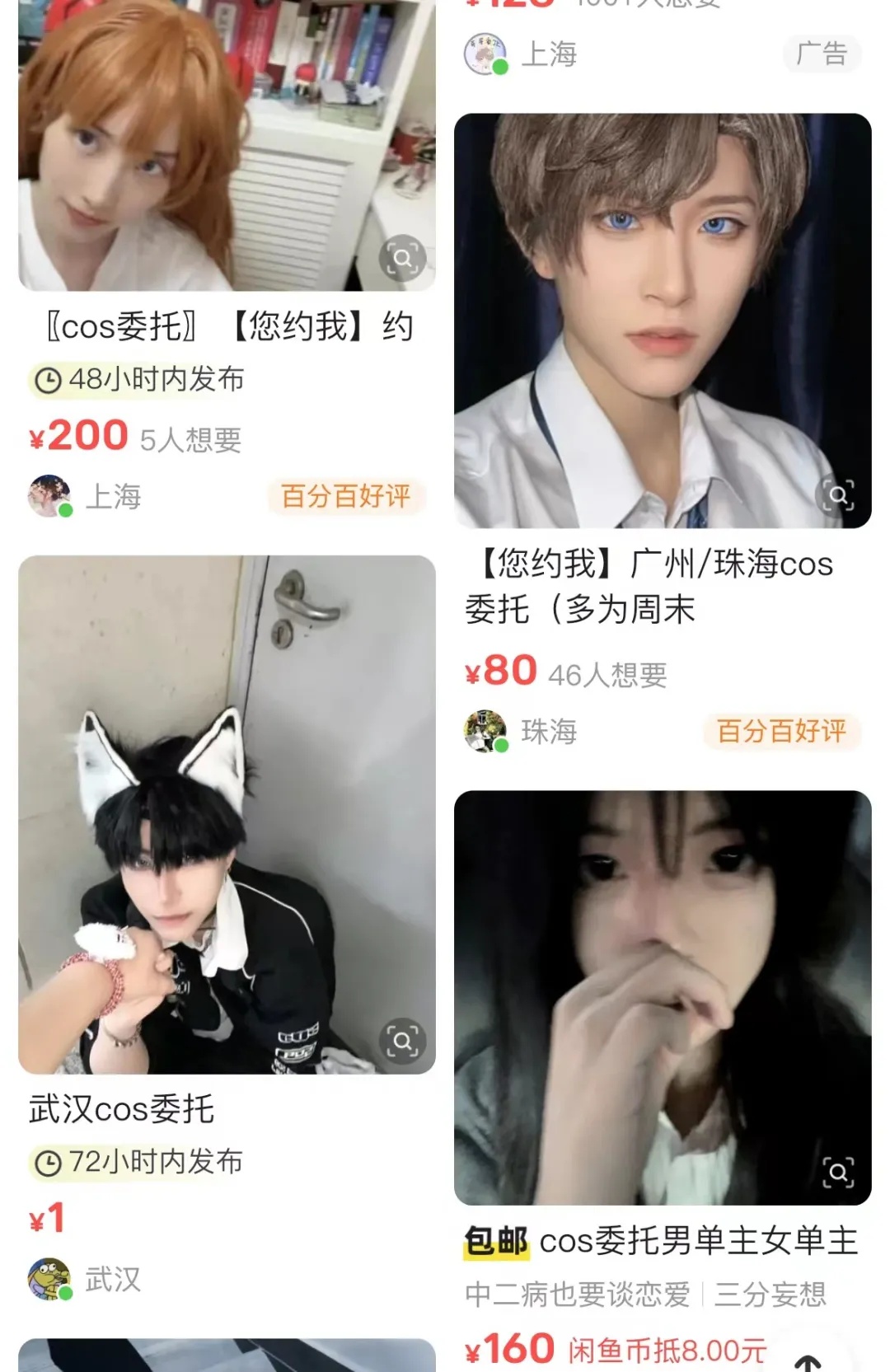
With the rise of cosplay commissions, more professional cosers are joining the trend. Many posts offering commission services can be found on second-hand trading platforms.
According to industry observations, the standard rate for professional cosers ranges from 40 to 80 yuan per hour, with a minimum booking time of two hours. Full-day bookings are cheaper, usually between 200 and 600 yuan.
Objectively, cosplay commissions aren't cheap, yet many otome game players are eager to participate. For clients, a cosplay commission is like a date with their perfect boyfriend—a way to materialize their love for anime characters and bring it into reality, allowing them to feel acknowledged and happy in real life.
However, the cosplay commission market remains chaotic.
On one hand, many clients become addicted to the happiness they feel after a date, experiencing withdrawal symptoms and saving up for the next one.
On the other hand, the lack of clear regulations in this growing market has led to scams. Some cosers don't match their advertised appearance, and some clients have even been cheated out of money.
Whether cosplay's shift from anime to reality is good or bad is still up for debate.
Moving into the real world has made the cosplay community more chaotic, with some anime fans questioning why anime should encroach on reality.
However, it's undeniable that this shift has brought more opportunities for cosplay, greater financial rewards for cosers, and expanded the anime market.
As for whether cosplay will continue to move toward reality or take another path, only time and market developments will tell.
The copyright of this article belongs to the original author/organization.
The views expressed herein are solely those of the author and do not reflect the stance of the platform. The content is intended for investment reference purposes only and shall not be considered as investment advice. Please contact us if you have any questions or suggestions regarding the content services provided by the platform.
