


 Likes Received
Soybean meal ETF, agricultural futures ETF

I. Basic Elements: Soybean Meal ETF(159985.SZ), U.S. stock$Teucrium Soybean(SOYB.US), full name "ChinaAMC Feed Soybean Meal Futures ETF", tracks "DCE Soybean Meal Futures Price Index"(DCESMFI.DCE), with underlying assets being soybean meal futures, and a margin ratio of 7%. Due to public fund leverage restrictions, only 7% of the position is used to buy soybean meal futures(current holdings as of 20240401: Soybean Meal 2409, Soybean Meal 2405. The "Index Compilation Rules" stipulate: ① Select the dominant contract, i.e., the contract with the largest open interest; ② If open interest is the same, select the contract with higher trading volume; ③ If trading volume is also the same, choose the farther-month contract), while 93% is held in bank deposits and settlement reserves(contributing approximately 2% annual interest income), with T+0 trading and an average daily turnover of 272 million.
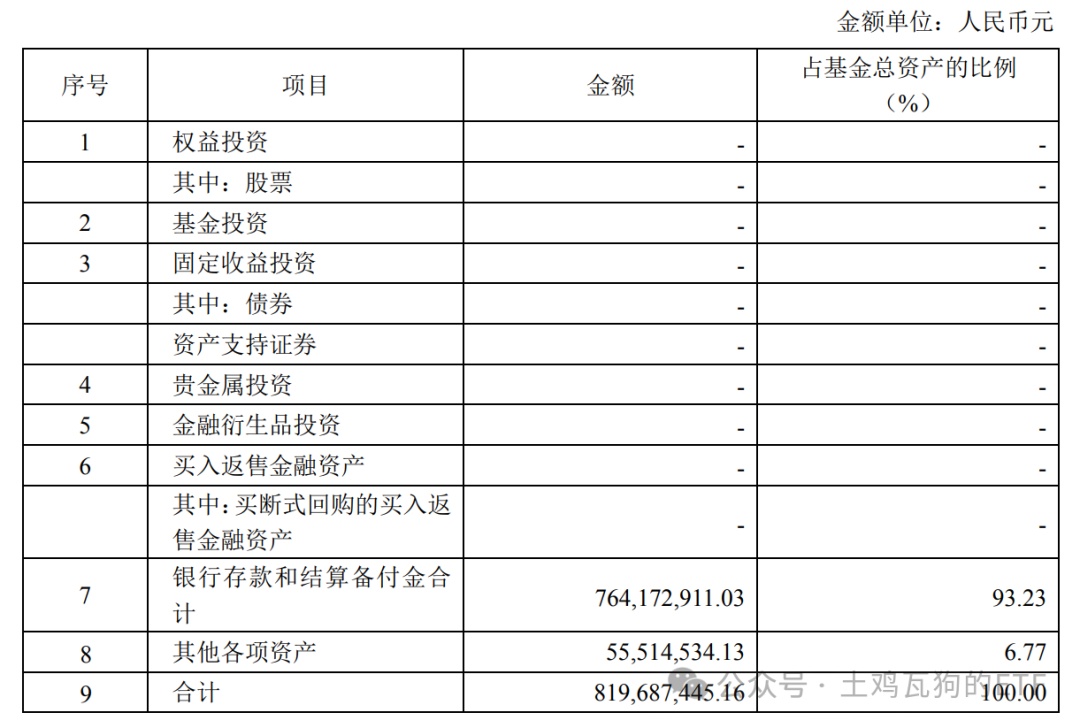
Data source: ChinaAMC 2023 Annual Report, a mediocre ETF
II. Investment Logic
1. Industry Chain
The upstream of soybean meal can be divided into soybean cultivation, soybean trade, and soybean processing.
In terms of price, the higher the soybean price, the higher the production cost of soybean meal, showing apositive correlation with soybean meal prices;
In terms of supply, the amount of soybean supply directly determines the supply of soybean meal, showing anegative correlation with soybean meal prices.
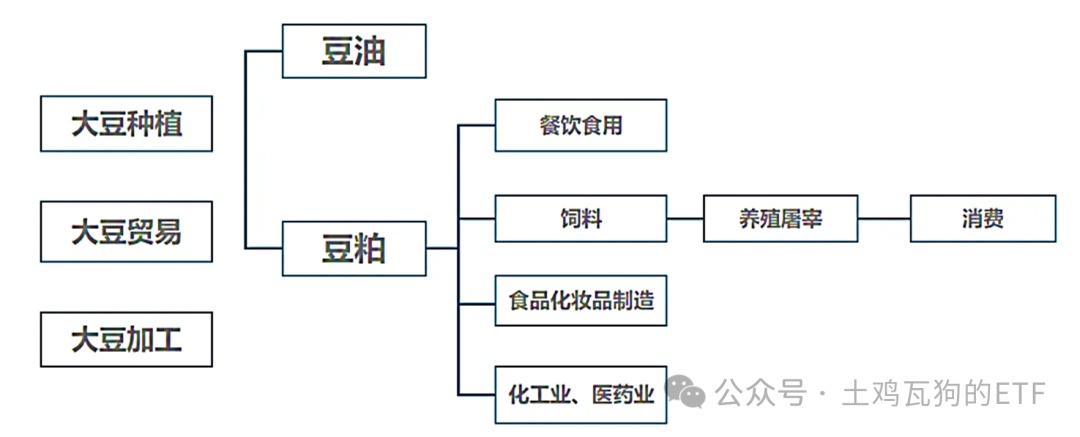
Data source: CITIC Securities Research Institute, a mediocre ETF
In the soybean meal industry chain, the midstream should focus on feed consumption and livestock/poultry inventory. Livestock/poultry inventory directly reflects feed demand, which positively impacts soybean meal prices. Feed consumption also has seasonal characteristics, which should be considered in research (refer to👉Livestock ETF, How to Grasp the Hog Cycle?).
In other words, soybean meal prices are influenced by two factors: On the supply side, mainly byinternational soybean price fluctuations. On the demand side, bydomestic livestock industry demand.
March-May prices depend on South America: Brazil and Argentina in South America export nearly 60% of the world's soybeans. Soybeans are typically planted in October-December and harvested in March-May. During this period, soybean price trends depend on South America.
September-October prices depend on North America: The U.S. in North America exports about 1/3 of the world's soybeans. Soybeans are typically planted in April-May and harvested in September-October. During this period, North America has a greater impact on soybean prices.
Additionally, price ratios between related products, such as the pork/soybean meal ratio, soybean meal/soybean ratio, soybean meal/soybean oil ratio, and substitutes for soybean meal like rapeseed oil and peanut meal ratios. These price differences fluctuate within a certain range and have some impact on soybean meal price movements.
1) Supply Side
In the short term, the supply side has a greater impact on soybean meal, while long-term focus should be on demand-side changes. When analyzing the supply side, it's necessary to examine the supply of imported and domestic soybeans. From a global production perspective, over the past decade, soybean production has shown a fluctuating upward trend. In the 2023/2024 season, global soybean production reached 398 million tons, up 5.85% year-on-year. Geographically, soybean production is highly concentrated in Brazil, the U.S., and Argentina. In the 2023/2024 season, the Americas accounted for over 80% of global production. Among Asian countries, China and India have relatively higher shares.(In China, soybean production is concentrated in the Northeast, Huang-Huai, and Southwest regions. Northeast: Heilongjiang, Inner Mongolia, and Jilin. Huang-Huai: Anhui, Henan, Jiangsu, and Shandong. Southwest: Sichuan and Yunnan.)
Supply-side impacts are mainly reflected in production forecasts for major producing countries. Factors affecting production forecasts include:weather andalternative crops. Soybean prices directly affect soybean meal production costs, with production costs and crushing margins jointly influencing soybean meal output. When crushing margins are high, oil mills increase crushing volume, leading to higher soybean meal production.
2) Demand Side
China's demand for soybeans accounts for a significant portion globally, and the market closely monitors Chinese demand. Observing domestic soybean imports and crushing volumes is the mainstream method for estimating Chinese demand.
Specifically for soybean meal, livestock/poultry inventory, feed demand trends, and prices of related products and substitutes can directly or indirectly impact soybean meal demand. In feed demand, pig feed, meat poultry feed, and egg poultry feed account for the majority of demand.
Given the critical role of pig feed in soybean meal demand, hog production capacity directly affects soybean meal prices. The 2017-2018 African swine fever outbreak led to a decline in hog production, causing a significant drop in domestic feed output, which later entered a fluctuating upward trend.
2. Product Characteristics
Agricultural product peaks are hard to identify, so there's no rush to call the top. Short positions may last a month, while longer ones could extend to three months. Bottoms typically last at least three months, sometimes up to six months. Soybean meal's small waves are around 200 points, larger waves around 400 points, with an average annual rise of about 1,000 points per cycle.
Soybean Meal Historical Highs:July 2008, July-August 2009, August 2010, August 2011, September 2012, September 2013, August 2014. These seasonal highs almost always occur in July, August, or September, as this is the peak demand season.
Many markets have patterns, especially futures markets where commodities like soybeans and soybean meal are physical goods with cultivation, production, and development costs. They have intrinsic value and rarely exceed multiples of their profit points, eventually reverting to their value points.
III. Investment Observations
1. Cultivation Side: ① Globally: season, planting regions, weather, prices, yield; ② Domestically: soybean production and prices; ③ Other substitute crop production and prices; 2. Demand Side: Domestic livestock demand, monitor breeding cycles; 3. Leading Indicators: ① Global: Soybean Continuous Contract ZSmain, Domestic: Soybean No.1 Continuous a9999/Soybean No.2 Continuous b9999; ② Global: Soybean Meal Continuous ZMmain, Domestic: Soybean Meal Continuous m9999; ③ Other agricultural futures continuous contracts;
The copyright of this article belongs to the original author/organization.
The views expressed herein are solely those of the author and do not reflect the stance of the platform. The content is intended for investment reference purposes only and shall not be considered as investment advice. Please contact us if you have any questions or suggestions regarding the content services provided by the platform.
