



Outperforming Kimi, the 'new generation' Meta AI search is coming on strong.

Introduction: The rapid growth of MetaAI Search is closely tied to the new search experience it provides.
01 Revolutionizing Search Engines
An AI product hotter than kimi has arrived.
In March this year, according to SimilarWeb data, the "new generation" MetaAI Search website achieved over 200,000 daily visits, with a monthly growth rate of 551.35%, far surpassing kimi's 321.55%.
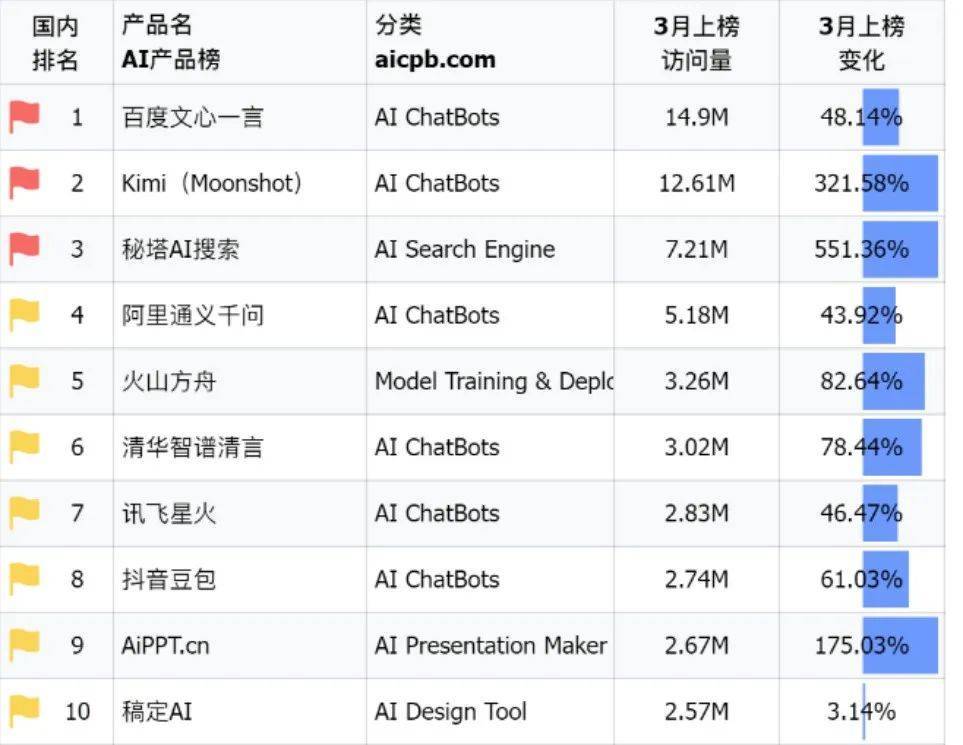
MetaAI Search, which has just entered the top three, continues to see rising popularity and traffic.
MetaAI Search was launched by MetaTech in early 2024 and is hailed by the industry as the "Chinese version of Perplexity."
MetaTech was founded in April 2018, with its core team consisting of CEO Min Kerui, technical expert Tang Yue, and COO Wang Yiwei.
Min Kerui was formerly the Chief Scientist at Cheetah Mobile and also the CTO & Co-founder of Boson Data. Tang Yue won a silver medal at the National Olympiad in Informatics (NOI 2023).
Wang Yiwei not only has 10 years of experience at a top-tier law firm but is also a famous legal content creator on Bilibili with 580,000 followers, known as "Wang Yikuai."
Leveraging his influence, Wang Yiwei leads the operations team in promoting MetaTech's products across platforms like Bilibili, Weibo, and WeChat Official Accounts.
MetaTech's self-developed large language model, MetaLLM, has passed the "Generative Large Model Filing" (second batch) and "Large Model Algorithm Filing" (second batch).
Starting from the vertical legal AI office tool sector, MetaLLM has gradually expanded into broader knowledge areas like translation, writing, and search. MetaTech also secured Pre-A round funding in May 2021, raising tens of millions of RMB.

Compared to traditional search, AI search is more efficient and concise.
Traditional search engines return multiple web pages, often cluttered with ads. Users need to click through multiple pages to analyze and extract the information they want.
In contrast, AI search retrieves content related to the user's query from its database, summarizes it using a large model, and outputs a direct answer, which is also indexable.
The rapid growth of MetaAI Search is closely tied to the new search experience it provides.
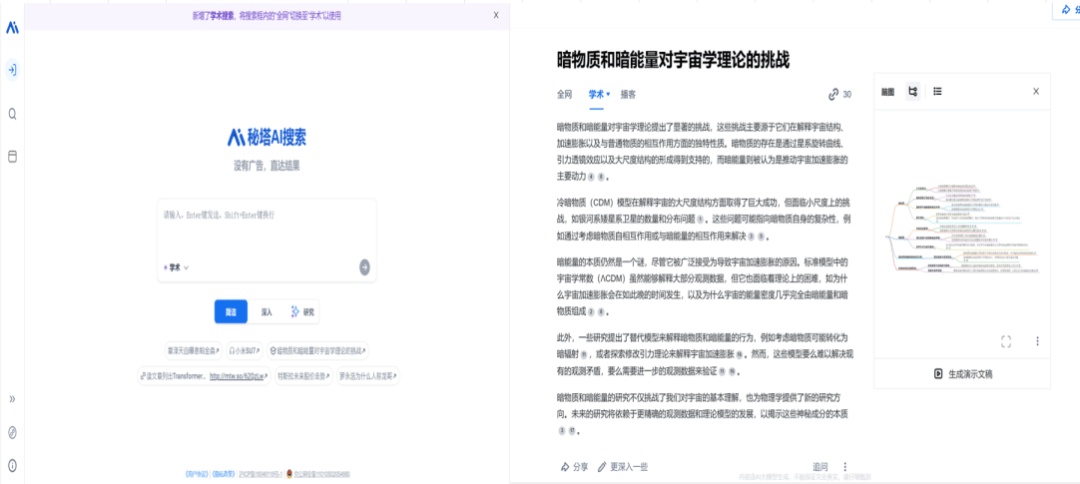
In terms of usability, MetaAI Search offers three response depth options—concise, in-depth, and research—and allows switching between "web" and "academic" modes.
The AI's answers include an outline on the right and related events, organizations, and people below, with sources clearly cited.
02 The Urgent Need for AI Search Commercialization
Globally, AI search is also making waves.
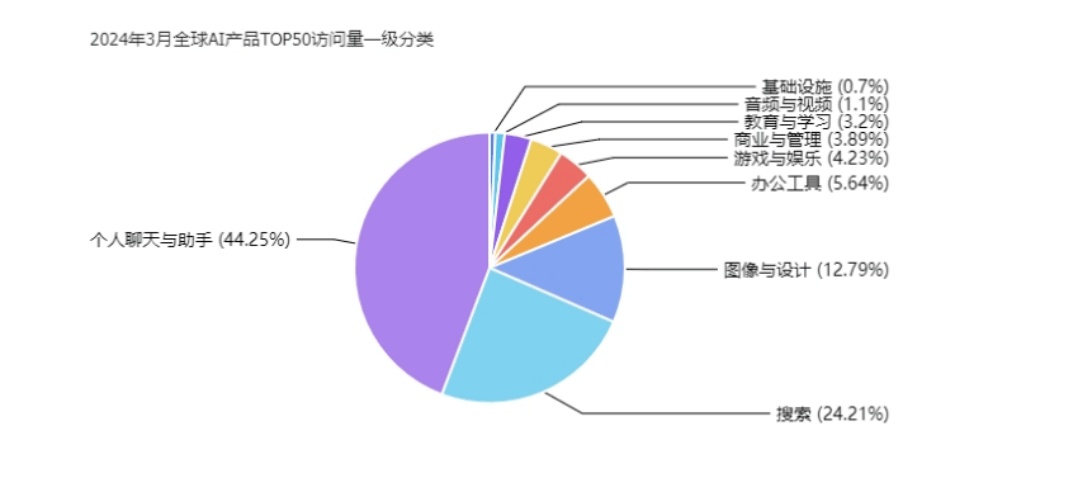
In March 2024, according to Feifan Research's global AI product traffic data, personal chat and assistant tools ranked first, accounting for 44.25% of visits. AI search followed closely at 24.21%.
The global AI search engine market includes not only startups like MetaTech but also giants like Microsoft.
However, beyond technological and user experience breakthroughs, all AI search engines face a common challenge—how to achieve commercialization.
Traditional search engines don't see immediate cost spikes with traffic growth; servers are added only after reaching a certain scale.
But every AI search query requires calling a large model API and incurs computing costs, making user volume strongly correlated with operational expenses.
MetaAI, which boasts "no ads, direct results," is no exception. Long-term free service or ignoring monetization is nearly impossible.
03 The Inevitability of Ads
As MetaAI Search's user base grows rapidly, future commercialization strategies are a critical focus.
Perplexity, a pioneer in AI search, offers a potential roadmap for MetaAI.
Founded in August 2022 by former OpenAI research scientist Aravind Srinivas and partners, Perplexity has seen steady traffic growth. In March 2024, its monthly visits hit 64.14 million—nine times MetaAI's.
Within 18 months, Perplexity reached a valuation of half a unicorn. In January 2024, it raised $73.6 million in Series B funding, valuing the company at $520 million.
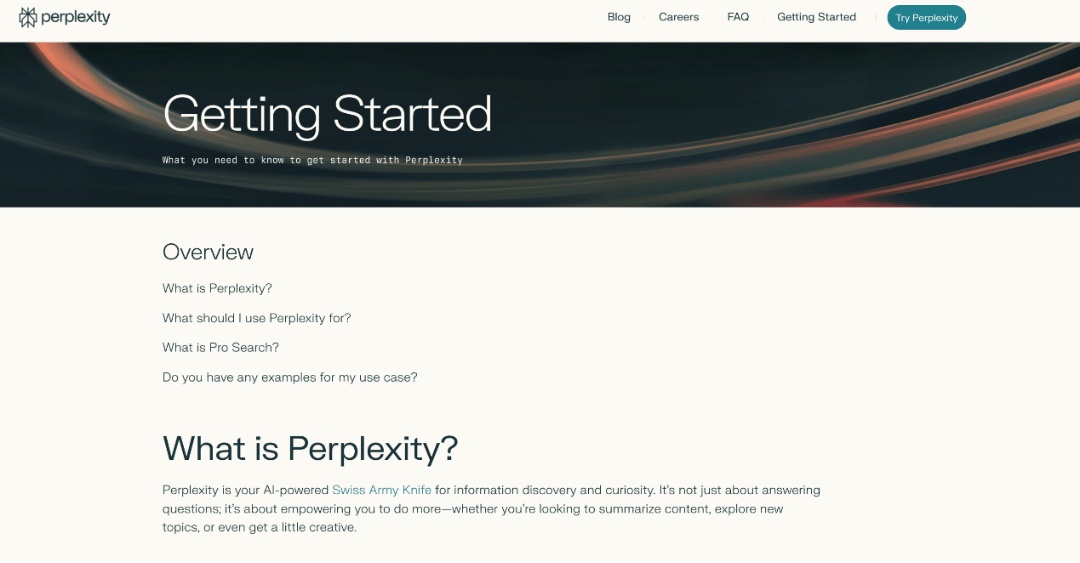
Perplexity's most notable exposure came thanks to NVIDIA CEO Jensen Huang.
When asked how often he uses ChatGPT or Bar, Huang replied, "I usually use Perplexity, almost every day."
Huang likely uses Perplexity's Pro paid version, which allows over 300 daily queries and unlimited file uploads. Priced at $20/month—the same as ChatGPT Plus—Perplexity's revenue surpassed $10 million last year, mostly from B2B subscriptions.
This revenue structure is common among AI companies, where enterprise clients dominate. Even OpenAI sees stronger 付费意愿 from businesses, driven by fears of falling behind competitors.
Despite its "no ads" slogan, Perplexity is warming to advertising. A 管理层透露,AI could enhance ad targeting efficiency, with branded "Related Questions" as initial ad slots. Future queries may display follow-up ads—a model reminiscent of Google's paid rankings.
The shift stems from cost pressures. CEO Aravind Srinivas admits Perplexity isn't profitable; $20/month can't cover API and compute costs long-term, let alone challenge search giants.
As one AI insider quipped, "No matter how 高端 AI claims to be, ads are inevitable."
Rumors suggest Apple may acquire Perplexity for over $1 billion to power its AI 手机. Beyond ads or acquisitions, can AI search forge new monetization paths? The answer lies with MetaAI and peers. (Source: AI New Intelligence)
The copyright of this article belongs to the original author/organization.
The views expressed herein are solely those of the author and do not reflect the stance of the platform. The content is intended for investment reference purposes only and shall not be considered as investment advice. Please contact us if you have any questions or suggestions regarding the content services provided by the platform.
