


The present continuous tense of large models: stepping out of the dialog box and moving towards the industrial end


After more than a year of the AI model frenzy, more people are calming down and starting to objectively rethink the value and opportunities of large models.
In the opening speech of Al Ascent 2024, Sequoia Capital mentioned that the creative and reasoning capabilities of large models have, for the first time, enabled human-like interactions, supporting a market worth tens of trillions of dollars.
However, compared to the distant dream of AGI, large model entrepreneurs must face the immediate challenges: training costs as high as tens of millions of yuan, yet few killer applications have emerged. Amid skepticism of "shooting arrows first and drawing targets later," survival remains the top priority.
On one hand, there's the opportunity to reshape industries; on the other, there are mountains to climb. What waves will the large model market make in 2024?
01 Rapid Convergence in the Number of Large Models
According to incomplete statistics, there are already over 200 large models in China, sparking the term "Hundred Models Battle." A bit of rationality reveals that "mass-producing models" is just a product of early over-enthusiasm, with many suspected of being "shells." Only a few top players will ultimately make it to the table.
CB Insights' "2023 AI Industry Status Report" shows that China's AI sector saw about 232 funding deals in 2023, down 38% year-on-year, with total funding at $2 billion, down 70%. Despite unprecedented hype, the capital market has cooled unusually.
Diving deeper into 2023's funding data, only 26 projects raised over 50 million yuan, including multiple rounds by a few companies. Large models are inherently capital-intensive, and those unable to secure funding will quietly disappear.
This is already happening. In the second year of the large model frenzy, only two factions seem to have a shot at the finals.
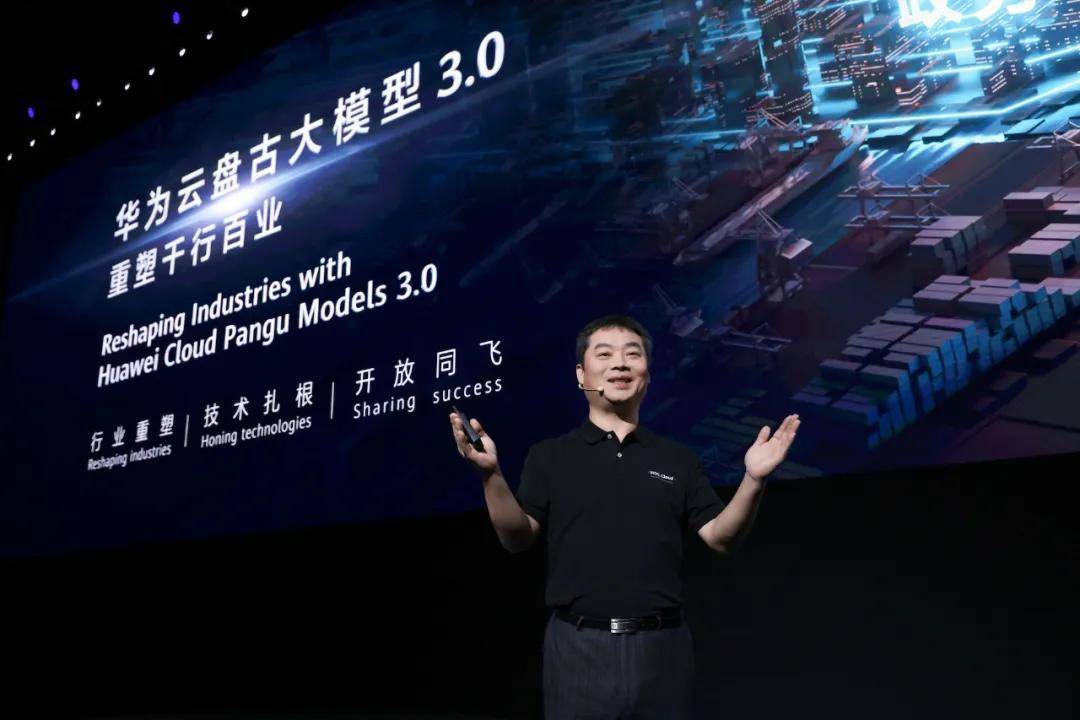
One faction is the tech giants with resources, technology, and talent, such as Baidu's ERNIE, Alibaba's Tongyi series, and Huawei Cloud's Pangu. These giants began exploring large models even before ChatGPT went viral, giving them deeper insights into their value.
For example, Huawei Cloud's Pangu 3.0, launched in July 2023, is positioned as "a series of industry-oriented large models," focusing on industrial applications. Baidu founder Robin Li has repeatedly stated, "Competing on large models is meaningless; competing on AI-native applications is valuable."
The other faction consists of star entrepreneurs favored by internet giants, currently including Zhipu AI, Moonshot AI, Baichuan AI, 01.AI, and Minimax, dubbed the "Five Tigers of Large Models" by the media.
These five "unicorns" grabbed over 40% of large model funding, but their total funding was less than 20 billion yuan, while Amazon invested $4 billion in Anthropic, and Microsoft poured over $10 billion into OpenAI. "Lack of funds" will remain the norm for domestic large model startups.
It's worth noting that the large model market is far from its final stage; the elimination round has just begun. New models may still rise, and familiar faces might not last. But one thing is certain: large models are not a chaotic free-for-all, and the next steps are predictable.
Currently, large models are widely recognized for three values—efficiency, experience, and creativity—each with fertile ground for application: optimizing human-computer interaction for experience, generating AIGC content for creativity, and boosting programming and R&D efficiency.
The only path to realizing these values is integrating models with industry needs. This means "refining large models" will be a battlefield for a few, while applying their capabilities across industries is where every developer can participate—and the ultimate direction of large models.
02 Beyond the Dialog Box: Toward Industry Applications
The spread of internet technology, in many eyes, followed a "To C before To B" path, whether in e-commerce, search, or online gaming, targeting individual consumers. Only after China's demographic 红利 peaked did "industrial internet" gain traction.
Thus, when the large model wave emerged, many tried to retrace the internet's "old path." But zooming out, internet 繁荣 was the "fruit" of network transmission technology applications. Drawing on the common analogy of computing power as electricity, computing power and data are "fuel," while large models are the "engine"—akin to steam engines or electric motors.
Take electric motors: they're everywhere in daily life yet unnoticed, as value comes from motor-driven products like ACs, washing machines, or blenders. Similarly, conversational AI is like adding a fan blade to a motor—a demo of its potential. To unlock large models' full value, we must move beyond dialog boxes and into industries.
This explains why tech giants choose "industry-oriented" approaches. Though industrial applications are young, their value is already proven.
Early experiments were in fields like research.
In 2018, Google Brain announced computer vision tech to identify protein crystals, aiding drug 研发 for various diseases.
After pre-trained models emerged, many research institutions applied them to drug discovery. For instance, Professor Liu Bing's team at Xi'an Jiaotong University, using Pangu's molecular model, discovered the first new antibiotic target in 40 years, cutting lead drug 研发 to one month at 70% lower cost. Compared to the "10 years, $1 billion" drug development rule, large models are almost "overkill."
Then came 大中型企业's exploration.
Contrary to their "conservative" image,大中型企业 with rich private data are pioneers in large model applications.
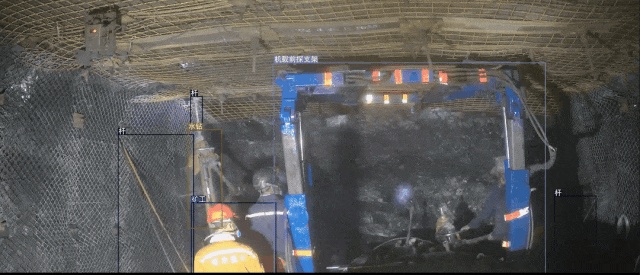
Examples abound. Ant Group launched a financial model covering wealth advising, insurance, research, and marketing; Shandong Energy built a "Pangu Mining Model" on Huawei Cloud for 40+ scenarios, pushing AI into mines; GF Securities boosted anomaly detection accuracy to 90% with Pangu... Unlike top-down 赋能, these enterprises have learned to wield tools.
Now, more industries are embracing large models.
Unlike reluctant C 端 users, once B 端 clients see productivity gains, their thirst for tech is unquenchable.
IDC's Q4 2023 AI survey showed over 90% of enterprises have adopted AI: 24% have clear budgets for models, 34% are scoping use cases, 35% are piloting, and only 7% have no plans. Every industrial revolution hinges on 新旧生产力迭代. If large models innovate, enterprises will adapt.
However, large model deployment is complex. Beyond consensus on direction, we need 高效、普适的路径。
03 Accelerating Fusion of Devices and Large Models
Smartphones, PCs, smart cars, and speakers are vital to large model 落地. If models are "super-brains," these devices are humanity's "organs" for the AI era.
Hence, "on-device AI" became a buzzword last year.
At HarmonyOS 4.0's August 2023 launch, Huawei upgraded its Celia 助手 to support natural language interactions for generating text, images, and videos; Samsung touted Galaxy S24's AI features like circle-to-search, call translation, and note-taking; even Apple, late as usual, unveiled its MM1 model... Device-model fusion is already underway.
On-device AI hints at 重构人机交互. Just as touchscreens replaced keyboards and birthed super-apps, models enable "conversational" interfaces—chat with an assistant to order food, hail rides, or shop.

Viewing device-model ties as mere "入口之争" overlooks both the post-dialog trend and device makers' ambitions.
At Huawei's 21st Analyst Summit,轮值董事长徐直军 dropped two key hints:
First, a unified developer platform for Kunpeng, Ascend, and HarmonyOS 生态, giving devs one entry point to move freely across ecosystems.
Second, a "Celia" super-agent—using Pangu to make Celia a super-assistant and HarmonyOS Next a natively intelligent OS with unified AI capabilities.
This unified platform and native intelligence bridge industry and consumer ends,注解深度融合。
For example, devs could use Pangu to match user intent,精准分发 services in e-commerce, gov, finance, or education. Or streamline model 工程化—simplifying deployment so services needing separate apps might just 唤醒 Celia.
HDC2024, set for June 21-23 in Dongguan, will debut Pangu 5.0 alongside HarmonyOS Next.徐直军's vision isn't just storytelling—it's 2024's next act.
Here's a bold prediction: post-HDC2024, more device makers will pivot from "on-device models" to 生态打通 and dev 赋能, shifting focus from "入口之争" to making models 实用—from "fun" to "functional."
Unlike industry 落地's subtlety, billions of devices shape public perception. Device-model fusion isn't just 厂商战争—it affects every dev's future. Industry apps and user 教育, once parallel, will intersect in 2024.
04 Conclusion
Every industrial revolution's key wasn't invention but adoption—spreading tech across industries.
Large models are no different. Their value lies not in 参数规模 or "godlike" abilities, but in widespread use creating 场景化 value. 2024 may mark the 拐点—from "model refining" to "model using."
The copyright of this article belongs to the original author/organization.
The views expressed herein are solely those of the author and do not reflect the stance of the platform. The content is intended for investment reference purposes only and shall not be considered as investment advice. Please contact us if you have any questions or suggestions regarding the content services provided by the platform.
