


 Likes Received
 Posts
PostsLi Auto's "problem", it's their turn now

When sales volume becomes the core consideration for automakers, all actions will be adjusted around it.
As the leader among new energy vehicle manufacturers, Li Auto achieved unparalleled results in 2023, but this advantage was not absolute. Therefore, entering 2024, the pressure of sales volume continues to trouble Li Auto, which ultimately compromised for sales.
On April 22, Li Auto announced a comprehensive price cut—the 2024 Li L9 and some models of L8/L7 will be reduced by 18,000 to 20,000 yuan, while the recently launched Li MEGA also saw a price cut of 30,000 yuan, with the current price dropping to 529,800 yuan.
This is the first time Li Auto has publicly announced a full-line price reduction in recent years, highlighting the immense sales pressure it faces.
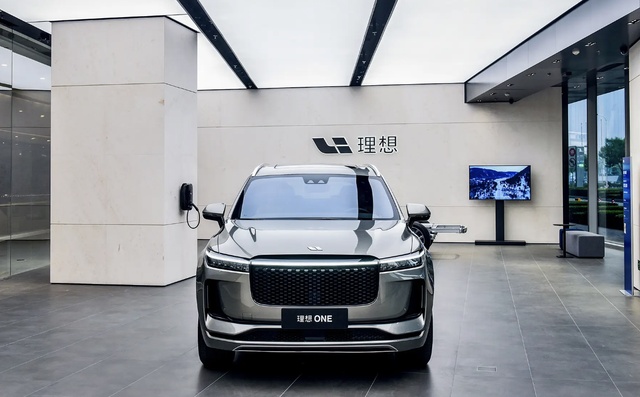
On the day of the price cut, Li Auto's U.S. stock plummeted by 5.57%. According to statistics, in less than two months, Li Auto's stock price has nearly halved.
In reality, as penetration rates increase, the challenges automakers face have become more complex. While sales volume remains a key metric, the issue of overcapacity has also emerged, with Tesla, the leader in new energy vehicles, being the most obvious example.
Kan Jian Finance found that Li Auto's current pressure may not stem from declining sales but rather the overcapacity that follows. Notably, at the beginning of this year, Li Auto set a sales target of 800,000 units and has been expanding production capacity to meet demand.
According to reports from China Entrepreneur, at Li Auto's manufacturing base in Wujin District, Changzhou, Jiangsu Province, a car is produced every 40 seconds, with 90 new cars rolling off the production line hourly and a daily output of 1,800 units. Calculated at 1,800 units per day without breaks, the annual production capacity of this base could reach 657,000 units under full capacity.
Gradual Overcapacity?
In 2023, Li Auto surged ahead, with annual sales exceeding 370,000 units, making it the leader among new energy vehicle manufacturers.
Supporting this rapid growth was the continuous expansion of production capacity.
In an interview with China Entrepreneur, Meng Qingpeng, Vice President of Supply Chain at Li Auto, stated: "Our pace is a vertical climb, soaring straight up; launch means immediate market entry, market entry means rapid scaling, and scaling means high quality—it’s a vertical charge upward." This reflects his confidence in Li Auto's production capacity.
So, what is Li Auto's actual production capacity?
Although not explicitly disclosed in financial reports, media reports indicate that the Changzhou production base alone delivered 370,000 units in 2023. Moreover, at the beginning of this year, Li Auto set a sales target of 800,000 units. Extrapolating from this, if all deliveries are realized, Li Auto's production capacity in 2024 would exceed 800,000 units.
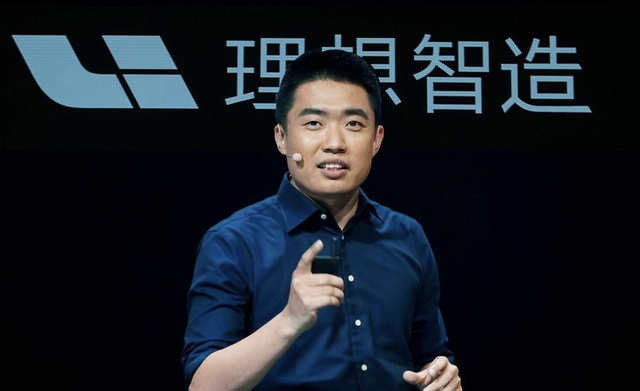
From the 2023 financial data, we can also infer that Li Auto's production capacity is indeed expanding. The financial reports offer glimpses of this.
According to the reports, as of Q4 2023, Li Auto's property, plant, and equipment totaled 15.75 billion yuan. In 2021, this figure was only 4.498 billion yuan, meaning it more than tripled in just two years. Additionally, in 2023, Li Auto's other non-current assets were 2.802 billion yuan, and other non-current asset items were 5.939 billion yuan, compared to 321.2 million yuan and 1.277 billion yuan in 2020, respectively.
Admittedly, if Li Auto maximizes its production capacity in 2024 and achieves full delivery, it will undoubtedly reach new heights. However, given the current delivery performance and the setback with the MEGA, achieving this year's delivery target will be extremely challenging.
Announcements show that in March, Li Auto delivered 28,984 new vehicles, a 39.2% year-on-year increase. In Q1, Li Auto delivered 80,400 units, up 52.9% year-on-year. Despite the significant growth, extrapolating from Q1's 80,000 units, the annual delivery volume would only reach 320,000 units. Based on the earlier calculation of the Changzhou base's annual capacity of 657,000 units under full production, the utilization rate of the Changzhou base is less than 50%.
On the surface, Li Auto's greatest pressure comes from sales, but in reality, it stems from production capacity. After all, production lines incur costs, and significant overcapacity would lead to substantial annual depreciation losses. Under the pressure of overcapacity, Li Auto's variables will increase.
Li Auto's "Dilemma"
How to boost sales is a problem Li Auto must now consider.
After all, only increased sales can alleviate production-side pressure.
Previously, founder Li Xiang repeatedly stated in public that he would not cut prices. He claimed that during detailed long-term planning and pricing, each model's price was set at the most competitive level within its segment, and any upward or downward adjustment would cause issues.
But now, Li Auto has finally yielded to market pressures.
Before this price cut, Li Auto also launched the L6 model with a starting price of 249,800 yuan, aiming to cover the mid-range market, but the results were underwhelming.
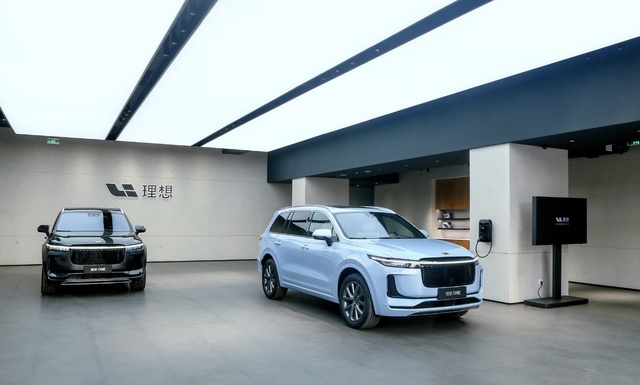
According to official data, the Li L6 received over 10,000 orders within 72 hours of launch. While this figure is decent, it pales in comparison to its competitor, the Aito M7, which garnered over 7,000 orders in a single day and accumulated 60,000 orders in a month. The Li L6 clearly falls short.
Perhaps because the Li L6 alone couldn't save Li Auto, the company opted for a full-line price cut. However, the impact of this price reduction is likely limited.
Currently, Li Auto's biggest issue isn't pricing but the overcrowded 200,000 to 500,000 yuan price segment, where market space is shrinking. Every automaker is vying for the remaining customer base. For example, Leapmotor, which has performed well this year, mimics Li Auto. Its C10, launched in Q3 last year, is dubbed the "half-price Li L7" due to its similar appearance and interior but at half the price. Other traditional automakers like BYD's Denza, Great Wall Motors' Wey, and Chery's Exeed are also targeting Li Auto. Even with significant price cuts, Li Auto may struggle to withstand their price wars.
For Li Auto, the sales boost from price cuts is ultimately short-lived. The real challenge lies in maintaining its competitive edge in a fiercely contested market. As the media pointed out, as competitors catch up in product definition, Li Auto has yet to introduce new technologies or products that can form a competitive barrier.
The copyright of this article belongs to the original author/organization.
The views expressed herein are solely those of the author and do not reflect the stance of the platform. The content is intended for investment reference purposes only and shall not be considered as investment advice. Please contact us if you have any questions or suggestions regarding the content services provided by the platform.
