



Sa Sa International, which has seen a strong recovery in performance, faces challenges from changing consumption patterns.

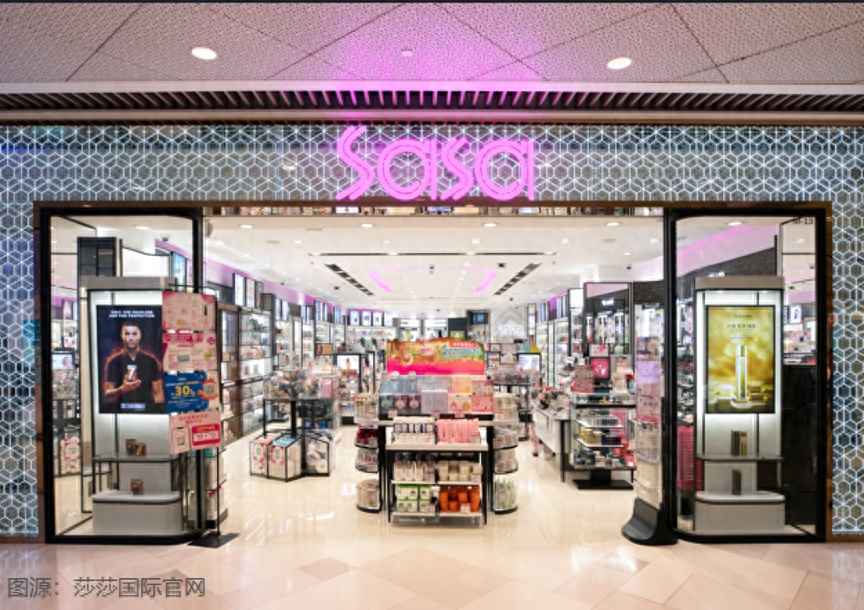
After the downturn during the pandemic, the leading company in Hong Kong's local retail market, $SA SA INT'L(00178.HK) , recently disclosed its strong recovery performance.
Although the stock price was briefly active around the earnings disclosure, market views on its prospects remain uncertain. From June 19 to 21, Sa Sa International rose for three consecutive days, with a cumulative increase of 16.7%, which was particularly eye-catching during the company's stock price bottoming period. However, on June 24, Sa Sa International's stock price lost its upward momentum and turned downward, falling by 3.57%.
Although the fiscal year 2024 performance was impressive, it does not mean Sa Sa International can rest easy in the coming days.
Post-pandemic recovery, fiscal year 2024 profit surges 2.76 times
Sa Sa International's fiscal year 2024 period was from April 1, 2023, to March 31, 2024. Compared to fiscal year 2023, which was mostly during the pandemic, fiscal year 2024 was a full fiscal year after the pandemic restrictions were lifted.
Therefore, fiscal year 2024 fully reflects Sa Sa International's post-pandemic operational performance, showing significant improvement compared to fiscal year 2023's "results," which was an expected outcome for the market.
In fiscal year 2024, Sa Sa International's revenue increased by 24.8% year-on-year to HKD 4.367 billion; gross profit margin rose by 0.8 percentage points to 40.8%; annual profit was HKD 219 million, a significant year-on-year increase of 275.78%.
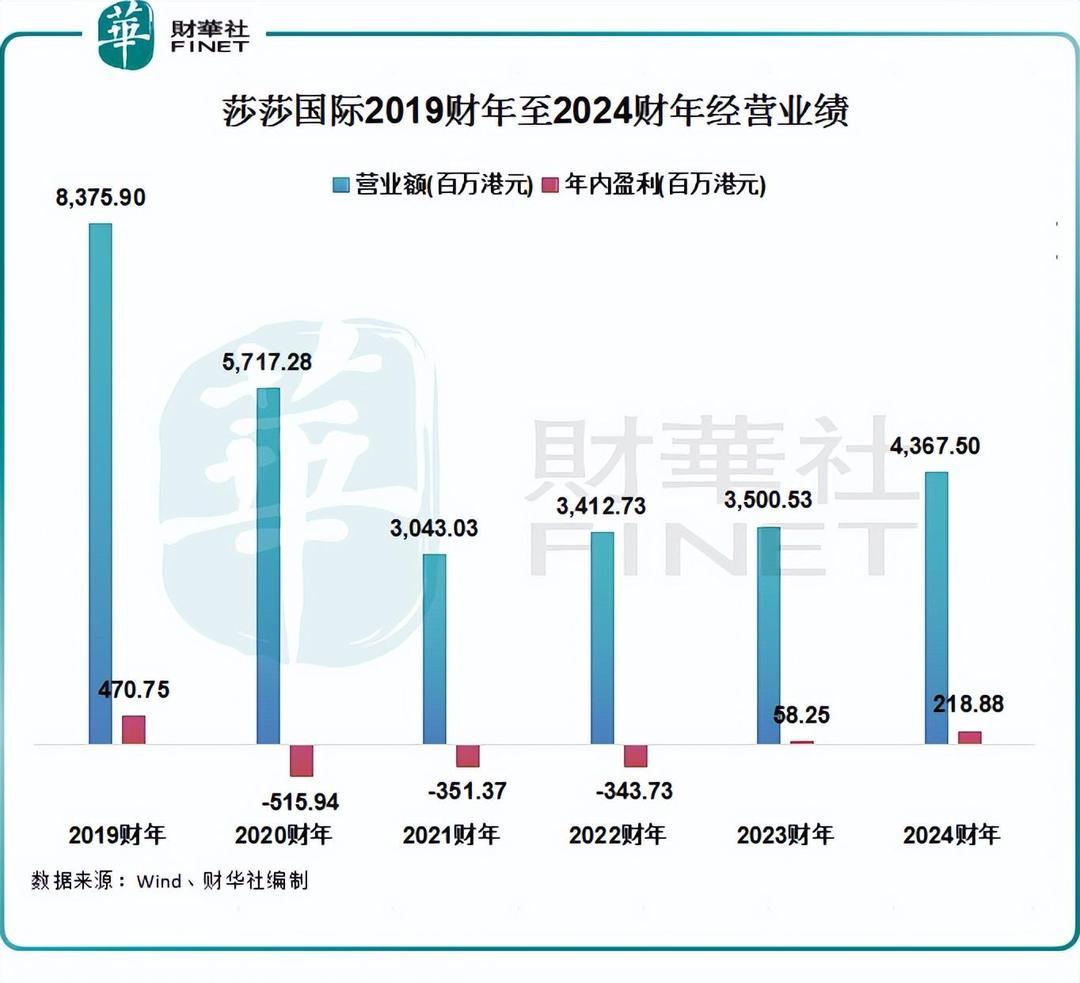
Comparing operational performance since the pandemic outbreak, Sa Sa International's fiscal year 2024 reached the best levels in terms of both revenue and profit, though there is still a significant gap compared to pre-pandemic fiscal year 2019.
Benefiting from the resumption of travel between Hong Kong, Macau, and the mainland, mainland tourists returned to the Hong Kong and Macau markets, and Sa Sa International's offline stores, like a long drought meeting sweet rain, saw a strong recovery in sales.
As Sa Sa International's largest market, the Hong Kong and Macau market saw revenue increase significantly by 31.4% year-on-year to HKD 3.41 billion, with offline sales rising by 35.1%. Driven by revenue growth, improved operational efficiency, and cost control measures, Sa Sa International's Hong Kong and Macau market profit increased by 110.7% year-on-year to HKD 234 million.
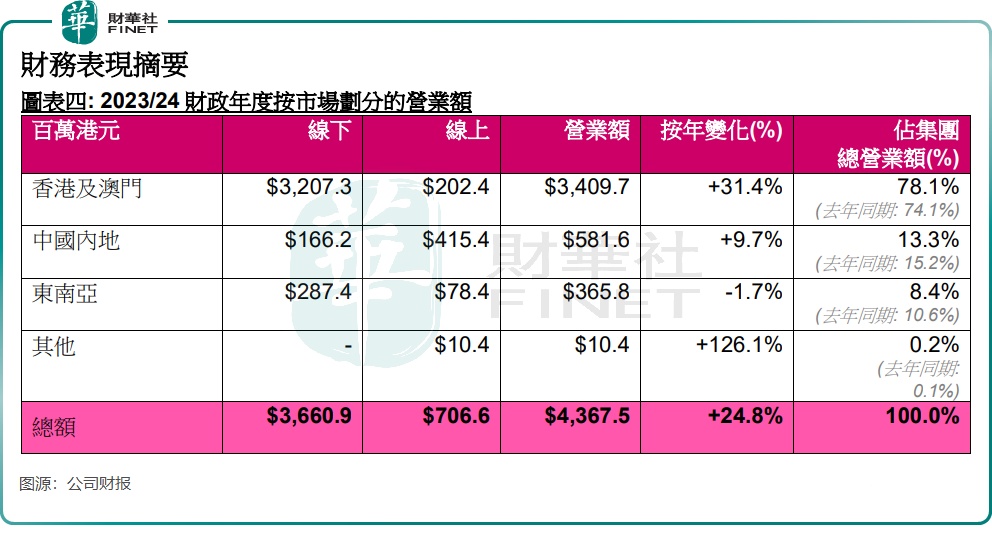
Sa Sa International has always struggled to adapt in the mainland China market. In the offline market, with the rise of local brands, Sa Sa International faces competitive pressure from mainland shopping malls and beauty collection stores. At the same time, the challenges of mainland economic recovery during the year led to Sa Sa International's mainland market sales performance lagging behind Hong Kong and Macau, with revenue rising only slightly by 9.7% to HKD 582 million, of which online channels contributed 71.4% of the region's total sales.
In Southeast Asia, Sa Sa International's sales in the Southeast Asian market fell by 1.7% year-on-year to HKD 366 million, as the Southeast Asian market faced factors such as inflation and economic slowdown, which affected the company's operational performance.
Earn in Hong Kong, spend in the mainland! Challenges to maintain growth
In the blink of an eye, it has been four and a half years since the pandemic outbreak. But in these short few years, Hong Kong's retail industry can be described as "the same scene but different people." Here, "different people" refers to the shift in consumer spending patterns.
Let’s first explore the spending patterns of tourists visiting Hong Kong.
Currently, mainland tourists' purposes and spending patterns when visiting Hong Kong have shifted from primarily shopping to focusing more on in-depth and unique experiences. Additionally, due to the high cost of Hong Kong hotel rentals and the convenience of same-day round trips to cities in the Greater Bay Area, they are less likely to stay overnight. With the weakening of the RMB against the USD, mainland Chinese tourists' overseas spending power has also declined.
Against this backdrop, the number of mainland tourists visiting Hong Kong returning to pre-pandemic levels seems increasingly unlikely.
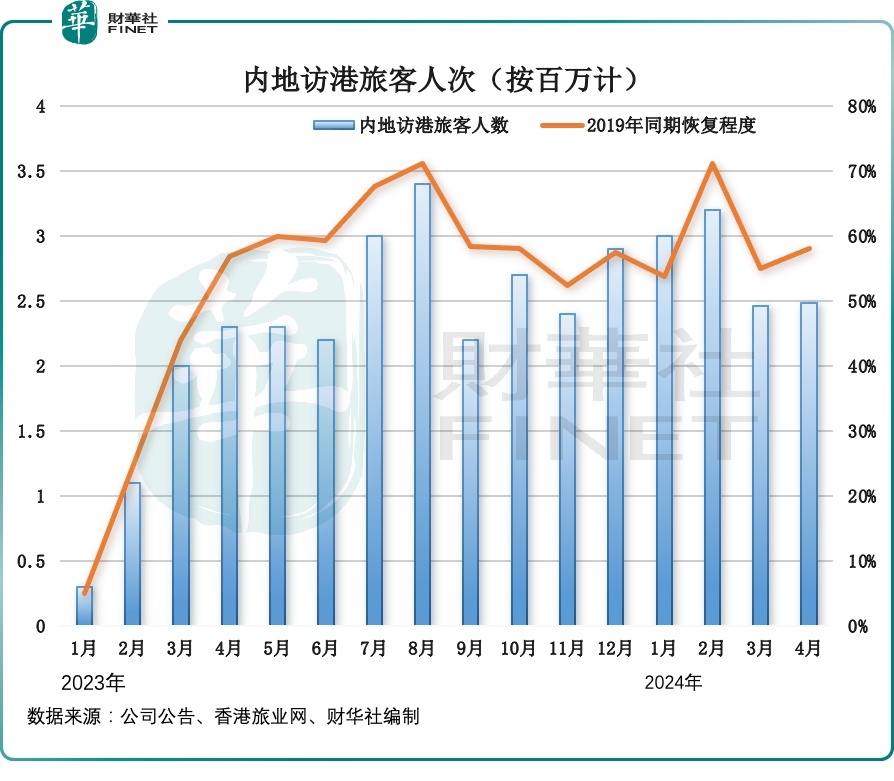
Data shows that in April this year, the number of mainland visitors to Hong Kong was 2.4826 million, only 58% of the same period in 2019. Since the resumption of travel between Hong Kong, Macau, and the mainland, only in a few months has the number of mainland visitors recovered to more than 60% of the same period in 2019, reflecting that Hong Kong's appeal to mainland tourists is far less than before the pandemic.
On the other hand, Hong Kong residents' consumption destinations are no longer limited to Hong Kong. "Hong Kong residents spending in the mainland" has recently become a hot topic on social media, with some netizens jokingly calling this new trend "earn in Hong Kong, spend in the mainland."
The number of Hong Kong residents traveling and spending in the mainland has surged. Data shows that the number of Hong Kong residents traveling to the mainland increased by 157.5% from 3.6 million in February 2023 to 9.3 million during the 2024 Easter holiday. During the four-day Lunar New Year holiday in February 2024, while 750,000 tourists visited Hong Kong, 1.16 million local residents traveled to the mainland.
The number of mainland tourists shopping in Hong Kong is far fewer than before, while more Hong Kong residents are traveling outside Hong Kong for tourism and consumption, which has dealt a huge blow to Hong Kong's local tourism industry.
This year, Hong Kong's retail market has declined rather than grown. Data from the Hong Kong Census and Statistics Department shows that the provisional estimate of the total retail sales value in April this year was HKD 29.6 billion, a significant year-on-year decline of 14.7%, a very poor performance. Compared with the same period in 2023, the provisional estimate of the total retail sales value for the first four months of 2024 fell by 4.7%.
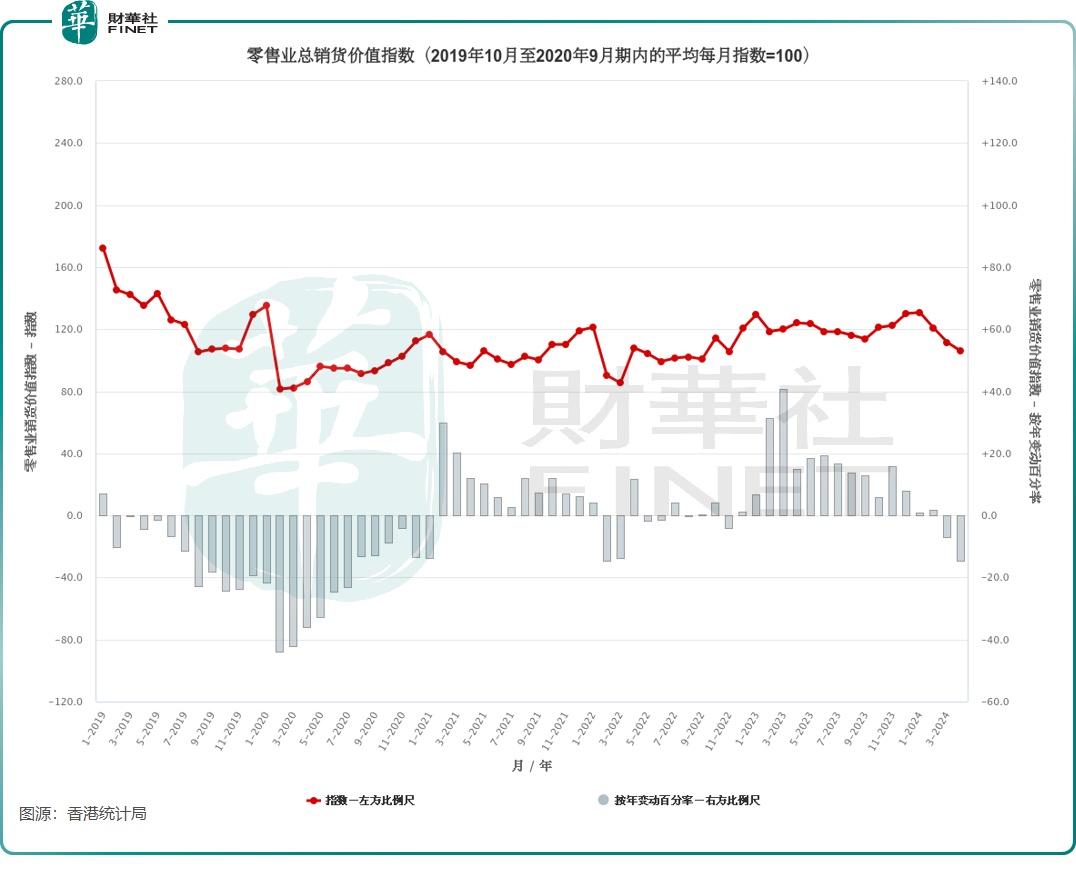
Recently, the Hong Kong Retail Management Association pointed out that the Hong Kong retail market is in a severe condition, with a double-digit decline expected in May. The association's survey also showed that over 90% of retail merchants reported a decline in sales in May, with some sectors seeing declines in the mid-double digits.
Therefore, given the ongoing pressure on Hong Kong's retail market, Sa Sa International will undoubtedly face a major test of growth in fiscal year 2025.
Citibank's latest research report takes a cautious view of Sa Sa International's prospects, lowering its net profit forecasts for fiscal years 2025 and 2026 by 14% and 13%, respectively, and reducing the target stock price from HKD 1.74 to HKD 1.49. The bank believes that due to the weak macroeconomic environment and changes in consumer behavior, Sa Sa International's sales and profit recovery may be slower than expected.
Author: Yao Yuan
The copyright of this article belongs to the original author/organization.
The views expressed herein are solely those of the author and do not reflect the stance of the platform. The content is intended for investment reference purposes only and shall not be considered as investment advice. Please contact us if you have any questions or suggestions regarding the content services provided by the platform.
