



Hong Kong Consumer Council hinted that Nongfu Spring may cause cancer, Zhong Shanshan responded in WeChat Moments: The opponent is sinister and ruthless.

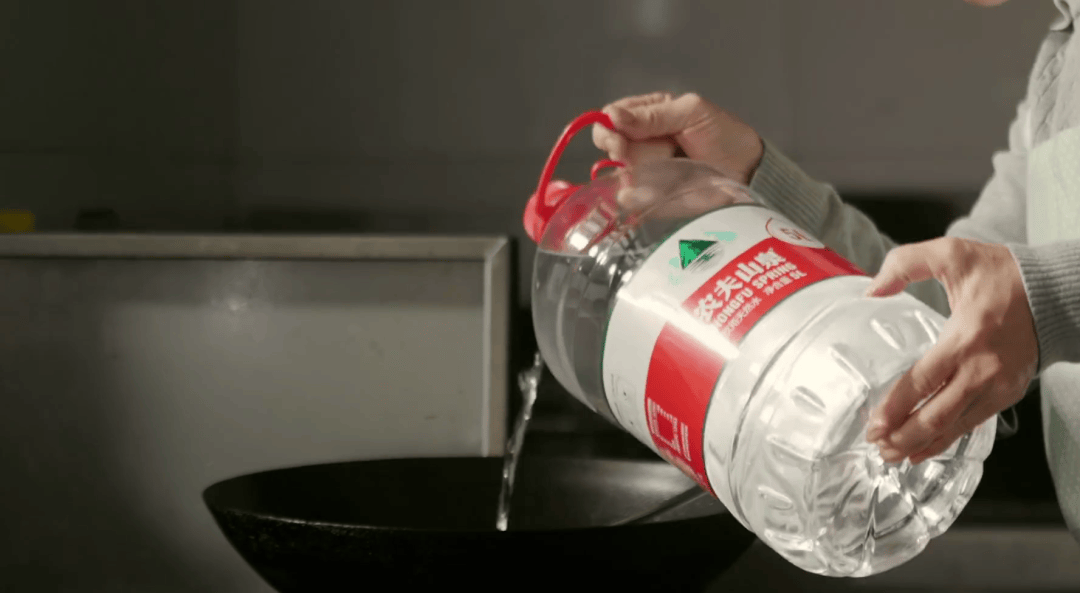
Introduction: Nongfu Spring believes that during the evaluation, the Hong Kong Consumer Council placed it in the "natural mineral water" category and compared it with other products, mistakenly applying the EU "natural mineral water" standards.
01 Another Controversy
During the peak of summer, when the beverage market is booming, $NONGFU SPRING(09633.HK) faced another public relations crisis.
On July 15, the Hong Kong Consumer Council (hereinafter referred to as "HKCC") disclosed that after testing 30 common bottled water samples purchased locally, Nongfu Spring's bottled water sample from mainland China was found to contain 3 micrograms of bromate per liter.
This figure reaches the EU's maximum limit for bromate in ozone-treated natural mineral water and spring water.
The incident quickly sparked widespread discussion. Many consumers raised concerns about the safety of Nongfu Spring's water quality.
As a result, Nongfu Spring's stock price fell by 4.56% at the close that day. The next day, July 16, Nongfu Spring's stock price opened lower again, dropping more than 3% at one point and closing down 2.84%.
On the same day, Nongfu Spring quickly responded by sending a lawyer's letter to the HKCC, demanding a formal apology.
Nongfu Spring stated that the HKCC's article was based on misunderstandings and unprofessional analysis, leading to an unfair evaluation of Nongfu Spring's bromate levels, which severely damaged the company's reputation.
Nongfu Spring formally requested the HKCC to issue a written clarification, apologize, and eliminate all negative impacts caused to the company.
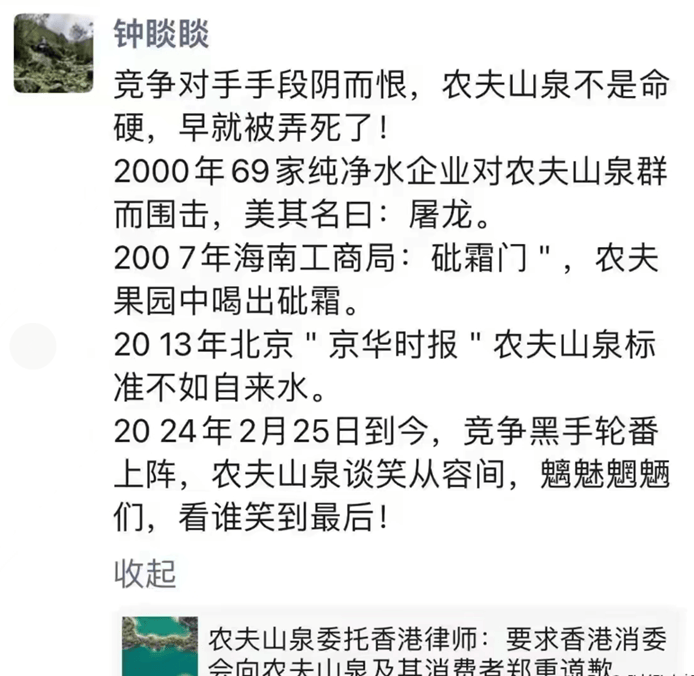
A screenshot circulating online shows Zhong Shanshan, founder, chairman, and general manager of Nongfu Spring, allegedly posting on his WeChat Moments: "Competitors' tactics are vicious and ruthless. If Nongfu Spring weren't resilient, we would have been destroyed long ago!" He referenced past incidents like "Dragon Slayer" and "Arsenic Gate," attributing the challenges since February 25 this year to "a series of competitive sabotage."
02 The Standards Debate
Bromate is rarely found in natural water.
Bromate is a chemical byproduct of industrial processes. Most bottled water production lines use ozone for sterilization, which can produce bromate compounds like sodium bromate and potassium bromate.
The HKCC noted that ingesting large amounts of bromate can cause nausea, abdominal pain, vomiting, and diarrhea, and in severe cases, may affect the kidneys and nervous system.
The International Agency for Research on Cancer (IARC) considers bromate carcinogenic to lab animals, with studies showing genotoxicity at high doses. Thus, bromate is classified internationally as a Group 2B potential carcinogen.
However, despite its side effects, the World Health Organization (WHO) advises against abandoning ozone disinfection due to bromate. The key is to keep bromate levels below safety standards to ensure drinking water safety.
The EU's drinking water safety standard sets the bromate limit at no more than 10 micrograms per liter.
Similarly, China, Hong Kong, the U.S., Japan, and the WHO all set the bromate safety limit at 10 micrograms per liter. Only the EU Commission Directive specifies that "natural mineral water" should have bromate levels ≤3 micrograms per liter.
The HKCC report also noted that Nongfu Spring's 3 micrograms per liter bromate level meets the EU's limit for ozone-treated natural mineral water but is below the 10 micrograms per liter standard set by the U.S., Japan, the UK, and the WHO.
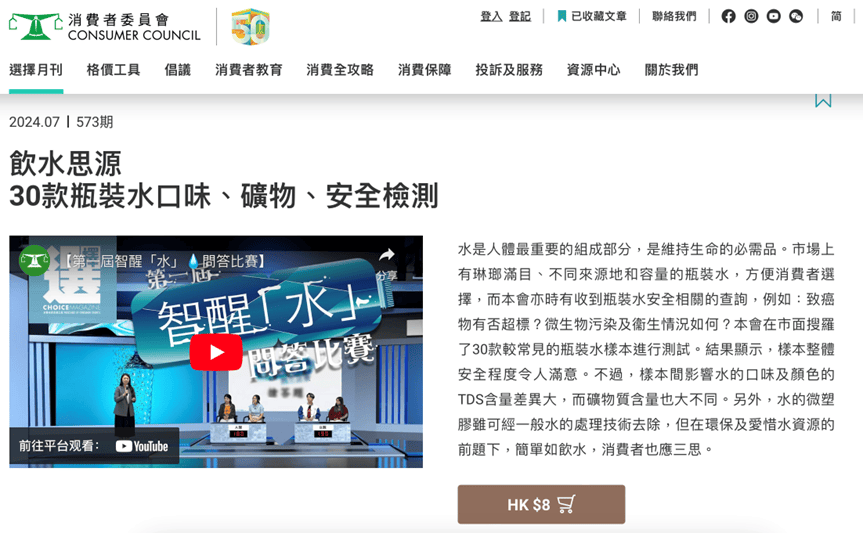
Nongfu Spring responded that its product is "drinking natural water." The HKCC report explicitly labeled it as "natural water (deep lake water)."
Currently, bottled water products on the market mainly fall into three categories: natural mineral water, natural water, and purified water.
Official information shows Nongfu Spring is natural water sourced from locations like Qiandao Lake in Zhejiang, Danjiangkou in Hubei, and Wanlv Lake in Guangdong.
This description implies Nongfu Spring differs from "natural mineral water" sourced underground and cannot be labeled as mineral water.
In its lawyer's letter, Nongfu Spring argued that even if EU standards were applied, the company's product should be evaluated under the EU "drinking water" safety standard, not the "natural mineral water" standard. Nongfu Spring's natural water product at 3 micrograms per liter fully complies with drinking water safety standards worldwide, making it a high-quality, qualified product.
Nongfu Spring believes the HKCC wrongly placed it in the "natural mineral water" category for comparison, essentially misapplying the EU "natural mineral water" standard.
Nongfu Spring also emphasized that standards only have "pass" or "fail" outcomes. Using terms like "upper limit" or "lower limit" is a deliberate misrepresentation intended to mislead.
Facing public skepticism and media pressure, the HKCC stood its ground.
It insisted that its testing and standards were based on protecting consumer health and aligned with international safety norms. The disclosure aimed to inform consumers about water quality issues, not target any specific brand.
On the afternoon of July 16, an HKCC representative stated: "The HKCC has confirmed receipt of a lawyer's letter from Nongfu Spring, one of the tested samples. We are currently reviewing and following up. Further updates will be released in due course."
03 Strategic Moves
The bromate controversy emerged during the summer sales peak.
Recently, Nongfu Spring had been busy rolling out its new purified water product, engaging in a fierce price war with rivals C'estbon and Wahaha.
In late April, Nongfu Spring launched green-bottled purified water, marking its return to the purified water market after 24 years.
Previously, Nongfu Spring had repeatedly claimed it would no longer produce purified water.
The bottled water industry is now caught in intense competition. This summer, bulk and large-pack bottled water prices have dropped below 1 yuan per bottle.
Nongfu Spring's new green-bottled purified water is priced as low as 0.74 yuan per bottle in some channels, directly challenging core products from Wahaha and C'estbon.
A media visit to a Yonghui supermarket in Beijing found Nongfu Spring's 12-bottle green-pack purified water priced at 9.9 yuan, or less than 0.83 yuan per bottle.
In comparison, C'estbon's 12-bottle pack costs 10 yuan, while Wahaha's is priced at 14.9 yuan.
At another supermarket, Nongfu Spring's 12-bottle pack was on sale for 8.9 yuan, or 0.74 yuan per bottle, prominently displayed in two key locations.
Online photos even showed a member price of 0.6 yuan per bottle.
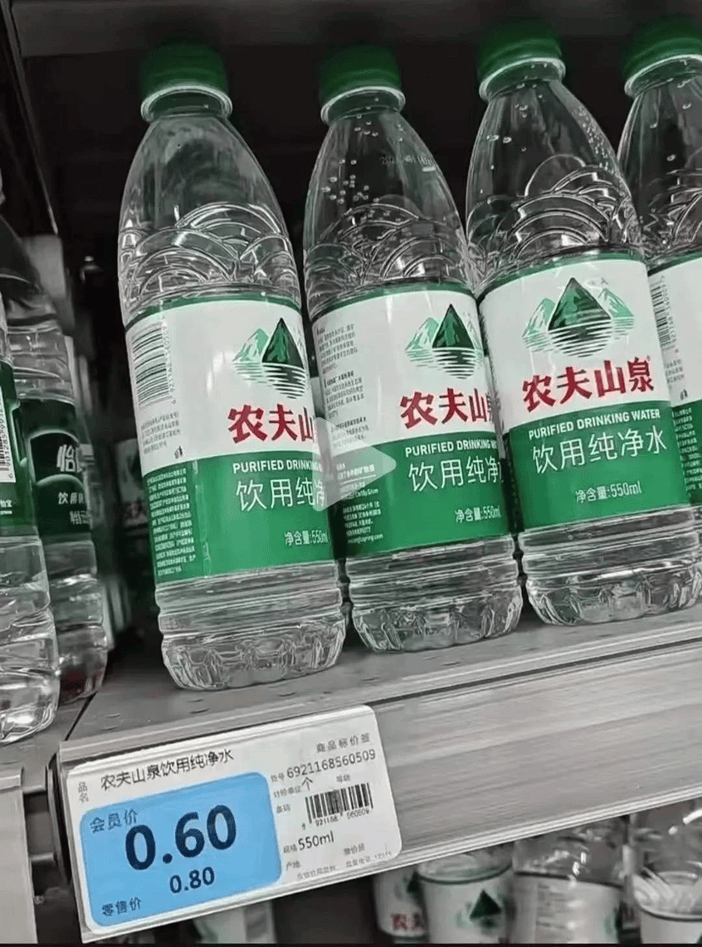
Nongfu Spring's aggressive pricing strategy has left competitors struggling to respond.
The bromate incident, a major food safety concern, may or may not be linked to this summer's cutthroat competition. However, Nongfu Spring's firm stance mirrors its dominant market presence.
With summer not yet half over, the industry awaits the next moves from competing brands.
The copyright of this article belongs to the original author/organization.
The views expressed herein are solely those of the author and do not reflect the stance of the platform. The content is intended for investment reference purposes only and shall not be considered as investment advice. Please contact us if you have any questions or suggestions regarding the content services provided by the platform.
