



Tesla's 24Q2 earnings analysis: Still in the 'window period' before the landing of new businesses

To the regret of many investors, the existing concerns in Tesla's (TSLA.US) business continued in the Q2 2024 earnings report.
On July 23, Eastern Time, Tesla released its Q2 2024 financial data as of June 30. Tesla's Q2 revenue reached $25.5 billion, a 2.3% increase year-over-year (YoY); operating profit was $1.605 billion, down 33% YoY. Net income attributable to Tesla's common shareholders was $1.478 billion, a sharp decline of 45% YoY.
In terms of stock price, on July 24, Eastern Time, Tesla's U.S. stock closed at $215.99, plummeting 12.33% from the previous trading day, marking the largest single-day drop in 2024. While this was partly due to the overall weakness in U.S. tech stocks, the disappointing earnings performance likely played a significant role.
From the earnings call, aside from the underwhelming results, the delay in the company's Robotaxi plans also disappointed investors. Although the hype around humanoid robots still keeps investors hopeful, Tesla must endure a period of declining profits before new businesses can generate revenue.
01
Automotive Gross Margin Continues to Face Pressure, While Energy Storage Shines but Fails to Offset Profit Decline
As mentioned earlier, Tesla's Q2 performance showed "revenue recovery but profit decline." Q2 2024 revenue grew both sequentially and YoY. However, breaking it down by segment, the core automotive revenue still declined YoY in Q2.
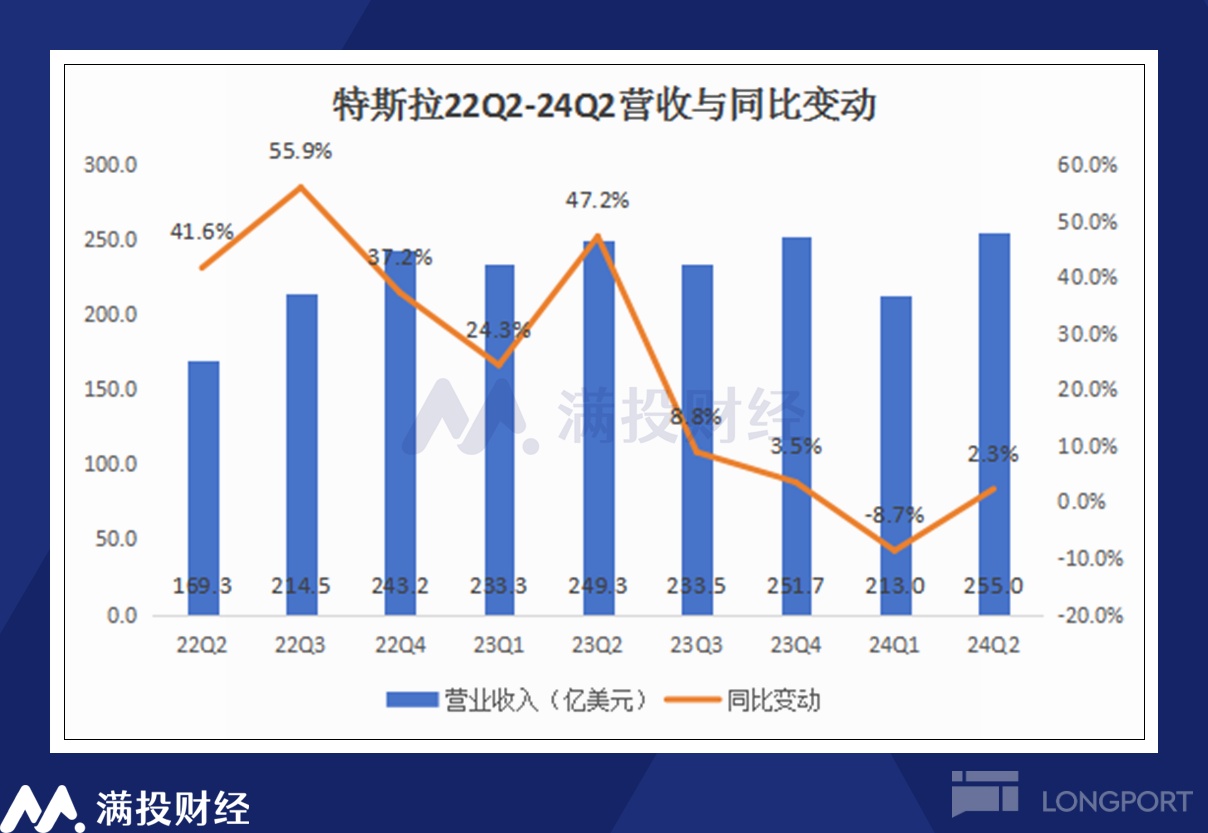
In Q2, Tesla's automotive revenue was $19.878 billion, up 14.4% quarter-over-quarter (QoQ) but down 7% YoY. In terms of production, Tesla manufactured and delivered 411,000 and 444,000 vehicles in Q2, respectively, exceeding market expectations but still down 14% and 5% YoY. Likely due to demand concerns, production of the flagship Model 3/Y in Q2 2024 was 386,576 units, down 16% YoY and 6.3% QoQ.
More concerning than the production and delivery decline is the weakening gross margin. The automotive gross margin in Q2 2024 was 18.5%, flat QoQ, but excluding regulatory credits, it was only 14.6%, lower than Q1's 16.4%. Focusing solely on automotive sales, the gross margin was just 13.9% in Q2, down from 15.6% in Q1 and significantly lower than the 17.5% in the same period last year. Tesla, once known for "$10,000 profit per vehicle" and significantly higher margins than other EV makers, now seems to have lost that edge.
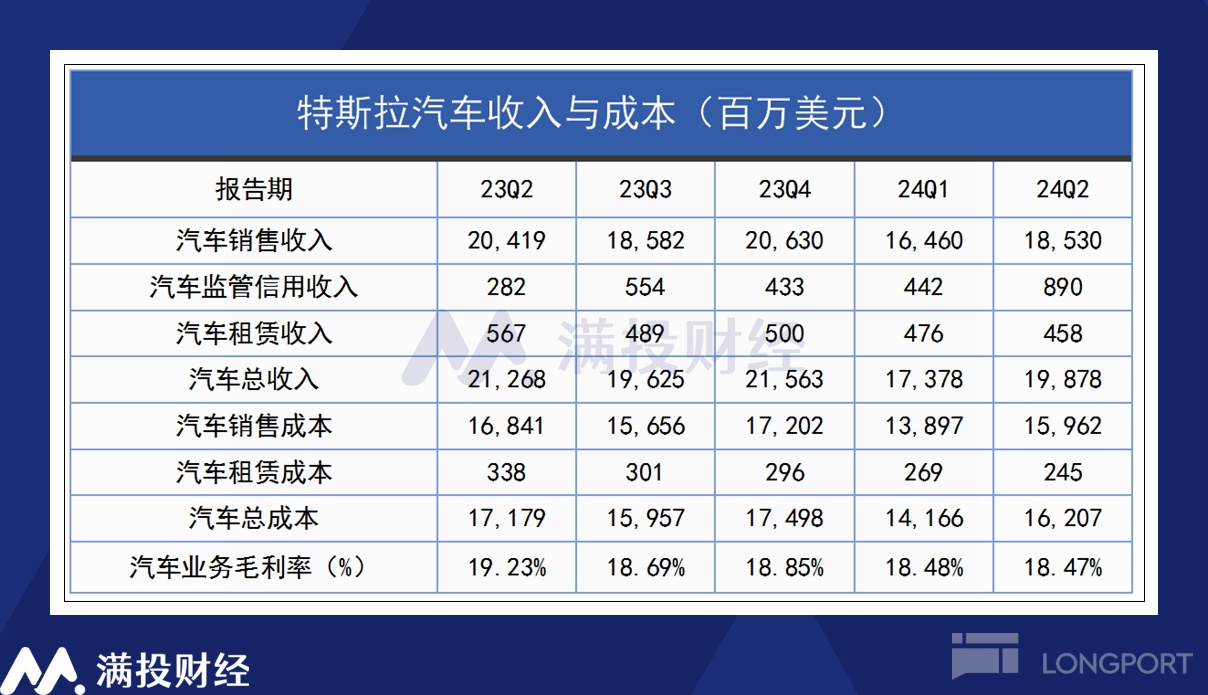
The reason for the declining automotive gross margin is no secret to Chinese observers. China's EV market has been embroiled in a fierce price war in 2024, and Tesla's sales in China play a crucial role. While Tesla has been raising prices in the Americas, it has largely participated in the price war in China, making the margin decline inevitable.
However, outside the automotive business, Tesla's energy storage revenue showed impressive growth in Q2, doubling YoY. Although it still accounts for a small portion of total revenue, it represents a promising growth avenue. Thanks to the strong performance in energy storage, Tesla's overall gross margin slightly improved from 17.4% in Q1 2024 to 18%.
In terms of expenses, Tesla cited increased operating costs driven by AI projects and restructuring charges as factors dragging down profits. However, the Q2 financials show no significant fluctuation in expense ratios compared to Q1 2024. Thus, the change in net profit margin is primarily due to revenue-side pressures.
According to the earnings report, Tesla's adjusted EPS for Q2 was $0.52, below the market expectation of $0.60. The operating margin also dropped from 7.6% YoY to 6.3%, though it improved from Q1's 5.5%.
02
Robotaxi Launch Delayed Pending Regulatory Approval—How Will Tesla Address H2 Pressure?
During Tesla's mid-2023 earnings, the author pointed out that Tesla's valuation issue lies in its "mediocrity." The public expects Tesla to be the "Apple of EVs," delivering groundbreaking innovations. Thus, the stock price reflects market expectations.
Since then, Tesla has unveiled several promising plans—FSD upgrades, Robotaxi, Cybertruck, and humanoid robots—which have supported the stock's rally since Q2 2024. However, until these plans materialize, they remain mere promises. If the timeline slips, Tesla needs interim measures to ease investor concerns.
During the Q2 earnings call, Elon Musk reiterated that Robotaxi and humanoid robots are coming soon. However, the Robotaxi launch was pushed from August to October, with commercialization timing still uncertain. Tesla emphasized that regulatory approval is a prerequisite for Robotaxi commercialization.
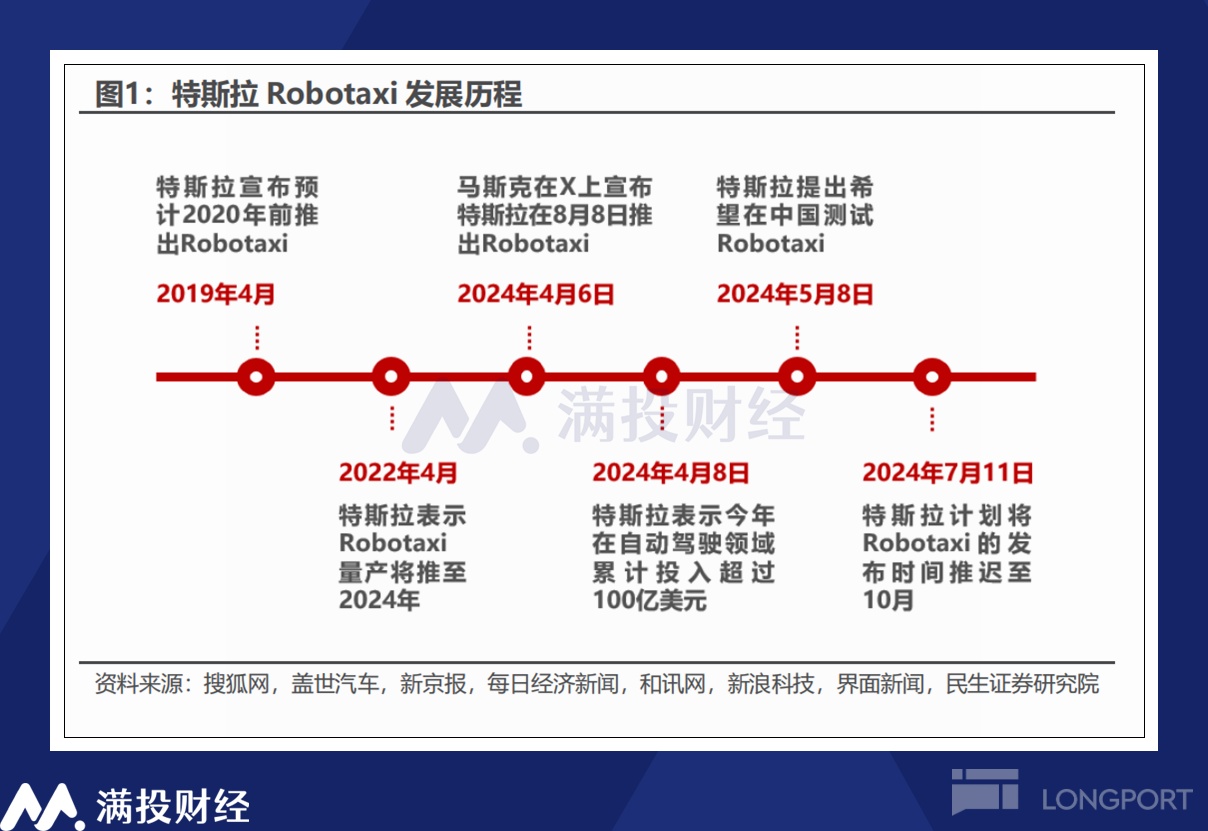
Amid the Robotaxi hype in China, this issue warrants attention. From a regulatory standpoint, Robotaxi legislation faces numerous challenges, including traffic laws and safety concerns. How will safety be ensured? Who is liable in accidents? As Musk noted, cars without steering wheels or pedals will take longer to gain U.S. approval—let alone in China, where regulations are stricter.
Notably, during the recent U.S. election turmoil, Musk publicly endorsed Trump, who is leading the 2024 race, despite Trump's EV policies being unfavorable to Tesla. Given Tesla's regulatory hurdles, this move may aim to secure future support for Robotaxi.
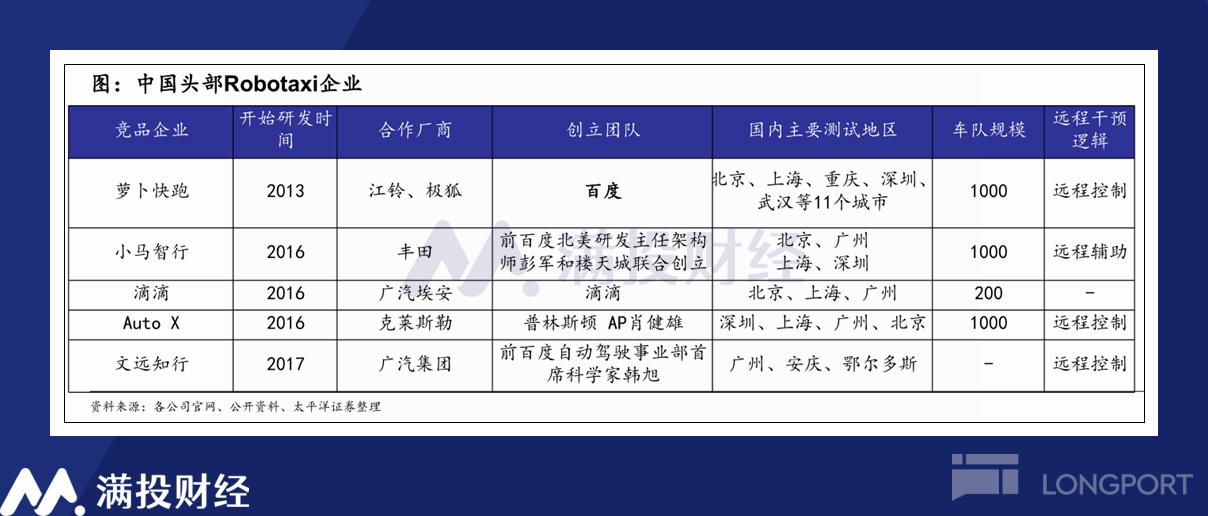
Whether it's Robotaxi or humanoid robots, commercialization is unlikely before 2025–2026. For now, Tesla faces tougher competition and a prolonged "dry spell" in H2 2024. Chinese EV makers are catching up in smart driving and Robotaxi, leaving Tesla to accelerate its new growth initiatives amid profit pressures.
To navigate this period, Musk hinted at near-term catalysts. Per the earnings call, Tesla's low-cost car project is progressing, with production expected in H1 2025.
Additionally, FSD's entry into China and the expansion of solar and energy storage businesses offer hope. While Tesla's management expressed concerns about H2 performance, the company isn't without strategies.
03
Closing Thoughts
From Q1 2023 to Q2 2024, Tesla's six consecutive earnings reports have disappointed. Yet, globally, Tesla retains strong investor support. Investors focus not on current performance but on Tesla's future potential—and in this regard, Tesla offers ample room for imagination.
The copyright of this article belongs to the original author/organization.
The views expressed herein are solely those of the author and do not reflect the stance of the platform. The content is intended for investment reference purposes only and shall not be considered as investment advice. Please contact us if you have any questions or suggestions regarding the content services provided by the platform.
