



From Quan Hongchan to Sun Yingsha: The Olympics are capitalizing women | Pioneer Women

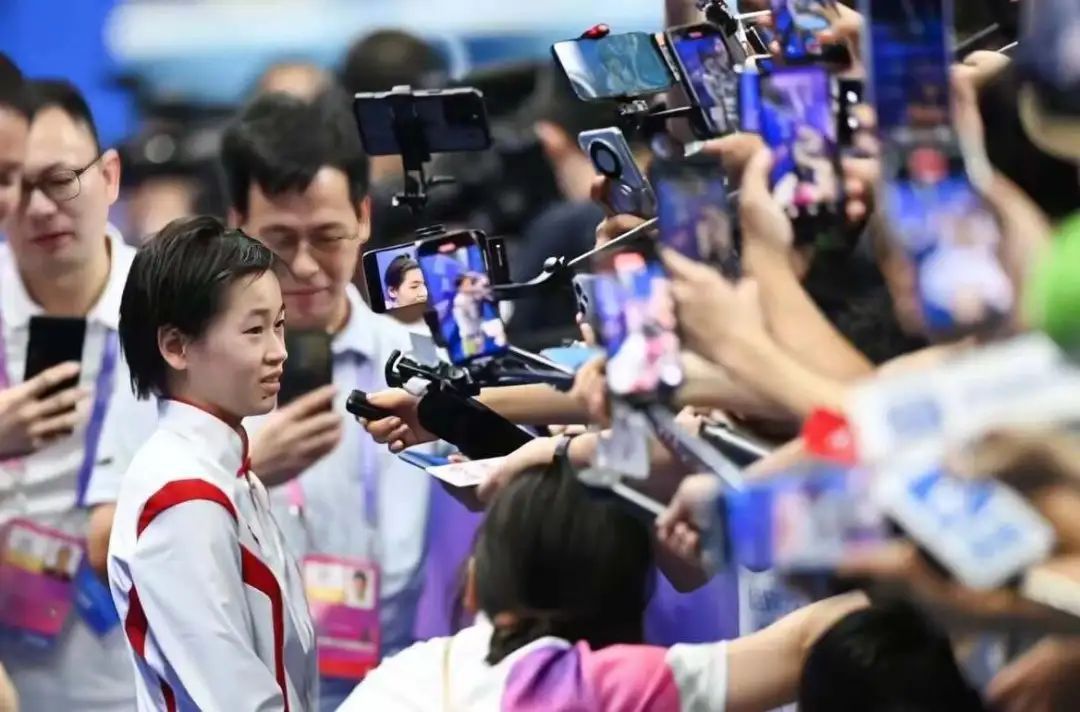
Under the precise machinery of society, no one dares to ignore the power of women anymore.
Mothers, wives, daughters, teachers, delivery workers, scientists, entrepreneurs... More and more "she" are transitioning from the role of givers to creators. They ambitiously express desires and ambitions, autonomously write every footnote of their lives, and step into the center stage—no longer dependent, refusing to look up. On the path to becoming "their true selves," they no longer care about others' gazes. Increasingly, women are shedding external definitions to seek inward.
ZhongMian (ID: ZhongMian_ZM) has launched the "Pioneering Women" series, focusing on women of all professions and ages who embody independence, freedom, and avant-garde spirit, documenting and witnessing their thoughts and lives.
This is the 7th installment of the series, featuring the miraculous female forces at the Paris Olympics.
The ten statues of women slowly rising during the Paris Olympics opening ceremony might have made women worldwide hold their breath and shed tears in that shared moment.
In the 1990 Paris Olympics, women were first allowed to participate in the modern Olympic Games. By the 2024 Paris Olympics, the banner of gender equality was finally raised high.
In traditional narratives, strong and resilient women were praised as "like men," while the inherent power of women was often overlooked, suppressed, or rewritten. Society lacked imagination about what female strength truly meant.
The Paris Olympics seemed to ignite a continuous flame of female power. On social media, memes like "the fiercest of the fierce" and "women are amazing" proliferated. Beyond the narratives of female athletes' struggles and victories, people saw and affirmed their kindness, sincerity, calm humility, boldness, and radiant ease—another layer of what female strength embodies.
Women create victories in competitive sports with their talents, but that’s not all. They carry energies of friendliness, purity, and inclusivity, filling the combative atmosphere with soft cotton and flowing silk. This isn’t weakness—it’s a powerful embrace that digests all emotions and hardships, leaving behind resilient and serene faces. This is the new narrative and world they’ve carved out.
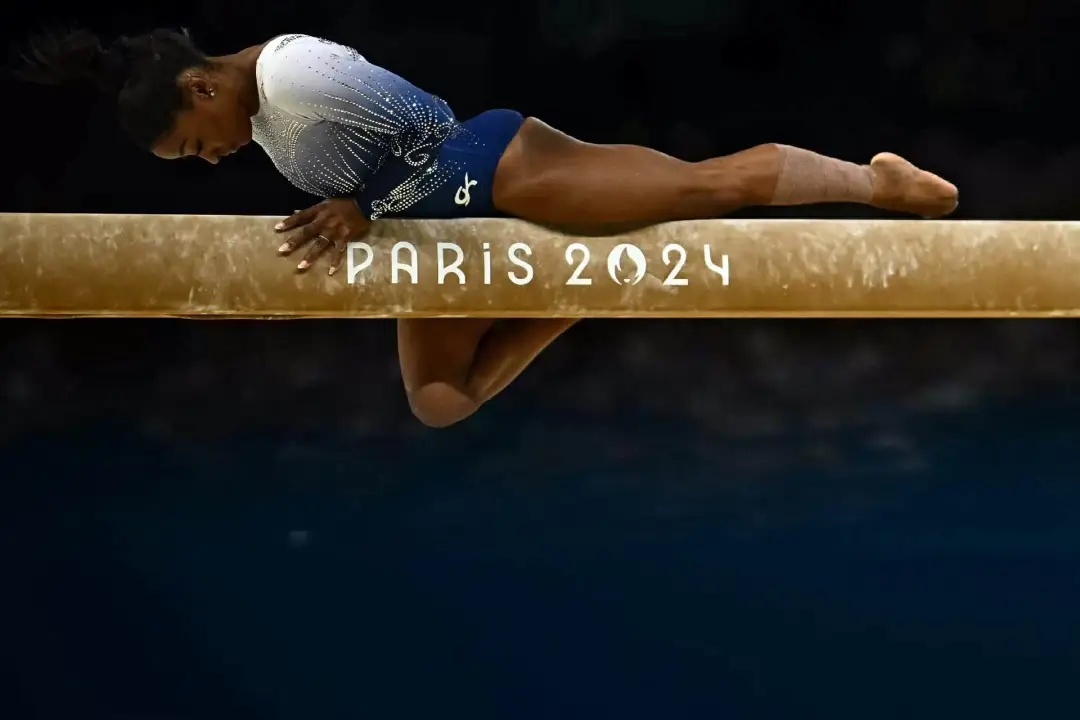
Like the photo "Gymnastics Queen" Simone Biles posted on social media: sitting cross-legged on a chair outside the arena, hands resting naturally, eyes closed, face calm, posture upright.
1. Beyond Victory, Women Have Their Own Strength
The slight increase in female athlete participation seems like strong evidence of female power in competitive sports.
At the 2012 London Olympics, there were 4,676 female athletes, about 44% of participants. By the 2016 Rio Olympics, it rose to 45%, and at the 2021 Tokyo Olympics, it reached 48.8%.
This was thanks to decisions made the prior year by the International Olympic Committee (IOC) Executive Board: first, "All 206 teams and the Refugee Olympic Team must include at least one male and one female athlete," and second, "Each National Olympic Committee can nominate one male and one female athlete to jointly carry the flag at the opening ceremony." These were historic firsts for the Olympics.
IOC President Thomas Bach emphasized that these decisions sent a powerful message—gender balance at the Olympics is now a reality.
If Tokyo was the Olympics that achieved gender balance, Paris carried on this mission, with 5,250 male and female athletes each—a 1:1 ratio.
In the Olympic arena, where peace, friendship, and fair competition are core values, weaving feminism into the opening ceremony and emblem designs is a shining moment for human civilization—capitalizing "Woman."
It’s no surprise the IOC Executive Board prioritizes protecting women’s rights. As a spiritual totem of human civilization, the Olympics symbolize humanity’s progress in strength and intellect. In modern society, women’s contributions are indispensable and indelible. Acknowledging, rewriting, and encouraging them is an inevitability of our times.
The IOC released the "Portrayal Guidelines," advocating for gender-neutral expressions in media coverage to reconstruct narratives of equality and inclusivity, addressing long-standing gender disparities in sports.
Changing narratives to change perceptions seems like a long road.
Awakening consciousness has also spread on domestic social media. Many netizens noted that powerful women in the Olympics challenge the "pale, young, and thin" beauty standard. "Queen Wen" Zheng Qinwen’s muscular swings went viral, and subway ads declaring "Victory answers everything" were widely celebrated.
After her match, Zheng Qinwen couldn’t hold back tears. She sobbed once, wiped her face, pursed her lips, looked up, took a few breaths, and kept walking.
Female athletes remind us of another possibility for posture. The Olympic stage lets us rethink what female strength means.
2. What Is Female Strength?
We might think of resilience, but female athletes also embody "letting go" and effortless strength—leveraging a fulcrum to stir waves of victory.
Weightlifter Luo Shifang broke three records to win gold in the women’s 59kg category. Before lifting, she raised a finger to hush the crowd. At the climax, her brows furrowed, eyes fixed ahead, then she set the bar down, bowed, and walked off.
Later, she revealed she was on her period. Her mindset: "This is the toughest match, but no problem—just do it." "I’ve always thought weightlifting is cool—it’s about challenging yourself. What men can’t lift, I can easily raise."
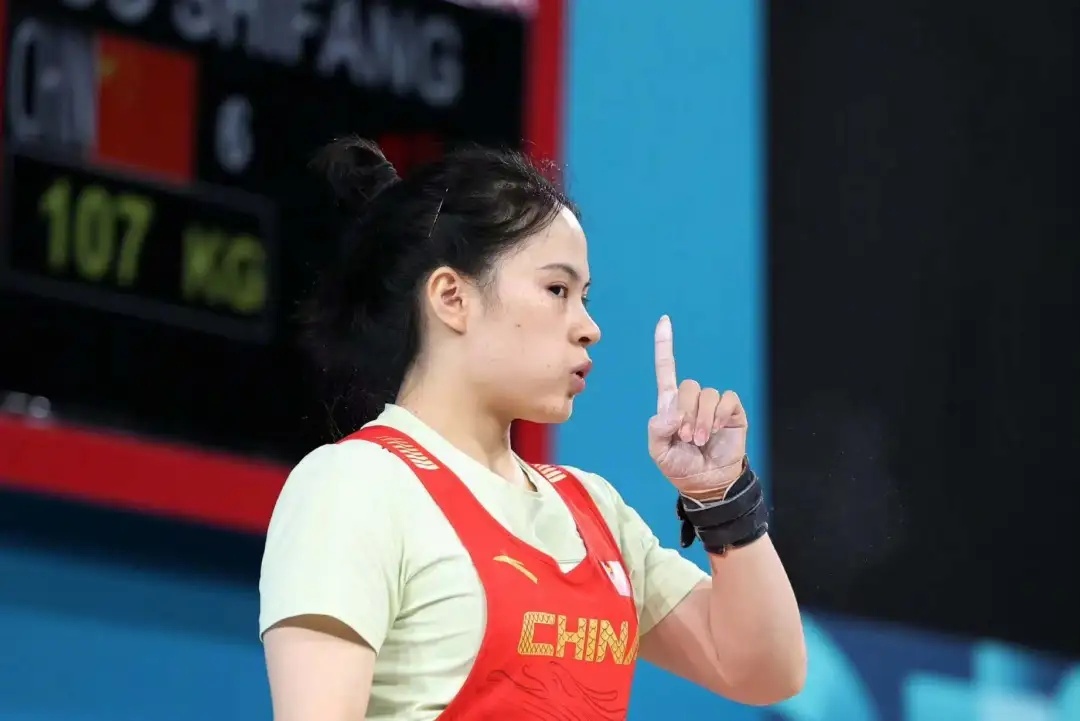
▲Image: Weightlifter Luo Shifang
Some female athletes radiate natural ease and agility. Before her event, Luo even napped in the waiting area. Similarly, Ukrainian high jumper Yaroslava Mahuchikh closed her eyes to rest before effortlessly leaping, her blue-and-yellow eyeliner highlighting her deer-like grace.
We also see sincere camaraderie among women—another facet of female strength. After executing her "ripple-less dive," Quan Hongchan ran tearfully into coach Chen Ruolin’s arms, who cupped her face and held her tight.
Three years of grueling training since Tokyo weren’t just about technique—Quan also weathered public scrutiny. Yet, this soon-to-be-adult woman responds to attention with a backpack full of plush toys and blunt honesty: "Who isn’t tired?" No melodrama, just childlike humility—an attitude many female athletes share.
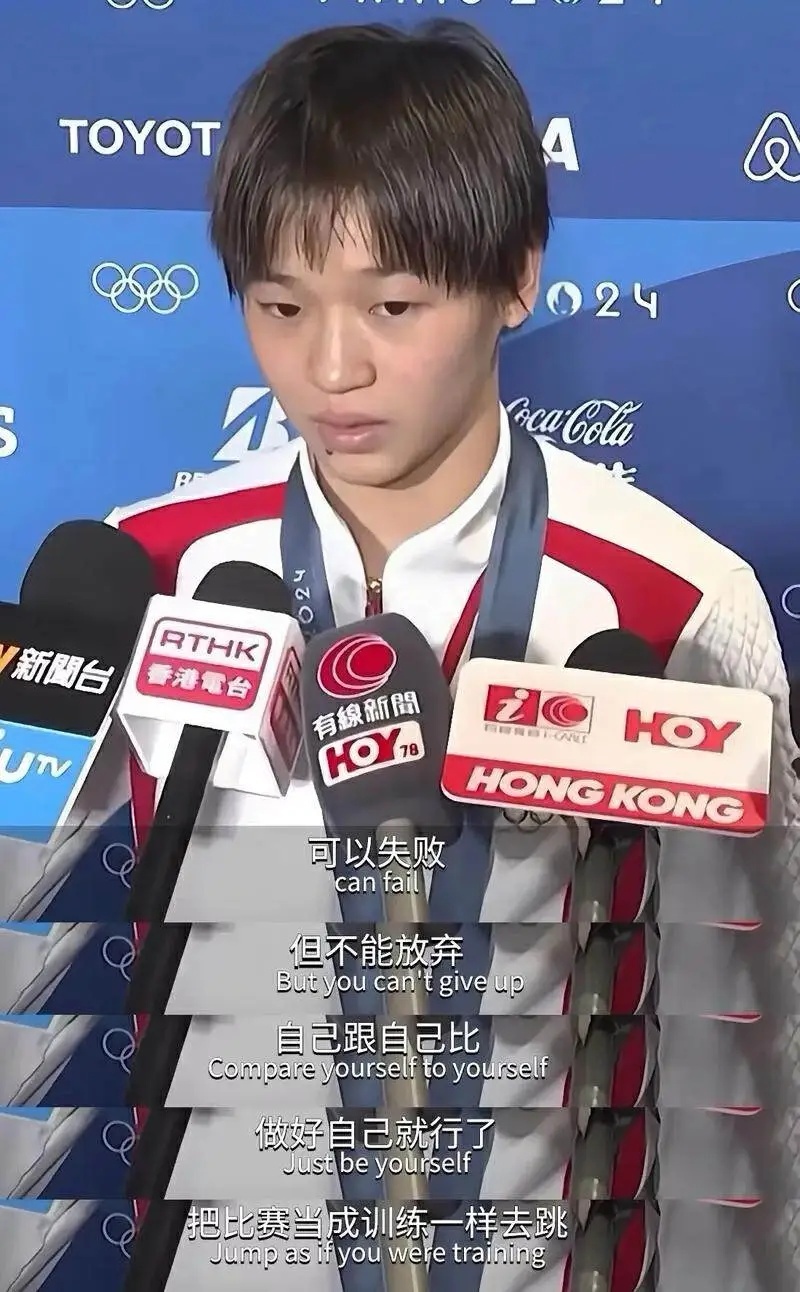
But this doesn’t mean they’re "kids" in societal narratives, open to casual consumption or critique. Their resilience and power demand respect.
In women’s triathlon, the commentator said: "Many women are forged from steel, their spines carved with bravery, their blood fused with freedom. Each represents adventure, defiance, and fearlessness."
There’s also adventure, vitality, and boundless possibility.
In Teahupo’o, 15-year-old Yang Siqi carved a place for China in Olympic surfing. The girl who hadn’t seen the ocean until age 8 wrote on her board: "Activity is the foundation of life. Dream what you want to do." Eleven-year-old skateboarder Zheng Haohao, China’s youngest Summer Olympian, laughed freely into cameras, radiating vibrant joy. "My mom said our family tree starts with me," she shared.
Beyond grand narratives, female individuality shines—resilience, effortlessness, expressiveness, agility, muscle power, ease, radiance, sincerity, gentleness, calm... Undoubtedly, Olympic women expand the meaning of "female," stretching boundaries to reach their most unconstrained selves—another interpretation of female strength.
3. Infusing the World with Female Strength
Perhaps moments of warmth, peace, inclusivity, and sincerity created by women can be frozen and passed on, influencing environments and perceptions.
After individual diving, Quan Hongchan and Chen Yuxi embraced. They knew each dive represented countless leaps. When asked which was harder—synchronized or individual—Quan said individual (no partner to rely on), while Chen said synchronized (pressure to match). Their mutual support defied the win-or-lose arena.
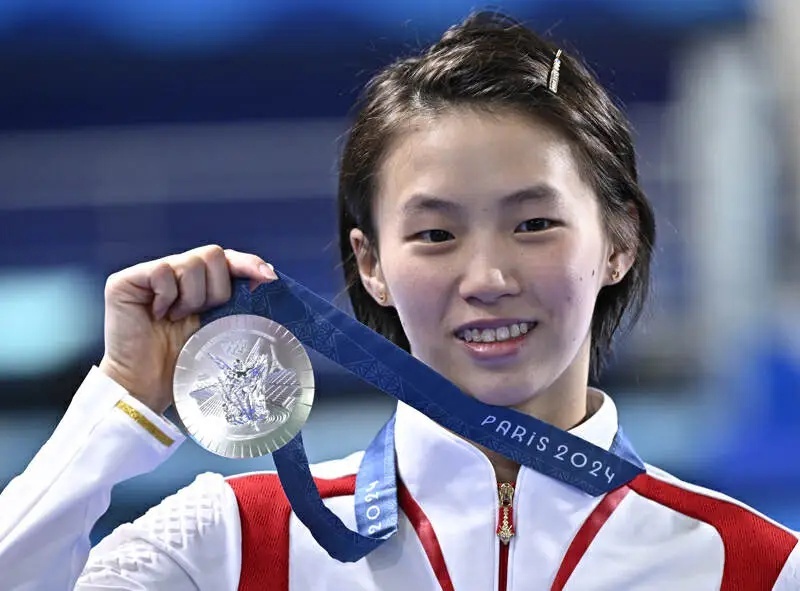
▲Image: Chen Yuxi
Before Rebeca Andrade mounted the podium for floor exercise gold, silver and bronze medalists Simone Biles and Jade Carey "plotted" a celebration. As Andrade raised her fists, they knelt in synchronized bows, all grinning. Andrade, after three ACL tears in nine years, finally won gold in Paris. This was sportsmanship transcending competition—pure, moving admiration.
Biles, who won four golds in Rio but struggled in Tokyo, openly cited mental health for withdrawing, then cheered on rivals. Her confidence—stepping back, then returning stronger—is the "Gymnastics Queen’s" quiet power beyond skill.
It inspires, pulling us from cutthroat competition closer to sports’ essence: human connection and transcendence—perhaps the most precious takeaway.
In women’s rugby sevens, gold medalists New Zealand performed the haka—a Maori war dance. Diverse athletes shouted and shook arms with wild pride, one growling fiercely. This was their cultural victory celebration.
4. Closing Thoughts
We no longer place women in secondary, dependent roles or chase traditional ideals of excellence. We stop caring about others’ words because women now truly believe: We can become our best selves.
The Olympics seem to affirm this. Given equal resources and rights, women flourish, surprising the world. In 1990 Paris, women competed only in tennis and golf—22 athletes (2.2%). By 2024 Paris, women made breakthroughs in participation and representation.
Women’s participation was fought for. Alice Milliat founded the International Women’s Sports Federation, pushing the IOC to add women’s events, leading to women’s athletics in 1928 Amsterdam. From 1948 London (women’s canoeing) to 2021 London (women’s boxing), each "first" filled out women’s Olympic presence.
Beyond participation, equality extends to prizes, decision-making, and media. The deliberate 1:1 ratio in Paris signals determination—for future natural balance. Only by visibility, documentation, and memory can women’s achievements shine in history.
As Paris closes, controversies and progress remain. It gifted us luminous human moments—genderless yet about humanity’s spirit. Once more, the Olympics remind us what it means to be human.
Author|Liu Yilin
Editor|Hu Zhanjia
Operations|Chen Jiahui
Producer|ZhongMian (ID: ZhongMian_ZM)
The copyright of this article belongs to the original author/organization.
The views expressed herein are solely those of the author and do not reflect the stance of the platform. The content is intended for investment reference purposes only and shall not be considered as investment advice. Please contact us if you have any questions or suggestions regarding the content services provided by the platform.
