


SHEIN is rumored to be 'DPO', capital really knows how to play.

This article is based on publicly available information and is intended for informational purposes only, not as any investment advice.

Photo: Night view of the City of London.
As a hot tech retail unicorn, SHEIN's IPO plans have attracted much attention.
Just last week, news broke again: According to the Global Times citing British media, SHEIN is planning to sell shares directly to the British public, including retail investors and professional investment institutions. This means SHEIN may opt for a DPO instead of an IPO, completing its listing in an unconventional way.
SHEIN's listing plans are no secret, but the twists and turns have been unexpected: from the U.S. to the UK, from an IPO to a DPO, the urgency and unspoken difficulties are evident.
What is a DPO, what information does it imply, and what are SHEIN's considerations? These questions will be the focus of this report.
01. All Roads Lead to Rome
Under the SEC's framework, there are far more methods for public stock listings than most ordinary investors realize. Counting mainstream approaches, there are at least six: the most common IPO, as well as American Depositary Receipt listings (ADR), private placements for Qualified Institutional Buyers (QIB), reverse takeovers (RTO), direct listings (DPO), and the recently popular Special Purpose Acquisition Company (SPAC) listings.
ADRs are well-known. According to U.S. securities laws, companies listed in the U.S. must be registered in the U.S. Thus, American commercial banks developed a business to facilitate foreign securities trading in the U.S. by issuing transferable certificates, typically representing publicly traded stocks and bonds of non-U.S. companies.
Early Chinese internet companies listing in the U.S. mostly used ADRs, including China Mobile, Sinopec, Alibaba, Baidu, New Oriental, and others.
Private placements for QIBs originated from the SEC's Rule 144A in 1990, allowing certain qualified securities to be sold to Qualified Institutional Buyers (QIBs) without fulfilling standard disclosure obligations. The intent was to attract more companies to issue securities in U.S. capital markets, making it one of the most efficient and fastest financing methods outside of traditional listings. However, in practice, most 144A offerings are bonds.
Reverse takeovers (RTOs), or backdoor listings, involve a non-listed company acquiring a listed one, then restructuring, merging, or exchanging shares to inject assets into the listed entity, effectively achieving a listing.
Special Purpose Acquisition Companies (SPACs) are unique in that they list first, then acquire future core businesses through mergers. Similar to RTOs but distinct, SPACs create a shell company to list via an IPO, raise funds, and then merge with a target operating company within a set timeframe. Since SPACs are shells with no complex debt history, target companies can list without the lengthy traditional IPO process.
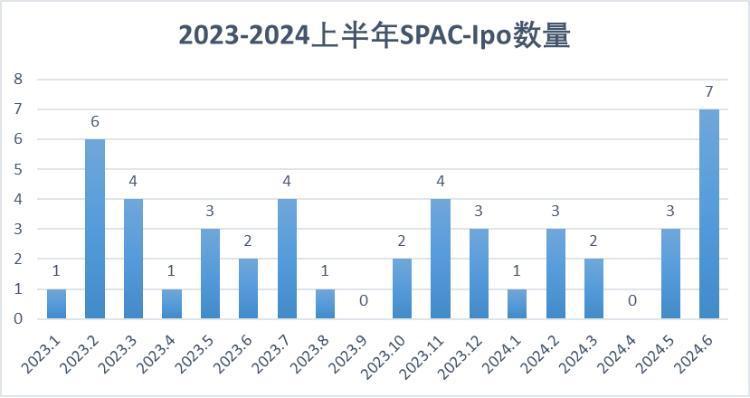
Chart: SPAC-IPO numbers in recent years. Source: Capital Lawyer
As for the DPO model SHEIN is reportedly considering, it refers to a securities issuer bypassing underwriters or investment banks, instead using non-traditional channels (e.g., the internet) to release listing information and documents, directly offering shares to the public.
From this, we can see DPOs primarily serve two purposes: avoiding complex review processes to accelerate listing and reduce barriers, and sidestepping intermediaries to minimize costs or potential sunk costs.
All roads lead to Rome—just for overseas listings, there are so many approaches. It’s hard not to marvel at how creative capital can be. Next, we’ll explore the pros and cons of DPOs versus traditional IPOs.
02. The History and Trade-offs of DPOs
The first DPO dates back to 1984, when Ben & Jerry's ice cream needed about $750,000 to operate. They advertised in local newspapers, offering shares at $10.50 each. With a loyal fanbase in Vermont, they raised the funds in months.
But DPOs weren’t officially recognized until 1995, when the SEC issued a report titled "Use of Electronic Media for Delivery of Information," stating that information sent on paper could also be sent via email with equal legal effect. While the report didn’t explicitly outline DPO rules, it allowed electronic dissemination of prospectuses, marking the SEC’s legal acceptance of DPOs.
DPOs gained prominence around five years ago. In 2019, Slack, the "American version of DingTalk," listed on the NYSE via DPO. Spotify, the world’s largest music streaming service, also went public via DPO. Palantir, the secretive AI and defense unicorn, followed in 2020.
The common thread? Cutting out intermediaries to speed up listings. According to Xunshi International, a Nasdaq IPO typically takes over a year from preparation to listing.

Chart: Nasdaq listing timeline. Source: Xunshi International
DPOs skip extensive due diligence, audits, and even registration requirements in some U.S. states. Roadshows and promotions are simpler, drastically shortening the listing cycle.
Simpler processes also mean lower costs. Without intermediaries, media estimates suggest DPOs can save up to 80% in procedural expenses.
But the flip side is no underwriters mean no new shares issued—hence no fundraising. Spotify and Palantir were cash-rich unicorns with substantial funding. Slack, less glamorous, had $792 million in cash and equivalents pre-IPO.
Without roadshows or banker intervention, third-party pricing leads to direct listings, leaving post-listing performance to retail investors. This can cause wild price swings. Lesser-known firms risk severe undervaluation or overvaluation, stifling growth. Spotify, Palantir, and Slack were household names, emboldening their DPO choices.
In summary:
DPO advantages:
Faster listing with fewer institutional due diligence and review steps.
No lock-up periods; existing shareholders can sell immediately.
DPO disadvantages:
No underwriters mean no price stabilization.
Most don’t issue new shares, so no fundraising.
03. What SHEIN Is Considering
Reports suggest SHEIN is mulling "a direct public offering." The original article notes it’s "still in early decision-making."
But we can infer the tech retail unicorn’s situation from the mere consideration:
1) Cash-rich
As a top-five global unicorn, SHEIN’s revenue speaks for itself.
Slack, Spotify, and Palantir were all loss-making pre-IPO. But SHEIN reportedly hit $32.2 billion in 2023 revenue with $2 billion+ profit—far more mature than 90% of pre-IPO firms, justifying DPO confidence.
2) Racing to create exit channels
SHEIN’s global listing scramble likely stems from investor exit pressure. Early backers are over a decade in—exit demands are mounting.
Spotify’s 2016 $1 billion convertible debt from TPG, Dragoneer, and Goldman Sachs came with a 20% conversion discount plus 5% annual interest if it missed its IPO deadline. Whether SHEIN has similar clauses is unknown, but speed benefits all, making DPO plausible.
3) Regulatory and PR pressures
Western "equality" and "eco" pressures are intense, especially in the UK. High Speed 2 rail faced "eco" delays until officials realized protesters just wanted cash.
Spotify faced debt, losses, and artist boycotts pre-IPO, with BBC declaring "Death Knell for Spotify." Its DPO saved lobbying costs.
SHEIN faces similar heat—eco, labor, dumping, IP—with Europe throwing every protectionist tool at it. A standard IPO’s lobbying costs could be astronomical, with PR risks at every step. A DPO may be the most efficient way to avoid drawn-out reviews.
4) No shareholder dilution
DPOs don’t issue new shares, preserving ownership stakes.
SHEIN’s profitability means growth isn’t funding-dependent. Mature-market investors likely prefer long-term value over quick exits. A DPO could satisfy both liquidity needs and long-term investor rights.
With SHEIN’s opaque ownership, DPO may reflect internal consensus on stakeholder interests.
04. Potential DPO Pitfalls
No solution is perfect. If SHEIN opts for a DPO, it faces two key risks: liquidity and valuation.
1) Market liquidity
Without underwriters, market reception hinges on brand recognition and liquidity—or risks devaluation.
Even NYSE-listed Spotify saw just 5.6% turnover on day one, closing 10% below its opening. SHEIN’s rumored London listing—potentially the LSE’s biggest IPO—faces tougher liquidity. The LSE’s $3.5 trillion market cap matches Shenzhen’s, but trading volume is one-fifth (Choice data).
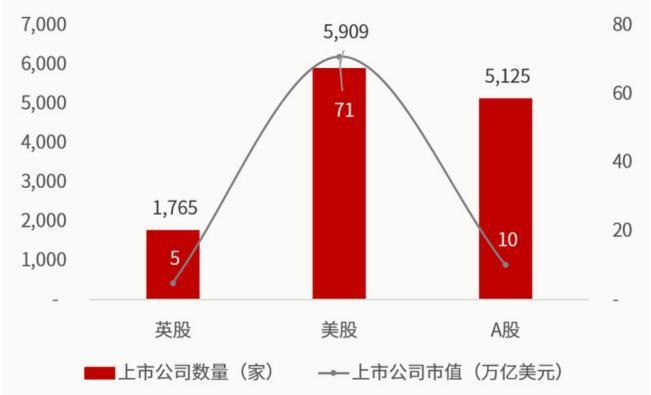
Chart: Comparison of major exchanges. Source: Xin Gong Research, IFind
A London DPO could thus mean valuation shrinkage.
2) Valuation disputes
Spotify’s ex-CFO Barry McCarthy wrote in the FT that avoiding IPO underpricing drove its DPO choice.
IPO underpricing—where offer prices lag trading debuts—hurts issuers and bankers. Overpricing risks weak demand. DPOs use third-party appraisals for reference prices, letting market hype dictate moves. But no lock-ups or stabilizers mean wild swings if shareholders dump stock.
SHEIN’s valuation has been volatile, dropping a third to $66 billion last year. Such swings could amplify DPO turbulence—a nightmare for cornerstone investors.
3) Lingering scrutiny
While DPOs involve fewer checks than IPOs, exchanges still impose reviews. The NYSE has DPO precedents (e.g., 2019’s Fangdd), but none are visible for the LSE—raising unforeseen hurdles.
Of course, all this remains speculative. SHEIN may yet ditch the DPO path.
For SHEIN, exploring options is wise. If it does choose a DPO, borrowing a line from the hit game Black Myth: Wukong, it’d be a "confrontation with destiny"—eschewing some 世俗名利 (worldly gains), letting the market judge its worth, and shedding capital pressures to face its 上市诉求 (listing imperative).
After all, with cross-border e-commerce and Amazon encroaching, SHEIN has little time for 红尘纷扰 (mundane distractions).
The copyright of this article belongs to the original author/organization.
The views expressed herein are solely those of the author and do not reflect the stance of the platform. The content is intended for investment reference purposes only and shall not be considered as investment advice. Please contact us if you have any questions or suggestions regarding the content services provided by the platform.
