


 Likes Received
 Posts
PostsPrivate 'China Starlink' initiates space competition, with constellation commercialization taking the lead.

When people mention "Starlink," they can't help but think of that crazy world's richest man—Elon Musk. But in reality, looking at the global commercial space industry, besides SpaceX's Starlink, there are many other commercial satellite constellation projects like Amazon's "Kuiper" and the UK's "OneWeb," all progressing vigorously.
The field of low Earth orbit (LEO) satellite communication constellations represented by these projects has become one of the hottest development directions today.

Nowadays, outer space satellite orbits have become a scarce and finite resource, and radio frequencies are non-renewable. The competition for LEO satellite resources is intense. Countries like the U.S., UK, Canada, Russia, Germany, and South Korea have successively planned ambitious LEO internet satellite network projects, and China is also accelerating its efforts with a series of plans. Numerous constellation projects led by state-owned enterprises are underway.
In 2014, the Chinese government lifted policy restrictions, encouraging private capital to enter the aerospace sector, leading to explosive growth in private enterprises in commercial space.
China's Starlink: Late to the Game but Catching Up Fast
To be realistic, China's constellation projects, especially those involving private enterprises, started later than those in advanced countries. It wasn't until 2014 that the first batch of commercial aerospace companies emerged in China, focusing on LEO satellite constellation R&D and launches.
However, starting late doesn't mean lacking momentum. In April 2020, China's National Development and Reform Commission (NDRC) included satellite internet in the scope of new infrastructure for the first time. In September of the same year, China submitted an application to the International Telecommunication Union (ITU) for spectrum allocation, covering a demand for spectrum resources for up to 12,992 satellites. In 2024, commercial aerospace was included in the government work report as a "new growth engine" for the first time.
Why build LEO satellite constellations?
Due to geographical and economic factors, 94% of the world still lacks internet access, becoming "information dead zones" in the digital age. The best tool to solve these dead zones is LEO satellites. Because LEO is closer to the Earth's surface, these satellites have the lowest transmission latency and higher speeds, making them the only satellite orbit capable of achieving near-ground communication performance.
At 2:30 AM on September 6, 2024, the third orbital plane of Geely's Future Mobility Constellation was successfully launched from the Taiyuan Satellite Launch Center, deploying 10 satellites into their intended orbit. All 10 satellites are functioning normally, marking a complete success for the mission.
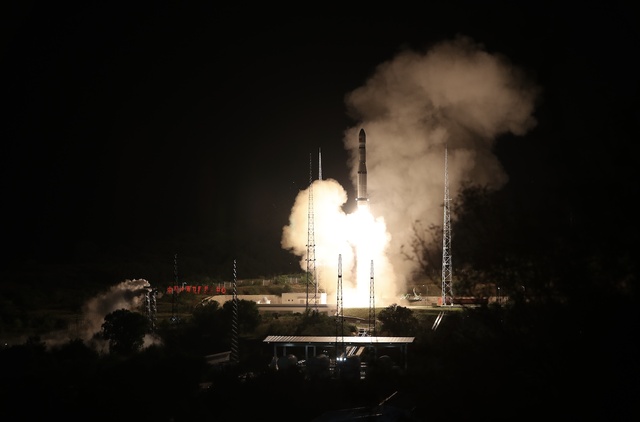
Geely's Future Mobility Constellation is a global LEO communication constellation developed by the commercial aerospace company Geespace. The first phase plans for 72 satellites, with two orbital planes and 20 satellites already in stable operation. This launch brings the total to 30 satellites.
After this successful launch, Geely's Future Mobility Constellation will officially provide satellite communication services to overseas users, marking the first time a Chinese commercial aerospace company offers LEO satellite communication services globally.
The constellation will provide comprehensive services for the mobility sector, particularly in autonomous driving and smart connectivity scenarios. The integration of satellite communication will enhance the intelligence and convenience of mobility tools and ecosystems. These functionalities and applications will become more commercially viable as the constellation's construction progresses.
In recent years, private commercial aerospace companies like Geespace have made significant strides, transforming the phrase "launching satellites"—which had negative connotations in China during the 1950s—into its literal meaning. This reflects China's advancements in high-tech R&D and innovation, as well as the manufacturing upgrades in the new industrialization process, showcasing the international leap of Chinese manufacturing.
Soaring to the Skies: The Rise of China's Private 'Starlink'
Constellation projects have extremely high entry barriers. Only players with substantial financial and talent resources can participate.
For example, Musk's Starlink and Amazon's Kuiper have invested over $10 billion each, while the UK's OneWeb has invested more than $5.5 billion.
Li Shufu, often called "China's Elon Musk," has long been gazing at the vast universe. In 2018, Geely Group strategically invested in Geespace. Over the past six years, Geespace has invested billions in R&D. Its CEO, Wang Yang, has experience in national aerospace management and a decade of entrepreneurship in commercial aerospace. The team consists of veterans from national aerospace programs, having participated in key national projects. This has allowed Geespace to overcome industry barriers in funding and technology.
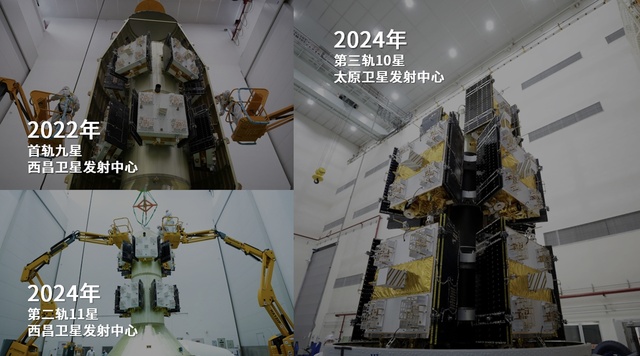
However, the first major challenge in constellation construction is satellite mass production.
First, companies must have sufficient production capacity. According to ITU requirements, after applying for frequency and orbital slots, the first satellite must be launched within seven years, 10% of the total within nine years, 50% within 12 years, and the entire constellation must be completed within 14 years.
Second, satellites must be cost-effective. The Iridium project initially had a construction cost of $5 billion, but high costs and unmet commercialization expectations led to its bankruptcy.
Constellation companies often require exceptional industrial manufacturing capabilities.
Musk leverages Tesla's production system, while Geespace relies on Geely Group's automotive manufacturing prowess. By adopting intelligent and automated mass-production models from the automotive industry, Geespace has built the world's first satellite mass-production factory integrating aerospace and automotive manufacturing. This innovation shifts satellite production from "lab-customized R&D" to "industrialized mass production."
Today, Geespace has reduced satellite production costs by 45% and achieved a production rate of 1-2 satellites per day, nearing the level of top international commercial aerospace companies.
After solving the mass-production challenge, the second major barrier is rapid commercialization. To address this, Geespace has planned the scale and timeline of its first-phase constellation reasonably.
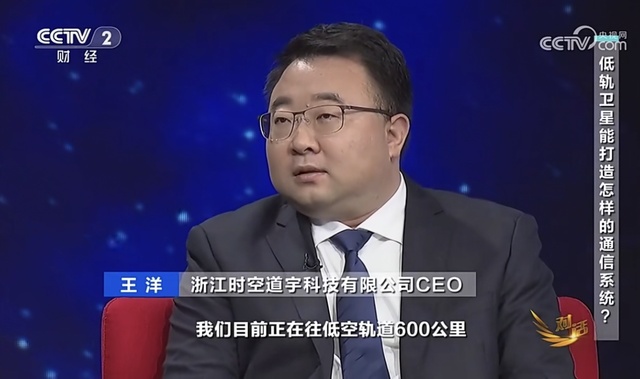
On June 2, 2022, the first nine satellites of Geely's Future Mobility Constellation were successfully launched. On February 3, 2024, the second batch of 11 satellites was deployed. Geespace CEO Wang Yang recently mentioned in an interview with CCTV Finance's "Dialogue" program that the company plans to launch 72 satellites into a 600 km LEO. "Once deployed, the constellation will provide satellite network coverage anywhere on Earth except the poles. The second phase will expand to 300 satellites."
Efficient production and pragmatic scheduling have allowed Geely's Future Mobility Constellation to advance commercialization alongside construction. Compared to other overly ambitious constellation projects, the first-phase target of 72 satellites balances China's current rocket launch capacity with commercialization needs.
Once the 72-satellite network is complete, the constellation will enable global real-time data communication, providing low-to-medium-speed satellite services for over 200 million users worldwide. Leveraging China's aerospace development cycle and existing capabilities, Geespace plans to transition from low-to-medium-speed to high-speed broadband services.
The second phase will add 264 direct-to-mobile satellites, enabling existing phones to connect directly to satellites for global services. The third phase will deploy 5,676 multimedia satellites for global LEO broadband communication, meeting consumer and industrial demands.
To Space and Beyond: China's Private 'Starlink' Poised for Greatness
Commercial aerospace is a vital part of China's space industry. Through continuous innovation, China's commercial aerospace sector is rapidly advancing toward commercialization and marketization. According to iMedia Research, from 2015 to 2021, the industry's CAGR was 22.3%, with the market expected to reach RMB 2.3 trillion by 2024.
However, due to late entry, few companies have achieved commercial success in this vast market.
Internationally, SpaceX's success offers valuable lessons.
SpaceX achieved profitability through reusable rockets and LEO communication constellations, serving over 3 million users in 70+ countries as of May 2024.
Domestically, Geespace is a shining example. It explores commercialization models while building its constellation, ensuring self-sustainability.
This sustainability is supported by Geely's vast ecosystem. In H1 2024, Geely sold 956,000 vehicles (+41% YoY), including 320,000 NEVs (+117% YoY), with overseas sales reaching 197,000 units.
This provides Geespace with ample global commercialization opportunities.
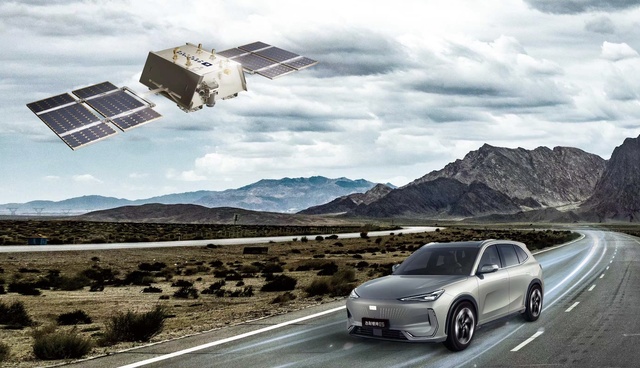
After the first orbital launch, Geespace quickly adapted its satellite communication technology for Geely vehicles, equipping models like the ZEEKR 001FR, ZEEKR 009 Glory Edition, ZEEKR 001, ZEEKR 007, and Geely Galaxy E8 with two-way satellite communication.
Beyond Geely's ecosystem, Geespace is expanding external collaborations. During the Hangzhou Asian Games, its high-precision positioning products and services were used in nearly 2,000 official vehicles, ensuring precise management and scheduling over 2 million kilometers.
Geespace's vision isn't limited to China. The Future Mobility Constellation already covers 90% of the globe 24/7, providing a foundation for international expansion.
While domestically focused on automotive IoT, internationally, Geespace partners with local telecom operators to tailor solutions for regional needs.
In 2023, Geespace partnered with Malaysia's Altel to accelerate smart port and agriculture projects. In 2024, it completed its first overseas commercial deployment test and teamed up with Oman's Azyan Telecom to promote direct-to-mobile satellite services in the Middle East and Africa.
Long-term, Geely's Future Mobility Constellation aims to establish China's commercial aerospace brand globally. Collaborations with leading operators will accelerate technology adoption and market penetration.
As China's only privately-owned aerospace company with a closed-loop business model, Geespace has secured a competitive edge and set a benchmark for the industry.
Conclusion:
In future global competition, multi-dimensional contests—from ground to space—will become the norm. In space, whether in LEO constellation deployment or resource competition, Chinese private enterprises are a force to reckon with.
The 2024 Government Work Report emphasized developing "new quality productive forces" and fostering emerging industries, including commercial aerospace. Against this backdrop, companies like Geespace are rapidly rising, securing a place in the global commercial aerospace landscape.
Geespace's rapid construction of a wide-ranging LEO constellation showcases Chinese private enterprises' technological and market prowess, highlighting their growing global competitiveness. More importantly, this marks China's integration into the global aerospace supply chain, offering high-value space services through innovation and international collaboration.
As commercial aerospace accelerates, Chinese private enterprises are proving that the future space race belongs not just to national teams but also to innovative, boundary-pushing businesses. In the new wave of technological and industrial revolution, projects like Geely's Future Mobility Constellation will be key players in expanding China's space economy, injecting new momentum into global development.
The copyright of this article belongs to the original author/organization.
The views expressed herein are solely those of the author and do not reflect the stance of the platform. The content is intended for investment reference purposes only and shall not be considered as investment advice. Please contact us if you have any questions or suggestions regarding the content services provided by the platform.
