



From deification to disillusionment: The rise and fall of the Yang brothers

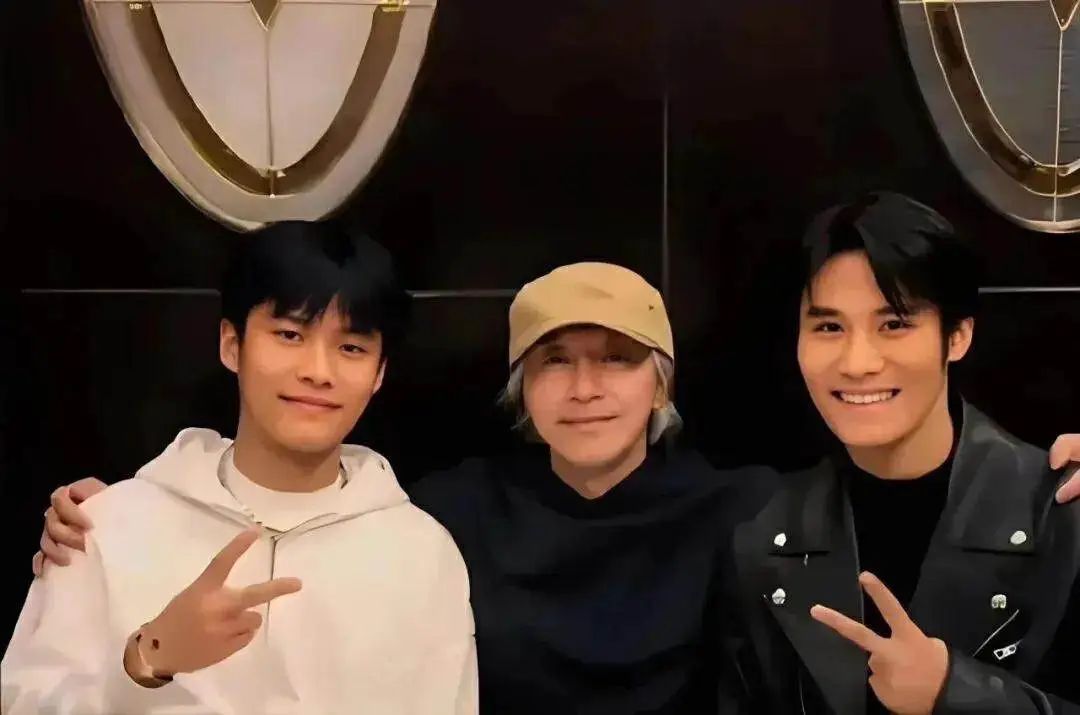
On September 17, Sanzhiyang's live-streaming sales of "Hong Kong Meicheng Mooncakes" were accused of "misleading consumers" and were officially investigated by the Hefei High-Tech Zone Market Supervision Bureau.
This is not the first time Sanzhiyang has faced product quality issues. Previous scandals included selling "gutter oil meat," falsely labeled hair dryer wattage, and counterfeit Moutai liquor, all of which have repeatedly crossed consumers' bottom lines.
The backlash has been fierce—"Crazy Xiaoyangge" lost over 2.18 million followers in 30 days, with a single-day drop of 230,000 on September 16.
Amid the wave of influencer economics, a crisis of trust is emerging. Countless individuals scramble to ride the tide of traffic, only to be abandoned by it. Today, becoming a "model youth" in mainstream discourse seems the only reliable way to retain the "grand prize"—a tactic that never fails.
1. Ordinary People, Extraordinary Dreams
"Crazy Xiaoyangge" is an unavoidable giant in influencer economics. His Douyin profile boasts a staggering 99.99 million+ followers. He’s also the poster child for the mentor-apprentice system in livestreaming—training disciples to build a powerful sales matrix.
His wealth myth, fueled by capital, appears replicable. Occasionally, the "god of traffic" blesses an ordinary lucky soul—like Guo Youcai.
Platforms and cities won’t let a "Guo Youcai" slip away.
At his peak, media swarmed Heze. The city renovated its south station, then halted livestreams—waves of attention rose and fell. For a young man who livestreamed by day and sold skewers by night, traffic felt like a lottery win. He emphasized "encouragement," "dreams," "self-improvement," and "knowledge."
This echoes the Xiaoyang brothers' rise from comedy clips to grassroots legends—a familiar social narrative.
Internet fame now erupts rhythmically. Influencers and viral cities refresh like supermarket shelves, stocking modern entertainment and sparking consumption.
Studies note that since 1994, China’s internet celebrities evolved every seven years: from web writers like Nanpai Sanshu, to sensational figures like Sister Feng and Brother Sharp, to e-commerce models and influencers, and now short-video streamers.
As MCNs dominate traffic, random grassroots stars offer surprises. The logic? "Inequality stings more than scarcity." Everyone craves a mic and a shot—yeast to fluff society’s cake, so all hopefuls smell success.
From 2022’s Ding Zhen and "rough-cut Li Ziqi" Zhang Tongxue, to 2023’s Ma Baoguo and Wan Yanhuide, to 2024’s Kaifeng Granny and Heze’s Guo Youcai—the speed of manufacturing nobodies into stars accelerates. "City tourism + influencers" reliably delivers eyeballs and profits.

▲Image: Kaifeng Granny
Once-niche figures, amplified by mainstream media and meme-makers, break into mass consciousness, sparking collective 狂欢 (carnival).
What follows is co-option—some champion joy, others peddle dreams, others hype their hometowns. The dizzying high of fame is irresistible.
Why do some go viral? Often, they tap hot-button issues: anti-fraud campaigns (Old Chen), rural nostalgia (Li Ziqi), or silver-haired economics (Guo Youcai).
In the traffic 狂欢, nothing’s new, and no one’s free.
Influencers sell emotions; audiences pay with time and tears. Once-opinion leaders morph into "spiritual guides." Grassroots seize their moment—ordinary folks get their spring.
This might be the mass-culture era once dreamed of—where traffic reveals true tastes. But platform capital skews the vote. Still, many see themselves in these fleeting stars.
2. Influencer Effects: Urban "Hallucinogens"
Heze knows viral fame. In 2021, Sun Shuo’s catchphrase "Shandong Heze Caoxian—damn, 666, my 宝贝 (baby)" birthed the meme "North-Shanghai-Guangzhou-Caoxian."
The county mayor invited visitors. Locals touted Caoxian’s e-commerce, hanfu, and woodcraft clusters—proof of rural vitality.
Guo Youcai’s fame was a firework; Sanzhiyang built a Hefei HQ, eyeing Hangzhou’s e-commerce throne.
No one ignores traffic, but can it grow roots? Heze named Guo its tourism ambassador, upgraded telecom infrastructure, and deployed volunteers to manage crowds.
Changsha, the OG 网红 city, offers lessons. In 2021, it cracked down on vulgar livestreams, regulated performance zones, and tightened controls.
Research on 328 cities (2011–2018) shows online buzz boosts tourism—but not always spending. For tourism-dependent cities, traffic surges strain public resources and curb per-capita consumption.

Even Harbin, where tourism accounted for 9.1% of GDP in 2022, saw visitor numbers outpace revenue growth during its 2023 revival. Its Q1 2024 GDP growth (3.7%) still lagged peers.
If Harbin struggles, Zibo and Tianshui—smaller viral hotspots—face tougher challenges. Heze, too, grapples with chaotic livestreamers at its south station.
Influencer economics offers hallucinogenic dreams—but rarely "pots of gold." Hefei can’t rely on Sanzhiyang’s whims. The real test: turning traffic into lasting investment.
3. The Never-Sleeping 网红 Economy
Scandals abound, but the machine churns on. MCNs mass-produce "Guo Youcais"; markets await new "Sanzhiyangs," even if they repeat past mistakes.
Consumption and production now self-perpetuate. Hotspots drive identity shifts—producers become consumers, and vice versa. People flock to 网红 landmarks, replicating the same poses and routes.
Platform templates homogenize experiences. The new internet creed: "If we’ve been to the same place, we’re friends."
Decision fatigue? Just follow the crowd.网红 cities are "netizen-certified." Travel guides tout "vibes," "photo ops," and "must-visits"—all aligned with trending hashtags.
In isolated times, the internet connects. As physical spaces reopen, so does the hunger for human closeness.
Wang Zhixing, once a campus comedian, now makes mini-dramas about maids vs. madams—relatable to overworked viewers. But off-screen, his company allegedly exploits workers, shattering the illusion.
Platforms overflow with copycat content. We live in a replica world, where emptiness looms.
"I think, therefore I am" no longer soothes modern angst.

"I’m not alone," "internet family," "digital home"—online bonds now prop up lives. Engagement validates existence. Truth matters less than laughter and belonging.
People relearn passion. Whether huddling for warmth or chasing novelty, none escape modernity’s machine. The 永动机 (perpetual motion) won’t stop. Culture and commerce crave fresh stories.
New 消费 trends emerge. Opposite the crowds, niche spots like campsites attract "believers." Escape the void in bustling streets, smoky eateries, or under stars—or in Sanzhiyang’s silent livestreams.
Guo Youcai has two Douyin accounts: "Heze Tree Brother" (livestreaming at 10 a.m.) and "Guo Youcai (Inspirational Edition)." His humble demeanor recalls Dong Yuhui.
When Heze’s spotlight fades, 25-year-old Guo must confront the same question as all 网红: What next? And what kind of online ecosystem do we truly want?
If Guo represents the solo hustler, Sanzhiyang symbolizes collective capital—traffic breaching social strata, monopolizing 局部 (niches).
Netizens’ attention is fleeting. Guo’s viral song "Promise" lingers in comments: "September 6, 2024—anyone still listening?" (107 likes). Meanwhile, Sanzhiyang’s product displays sit silent, hostless.
One thing’s certain: There’ll always be another Guo Youcai—and another Sanzhiyang topping sales charts.
Author|Zhang Yizhi
Editor|Hu Zhanjia
Operations|Chen Jiahui
Produced by|Zhongmian (ID: ZhongMian_ZM)
The copyright of this article belongs to the original author/organization.
The views expressed herein are solely those of the author and do not reflect the stance of the platform. The content is intended for investment reference purposes only and shall not be considered as investment advice. Please contact us if you have any questions or suggestions regarding the content services provided by the platform.
