


 Buffett Apprentice
Xiaomi Group 2024Q2: Strong half-year report, automobiles begin to gain momentum

Xiaomi Group's 2024Q2 earnings report is undoubtedly the best quarterly performance in recent years. Judging from the market response after the release of the company's earnings report, the market has given a very positive response.
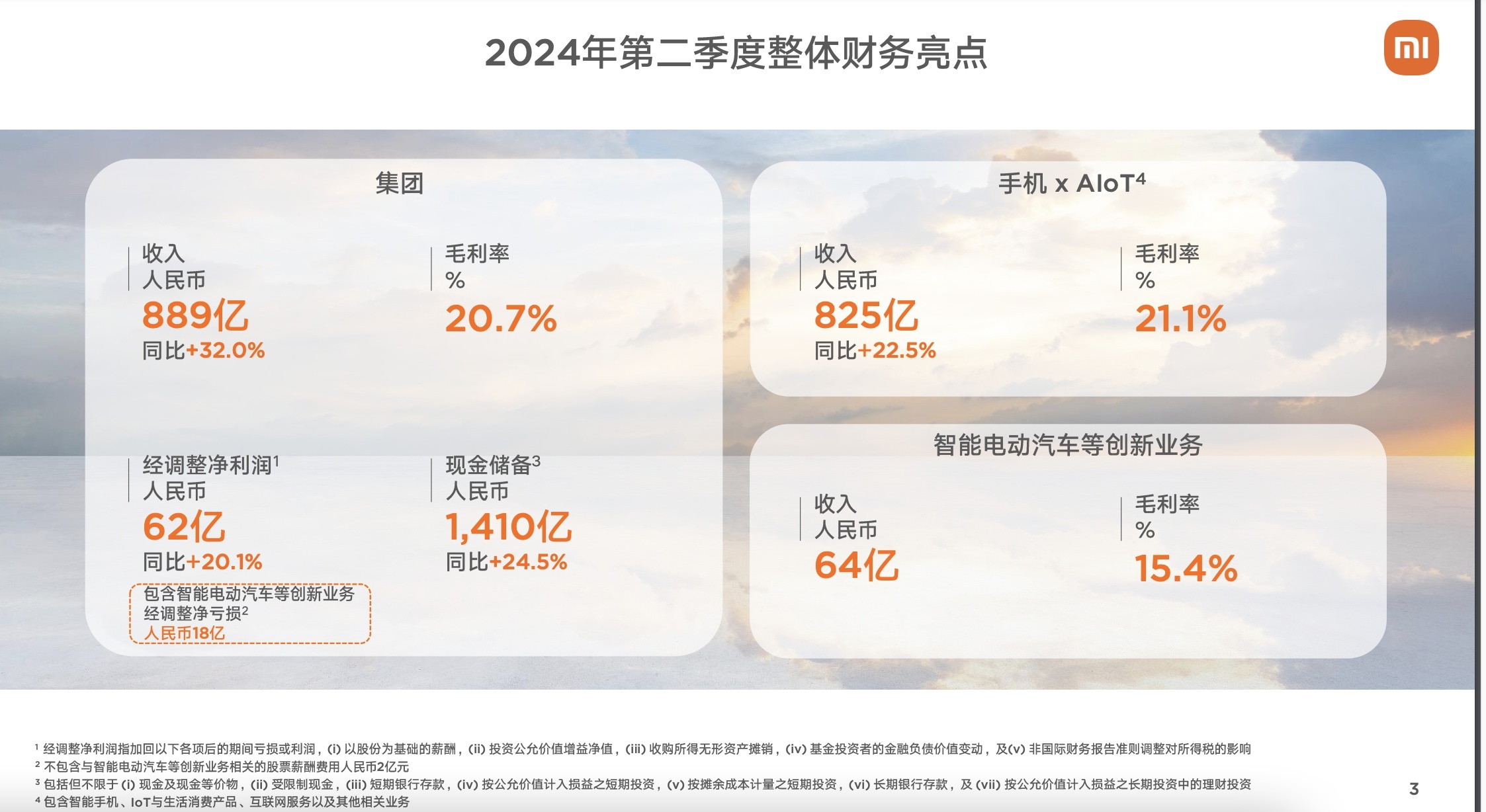
Specifically, in terms of financial data, Xiaomi Group achieved revenue of 88.89 billion yuan in 2024Q2, a year-on-year increase of 32.0%; net profit was 5.1 billion yuan, a significant increase from 3.7 billion yuan in the same period last year; adjusted net profit was 6.2 billion yuan, a year-on-year increase of 20.1%.
Among them, smartphone revenue reached 46.5 billion yuan, a year-on-year increase of 27.1%; IoT and lifestyle consumer products revenue reached 26.8 billion yuan, a year-on-year increase of 20.3%; internet services revenue reached 8.3 billion yuan, a year-on-year increase of 11.0%; innovative business segments such as smart electric vehicles generated revenue of 6.4 billion yuan. The expense ratio was 14.2%, a year-on-year decrease of 1%, and cash reserves stood at 141 billion yuan.
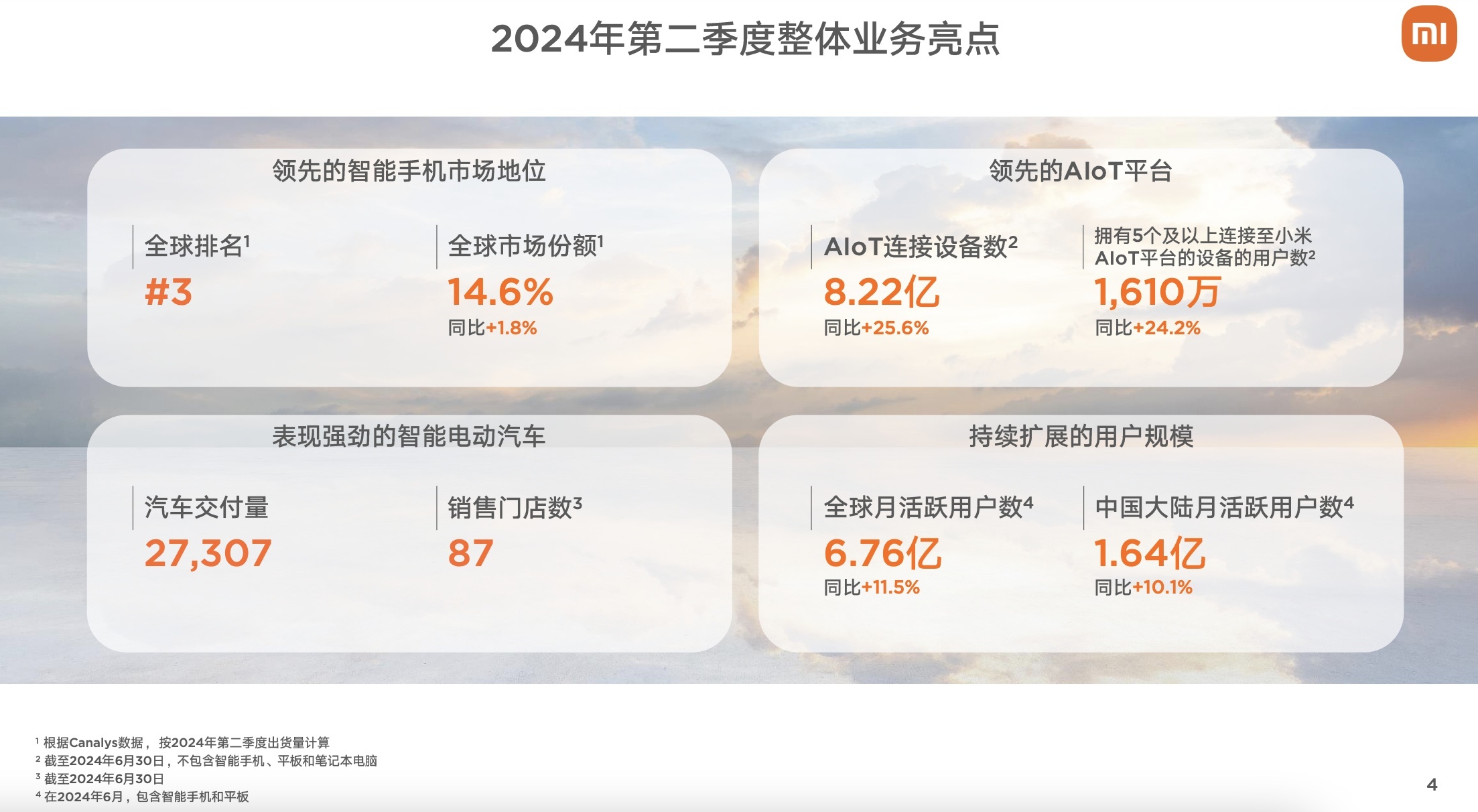
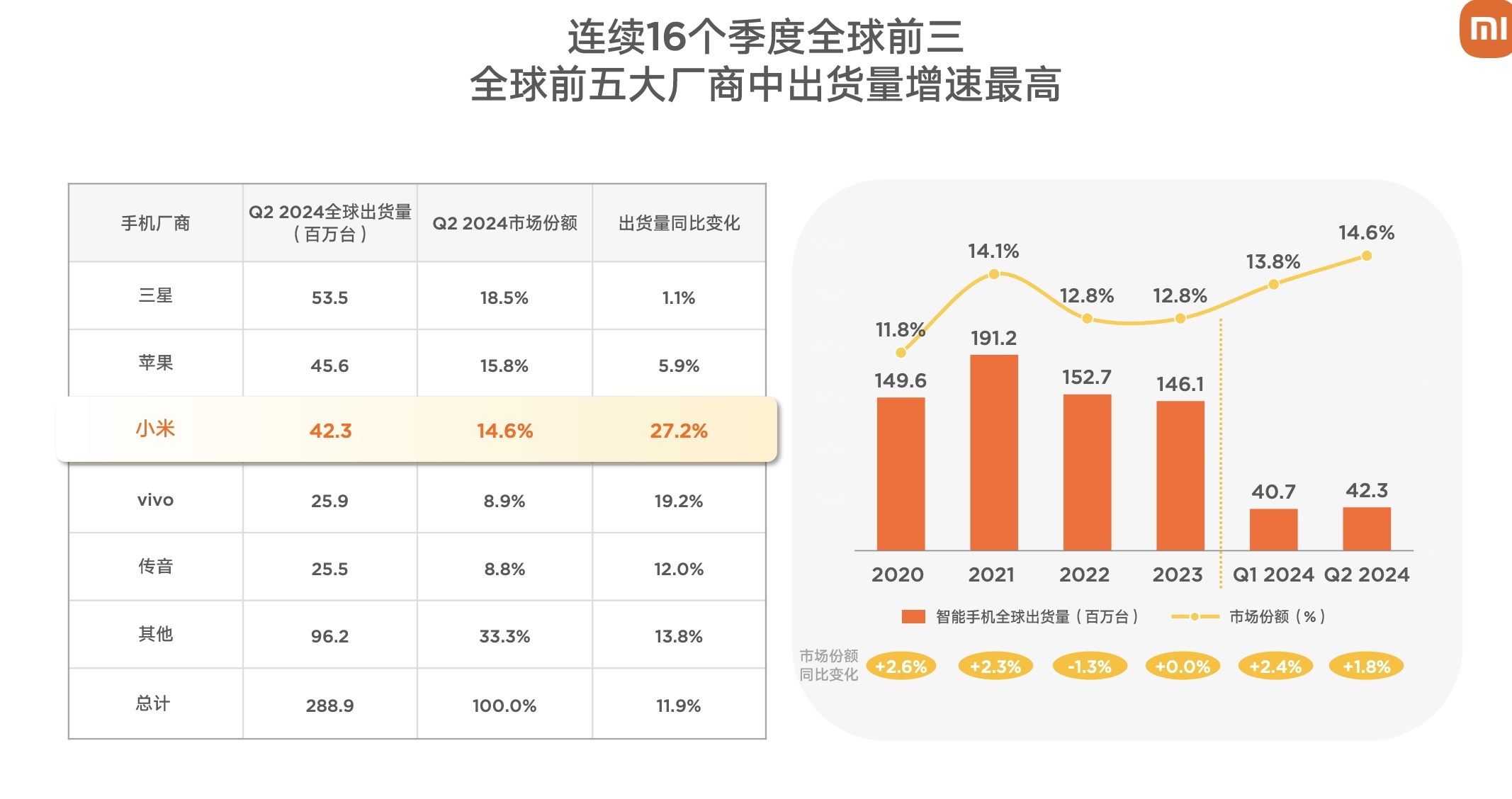
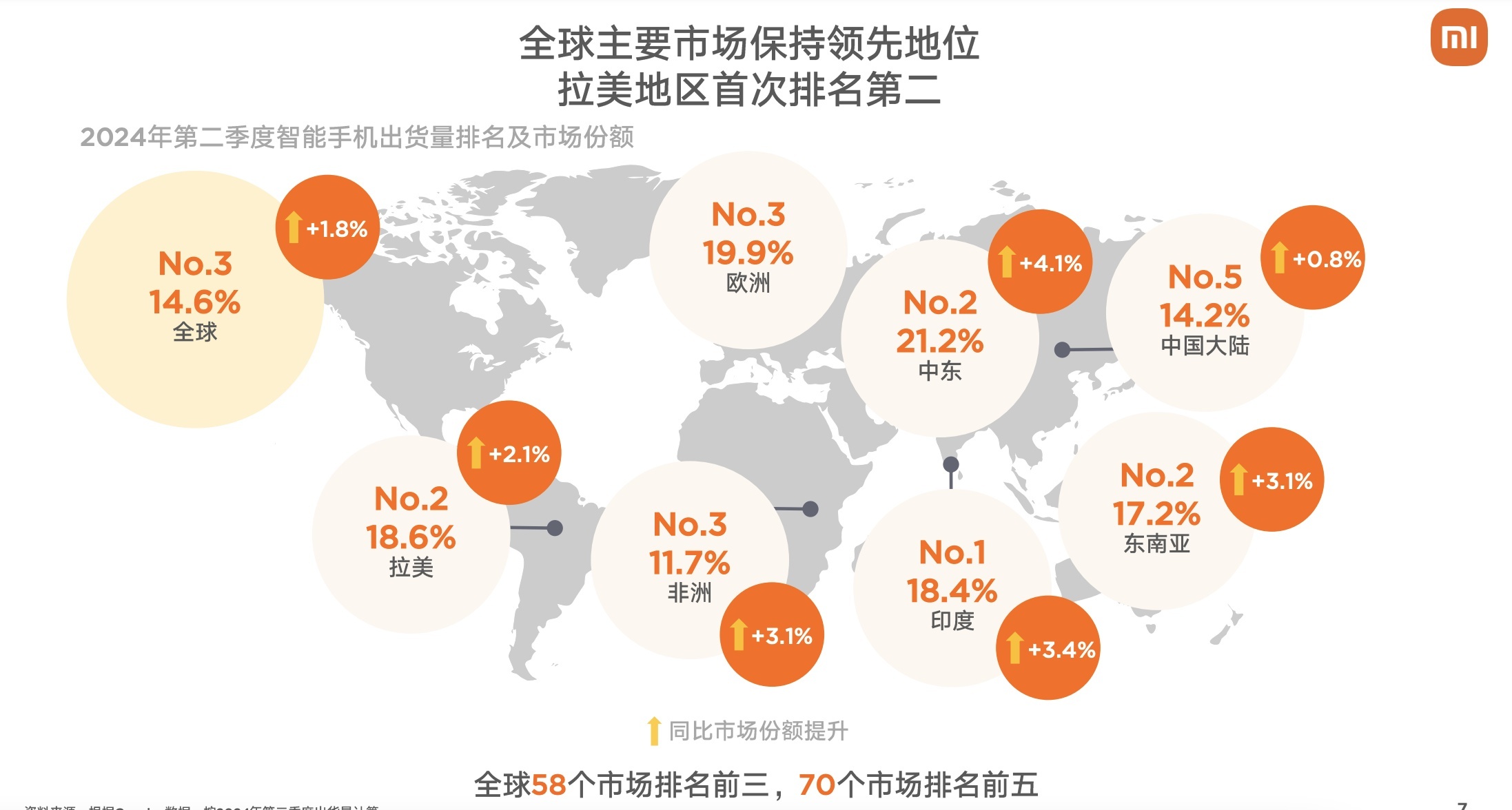
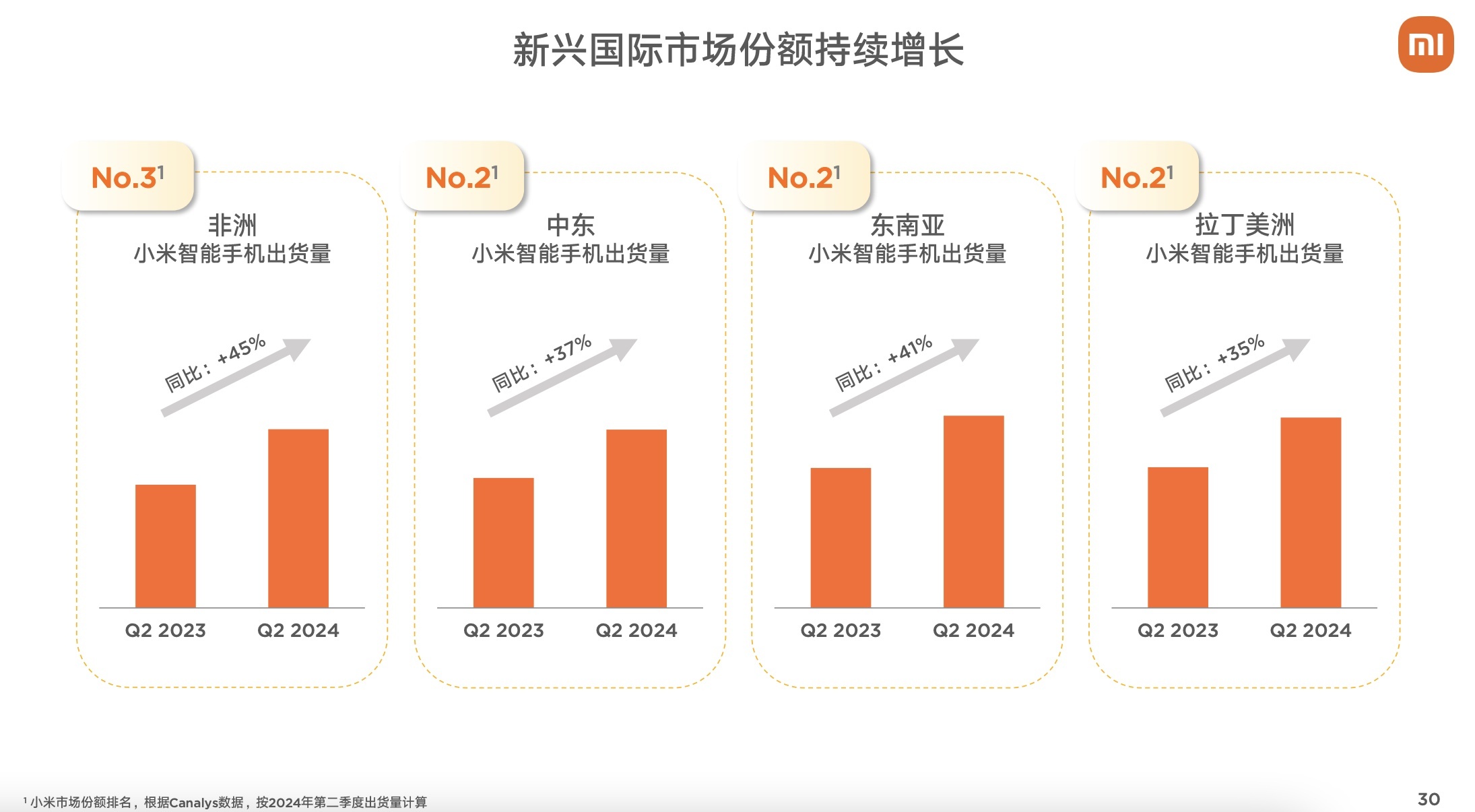
As the company's core business, Xiaomi's global smartphone shipments in 2024Q2 reached 42.2 million units, a year-on-year increase of 28.1%, ranking third globally with a market share of 14.6%. The proportion of high-end smartphone shipments increased to 22.1% (+2 pp), offline channel market share reached 10.4%, a year-on-year increase of 2.5pp, while ASP slightly declined to 1,103.5 yuan, mainly due to intensified competition and an increase in emerging market share, with a gross margin of 12.1%. In terms of overseas expansion, Latin America, Southeast Asia, the Middle East, and Africa showed rapid growth, with Latin America ranking second in shipments for the first time, with market share increasing from 3.1% to 17.2% year-on-year.
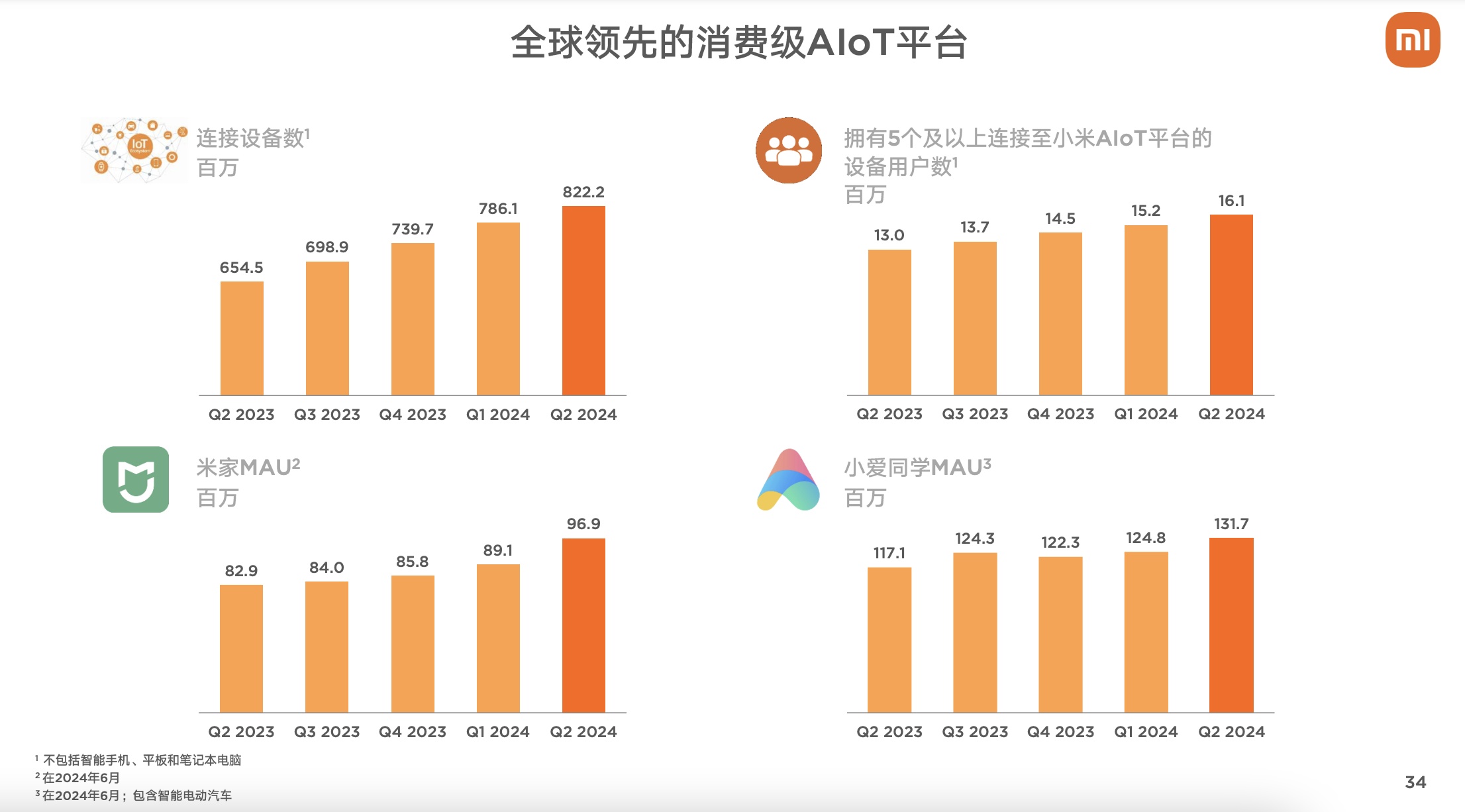
In terms of IoT business, Xiaomi Group's IoT connected devices reached 822 million units in 2024Q2, a year-on-year increase of 25.6%, with over 16.1 million users owning five or more devices, a year-on-year increase of 24.2%. Major appliances grew by 38.7% year-on-year, with air conditioner shipments exceeding 3.3 million units, a year-on-year increase of 40%; refrigerator shipments reached 600,000 units, a year-on-year increase of 25%; washing machine shipments reached 400,000 units, a year-on-year increase of 30%; global tablet shipments grew by 106% year-on-year.
Xiaomi Group has begun building a globally leading consumer AIoT platform.
Most notably, the company's new energy vehicle business launched this year. In 2024Q2, Xiaomi delivered 27,307 smart electric vehicles, with an ASP of 228,600 yuan. Additionally, the automotive business reported its first gross margin of 15.4%.
In the first half of 2024, Xiaomi had 87 automotive stores covering over 30 cities. The automotive business incurred a loss of 1.8 billion yuan this quarter but remained at a relatively good level.
Over the past few months, Xiaomi Group has continuously expanded production capacity and deliveries. In the second quarter, deliveries of the Xiaomi SU7 series reached 27,307 units, with monthly deliveries steadily increasing. July deliveries exceeded 13,000 units, surpassing the Model 3 in the pure electric vehicle market priced above 200,000 yuan, fulfilling the user promise of 'launching upon release, delivering upon launch, and scaling upon delivery.'
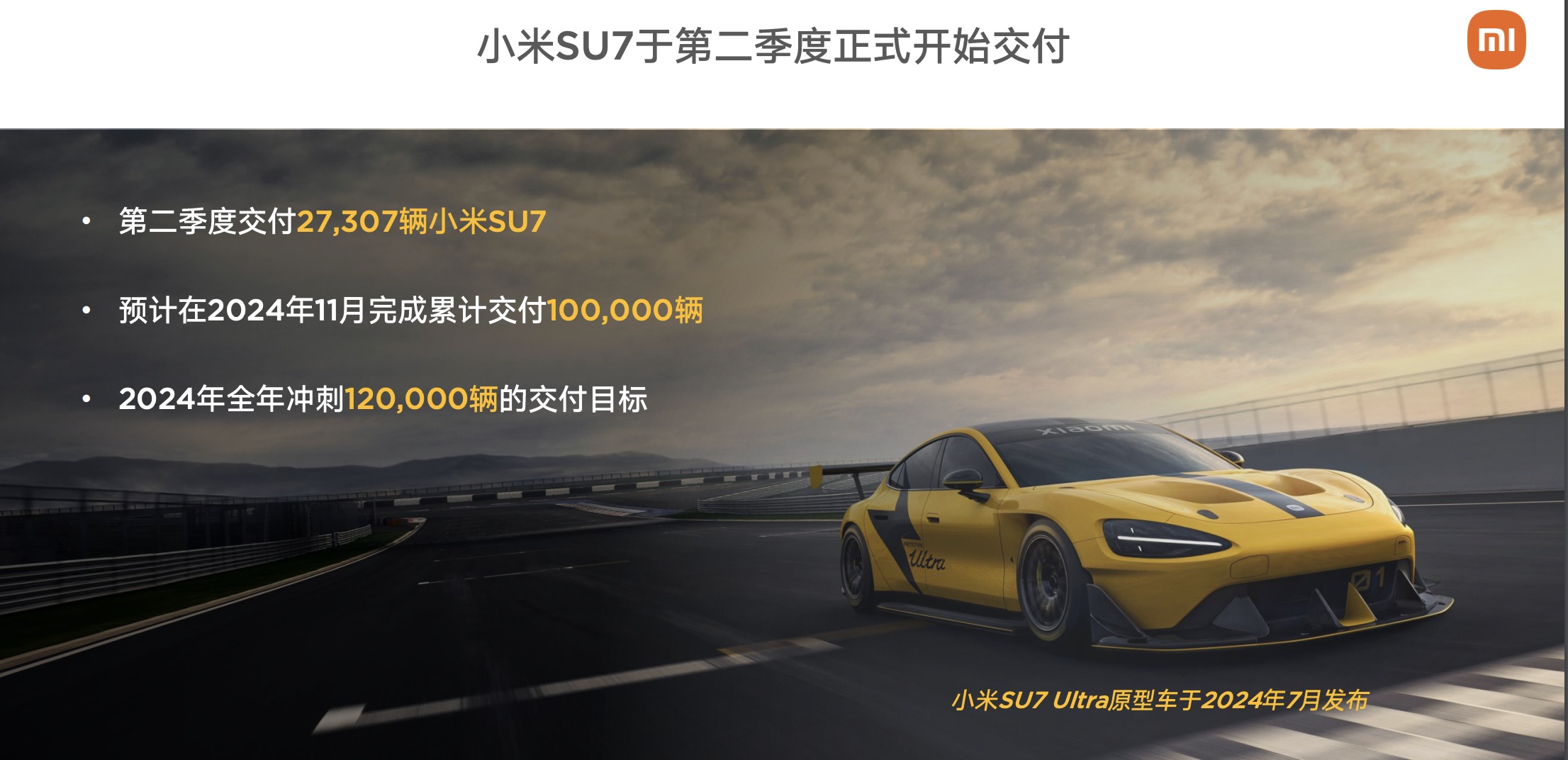
Additionally, Xiaomi Group adjusted its annual delivery target, expecting to achieve the goal of cumulative deliveries of 100,000 Xiaomi SU7 series vehicles by November 2024, ahead of schedule, and is now targeting a new goal of 120,000 cumulative deliveries for the full year of 2024.
If Xiaomi's automotive deliveries proceed smoothly, the company will join the top tier of domestic new energy vehicle manufacturers.
Currently, Xiaomi has over 100 automotive sales stores, with plans to open more than 220 by the end of the year, covering 59 cities nationwide.
In the second quarter of 2024, Xiaomi Group's innovative business segments, including smart electric vehicles, generated total revenue of 6.4 billion yuan, with an automotive gross margin of 15.8%. Net losses narrowed to 1.8 billion yuan, fully demonstrating Xiaomi's strong product competitiveness, cost control capabilities, and delivery capacity. The company remains committed to increasing investment in its automotive business and is confident in locking in new orders, improving deliveries, and further enhancing gross margins.
In fact, Xiaomi Group's automotive business performed exceptionally well in 2024Q2, with narrowing losses as deliveries continued to increase. This is particularly impressive for a new smart electric vehicle brand. The ability to deliver over 10,000 vehicles per month is also proof of Xiaomi's strong supply chain management capabilities.
Many brands go through a trial phase when entering the smart electric vehicle market, but Xiaomi's performance has left no doubt about the company's capabilities. This is also a reflection of the company's overall brand influence.
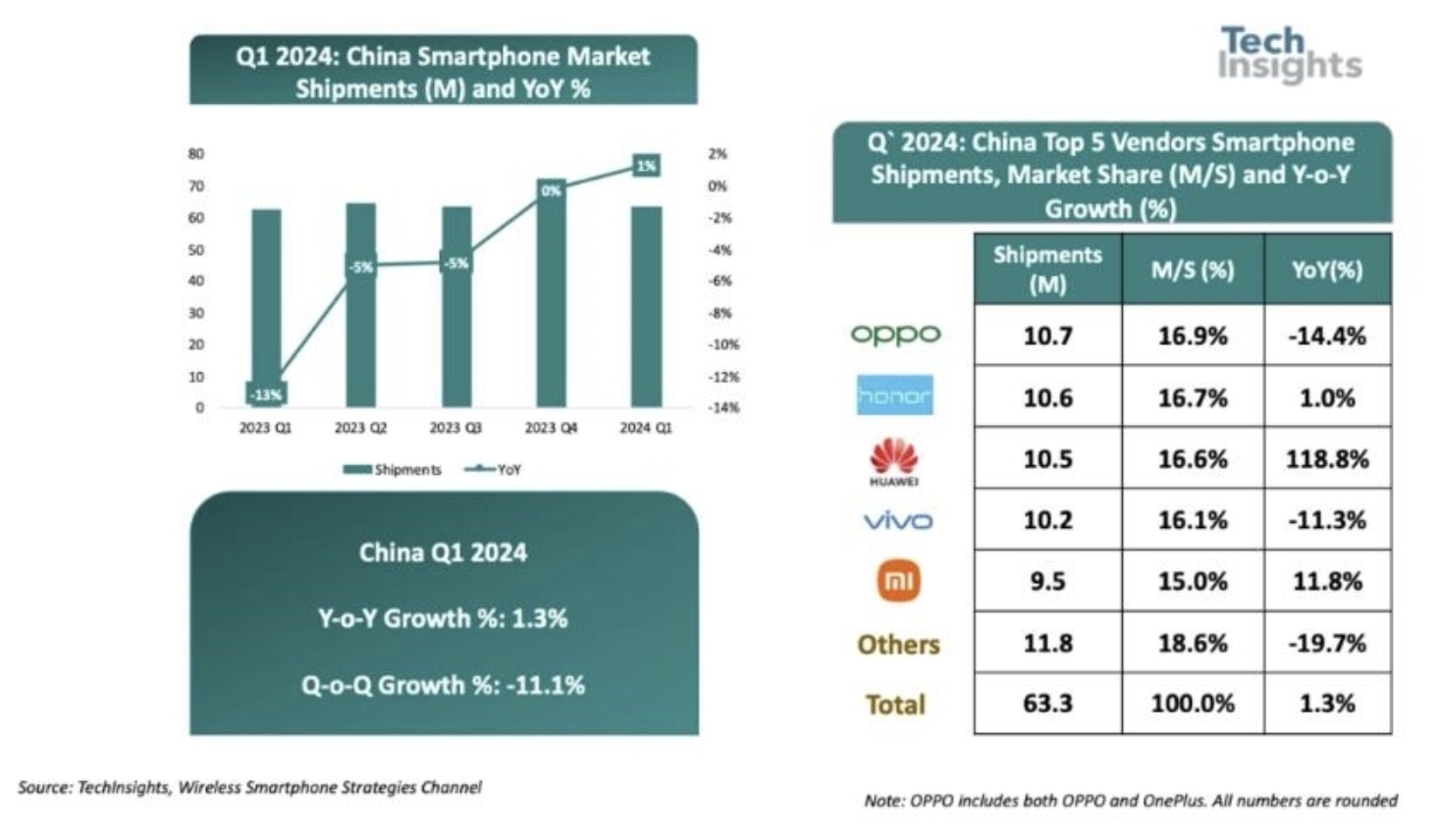
Another important factor is the company's strong performance in the smartphone market.
For many brands, 2024 may not be a year of rapid growth. Even industry leaders like Apple have struggled with growth stagnation, but Xiaomi Group has managed to achieve rapid growth under these unfavorable conditions, particularly with outstanding performance in non-traditional markets such as Africa, Southeast Asia, and the Middle East.
As Xiaomi continues to maintain strong momentum this year, the second half of the year may bring even more impressive performances.
【Q&A Session】
Q: What are the factors behind automotive gross margin? What is the outlook for automotive gross margin in the second half of the year? What is the target automotive gross margin?
A: Automotive gross margin is quite good, mainly due to 1) suppliers' confidence in Xiaomi, despite the small volume of the first vehicle; 2) Xiaomi's approach to creating hit products: scaling one model to surpass the volume of multiple models, avoiding the diseconomies of scale common in the automotive industry; 3) leveraging experience from the consumer electronics industry: over a decade of expertise has given us strong management capabilities from the start. This quarter, automotive losses were 1.8 billion yuan, which is still in the early stages.
Going forward, automotive gross margin will continue to improve: 1) Q2 deliveries were just the initial orders, and we offered many incentives; 2) BOM costs were highest at the start, but the current target is 120,000 units; 3) supply chain cost reductions. Additionally, Xiaomi delivered over 10,000 units in July and August, and as amortization decreases, other revenue streams and optional features will contribute to overall automotive gross margin growth.
Q: What are the goals for new retail expansion?
A: Xiaomi's new retail goals are: to sell all product categories and expand from domestic to international markets. Automotive is a key part of Xiaomi's new retail strategy. With the addition of automotive, Xiaomi's new retail stores have significant rental advantages, and larger stores (over 500 square meters) are increasing. The pace of store openings has accelerated, with 2,000 new stores added by the end of June and a target of 4,000 by year-end (up from the initial target of 3,000). High-end smartphone sales require brand stores, including major appliances like air conditioners, refrigerators, and washing machines, to provide integrated services from sales to installation. This is also why Xiaomi is expanding new retail overseas, with plans to appear in more countries and regions.
Q: Xiaomi's smartphone market share increased in all regions in Q2, indicating improved core competitiveness. Can market share continue to grow in the second half of the year?
A: The smartphone market is saturated, so Xiaomi is steadfastly executing its existing strategy: 1) Deepening underlying technologies and implementing a technology-driven strategy. Xiaomi continues to advance smartphone technology, with HyperOS and this year's HyperOS 2.0 incorporating many AI features; 2) Strengthening supply chain management, such as anticipating rising memory costs to control expenses; 3) Continuing the high-end strategy, which has succeeded in China and is now being expanded overseas. Service improvements have also enhanced customer satisfaction. 4) Xiaomi Home and new retail stores provide a competitive edge. Smartphone competition is multifaceted, and Xiaomi's strategies will remain unchanged in the coming years, with fluctuations expected quarter-to-quarter but long-term confidence in sales growth.
Q: Automotive gross margin is impressive. Will the next competitive focus be on price or quality?
A: Our current focus is on quality + delivery. Despite facing many malicious attacks, we remain committed to accelerating deliveries. Optimizing manufacturing costs is also crucial. New model development is highly confidential, but overall competitiveness is strong. As our user base grows, we will offer more user-centric services to make Xiaomi cars even more engaging.
Q: Will the company raise its automotive gross margin target?
A: We expect steady quarterly improvements in 2024, with an upward trend.
Q: What are the challenges and opportunities for flagship smartphones in the second half of the year? What are the trends and magnitude of raw material costs?
A: We have no judgment on Apple's new AI phone, but our trend of capturing the high-end market will not stop with any single model. We have the ability to compete with all brands, and the current market landscape will not fundamentally change. Raw material costs are mainly driven by screens and memory. Screen price increases have ended, while memory prices have doubled year-on-year due to production cuts, but we believe they have peaked.
Q: What drove the increase in internet gross margin in Q2? What is the outlook for internet business in Q3 and Q4?
A: The growing base of smartphone users, with global users increasing by approximately 70 million, contributed to the rise. Product mix optimization and higher sales of high-end smartphones also boosted gross margin. Overseas gross margin growth further drove improvements. Advertising revenue gross margin is now higher than gaming. While the trend of increasing sales, high-end smartphone share, and overseas expansion will continue, internet gross margin is already at a high level, so future growth will be limited.
Q: What are your thoughts on the prospects of AI phones?
A: Current AI phones are just smartphones with added AI features, not true AI phones. Xiaomi believes future AI phones should reconstruct the operating system with AI technology. We are working on this and may release related products in a few months.
Q: Are major appliances and tablets part of IoT's overseas expansion?
A: Our IoT strategy has two pillars: leading industrial capabilities and internationalization. Initially, we relied on ecosystem partners but found it difficult to achieve high-endization. We shifted to in-house R&D for core products (e.g., bands, major appliances, smart locks, routers) to enable heavy investments. The current IoT performance reflects this strategy. We also adopted a global product strategy, achieving strong economies of scale. Overseas sales will accelerate further as Xiaomi Home expands.
Q: Smartphones in the 3,000-6,000 yuan price range are growing rapidly. Is there a methodology?
A: We are solid in the 4,000-6,000 yuan range but face pressure at 6,000-10,000 yuan, relying on foldables and the Digital Ultra series. Each year, the Digital Ultra offers the best camera, starting at 6,499 yuan this year. Our small foldable has been very successful. We have some methods for the 6,000+ range but still need to work on the 10,000+ segment. We are not in a hurry for the 10,000+ range. Additionally, the synergy between Xiaomi cars and smartphones is just beginning.
Q: What are the bottlenecks in automotive production? Are there any after-sales issues?
A: Shifting from one shift to two shifts is our response to delivery bottlenecks. After-sales service faces no challenges, as delivery centers and 4S stores provide support. In areas with fewer sales, third-party stores handle after-sales, and user satisfaction is high.
Q: How does smart manufacturing impact profitability? Major appliances are becoming hits—will they adopt smart manufacturing?
A: Whether a product has manufacturing value-added determines if Xiaomi will produce it in-house. We avoid pure assembly products but will manufacture cars. As high-end smartphones advance, manufacturing becomes critical for process integration. About 20% of capacity will be in-house, with 80% outsourced to partners under strict quality control.$XIAOMI-W(01810.HK)
The copyright of this article belongs to the original author/organization.
The views expressed herein are solely those of the author and do not reflect the stance of the platform. The content is intended for investment reference purposes only and shall not be considered as investment advice. Please contact us if you have any questions or suggestions regarding the content services provided by the platform.
