


Seven years of waiting, Jinmailang still can't break the IPO curse

Against the backdrop of a saturated instant noodle market with slowing growth, Jinmailang has shifted its focus to the beverage sector, aiming to create a second growth engine. However, whether the beverage business can help it realize its IPO dream remains to be tested.
@新熵 Original
Author 丨 Luxuan Editor 丨 Jueying
Going public seems to be the dream of every company. For Jinmailang, this dream has been long and arduous.
On June 9, 2017, Jinmailang Noodle Products Co., Ltd. held an IPO launch meeting, announcing its official sprint toward an IPO.
"We must build a large marketing platform to achieve 100 billion yuan in revenue in the future." "With Jinmailang's craftsmanship and our conscience in food production, we will win consumers' affection." Chairman Fan Xianguo's passionate speech still echoes in our ears.
However, seven years have passed in the blink of an eye, and Jinmailang's IPO bell has yet to ring.
In fact, counting from its humble beginnings in a small village in Hebei Province in 1994, it has been a full 30 years. Jinmailang's relationship with the capital market has been a rollercoaster of love and conflict. Is the IPO dream really so hard to achieve?
The Tough Road to IPO
Jinmailang's story with the capital market is full of twists and turns, sparking heated discussions in the industry.
Rewind to 20 years ago. In 2004 and 2006, Jinmailang partnered with Nissin Foods and Uni-President Enterprises Corp., respectively, embarking on its capital market journey. However, after a "decade of love," they parted ways in 2015 and 2016, leaving many sighing. At the time, Nissin and Uni-President both issued announcements explaining the reasons for the "breakup." Industry speculation mostly pointed to Jinmailang's focus on the lower-tier market.
Although the partnerships didn’t work out, they seemed to fuel Jinmailang's determination to go public.
In 2017, Jinmailang loudly announced its official IPO sprint. After that, Jinmailang went all out with frequent moves.
In 2019, Jinmailang attempted to collaborate with Lander Sports to achieve a backdoor listing through a control transfer, but it ultimately fell through.
On December 23, 2020, Jinmailang signed an IPO advisory agreement with China Securities Co., Ltd., preparing to list on the A-share market. According to information on the Hebei Securities Regulatory Bureau's website, China Securities released IPO counseling reports on March 29 and July 30, 2021. After that, there were no updates, and Jinmailang's IPO plans fizzled out.
In January 2022, Jinmailang caught the eye of Cathay Capital and secured 600 million yuan in funding. "We are optimistic about Jinmailang's strong infrastructure capabilities that benefit the people," said Song Xiangqian, founding partner of Cathay Capital, expressing confidence. Compared to Jinmailang's 20 billion yuan revenue, the investment wasn’t huge, but for a company eager to enter the capital market, it was a ray of warm sunshine. The results of this collaboration with capital remain to be seen.
Over the past 20 years, Jinmailang has poured too much expectation and ambition into the capital market. However, the results have been repeated failures or unresolved outcomes. Moreover, due to its partnership with Nissin, Jinmailang was once labeled as a Japanese-funded company, plunging into a PR crisis. The company urgently clarified that it had "not a single cent of foreign capital," and the crisis was resolved.
Jinmailang's intense IPO complex may be related to its industry competitors. The instant noodle market is highly concentrated. In 1994, when Jinmailang's predecessor, Hualong Instant Noodle Factory, was first established, competitors like Tingyi (Cayman Islands) Holding Corp. and Uni-President already held 80% of the market share. After years of hard work, Jinmailang finally became able to compete with these two giants. Tingyi and Uni-President went public in 1996 and 2007, respectively.
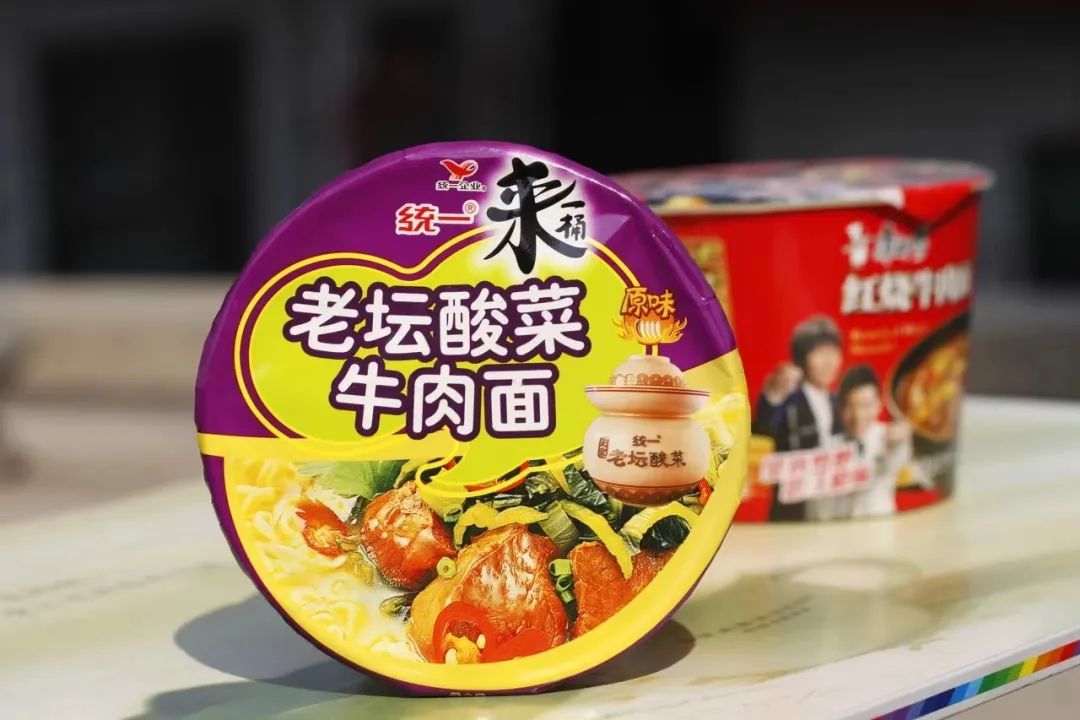
Tingyi is China's leading company in both instant noodles and beverages, with stable performance over the years and a market share of nearly 50%, making its dominance unshakable.
If Jinmailang has always been under Tingyi's shadow, its relationship with Uni-President was once neck and neck. In 2019, Jinmailang's revenue was 21.8 billion yuan, while Uni-President Group's was 22 billion yuan. No wonder Fan Xianguo declared that the "Tingyi-Uni-President" rivalry would become a "Tingyi-Jinmailang" one, exuding the confidence to replace Uni-President as the industry's second-largest player.
Moreover, even Bai Jia Akuan Foods, whose market share is far smaller than Jinmailang's, officially applied for an IPO on the Shenzhen Stock Exchange on December 28, 2021, moving much faster toward listing than Jinmailang.
In such a competitive landscape, with strong rivals ahead and challengers behind, it’s understandable that Jinmailang urgently needs to rely on an IPO to gain capital support and strengthen its position.
Jinmailang's repeated IPO failures may also be related to the bottlenecks in the instant noodle industry. When Tingyi and Uni-President went public, the market was in a rapid growth phase with high potential and profitability. As market conditions changed, Jinmailang missed the best window for an IPO.
Moreover, in recent years, multiple quality control failures and credibility issues have damaged Jinmailang's public image, negatively impacting its IPO prospects.
The Instant Noodle Market Is No Longer Easy
Thirty years ago, when Jinmailang's predecessor, Hualong Instant Noodle Factory, was first established, no one could have imagined that this unremarkable small factory would grow from an initial investment of 2.18 million yuan to over 20 billion yuan in revenue—a ten-thousand-fold increase.
Jinmailang's first bucket of gold was dug by targeting rural, lower-tier markets from the very beginning. Relying on a reputation for affordability, it quickly captured small shops in towns and villages.
Although Jinmailang started with low prices, it was unwilling to be labeled as "low-end."
After eight years of painstaking effort, in 2002, Chairman Fan Xianguo defied opposition and abandoned the long-established Hualong brand, adopting the "Jinmailang" trademark to begin its journey from rural areas to cities. That same year, endorser Dicky Cheung's advertisements—"Bounce well, bounce wonderfully, bounce with delicious flavor"—flooded the market, and the "bounce noodle" series entered urban supermarkets. Three years later, Jinmailang's instant noodle annual revenue exceeded 2 billion yuan.
However, the instant noodle market has always been fiercely competitive. Compared to rural areas, urban markets are dominated by strong players and have higher saturation.
In 2002, Tingyi's instant noodle revenue was $637 million, with market shares of 27.8% in sales volume and 39.6% in sales value. By 2005, Tingyi's instant noodle revenue had grown to $982 million, making it the undisputed leader. Moreover, Tingyi and Uni-President had already moved toward the mid-to-high-end market.
Facing such strong competitors, Jinmailang's "low-end" image from its rural roots lingered like a shadow.
At the same time, by focusing on urban markets, Jinmailang gave its low-end competitor, Bai Xiang Instant Noodles, an opportunity. In 2003, Bai Xiang pioneered China's first bone broth instant noodle, the "1 Yuan Big Bone Noodle," which was even more affordable than Jinmailang's products, quickly capturing the lower-tier market.
Fortunately, Jinmailang reacted swiftly, launching the "One and a Half Bag" and "One and a Half Bucket" series, addressing consumer pain points and regaining its footing in the lower-tier market.
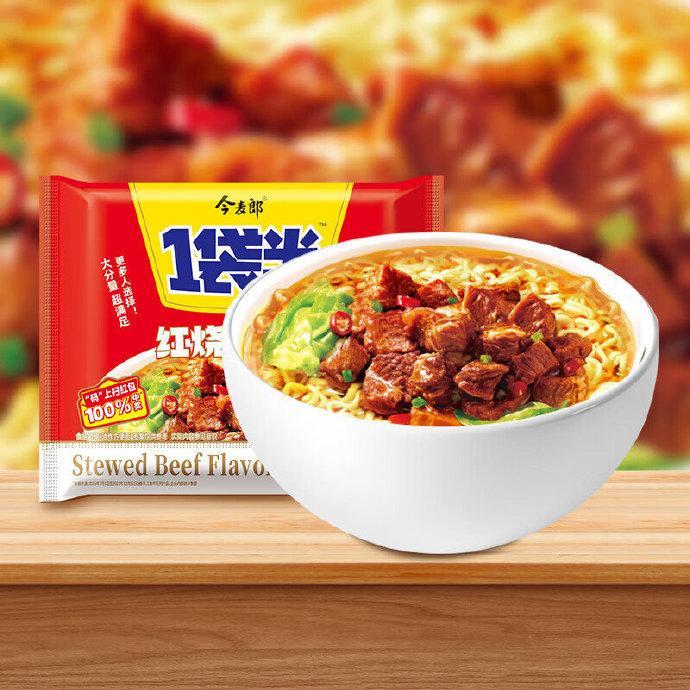
In reality, Jinmailang knows that to compete in the high-end market, it must launch premium products. In 2022, Jinmailang proposed a "0 frying" concept and introduced the 0 Fried Noodle "Lamian Fan." At this year's Convenience Food Conference, Fan Xianguo reiterated this direction. This may signal the phasing out of the "One and a Half Bag" and "One and a Half Bucket" bestsellers.
Beyond the dilemma of oscillating between low-end and high-end markets, Jinmailang's instant noodles also face fierce competition and an unpredictable market.
During periods of rapid domestic economic growth, consumption upgrades, and strong demand, the instant noodle industry flourished. Jinmailang was a beneficiary of this era's 红利. However, in recent years, the rise of food delivery, the increasing popularity of alternatives like 螺蛳粉,酸辣粉, and 预制菜, and the impact of 消费降级 have squeezed the instant noodle market. Industry insiders lament that instant noodles are becoming harder to sell.
In 2023, Jinmailang's instant noodle segment revenue was 6.367 billion yuan, down 11.29% year-on-year, with production volume dropping 20.09% to 3.804 billion servings. That year, Bai Xiang surged into the top three in the instant noodle market, while Jinmailang fell to fourth place with a 10% market share.
In fact, in the past two years, both Tingyi and Uni-President have faced the dilemma of increasing revenue without increasing profits in their instant noodle businesses. "The instant noodle market has been hit hard by fierce competition." "From 2023 to 2024, China's instant noodle industry is transitioning from rapid growth to a low-growth adjustment phase," said Meng Suhe, honorary chairman of the China Science and Technology Association, at the 24th Convenience Food Conference in August 2024.
In the face of sweeping 时代潮流, price wars and 流量战 cannot solve the fundamental problems of the instant noodle industry.
Can Selling Water Help with the IPO?
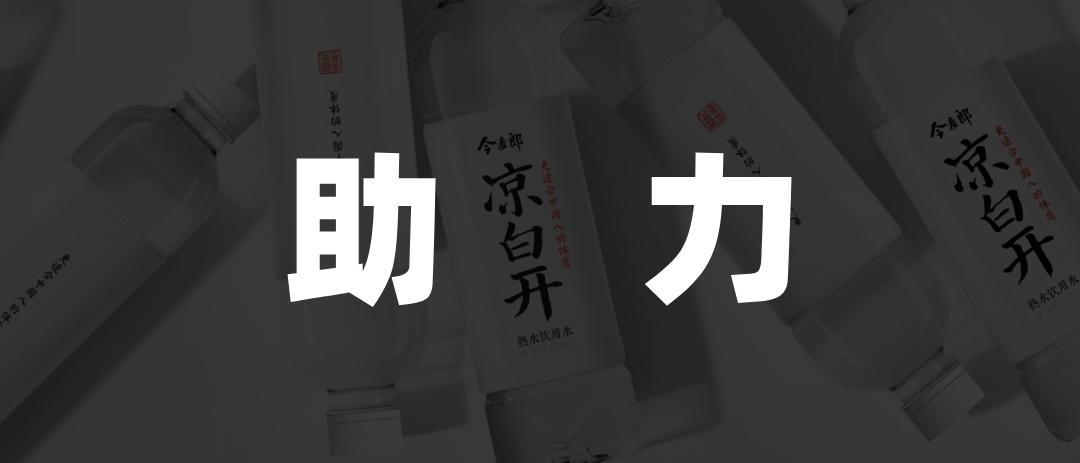
In 2006, Jinmailang joined hands with Uni-President to establish Jinmailang Beverage Co., Ltd., officially entering the beverage market.
Starting with noodles and expanding into beverages—this product line strategy is quite similar to that of Jinmailang's competitors, Tingyi and Uni-President.
Similar to its entry into the instant noodle market in 1994, Jinmailang stepped into a red ocean when it ventured into beverages. According to Tingyi's financial reports, in 2006, Tingyi led the non-carbonated beverage market, with its ready-to-drink tea holding a 53.6% market share in sales value, dominating the sector. Its bottled water ranked second nationally with an 11.0% share, while its diluted juice held a 17.1% share, ranking third.
Additionally, established beverage companies like 农夫山泉 and Wahaha had already secured dominant positions with extensive product lines, robust distribution channels, and technological 积累。
At the time, Uni-President's beverages were its main profit driver, with its tea drinks holding over a third of the market share. Jinmailang likely hoped to ride Uni-President's coattails into the beverage market, but their collaboration yielded mediocre results.
It wasn’t until 2015 that Jinmailang made waves with its 1-yuan soft-packaged water, leveraging its familiar low-price strategy.
After this initial success, in 2016, following its split with Uni-President, Jinmailang officially launched "Liang Bai Kai" (Cool Boiled Water).
As a new category 主打 "熟水" (boiled water) concept, it sold 5 million cases in its debut year. From 2017 to 2019, sales reached 250 million, 1.25 billion, and 2 billion yuan, respectively. According to a Huaxing Securities research report, in 2023, Liang Bai Kai 跻身 the ranks of beverages with over 2 billion yuan in sales.
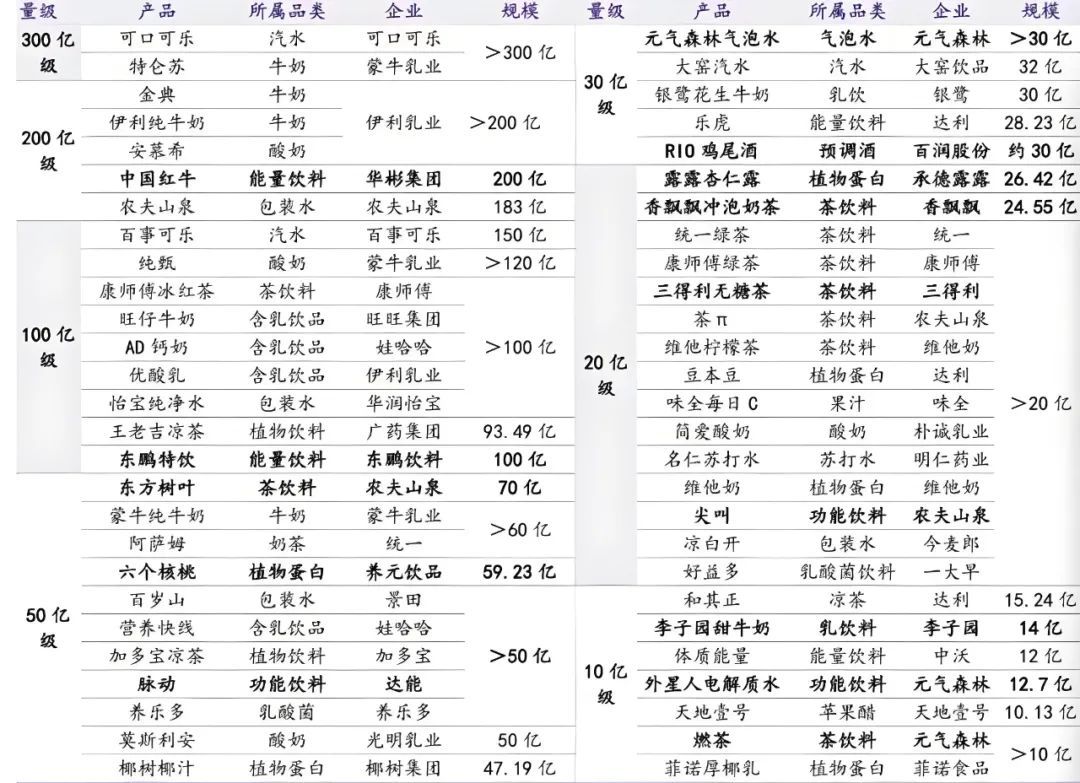
"Either create a new category or be the first in an existing one." Liang Bai Kai's impressive performance is the best footnote to Fan Xianguo's words.
These encouraging numbers may have greatly bolstered Jinmailang's confidence in beverages. Jinmailang also applied its marketing prowess to the fullest. On January 6, 2023, 1,000 drones staged a large-scale light show titled "The Beauty of China Is in Full Bloom" over Qingdao's Olympic Sailing Center. Amid this high-tech spectacle, Liang Bai Kai also underwent 包装焕新 and a brand upgrade.
With Liang Bai Kai's successful entry into the beverage market, Jinmailang Beverage has expanded to include 茶粹, Blue Label Water, and 今矿, among other products. On the 2023 Hurun China Food and Beverage Brand Value List released by Focus Media, Jinmailang ranked 26th nationally and 19th among private enterprises.
For a company starting from scratch, these achievements are commendable.
However, looking at the broader beverage industry, the competition is 异常激烈, with numerous players and entrenched giants. According to Zhiyan Consulting's "Bottled Water Industry Research Report—Analysis of China's Bottled Water Development Environment, Supply and Demand Trends, and Investment Prospects in 2023," the bottled water market is highly concentrated. In 2021, the top six companies—农夫山泉,怡宝, Tingyi, Wahaha,百岁山, and 冰露—held over 80% of the market share. Jinmailang was not among them. Under such circumstances, the pressure on Jinmailang is 可想而知。
Even its standout product, Liang Bai Kai, faces 尴尬. Since the trademark "Liang Bai Kai" under Class 35 (a "universal trademark" category) was registered by an education consulting company in August 2018, Jinmailang may face challenges in continuing to use the name.
Moreover, the success of the "boiled water" category has attracted 模仿 from other bottled water brands. In 2020, Tingyi launched "Drink Boiled Water," entering the market. "Boiled water" is no longer Jinmailang's exclusive territory.
In summary, against the backdrop of a saturated and slowing instant noodle market, Jinmailang's move into beverages reveals its strategic intent to establish a second growth curve. But can the beverage segment help Jinmailang achieve its long-held IPO dream? The road ahead may still be long.
The copyright of this article belongs to the original author/organization.
The views expressed herein are solely those of the author and do not reflect the stance of the platform. The content is intended for investment reference purposes only and shall not be considered as investment advice. Please contact us if you have any questions or suggestions regarding the content services provided by the platform.
