


 SEAZEN Return Rate
 Rate Of Return
9.19 marks the beginning of a new rate-cut cycle

Last night, the Federal Reserve cut interest rates by 50 basis points, and Asia-Pacific stock markets and Hong Kong stocks performed well after the Mid-Autumn Festival break. The A-share market opened flat and fell in the morning, then rose around noon, showing overall good performance.
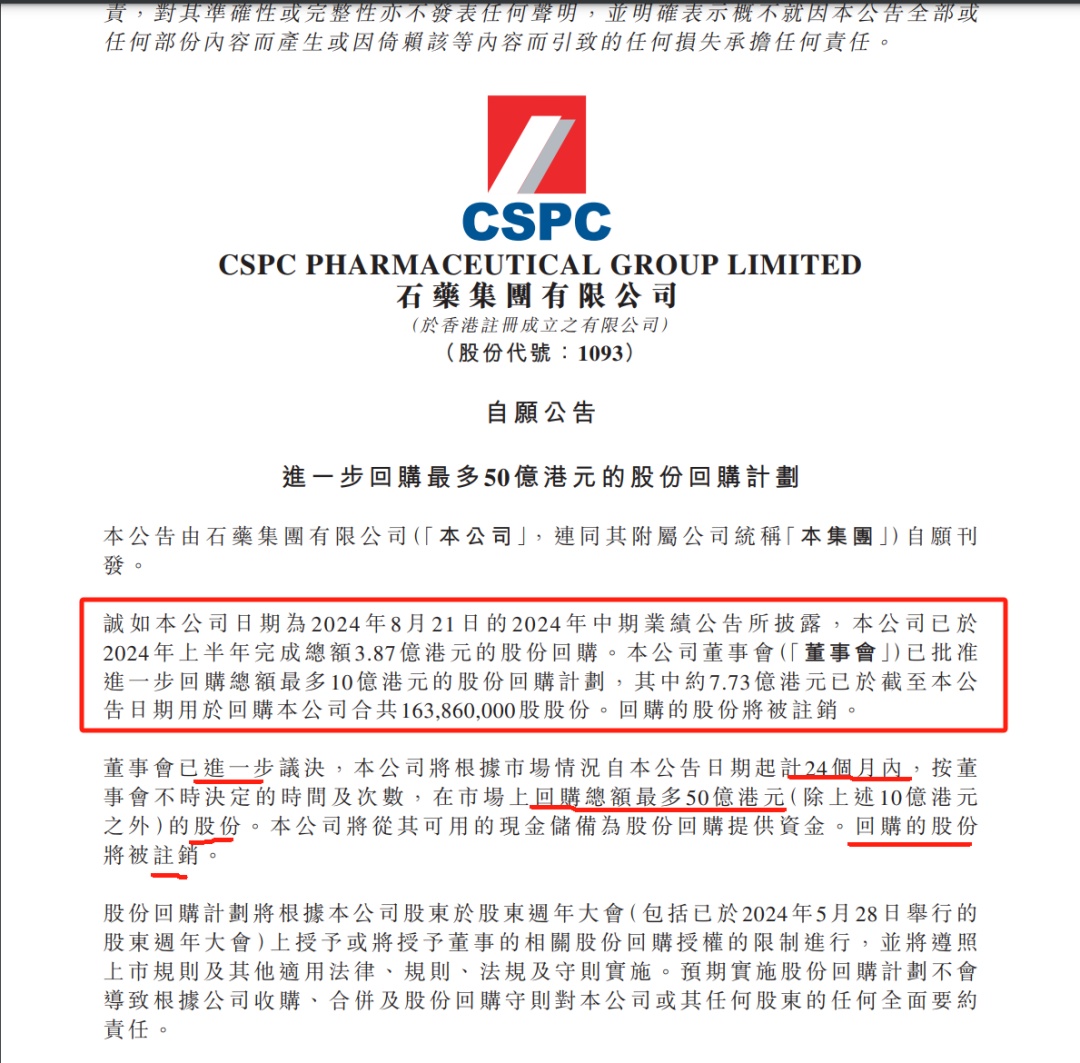
After the market closed today, I saw a satisfying announcement. Sino Biopharmaceutical has delivered reassurance—after exhausting the current RMB 1 billion buyback quota, it will add another round of buybacks up to RMB 5 billion. Having no shortage of funds is a good thing. Buybacks and cancellations are equivalent to dividends. The total interim and final dividends this year should reach HKD 0.32-0.35 per share. Combined with the two rounds of buybacks totaling RMB 6 billion, the potential returns for investors are quite high.
After the Fed's rate cut, the U.S. stock market saw sufficient turnover, with a slight pullback at the close after fluctuations. Pre-market, the index futures for the three major indices all hit new historical or recent highs. Did some calculations—that small options lottery ticket finally broke even...
I’ve actually shared quite a few thoughts recently. Earlier, I discussed the logic behind real estate, pharmaceuticals, and new energy. The main consideration is the relief on the debt side of real estate after the rate cut. For pharmaceuticals, especially innovative drug companies with heavy R&D investments, which also carry significant debt for single-product research, financial costs become more competitive in a lower-rate environment. For new energy, the focus is on lithium batteries at low levels. The recent negative news about the low-level Lebanon pager explosion is actually an opportunity to enter lithium battery stocks. As for utilities, since they haven’t rebounded yet, the broader logic remains about local fiscal supplements beyond land sales. Although utility price hikes are a sensitive issue, differentiated services and price increases are still certain trends for the future. (In summary, four major allocations: real estate, pharmaceuticals, lithium batteries, and water & gas.)
Each generation has its own investment limitations. It can’t always be the older generation holding positions, nor can it always be the younger generation making reckless decisions. Personally, I think more discussion and communication are needed. But reality is often not as ideal as we imagine: one generation repays the debts of another, or one generation reaps the dividends of another.
The copyright of this article belongs to the original author/organization.
The views expressed herein are solely those of the author and do not reflect the stance of the platform. The content is intended for investment reference purposes only and shall not be considered as investment advice. Please contact us if you have any questions or suggestions regarding the content services provided by the platform.
