


 Likes Received
 Posts
PostsThe first AI chip stock surged by 156.5 billion.

A tenfold increase in two years, Cambricon, crowned as the "first AI chip stock", staged a dramatic comeback.
Riding the wave of AI, Cambricon has temporarily escaped its crisis.
But in the long run, no matter how hot the concept is, performance is the ultimate destination. And judging from Cambricon's current financial performance, there is no sign of turning losses into profits.
From the perspective of the capital market, if Cambricon still fails to seize the opportunity to turn losses into profits after the hype fades, it will most likely be "abandoned" by the capital market again.
Of course, the market has given Cambricon chances before, but it failed to seize the last one.
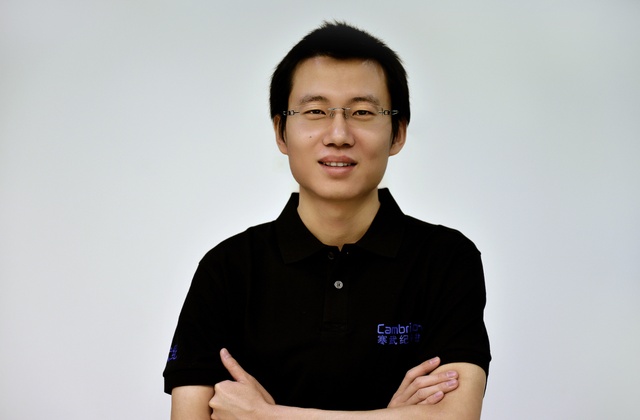
As is well known, Cambricon was once a shining "rising star" in China's chip industry, and its star founder Chen Tianshi was also highly regarded by the industry. As a genius in the chip industry, founder Chen Tianshi and his brother Chen Yunji were closely watched by the market from the very beginning of their entrepreneurial journey. Chen Tianshi's rapid entry into the industry was also largely due to his brother.
In 2015, Chen Tianshi and his team developed the world's first prototype chip for a deep learning processor. Because the project was ahead of its time, commercialization was quite challenging. It wasn't until 2016, with the support of the investment management platform of the Institute of Computing Technology of the Chinese Academy of Sciences, that Chen Tianshi co-founded Beijing Cambricon Technology Co., Ltd. with the Chinese Academy of Sciences.
Shortly after its establishment, the company caught the attention of Huawei.
At the time, Huawei's market team approached Chen Tianshi to explore the possibility of integrating AI with smartphone chips, which greatly inspired him. After adjusting the early chip designs, he sold them to Huawei. Partnering with Huawei, Cambricon began to thrive. In September 2017, Huawei launched the world's first AI smartphone chip, the "Kirin 970", in Germany. Since it was equipped with Cambricon's 1A processor, Cambricon became an overnight sensation.
Notably, Cambricon's main revenue at the time came entirely from IP licensing, which also sowed the seeds for its later "fall".
In 2020, Cambricon, then at the height of its glory, went public on the STAR Market, becoming the undisputed "first AI chip stock". Tragically, shortly after its IPO, Cambricon lost its biggest client, Huawei. The impact of this event has yet to be fully absorbed.
Due to limited revenue growth, Cambricon's stock price entered a two-year downward spiral, plummeting by over 80% at one point. Fortunately, teetering on the edge of danger, Cambricon caught the global AI wave.
Amid the global AI boom, Cambricon regained favor with investors. Statistics show that since mid-2022, Cambricon's stock price surged from a low of 46.59 yuan per share (pre-split adjusted) to a peak of 503.33 yuan in just two years, a staggering increase of over 1000%, with its market cap soaring by more than 190 billion yuan. As of the latest closing price, it remains up by over 156.5 billion yuan from its lowest point.
For now, Cambricon's crisis has been temporarily averted, but its persistent losses remain an unavoidable hurdle. If it fails to turn losses into profits, the "bubble" could burst quickly once the hype fades.
Continuous Losses
A glance at Cambricon's financial reports reveals that sustained and massive R&D investments are the root cause of its long-term losses.
Compounding Cambricon's woes is its stagnant revenue.
According to its financial reports, from 2019 to 2023, Cambricon's revenues were 444 million yuan, 459 million yuan, 721 million yuan, 729 million yuan, and 709 million yuan, respectively. In other words, from 2021 to 2023, Cambricon's revenue stagnated and even showed signs of decline.
In contrast, its net losses from 2019 to 2023 were 1.179 billion yuan, 435 million yuan, 825 million yuan, 1.256 billion yuan, and 848 million yuan, respectively.
Cambricon's financial reports indicate that by mid-2024, its performance had further deteriorated, with first-half revenue at 647.653 million yuan, a year-on-year drop of over 43%, and a net loss of 530 million yuan, showing no signs of narrowing.
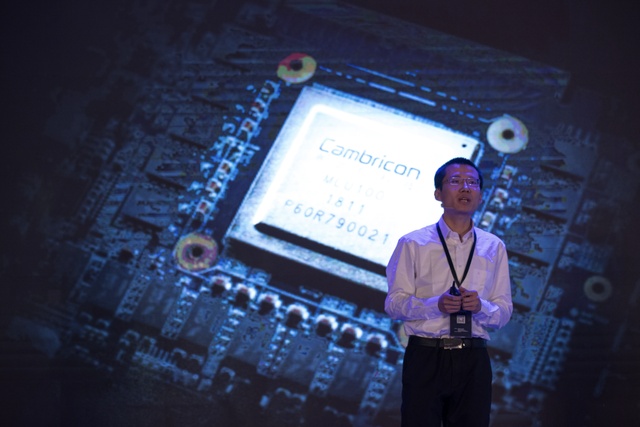
Thus, losses have become the norm for Cambricon. Moreover, the impact of the interest rate hike cycle has made financing more difficult, pushing Cambricon to the brink of danger.
Persistent losses and stagnant revenue have also strained Cambricon's operating cash flow. From 2021 to 2023, its operating cash flow was -873 million yuan, -1.33 billion yuan, and -596 million yuan, respectively. Although the loss narrowed slightly in 2023, the situation seems to have worsened again this year.
According to its 2024 interim report, in the first half of the year, Cambricon's operating cash flow was -631 million yuan, already exceeding the full-year loss for 2023. Notably, as of the end of June 2024, its cash and cash equivalents balance had dwindled to just 1.383 billion yuan, a quarter-on-quarter decrease of 2.571 billion yuan.
For Cambricon, while the AI wave has temporarily saved it from crisis and opened up vast possibilities, the market's ultimate test will always come back to performance. Take NVIDIA, the global chip leader, as an example: in the first half of this year, NVIDIA's revenue reached $56.084 billion, up 170.95% year-on-year, while its net profit attributable to shareholders was $31.48 billion, a 282.41% increase.
In other words, despite NVIDIA's massive gains, its performance justifies its valuation. Cambricon's current performance, however, can hardly support its market cap. Additionally, Cambricon has never turned a profit since its inception, relying instead on continuous financing to stay afloat. Before its IPO, Cambricon raised 4.6 billion yuan through six rounds of financing. Including its IPO proceeds, its total fundraising exceeds 7.1 billion yuan.
From this perspective, if Cambricon fails to quickly turn losses into profits and expand its revenue streams, the risks ahead could be substantial.
Bubble and Future
For the capital market, high returns come with high risks, but that doesn't mean investors have a high-risk appetite.
What worries investors most about Cambricon is its uncertainty. After all, the failure of Royole, once a leader in flexible screens, served as a stark lesson for the market.
When Cambricon lost its biggest client in 2020, institutional investors voted with their feet. Starting in 2021, institutions such as Guotai Junan, Zhishi Private Equity, SDIC Ningbo Hango, Changjiang Zhaoyin, iFlytek, and Beijing Nayuan began reducing or even liquidating their positions.
Notably, the institutional exodus didn't stop there. Taking advantage of the stock price rebound, several venture capital shareholders of Cambricon engaged in large-scale sell-offs in the second half of 2023, drawing criticism from the market.
To stabilize market sentiment, in September 2023, Cambricon issued an announcement stating that its actual controller and chairman, Chen Tianshi, voluntarily pledged not to reduce his holdings in any form until December 31, 2024. However, under new regulations, for companies that were unprofitable at the time of listing, controlling shareholders and actual controllers are prohibited from selling pre-IPO shares for three years, with restrictions on the proportion of sales in the fourth and fifth years.
Thus, Chen Tianshi's no-sale pledge was largely redundant.
On July 26, 2024, Cambricon announced a share buyback plan. According to the announcement, Cambricon plans to repurchase between 20 million yuan and 40 million yuan worth of shares via centralized bidding, at a price not exceeding 297.77 yuan per share. The repurchased shares will be used entirely for employee stock ownership plans or equity incentives.
Kan Jian Finance believes that for a behemoth with a market cap of nearly 200 billion yuan, a buyback plan of no more than 40 million yuan is unlikely to provide any real support for its stock price.
In July of this year, Sina Tech also reported that Cambricon's autonomous driving chip subsidiary, Xingge Technology, underwent massive layoffs. Sina Tech noted that new projects in Cambricon's autonomous driving chip business had been suspended, with nearly half of the software team laid off and only a few hardware employees retained for "wrapping up." This marks the second round of layoffs at Cambricon since April 2023.
An industry insider interviewed by Sina Tech stated that Cambricon's current strategy resembles that of many cloud service providers, but the company seems to lack the resources and capabilities to execute such systematic work.
Kan Jian Finance argues that no matter how vast the AI potential seems, Cambricon must return to the fundamentals of performance. If it cannot sustain its valuation with solid results, its current market cap may prove to be a mirage. If Cambricon fails to capitalize on this AI wave, its future could be even more precarious than in 2023.
Additionally, Kan Jian Finance notes that in the past six months, 11 brokerages have issued ratings for Cambricon, with six recommending "buy" and five suggesting "overweight."
The copyright of this article belongs to the original author/organization.
The views expressed herein are solely those of the author and do not reflect the stance of the platform. The content is intended for investment reference purposes only and shall not be considered as investment advice. Please contact us if you have any questions or suggestions regarding the content services provided by the platform.
