


Premiumization, Xiaomi's 'Waterloo'?

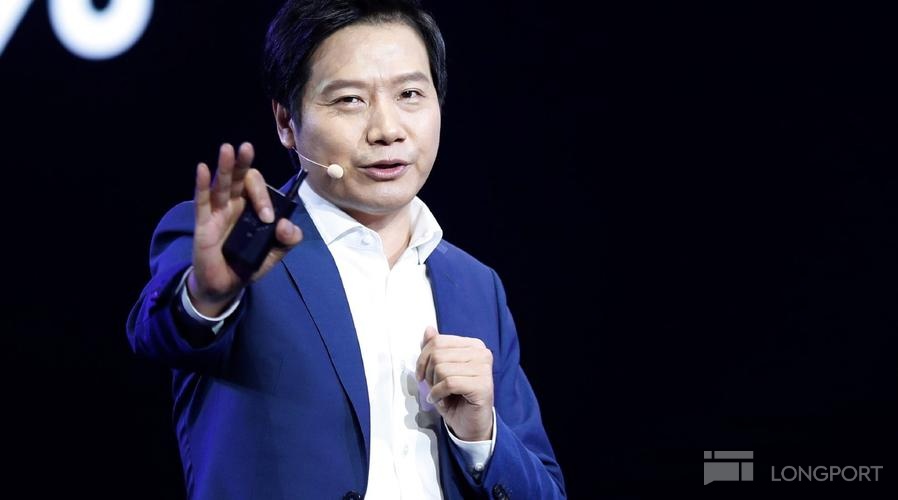
If we were to summarize Xiaomi's latest product launch, the word "premiumization" would undoubtedly be the key theme.
Whether it's the Xiaomi 15 smartphone or the Xiaomi SU7 Ultra electric car, we can see Xiaomi's determination to move upmarket.
Although we don't yet know if the market will buy into it, at least Xiaomi has made its ambition for premiumization clear.
For both the smartphone industry, which is undergoing deep consolidation, and the automotive industry, which is gradually moving upmarket, Xiaomi's premiumization strategy is a very good choice.
Observing Xiaomi's entire launch event, it's clear that Xiaomi wants to convey to the outside world that its premiumization is built on a foundation of technology and R&D, not just marketing considerations.
We can see traces of this in Xiaomi's continuous investment in R&D and its deep internal transformation.
It must be said that Xiaomi's strategy of using technological prowess to drive its premiumization is indeed commendable.
If this strategy continues, even in the highly competitive smartphone and automotive industries, Xiaomi can carve out a place for itself.
The reason is that the current market is no longer the growth-driven market that once fueled Xiaomi's rise but has become a saturated market with diminishing returns.
I
From the very first day of its founding, Xiaomi has targeted young consumers as its core customer base.
Whether it's Xiaomi's slogan "Born for the tech-savvy" or its marketing strategies, almost all efforts have focused on young users.
With this strategy, Xiaomi quickly captured the youth market and once became the go-to brand for young consumers.
Even in the fiercely competitive smartphone industry, Xiaomi managed to secure a foothold.
However, young users eventually grow up, and Xiaomi's once-proud youth-oriented strategy is now facing new challenges.
At the same time, competition among players has shifted from marketing and concepts to technology and R&D.
To change this situation, sticking to old strategies won't sustain Xiaomi's growth. Only by adapting to market changes can Xiaomi enter a new phase of development.
It is against this backdrop that we've seen Xiaomi gradually increase its R&D investments and enhance the value of its products.
This launch event is the most direct proof of that.
This time, the theme of Xiaomi's launch was defined as "A New Starting Point," and the products unveiled were packed with cutting-edge technology and hardcore features.
Take the Xiaomi 15, for example. Externally, it features an industry-first high-gloss aluminum metal process, weighing only one-third as much as stainless steel. The phone also achieves an "ultra-narrow four-sided bezel" of just 1.38mm.
Lei Jun stated at the launch: "Xiaomi's premiumization strategy has been in place for five years, with five generations of products. The Xiaomi 15 released today will be the smoothest, most refined, and best-feeling compact flagship in history."
According to reports, to achieve the ultra-narrow bezel and LIPO screen encapsulation, Xiaomi conducted full-process in-house R&D, investing over 100 million yuan in production lines, filing 30 patents, and spending 20 months from pre-research to mass production.
It's clear that Xiaomi is no longer the assembly-line brand it was once perceived as but has transformed into a tech-driven company with high added value.
For Xiaomi, this is likely the fundamental reason why it labeled this launch as "A New Starting Point."
II
If Xiaomi's increasing added value is helping it shed its old stereotypes, the profound changes in its market environment are another key reason for its push into the premium segment.
In other words, the market demands that Xiaomi embrace premiumization.
We all know that, for Xiaomi and other smartphone manufacturers, their past growth was largely driven by expanding into incremental markets.
Smartphone penetration and internet adoption rates were the primary drivers of their development.
However, after the mobile internet era, both smartphone and internet penetration have reached very high levels.
For them, trying to grow by capturing incremental market share is now extremely difficult.
As a result, we see players increasingly focusing on premiumization.
In fact, besides Xiaomi, Huawei, Apple, Samsung, and others are all making moves in this direction.
In a sense, premiumization has opened up new growth opportunities in a saturated market, allowing them to achieve new development through iteration and upgrades.
Huawei's tri-fold screen, Apple's titanium designs, and other innovations all signal a commitment to premiumization and the potential to gain new growth in a saturated market.
For Xiaomi, sticking to low-end strategies or being seen as a mere assembler would make it impossible to thrive in this environment or convince investors of its potential.
This is why we saw so many in-house technologies unveiled at this launch and why Lei Jun emphasized Xiaomi's massive R&D investments going forward.
At the launch, Lei Jun stated that behind Xiaomi's "New Starting Point" is its unwavering commitment to technology, with continued focus on core technologies in AI, OS, and chips.
In 2024, Xiaomi expects R&D spending to exceed 24 billion yuan, reaching 30 billion yuan in 2025.
Thanks to this, Xiaomi Group achieved 27% year-on-year growth in Q1 2024 and 32% in Q2, maintaining counter-trend growth and evolving into a global advanced hardcore tech company.
According to Interbrand's "2024 Top 100 Global Best Brands," Xiaomi ranked 87th, becoming one of only two Chinese brands in the top 100.
Canalys data shows that as of Q2 2024, Xiaomi ranked among the top three smartphone vendors in 58 countries and regions and top five in 70.
As of Q3 2024, Xiaomi has maintained its position as a top-three global smartphone vendor for 17 consecutive quarters.
In automotive, the Xiaomi SU7 outsold the Tesla Model 3 in July 2024, becoming the best-selling pure electric sedan priced above 200,000 yuan. In October 2024, monthly deliveries exceeded 20,000 units, achieving this milestone just seven months after its first delivery—a record in the industry. Its annual target of 100,000 deliveries will also be met ahead of schedule in November.
In smart home appliances, Xiaomi's smart locks have led China's online sales for three consecutive years, its Wi-Fi 7 routers rank first in online sales, its Mini LED TV series led online sales from January to August, and its air conditioners rank fourth in China.
III
If we look for the internal logic behind Xiaomi's premiumization, another key factor is its embrace of AI and its vision for a "Human x Car x Home" ecosystem.
An AI-led revolution is unfolding across the tech industry.
Whether in software or hardware, AI has become a battleground for major players.
From Apple's Intelligence to Honor's AI-powered autonomous smartphone era, actively embracing AI to inject new vitality into development is another critical aspect.
For Xiaomi, AI is also a crucial step toward premiumization.
Xiaomi stated that HyperOS 2, fully empowered by AI, is its first step toward an AIOS and a new starting point for its "AI Full Ecosystem."
So far, HyperOS's cross-device connectivity has linked over 1 billion devices globally. HyperOS 2 aims to create a "Human x Car x Home" ecosystem centered on users and fully powered by AI, with three core innovations: HyperCore, HyperConnect, and HyperAI.
Based on HyperOS 2, Xiaomi officially launched its full-ecosystem AI assistant—Super XiaoAI. Leveraging multimodal capabilities, it simplifies complex operations across devices, enabling end-to-end execution to solve high-frequency "small" problems in daily life.
For example, it can save flight details or meeting invites directly to calendars, find specific frames in videos (e.g., "a dog playing on the grass"), recognize on-screen addresses to initiate navigation, or execute commands like "turn off lights, AC, and start the robot vacuum after leaving home."
Clearly, Xiaomi is using AI as a key to premiumization.
For Xiaomi, leveraging AI to build a "Human x Car x Home" ecosystem larger than its internet-era ecosystem will determine the success of its premiumization.
In short, the success of its AI strategy will directly impact its premiumization.
Conclusion
For Xiaomi, today's premiumization is truly a new starting point.
Its success will determine Xiaomi's future.
This is why Xiaomi is so resolutely embracing, planning, and executing its premiumization strategy.
With this strong start, the next challenge is finding the right product-consumer fit, as it did in the internet era.
If this is achieved, Xiaomi's premiumization won't be its "Waterloo" but a true new beginning.$XIAOMI-W(01810.HK)
The copyright of this article belongs to the original author/organization.
The views expressed herein are solely those of the author and do not reflect the stance of the platform. The content is intended for investment reference purposes only and shall not be considered as investment advice. Please contact us if you have any questions or suggestions regarding the content services provided by the platform.
