


 Likes Received
 Posts
PostsThe more they sell, the more they lose! In the third quarter, Nio lost another 5 billion yuan.

As the competition in the new energy vehicle market enters a "white-hot" phase, the high-end market has become a battleground for new energy car manufacturers.
However, the ideal is full, but the reality is harsh.
From the current situation, apart from BYD and Tesla, which are making significant profits, Li Auto, which has already "landed," is also seeing a decline in net profit, while other new energy car manufacturers are still struggling in the quagmire of losses.
Previously, Nio $NIO(NIO.US) disclosed its Q3 financial report, which showed that Nio's Q3 revenue was 18.674 billion yuan, a year-on-year decrease of 2.1%; the net loss was 5.06 billion yuan, compared to a net loss of 4.557 billion yuan in the same period last year. The adjusted net loss was 4.412 billion yuan, compared to 3.953 billion yuan in the same period last year.
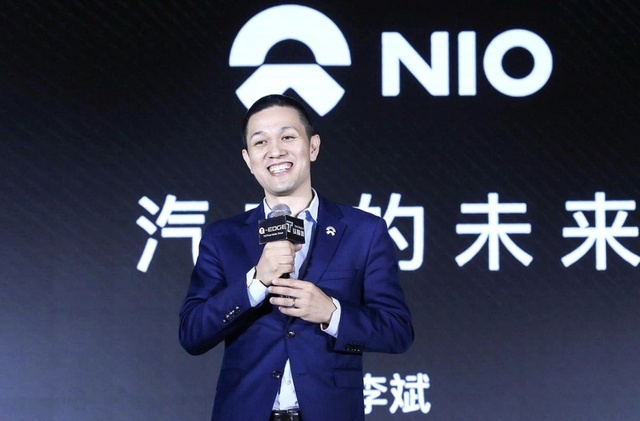
Judging from various data points, Nio's Q3 report is not impressive.
It is worth noting that Nio's Q3 deliveries hit a record high, with 61,900 new vehicles delivered. However, considering the losses, Nio still couldn't escape the outcome of "the more it sells, the more it loses."
Perhaps affected by its performance, Nio's recent stock price trend has also been less than ideal.
Statistics show that since early October, Nio's U.S. stock price has fallen by more than 30%, which may be the market's feedback on Nio's performance.
According to statistics, since its establishment in 2014, Nio's cumulative losses have exceeded 100 billion yuan.
The Difficulty of the High-End Market
Statistics show that as of August this year, Nio's market share in the mid-to-high-end pure electric market has risen to 55%; in the price range of 300,000-400,000 yuan, Nio's market share even reached an astonishing 68%.
Although Nio dominates the high-end pure electric market, its massive losses remain a "hard injury."
Moreover, the path of new energy in the high-end market is not easy. Statistics show that the penetration rate of high-end pure electric vehicles remains low. In the first eight months of this year, the penetration rate of pure electric vehicles priced at 300,000-400,000 yuan and above 400,000 yuan averaged less than 15%, far below the overall pure electric penetration rate of 26%.
In the high-end new energy vehicle market, consumers prefer range-extended or plug-in hybrid models that eliminate range anxiety, while pure electric models are less popular.
Limited by the capacity of the high-end pure electric market, even though Nio is already the dominant player, sales growth remains a headache. Especially for the automotive industry, scale has always been an important factor. Therefore, Nio is somewhat constrained by its own situation and the industry's challenges.
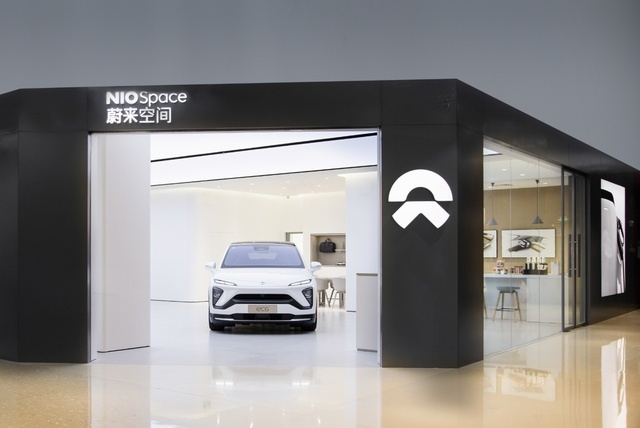
Under pressure to boost sales, Nio has tried various methods this year, but so far, its sales have not seen a qualitative change.
Q3 data shows that Nio's average selling price per vehicle was 270,000 yuan, lower than the market's expected 276,000 yuan and the implied guidance of 282,000 yuan. The average selling price is accelerating its decline. Meanwhile, Nio delivered 61,900 new vehicles in Q3, setting a new record, but the monthly average was only around 20,000.
Additionally, according to Q3 guidance, Nio's Q4 sales guidance is 72,000 to 75,000 vehicles. This figure includes the projected 8,000 monthly sales from Ledao. Excluding Ledao's sales, Nio's main brand's Q4 deliveries would be less than 60,000.
As we all know, establishing a foothold in the high-end market is not easy. To build its high-end pure electric brand image, Nio focuses on two directions:
First, the capital-intensive battery swap model, offering users a unique energy replenishment method.
Second, building a massive user operations team to establish a high-end brand image through "comprehensive services."
Both battery swaps and "comprehensive services" require substantial capital support. For example, by the end of 2023, Nio had nearly 10,000 service personnel. Reflected in the financial report, the salaries of service personnel directly related to Nio's vehicle sales are included in the sales expenses under employee compensation. Nio's sales expenses have remained high for years, reaching 3.932 billion yuan in 2020, 6.878 billion yuan in 2021, 10.54 billion yuan in 2022, and 12.88 billion yuan in 2023, totaling over 30 billion yuan in four years.
Can Ledao Carry the Flag?
Given the limited capacity of the high-end pure electric market and the prerequisite of scale for profitability, expanding into the mass market has become a necessity for Nio.
Through its battery rental model, Nio's main brand can already tap into the 250,000-yuan market. However, the largest market segment of 100,000-200,000 yuan is beyond the reach of the main brand. From this perspective, the recently launched Ledao is crucial for Nio, as it carries the mission of "volume sales" and could even determine Nio's future.
So far, Ledao's reception has been relatively positive.
According to Ledao executives, production plans for the Ledao L60 are already scheduled into Q1 next year. On November 14 alone, the company successfully delivered over 7,000 new vehicles. It is expected that in December this year, Ledao L60 deliveries will exceed 10,000, and by March next year, this number could climb to over 20,000.
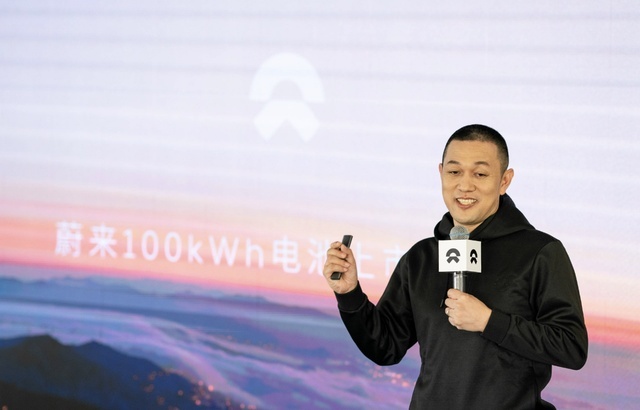
Admittedly, Ledao's product strength is not weak. As a model competing with the Tesla Model Y, the Ledao L60 has advantages in size, offering more interior space and a longer wheelbase than the Model Y. In terms of price, the Ledao L60 starts at 219,900 yuan, 30,000 yuan cheaper than the entry-level Model Y. With battery rental discounts, the price drops to the 150,000-yuan range. Moreover, the Ledao L60 supports both 900V high-voltage fast charging and battery swaps, with access to over 1,000 swap stations and more than 25,000 Nio-owned charging piles nationwide, making it highly cost-effective.
However, as a newly launched brand, it remains challenging for Ledao to shoulder the burden of Nio's sales.
Currently, Nio has opened 105 offline stores as promised on September 1, covering 55 cities nationwide. However, given Ledao's target of 10,000 monthly sales per brand, the current distribution channels are far from sufficient. According to the plan, Ledao will expand to around 250 stores by Q1 next year, including new stores and partnerships with third parties, indicating significant pressure in channel development.
Apart from the time needed for channel development, the 150,000-250,000 yuan price range is the most competitive segment in the new energy vehicle market. Whether Ledao can sustain strong sales remains questionable—this price range already features many popular models like the Model Y, BYD Sea Lion 07 EV, ZEEKR 001, and Denza N7. Moreover, the homogenization of new energy vehicles is severe, and the Ledao L60's features and configurations are largely similar to mainstream models, making long-term differentiation difficult.
The copyright of this article belongs to the original author/organization.
The views expressed herein are solely those of the author and do not reflect the stance of the platform. The content is intended for investment reference purposes only and shall not be considered as investment advice. Please contact us if you have any questions or suggestions regarding the content services provided by the platform.
