



The first round of Japan-US confrontation: Under the laughter, economic undercurrents are surging


According to Nikkei, the first tariff talks between Japan and the U.S. concluded on the morning of April 17, Asia time. Japan's Minister of Economy, Trade and Industry stated that they have requested the U.S. to comprehensively review tariffs, including reciprocal tariffs, as well as tariffs on automobiles, steel, and aluminum products.
The U.S. imposed a 24% reciprocal tariff on Japan on April 9, 2025, but half a day later, Trump announced a 90-day suspension of some tariffs. Currently, Japan faces a 10% reciprocal tariff and an additional 25% tariff on specific items like automobiles, steel, and aluminum products.
The market widely expects the focus of Japan-U.S. negotiations to be on tariffs, non-tariff barriers, and the yen exchange rate. This meeting could be a turning point for the yen, but Trump's sudden involvement may introduce specific topics, giving the impression that the U.S. is eager for results.
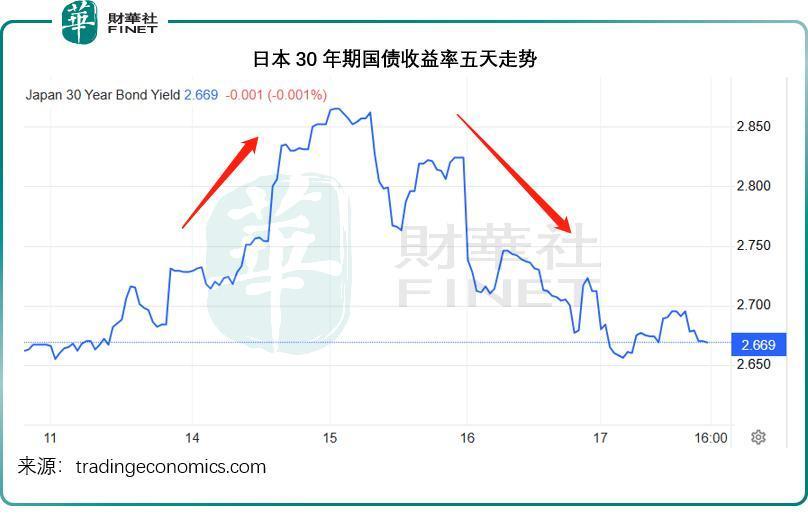
Notably, just before the talks, Japan's ultra-long-term government bond yields surged due to market concerns that Japan might introduce economic stimulus measures or subsidies to offset the negative impact of U.S. tariffs, increasing government spending and worsening Japan's already heavy debt burden.
According to worlddebtclocks.com, Japan's current debt stands at 1,061 trillion yen (approximately $9.58 trillion), equivalent to 251.29% of its GDP, making it one of the most indebted developed economies. In comparison, the U.S. debt is $21.18 trillion, or 114.04% of its GDP.
If Japan issues more ultra-long-term bonds, it may need to raise interest rates to attract buyers. Coupled with potential rate hikes by the Bank of Japan, this could further increase long-term bond yield expectations, pressuring bond prices and causing yields to spike—bond yields move inversely to prices.
However, after Japan concluded its first round of trade talks with the U.S., long-term bond yields fell significantly. Bloomberg data shows the 10-year Japanese government bond yield dropped 11 basis points to 2.705%, while the 5-year yield fell 3.5 basis points to 0.845%.
As shown below, Japan's 30-year bond yield has also declined.
But it's too early to be optimistic. Japan initially expected the exchange rate to be a key topic in the tariff talks. The market widely anticipates that the Bank of Japan may accelerate monetary tightening under U.S. pressure, even though this could harm Japan's export-driven economy. However, facing cost-push inflation from a weak yen and speculative arbitrage due to the Japan-U.S. interest rate gap, the Bank of Japan may have motives to moderately strengthen the yen. Yet, a rapid yen appreciation could hurt export-reliant Japanese companies and potentially trigger a sharp decline in Japanese stocks, where export firms dominate.
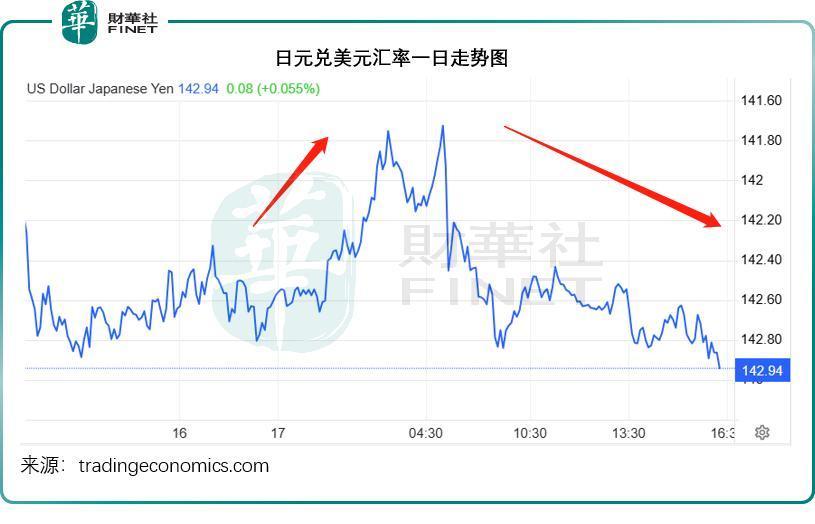
As shown below, the yen briefly strengthened against the dollar ahead of the talks, breaking the 141 level. However, after the talks, Japan revealed no discussions on the exchange rate, temporarily easing fears of forced rapid yen appreciation. The yen subsequently retreated, partly due to Fed Chair Powell's latest remarks indicating no rush to cut rates and prioritizing inflation control, which boosted the dollar.
Conclusion
Japan's Minister of Economy, Trade and Industry revealed they have requested the U.S. to comprehensively review multiple tariff issues, but the final outcome remains uncertain.
Historically, Japan-U.S. trade friction is long-standing. Last century's trade war spanned multiple industries, with Japan making compromises that ultimately led to its economic bubble bursting and long-term stagnation. Today, the U.S. still leverages its dominance to pressure Japan on trade deficits and non-tariff barriers.
Trump's direct involvement gives the impression the U.S. is eager for results but also adds unpredictability. Before the talks, Trump mentioned defense burden-sharing, hinting the U.S. seeks not just trade benefits but also greater concessions from Japan in alliance cost-sharing. Japan's Prime Minister Shigeru Ishiba acknowledged the difficulty of negotiations, but whether Japan can hold its ground under U.S. pressure remains to be seen.
Economically, the surge and subsequent retreat in Japan's ultra-long-term bond yields reflect volatile market expectations. Japan's heavy debt burden remains a Damocles' sword over its economy. If large-scale stimulus or subsidies are introduced to counter U.S. tariffs, debt risks will worsen. Fluctuations in long-term bond yields could also raise borrowing costs for businesses and households, impacting the real economy.
The yen exchange rate is equally delicate. The Bank of Japan faces a tough choice between supporting export-driven growth and addressing inflation from a weak yen. Market expectations of monetary tightening under U.S. pressure could hurt exporters, while rapid yen movements would significantly impact Japan's economy, fiscal policy, and businesses.
As further rounds of talks unfold, deeper economic and political maneuvering will shape Japan's economy and Japan-U.S. trade relations. The global market watches closely, as this could set a precedent for other nations negotiating with the U.S.
Author: Wu Yan
The copyright of this article belongs to the original author/organization.
The views expressed herein are solely those of the author and do not reflect the stance of the platform. The content is intended for investment reference purposes only and shall not be considered as investment advice. Please contact us if you have any questions or suggestions regarding the content services provided by the platform.
