


 Likes Received
 Buffett's senior apprentice
TEMU insider: platform, sellers, love and conflict

Just watched the second season of the business documentary "Rapid Currents," and the third episode focused on Pinduoduo's TEMU. As a long-term investor following Pinduoduo, this episode really resonated with me and is worth sharing.
I’ve always enjoyed Li Xiang’s "In-Depth Conversations" book series, where the dialogues vividly bring to life figures like Zuo Hui of Lianjia and Zhao Peng of Boss Zhipin—far more enlightening than studying these companies’ financial reports.
The third episode’s title is "Cross-Border Giant and Gold Diggers," focusing on the relationship between TEMU and its sellers. It traces the journey from leveraging sellers to break into the market, through the boom phase, competition phase, conflict phase, and now the "weathering the storm together" phase. The documentary’s straightforward language answers what really happened between sellers and the platform.
The documentary’s narrative aligns with my observations of TEMU. I’ve watched it rise to prominence, host grand feasts… but unlike dramatic collapses, TEMU hasn’t fallen. Yet merits and flaws go hand in hand—precisely because the controversies and achievements are equally significant, the documentary’s value shines.
I’ve tracked Pinduoduo, TEMU’s parent company, for years. At first, I didn’t understand why my family loved it so much. But when I tried to understand it, I realized it was a company with limitless potential. However, because it’s listed in the U.S., I invested later. Ironically, this helped me avoid the 2021 bubble, as I only started building my position in late 2021 and have held it since.
As an investor, I’m deeply interested in TEMU’s progress. But Pinduoduo’s deliberate "low-key" approach often makes it seem like a fog—silent to the outside world. What’s remarkable is that this documentary interviews not just sellers but even former TEMU recruitment team members. The clash of perspectives is the highlight.
1. Breaking Through
Cross-border e-commerce is a fiercely competitive market where many giants have failed. In September 2022, Pinduoduo launched TEMU, choosing the U.S. market as its first challenge. For a latecomer, breaking through was the top priority.
Full hosting was TEMU’s masterstroke for breaking through. The documentary starts here, addressing the pain points of small and medium sellers in cross-border trade and aligning with TEMU’s end-to-end solution.
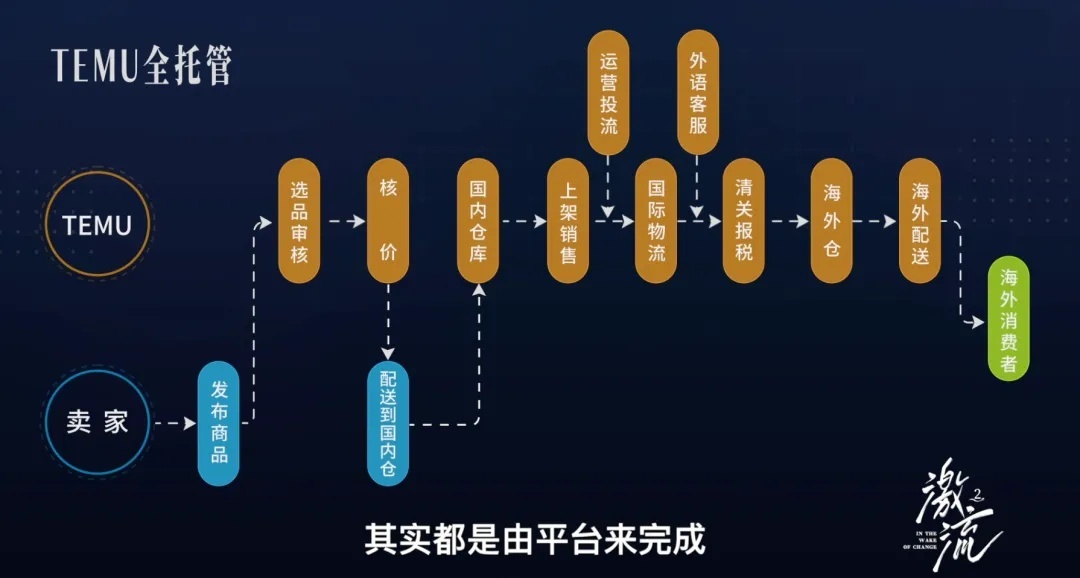
Personally, I believe that while Pinduoduo’s domestic platform forced supply-side reforms through low prices and after-sales service, building "price trust" with consumers and forming a mature business model, TEMU couldn’t simply copy this.
Even the domestic model evolved through multiple stages. TEMU had no users or sellers initially—just an empty shell. AliExpress’s years of struggle are a cautionary tale. "You can’t make bricks without straw." TEMU had to solve both user and seller problems simultaneously to get the platform running.
Before TEMU, Pinduoduo’s last hard battle was community group buying—a capital-intensive model with next-day delivery requirements, akin to a "mini-JD" in lower-tier markets. The asset-heavy model of Duoduo Grocery clearly inspired TEMU’s full hosting.
For sellers, full hosting is "foolproof." They only need to list products and ship them to TEMU’s domestic warehouses. TEMU handles everything else, proactively helping sellers navigate pitfalls.
Meanwhile, TEMU aggressively marketed to users—Super Bowl ads, social media campaigns, unboxing videos… TEMU exploded across the English-speaking internet overnight.
With users, sellers, and the price advantage of Chinese supply chains, the platform took off, and TEMU became an instant hit.
2. The Boom
For the platform, full hosting isn’t an ideal long-term business model—it’s too heavy.
But business models don’t emerge overnight. If your goal is point Z, you must first pass through A, B, C… Evolution follows its own logic, and platforms must consider ecosystem progression at each stage.
Full hosting broke the ice, and the first wave of sellers reaped the rewards. Even I, who opened a test store on Pinduoduo just to understand it better, received multiple invitations from TEMU. This wasn’t about information asymmetry—it was the reward for early adopters.
During the boom, sellers made money effortlessly: order from 1688, ship to TEMU’s warehouses, click a few buttons, pass price checks, and orders flowed in. Competition was minimal, and margins were healthy.
The documentary captures sellers’ joy—side hustlers with no experience marveled at how easy it was to make money. Like Lei Jun’s famous "windfall theory," the boom required no expertise or capital, just the courage to dive in.
But TEMU was a high-speed machine, pulling in more users and sellers. The boom couldn’t last.
3. Competition
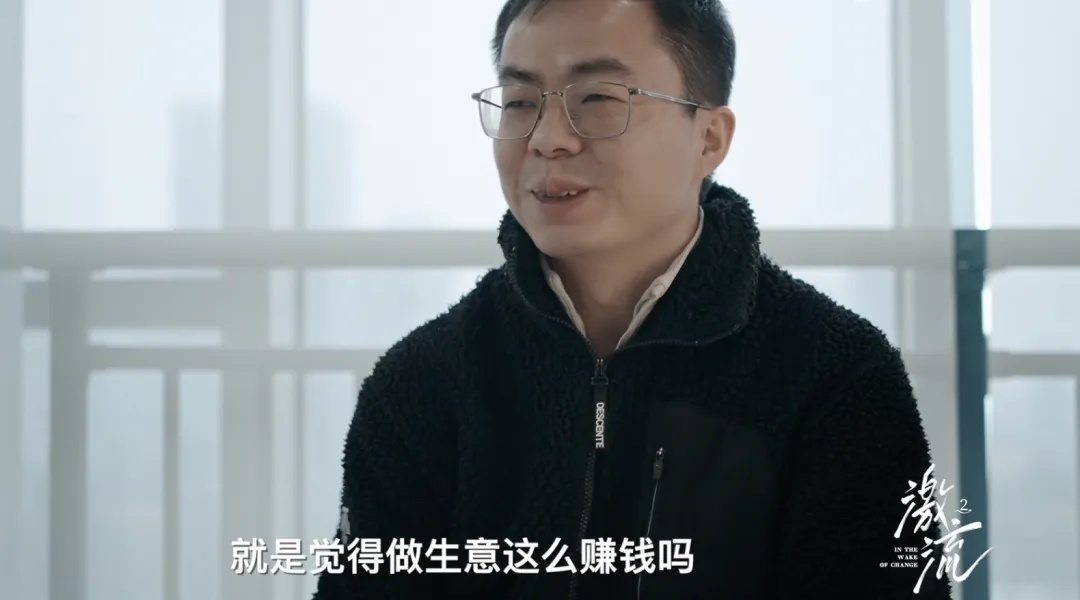
In any e-commerce platform, if sellers profit excessively, the information gap won’t last—more sellers will flood in. TEMU’s sellers soon shifted from undersupply to oversupply.
As a consumer-centric platform, TEMU knows users want quality at the lowest price. So, it enforced a ruthless rule: extreme low prices.
For the same quality, whoever offers the lowest price wins.
As the documentary shows, sellers understood TEMU’s full hosting best suits "factories opening their own TEMU stores" or "being the factory owner’s son." The platform’s logic is Darwinian: survival of the cheapest.
For the same quality, the "factory owner’s son" can undercut you. If you can’t match that, it’s not TEMU pushing you out—it’s the "factory owner’s son," with TEMU as the enforcer.
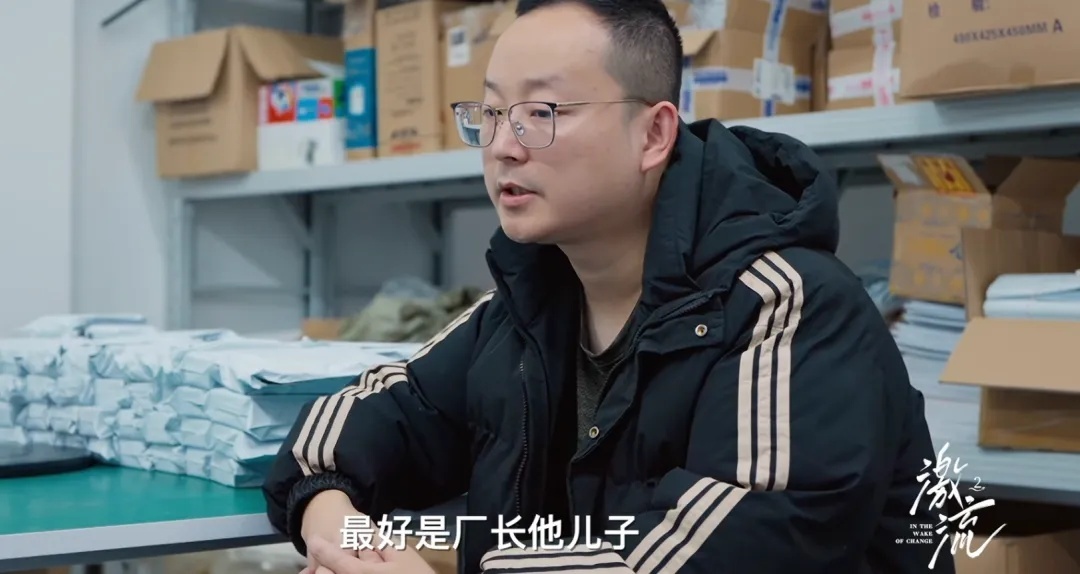
Compared to the boom’s warmth, the hyper-competitive environment left many sellers behind.
For sellers, falling behind is brutal. But from TEMU’s perspective, this is inevitable evolution.
As a former TEMU recruitment team member notes in the documentary, the platform can’t focus on lagging sellers. If they can’t compete, even if TEMU stocks their goods, unsold inventory wastes everyone’s time and resources.
This resonates with me. A retail platform aggregates sellers based on user demand. If you don’t filter sellers, you harm users. Such platforms can’t last.
4. Conflict
Under these rules, human nature falters—sellers cut corners to compete. When low prices fail, they skimp on quality, leading to mismatched or defective products.
This eroded TEMU’s reputation, with unboxing fails and complaints flooding social media.
But TEMU reacted swiftly—this team isn’t new to e-commerce. Drawing on domestic experience, it updated the "After-Sales Service Rules," mandating quality under low prices, with penalties for violations.
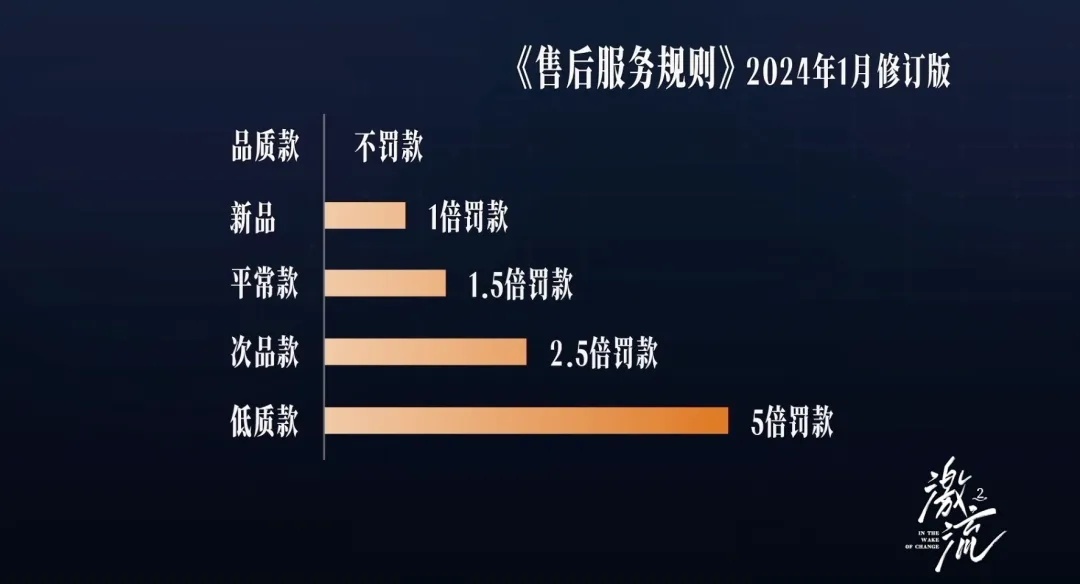
Opaque penalty rules sparked TEMU’s worst crisis: fined sellers stormed its Guangzhou HQ.
Public opinion sided with sellers, calling TEMU a "vampire platform." When I defended TEMU, the backlash was overwhelming.
But from TEMU’s view, tolerating bad actors would drive out good sellers, ruining the platform. Not punishing rule-breakers harms compliant sellers—and everyone’s livelihood.
Even sellers in the documentary admit: platforms are relative. They’re here to make money; if TEMU made everyone lose money, it wouldn’t last.
It’s simple logic, but self-interest distorts perspectives. Outsiders, lacking context, blame "capital" for everything.
5. The Times
In 2025, Trump’s return brought anti-globalization, trade barriers, and populism.
As a frontline in U.S.-China trade, TEMU bore the brunt. The end of the $800 tax exemption and 145% tariffs stalled its U.S. full hosting.
But TEMU had already evolved semi-hosting and local fulfillment models, resembling its domestic platform.
In a way, the trade war accelerated TEMU’s evolution. Semi-hosting and local models are its comfort zone—the endgame.
As they say, "A grain of sand from the times is a mountain on a person." Companies face this too. The macroenvironment shifts like the tides.
As a Pinduoduo investor for nearly four years, I’ve seen darker days—like March 2022, when delisting risks and unclear business models drove shares below $30 (my cost was $60). But I doubled down, seeing market irrationality, not company failure.
I don’t trade to outsmart others. Investing is buying businesses—value comes from operations improving.
So sometimes, the stocks I hold aren’t just cold codes.
TEMU, as a seller-aggregating platform, sails the stormy seas of our times. In uncertainty, it seeks overlooked user needs, creating value where others don’t. No one is exempt—we’re all in this together.
Investing is a journey; I, too, am a "seller."
$PDD(PDD.US)
The copyright of this article belongs to the original author/organization.
The views expressed herein are solely those of the author and do not reflect the stance of the platform. The content is intended for investment reference purposes only and shall not be considered as investment advice. Please contact us if you have any questions or suggestions regarding the content services provided by the platform.
