



Xiaomi achieves record highs in multiple metrics, but can it mask the underlying concerns?

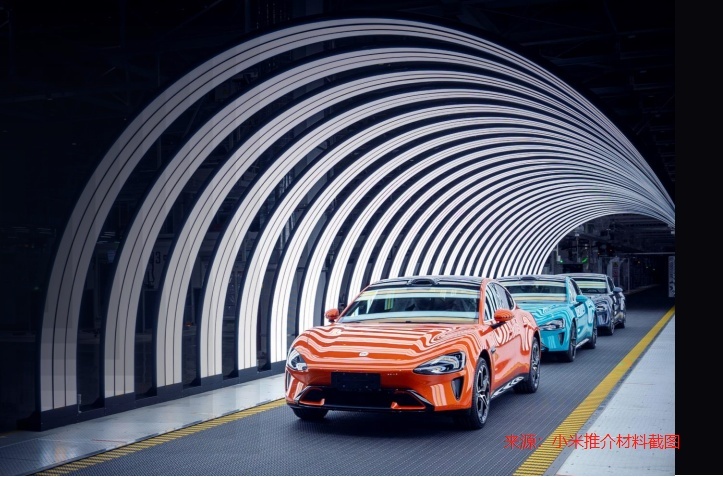
Xiaomi Group-W (01810.HK), which has recently been embroiled in public controversy, delivered a strong Q1 2025 financial report. However, it's important to note that this performance figures cover the financial results up to the end of March 2025, and do not include the negative impacts from the SU7 incident in late March or the SU7 Ultra cancellation controversy in mid-May.
Multiple Financial Metrics Hit Record Highs in Q1
Thanks to growth across its core business lines, Xiaomi achieved record highs in several financial metrics for Q1 2025:
1) Total revenue in Q1 2025 increased 47.40% year-over-year to RMB 111.293 billion. Both revenue and gross margin for the IoT and lifestyle products business reached record highs, with quarterly revenue growing 58.73% YoY to RMB 32.339 billion and gross margin reaching 25.22%, up 5.35 percentage points YoY. Additionally, the smart electric vehicle and AI innovation business contributed RMB 18.580 billion in revenue, compared to just RMB 26.03 million in the same period last year.

2) Overall gross margin in Q1 2025 increased 0.54 percentage points YoY to 22.83%. The smartphone and AIoT segment's gross margin was 22.76%, up 0.47 percentage points YoY, while IoT & lifestyle products and internet services segments saw gross margins increase by 5.35 and 2.68 percentage points respectively, offsetting the 2.39 percentage point decline in smartphone gross margin. The smart EV and AI innovation business had a gross margin of 23.17%, nearly double that of the smartphone business, becoming a key driver of overall margin improvement.
3) Adjusted net profit for Q1 2025 was RMB 10.676 billion, up 64.47% YoY.
We note that while gross margins improved, operating expenses including sales, administrative and R&D costs grew by about 26.95%, lower than the 47.40% revenue growth, indicating effective cost control that likely drove the net profit increase.

Smartphone Gross Margin Declines
In Q1 2025, Xiaomi's global smartphone shipments reached 41.8 million units, slightly lower than the previous quarter's 42.7 million but still up 3.0% YoY. The ASP (average selling price) increased 5.8% YoY to RMB 1,210.6, a record high. Driven by higher ASP and shipment growth, smartphone revenue increased 8.89% YoY to RMB 50.612 billion.
However, due to rising costs of key components, smartphone gross margin declined from 14.80% in the same period last year to 12.41% in Q1 2025.
Consumer Electronics Maintains Leadership
In Q1, Xiaomi's consumer electronics division maintained its leading position, with IoT and lifestyle products achieving record revenue and gross margin. Quarterly revenue was RMB 32.339 billion, up 58.73% YoY, while gross margin improved 5.35 percentage points to 25.22%.
This was likely due to effective brand promotion and government subsidies, with smart home appliance revenue growing 113.8% YoY. Refrigerator and air conditioner sales grew over 65%, while washing machine sales increased more than 100%.
In wearables, Xiaomi remained a leader, ranking second in mainland China and first overseas for wrist-worn devices.
Monthly Active Users Hit Record High
Xiaomi's internet services division, its most profitable business, derives revenue primarily from games and advertising.
In Q1 2025, global and domestic MAUs reached new highs, with global MAUs at 719 million (up 9.2% YoY) and domestic MAUs at 181 million (up 12.9% YoY).
Game revenue remained flat at RMB 1.2 billion, while ad revenue grew 19.7% to RMB 6.6 billion. Driven by higher-margin ad revenue, internet services gross margin expanded 2.68 percentage points to 76.93%.
Smart EVs and AI
The most watched segment remains Xiaomi's smart EV business.
Since launching the SU7 in March 2024, Xiaomi's EV business has been a constant topic of discussion.
Starting Q3 2025, Xiaomi renamed its "Smart EVs and Other Innovation Businesses" segment to "Smart EVs, AI and Other Innovation Businesses".
In Q1 2025, Xiaomi delivered 75,869 SU7 vehicles with an ASP of RMB 238,300, up 1.63% from the full-year 2024 ASP of ~RMB 234,500.
The segment's gross margin reached 23.17% in Q1 2025, 10.91 percentage points higher than the 12.26% in Q1 2024 when the SU7 launched, and 2.72 percentage points higher than Q4 2024.
However, with operating expenses of RMB 4.8 billion in Q1 2025, the segment still recorded an operating loss of RMB 500 million, though this improved from the RMB 700 million adjusted net loss in Q4 2024.
Mixed Prospects
In May 2025, Xiaomi launched its first self-developed flagship processor, the Xuanjie O1, using second-gen 3nm technology with a 10-core CPU and 16-core GPU, powering the Xiaomi 15s Pro and Xiaomi Pad 7 Ultra.
Xiaomi also released its first long-endurance 4G smartwatch chip, the Xuanjie T1, with its first self-developed 4G modem, featured in the Xiaomi Watch S4 eSIM 15th Anniversary Edition.
In April 2025, Xiaomi introduced its first open-source large language model for inference, "Xiaomi MiMo".
However, public sentiment toward Xiaomi's EV business shifted after the March 29 SU7 accident, raising concerns about future sales.
Xiaomi reported cumulative SU7 deliveries exceeding 258,000 units as of May 21, 2025 (before the YU7 launch). Estimates suggest about 212,700 units were delivered by end-March 2025, implying ~45,300 deliveries between April and May 21 - roughly 60% of Q1 2025's total.
In early May 2025, Xiaomi admitted to unclear marketing about the SU7 Ultra's carbon fiber dual-vent hood. By mid-May, reservation holders requested cancellations, but Xiaomi implemented a "60-day cooling-off period" policy, requiring wait times and potential forfeiture of deposits, sparking further controversy.
However, management stated at the earnings call that SU7 Ultra reservations exceeded 23,000 as of May 26, far exceeding expectations - though it's unclear if this includes cancellations.
In May 2025, Xiaomi launched the premium performance SUV YU7 series, positioned against $Tesla(TSLA.US)'s Model Y, with sales starting July.
Management remains optimistic about 2025 EV prospects, targeting 350,000 annual deliveries through capacity expansion.
However, the two PR incidents may prompt market reevaluation of Lei Jun and Xiaomi's brand influence.
Xiaomi's stock retreated amid these events. After hitting a high on March 19, the stock declined, with the March accident accelerating the drop to an April low before rebounding. May saw pressure until the YU7 launch and record Q1 earnings provided support.

Looking ahead, stronger government policies encouraging consumption should benefit Xiaomi's consumer electronics and EV sales.
However, with EV brands engaging in new price wars amid Xiaomi's PR challenges, it remains uncertain whether Xiaomi can break through - the answer may not come quickly.
Author: Mao Ting
The copyright of this article belongs to the original author/organization.
The views expressed herein are solely those of the author and do not reflect the stance of the platform. The content is intended for investment reference purposes only and shall not be considered as investment advice. Please contact us if you have any questions or suggestions regarding the content services provided by the platform.
