


Dongpeng Beverage: The leader in functional beverages, the second growth curve is emerging, actively exploring overseas markets
Financial Performance
$EASTROC(09980.HK) From 2022 to 2024, the company's total revenue was 8.5 billion/11.257 billion/15.83 billion yuan, with year-on-year growth of -/32.4%/40.6%. In the first half of 2025, the company's total revenue was 10.737 billion yuan, a year-on-year increase of 36.37%.
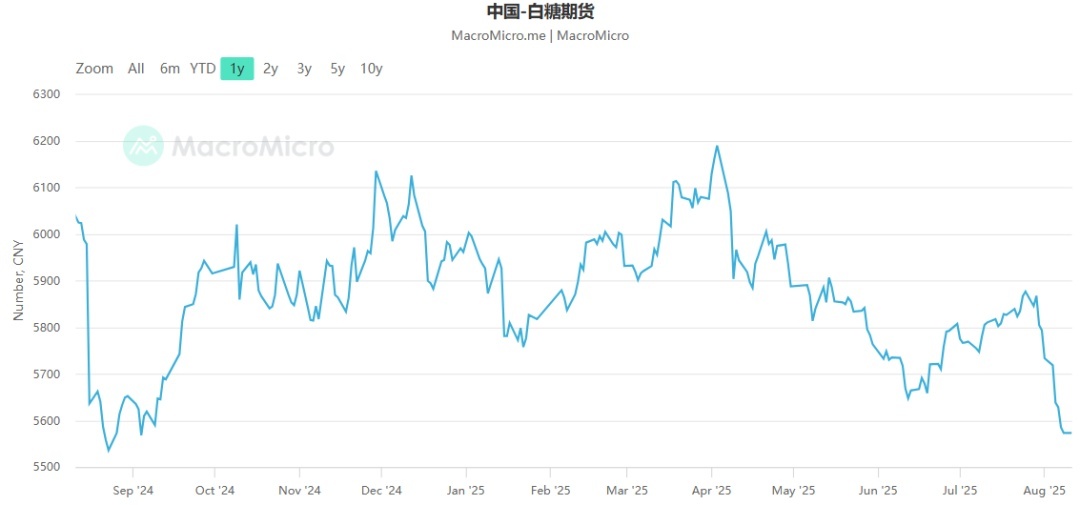
From 2022 to 2024, the gross profit margin was 41.6%/42.3%/44.1%, and in the first half of 2025, it was 45.15%, a year-on-year increase of 0.55 percentage points. The company attributed this to the decline in raw material prices. The core raw materials for the beverage industry are PET and white sugar, and the cost fluctuations in the first half of 2025 brought short-term cost improvements. Among them, PET costs decreased, while white sugar prices stabilized in the short term, supported by peak demand seasons, making the cost environment more stable.
Product-wise, Dongpeng Special Drink remains the company's top product. In the first half of 2025, it contributed 8.361 billion yuan in revenue, a year-on-year increase of 21.91%, with a gross profit margin of 50.61%, accounting for 77.87% of total revenue, down from 87.2% in the same period last year. Despite the risk of relying on a single product, the "Hydrate Now" launched in 2023 has grown rapidly, entering the market at a price of 7.21 yuan/L, lower than the 10 yuan/L price of similar products like Alien, and has become the company's second growth curve, driving sustained growth. In its first year, sales were approximately 400 million yuan, reaching 1.5 billion yuan in 2024. In the first half of 2025, it contributed about 1.5 billion yuan, with a gross profit margin of 32.09%, and its share of revenue increased from 6.05% in the same period last year to 13.91%. A diversified product matrix is emerging, reducing reliance on a single product.
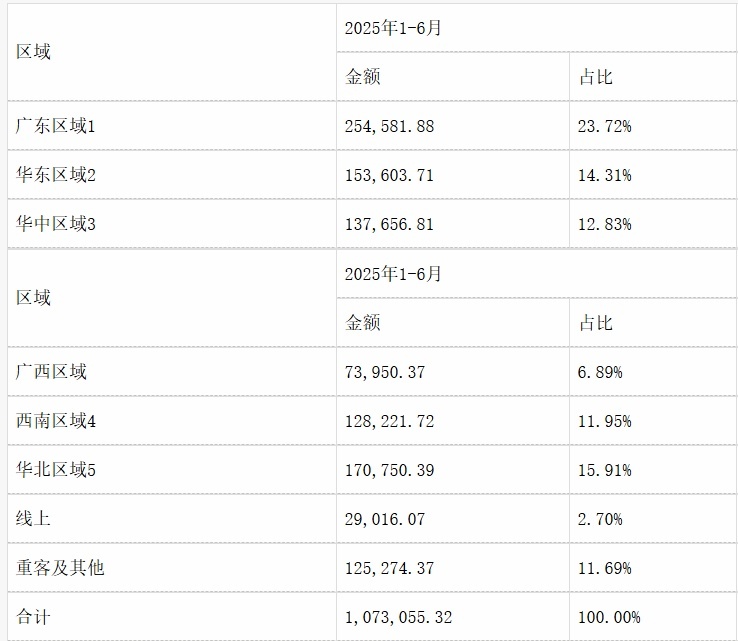
Regional Revenue: Guangdong remains the stronghold, with rapid growth in national markets. In the first half of 2025, by region, Guangdong/North China/East China/Central China contributed 2.546/1.708/1.536/1.377 billion yuan, with year-on-year increases of 20.61%/73.03%/32.62%/28.91%, accounting for 23.72%/15.91%/14.31%/12.83% of total revenue. Among regions outside Guangdong, North China, East China, and Central China lead in revenue scale, with North China's growth rate far exceeding the national average, becoming the second-largest sales region after Guangdong, demonstrating the significant effect of the company's nationalization strategy.
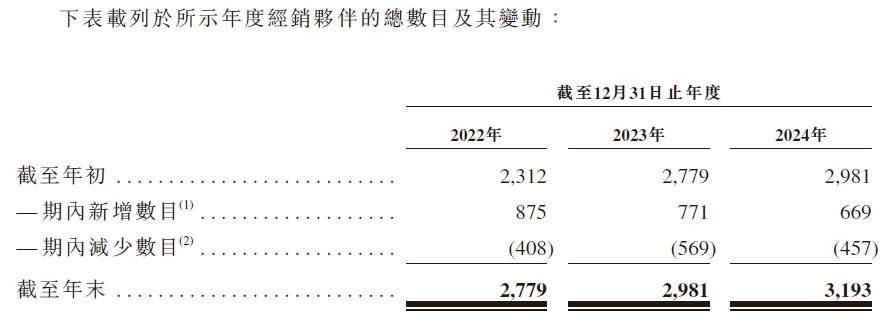
Supporting this growth is the rapidly expanding distribution network. As of December 31, 2024, the company covered nearly 4 million terminal sales outlets nationwide, achieving nearly 100% coverage in prefecture-level cities across China. By the first half of 2025, the number of active terminal outlets increased to over 4.2 million, with 3,279 distributors, a net increase of 86 from the beginning of the year.
Rising Sales Expenses, Channel Expansion, and One-Code-Per-Product
Dongpeng Beverage's sales expenses have grown for three consecutive years. From 2022 to 2024, sales expenses were 1.449 billion, 1.956 billion, and 2.681 billion yuan, with year-on-year growth of 5.91%, 34.94%, and 37.09%, respectively.
In the first half of this year, sales expenses reached 1.682 billion yuan, a year-on-year increase of 37.27%. The company attributed this to (1) a 26.06% increase in employee compensation due to the addition of sales staff to advance the nationalization strategy; (2) a 61.20% increase in channel promotion expenses due to increased investment in refrigerators; and (3) a 34.30% increase in advertising expenses due to increased promotional efforts.
As a highly homogeneous industry, the core competition in beverages lies in channels. To expand its presence in lower-tier markets and reach more consumers, Dongpeng Beverage launched the "Refrigerator Plan" in 2023, leasing refrigerators in large quantities. By the end of 2024, the company had deployed approximately 300,000 refrigerators, with plans to add 100,000-200,000 more in 2025.
The company introduced a "1-Yuan Exchange" program, targeting both B and C ends for marketing. For consumers purchasing 500ml bottled Dongpeng Special Drink, if the cap bears the "1-Yuan Enjoy" label, they can exchange it for another 500ml bottle (recently, some consumers reported only being able to exchange for 250ml) after successful verification by the merchant, boosting repurchase desire. For the B end, the company implemented a mechanism where the 1 yuan paid by consumers for exchanges becomes direct profit for the store, enhancing redemption enthusiasm. Additionally, stores receive random cash rewards when scanning codes for verification, adding extra income. Combined with discounts, display fees, and refrigeration fees from Dongpeng, the gross profit per product is significantly higher than Red Bull and Lehu, making channels more willing to stock Dongpeng.
Through the one-code-per-product system, the company accurately captures user data, enabling real-time monitoring of sales, inventory, product age, and participation rates in activities across regions, reducing distributor stockpiling and adjusting strategies.
Adapting to the "Sugar-Free" Trend and Broadening User Profiles
Initially, the company's products imitated Red Bull. It wasn't until 2007, with a new packaging launch, that it shed the "knockoff" label. With pricing far below Red Bull, the company tapped into the blue-collar market, with early buyers being manual laborers and long-term purchasers, especially long-haul truck drivers and factory night-shift workers. In contrast, teenagers and the elderly rarely purchased the product. Additionally, Dongpeng expanded into lower-tier cities, achieving over 90% coverage in third- and fourth-tier cities, while Red Bull's coverage was below 60%.
In July, Dongpeng Beverage's Tmall store launched a "Sugar-Free Dongpeng Special Energy Drink" priced at 3.92 yuan per 500ml. The new product contains "L-α-Glycerylphosphorylcholine," which helps alleviate fatigue, targeting the brain fatigue market for 200 million office workers. In its semi-annual report last August, Dongpeng noted a significant shift in its customer base, with consumers from first- and second-tier cities now contributing more than those from third-tier and below.
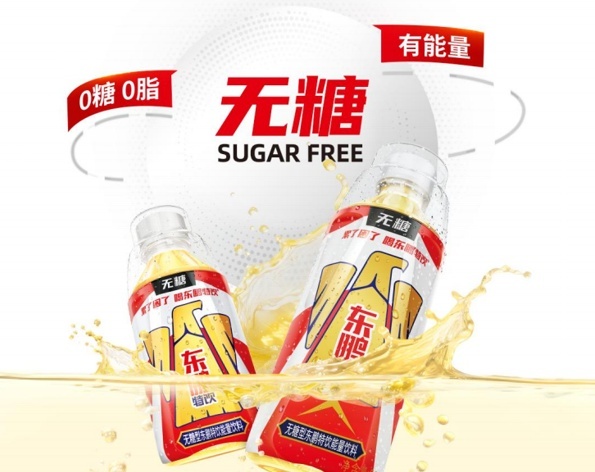
In recent years, Dongpeng Special Drink has sponsored sports and e-sports events, frequently appearing in front of young people. Its "Hydrate Now" brand became the electrolyte water sponsor for the Les Mills Festival (an annual large-scale fitness event by Les Mills) and the Spartan Race, targeting white-collar workers in Beijing, Shanghai, and Guangzhou.
Actively Exploring Overseas Markets
In 2024, the company focused on Southeast Asia and the Middle East, leveraging the local hot climate and demand for energy drinks to explore overseas opportunities. The company's Hainan base began construction in April this year and is expected to start production in 2027, potentially becoming a pivot for cross-border business with high-cost-performance products.
Declining Raw Material Costs
The company attributed the record-high gross margin in 2024 to lower raw material costs. For example, according to SCI Research, white sugar prices may rise and fall after the peak import season in the second half of the year, with supply easing after the September harvest transition. Domestic white sugar prices may rise before declining. PET, primarily derived from petroleum, is influenced by global conditions, which are stabilizing, putting downward pressure on PET prices.
Significant Growth Potential Remains
In 2024, China's per capita energy drink consumption was 2.8 liters/year, compared to 11.2 liters/year in the U.S., 4.1 liters/year in Japan, and 4.5 liters/year in Thailand, indicating substantial room for growth.
Functional drinks are growing faster than other beverages due to the increasing number of people needing physical and mental energy replenishment. While blue-collar workers were the primary consumers in the past, the "fatigue era" has expanded demand to include late-night studying, overtime work, fitness, and e-sports.
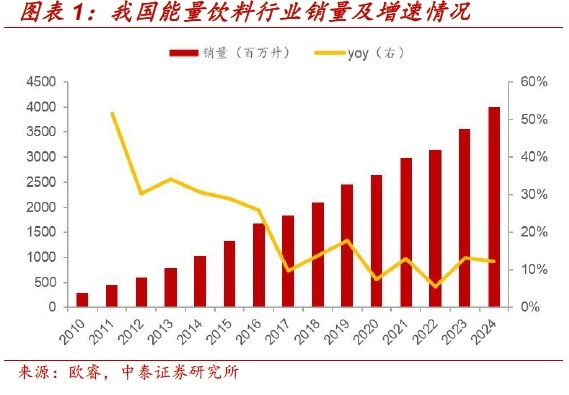
In terms of sales, China's energy drink industry has maintained rapid growth for years, with a 10.9% CAGR from 2020 to 2024. In 2024, sales reached nearly 4 billion liters.
Crowded Functional Drink Market
The functional drink market is unprecedentedly crowded. Besides Dongpeng Special Drink, competitors include Red Bull, Monster, and later entrants like Dali Foods' "Lehu," Zhongwo Industrial's "Physique Energy," and Huabin Group's "Warhorse." The top global ginseng drink brand, Jeong Kwan, launched "Ao Ao Yuan Drink" in 2025, priced at 9.8 yuan per 330ml bottle, with ginseng as the main ingredient. Even Yongan Pharmaceutical, the taurine supplier for Red Bull and Dongpeng, entered the market with its taurine powder brand "Yi Jia Neng," priced at 2.8 yuan per 4g sachet, mixable with 250ml/500ml water.
Looking at Dongpeng Special Drink's history, its growth inflection point came after 2016, when Red Bull faced brand ownership disputes, losing market share. Domestic brands like Dongpeng seized the opportunity to rise. By sales volume, Dongpeng surpassed Red Bull in 2021 and has since led China's functional drink market for four consecutive years. In 2024, Dongpeng held a 44.5% market share by sales volume, far ahead of Red Bull's 25.5%. In terms of sales revenue, Red Bull (39.1%) still leads due to premium pricing, but Dongpeng (31.2%) is closing the gap. Currently, the combined market share of the top two (Dongpeng + Red Bull) exceeds 70%, marking a duopoly.
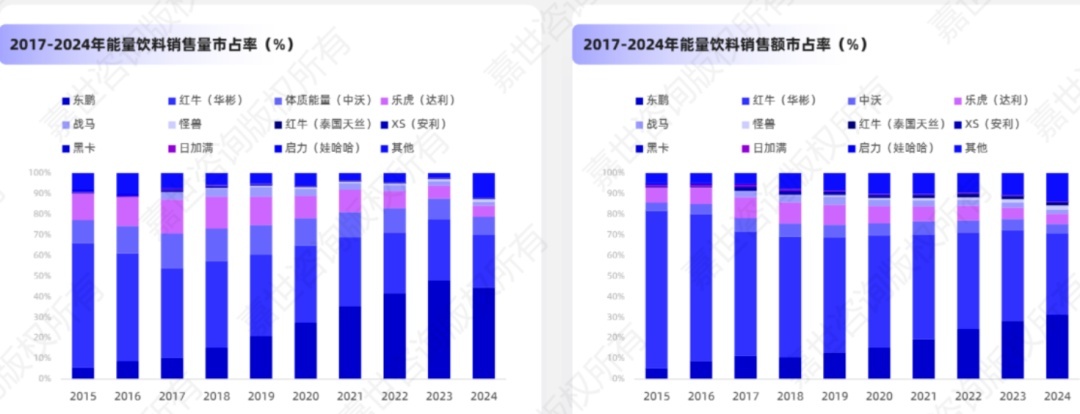
Image source: Jias Consulting
However, low product barriers and lack of innovation have limited competition to "ingredient stacking + price cuts". Beyond traditional taurine, additives include ginseng extract and maca powder (a dietary supplement). Price-wise, besides Dongpeng's 1-Yuan Exchange, Monster offers bottle cap scans for cash rewards and launched a sub-brand, "Beast Hunter," with 1-liter bottles priced at 6 yuan. Brands like Want Want's "Dali," Jinmailang's "Tianbao," and Huayang's "Monster" are priced around 5 yuan per bottle, with "add 1 yuan for another bottle" promotions.
Operating Cash Flow Trend Contradicts Business Performance
In the first half of 2025, operating cash inflow was 1.74 billion yuan, down 23.24% year-on-year. The company attributed this to higher prepayments at the end of 2024 and increased tax payments. As of the first half of 2025, Dongpeng Beverage's contract liabilities were 3.667 billion yuan, down 1.093 billion from 4.761 billion at the beginning of the year, with prepayments dropping by 1.873 billion. The sharp decline in contract liabilities and prepayments may reflect weakening distributor stocking willingness.

Becoming a Family Business with Declining Institutional Ownership
Lin Muqin is the chairman (founder) of Dongpeng Beverage. Lin Yupeng, the controller of Kunpeng Investment, is Lin Muqin's son, while Lin Daiqin is his nephew, and Lin Mugang is his brother. Additionally, Chen Huanming, a limited partner in Kunpeng Investment, and Chen Haiming (holding 1.09%), the eighth-largest shareholder, are brothers of Lin Muqin's wife, Chen Huiling. Thus, the Lin Muqin family holds approximately 67.71% of shares.
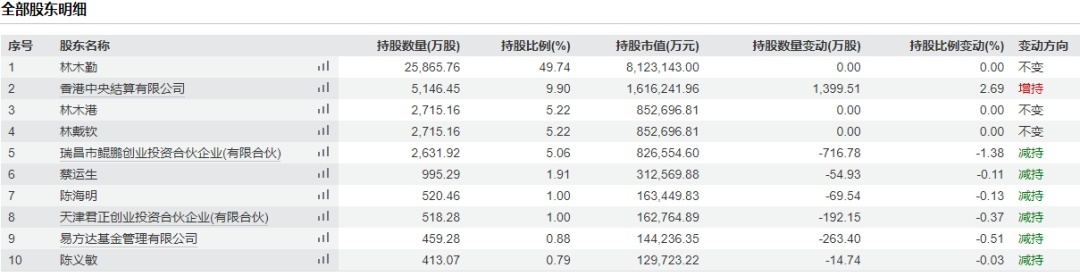
Public information shows that since its IPO, Dongpeng Beverage has distributed over 5.3 billion yuan in dividends. In its 2025 interim report, the company proposed an interim dividend of 1.3 billion yuan, enhancing shareholder returns. With the Lin Muqin family holding over 60%, they would receive 780 million yuan from this dividend. Despite such large payouts, Dongpeng has struggled to retain institutional investors. From 2021 to 2024 and the first half of 2025, the number of institutional shareholders was 349/293/380/651/203, with ownership at 44.6%/78.7%/60.2%/24.5%/15.7%.

High Debt Amid Large Dividends, Shifting Risk to Minority Shareholders
The debt-to-asset ratio is high and rising, at 57.3%/57.0%/66.1%/61.9% from 2022 to 2025H1. The increase in debt is mainly due to a sharp rise in short-term borrowings. In 2023, Dongpeng's borrowings were 3.016 billion yuan, surging to 6.551 billion in 2024 and 6.128 billion in the first half of 2025. However, its cash reserves were 6.058 billion in 2023, 5.653 billion in 2024, and 5.262 billion in the first half of 2025.
Regarding the "high cash + high dividends + high short-term debt" structure, some analysts suggest Dongpeng may be using low-cost loans to maintain operations while distributing profits as dividends to major shareholders, leaving debt repayment pressure within the company and transferring risk to minority shareholders.
Valuation & H-Share Listing
Dongpeng Beverage's 2025E PE is 33.8x, compared to 19.2x for Moutai, 33.7x for Monster Beverage (MNST), and 23.8x for Coca-Cola, indicating industry-leading valuation.
Dongpeng Beverage submitted its H-share listing application to the Hong Kong Stock Exchange on April 3, with Huatai International, Morgan Stanley, and UBS as joint sponsors. If successful, Dongpeng will become the second beverage company after Andre to achieve a dual listing.
Short-term, the company must address: (1) the impact of high valuation and shareholder exits on market sentiment; and (2) reliance on a single product. Long-term, focus on Southeast Asian market exploration, which will determine whether Dongpeng can become a global brand.
Disclaimer: This content represents the author's independent views and does not reflect the stance of Beta International Securities. Unauthorized reproduction is prohibited. The content is for reference only and not intended as investment advice. Risks are borne by the investor. For the latest Hong Kong and U.S. stock news, follow the official account: Beta Investment Think Tank.
The copyright of this article belongs to the original author/organization.
The views expressed herein are solely those of the author and do not reflect the stance of the platform. The content is intended for investment reference purposes only and shall not be considered as investment advice. Please contact us if you have any questions or suggestions regarding the content services provided by the platform.
