


Microsoft: From "Software Giant" to "AI Empire" Microsoft, founded by Bill Gates and Paul Allen in 1975, has long been known as the "Software Giant" due to its dominance in the software industry. However, in recent years, the company has undergone a significant transformation and is now positioning itself as an "AI Empire". With the rise of artificial intelligence (AI) technology, Microsoft has been actively investing in and developing AI capabilities. The company has made significant progress in areas such as machine learning, natural language processing, and computer vision, enabling it to provide advanced AI solutions to various industries. One of Microsoft's key AI initiatives is its Azure cloud platform, which offers a wide range of AI services and tools. These include Azure Machine Learning, Azure Cognitive Services, and Azure Bot Service, among others. These services enable developers and businesses to easily incorporate AI capabilities into their applications and processes. In addition to its cloud platform, Microsoft has also been focusing on developing AI-powered products and services. For example, the company's virtual assistant, Cortana, utilizes AI technology to provide personalized assistance to users. Microsoft's AI research division, Microsoft Research, is also at the forefront of AI innovation, conducting cutting-edge research in areas such as deep learning and reinforcement learning. Furthermore, Microsoft has been actively collaborating with other companies and organizations to promote the development and adoption of AI. The company has formed partnerships with leading AI research institutions, such as OpenAI and the Allen Institute for Artificial Intelligence, to advance the field of AI and address its ethical implications. Through these efforts, Microsoft is not only expanding its influence in the AI industry but also transforming itself into an "AI Empire". The company's vision is to empower individuals and organizations with AI technology, enabling them to achieve more and drive innovation in the digital age. In conclusion, Microsoft's journey from being a "Software Giant" to an "AI Empire" reflects its commitment to embracing and harnessing the power of AI. With its extensive AI capabilities and strategic partnerships, Microsoft is well-positioned to lead the way in the AI revolution and shape the future of technology.

微軟在 Ignite 2023 上的戰略明確表明,其重點是引領人工智能革命,利用其平台傳統,在硬件和軟件方面進行創新,以保持行業的主導地位。
從 2009 開始開發 AI 模型,到 2019 年投資 OpenAI,微軟正在一步一步成為 AI 時代的龐然大物。
對於微軟及其生態系統而言,今年的 Ignite 技術大會堪稱異彩紛呈。微軟一口氣公佈了 100 多項以 AI 為中心,在雲計算基礎設施、 模型即服務 MaaS 、數據平台、Copilot 人工智能助手等方方面面的新產品和新功能,展示了一個端到端的 AI 全面願景。
但有一個細節應當被注意:在微軟的傳統上,Ignite 大會主要聚焦於基礎設施和運營,而 Build 大會則主要針對開發者。
而本次的 Ignite 大會,針對開發者和機器學習工程師的人工智能內容佔據了中心位置。
這意味着,這場大會不僅僅關乎開發者和 IT 專業人士,更像是整個微軟生態系統的一個劃時代時刻。
在主題演講中,微軟首席執行官 Satya Nadella 明確表示,微軟渴望成為 AI 生態系統的重要力量。從開發自己的人工智能加速芯片到推出 Copilot 市場,微軟已經制定了人工智能的長期戰略。
總體而言,微軟在 Ignite 2023 上的戰略明確表明,其重點是引領人工智能革命,利用其平台傳統,在硬件和軟件方面進行創新,以保持行業的主導地位。
Azure→新 AI 操作系統 Copilot→新應用
微軟正試圖複製在軟件操作系統時代的榮光。
在構建系統平台方面,微軟確實有着豐富的經驗:從最早的 Windows 平台、OLE 和 COM 的開發,到 2000 年代初的 Microsoft. NET 和 Visual Studio 推動了 Web 服務的開發,再到上個十年成功推出的 Azure 平台。
現在,微軟希望通過人工智能再次重現這種奇蹟,創造一個集合了開發者、獨立軟件供應商(ISV)、系統集成商、企業和消費者的繁榮生態系統。
而這一次,Azure 成為新的操作系統,就像新的 Windows,提供運行時和平台服務,而 Copilots 成為微軟稱之為 AI 助手的新應用程序。GPT-4 等基礎模型構成了這個新操作系統的內核。
與 Visual Studio 類似,微軟也以 AI Studio 和 Copilot Studio 的形式投資了一套開發者工具。這種堆棧與 Windows、.NET 和 Visual Studio 非常相似,後者曾統治開發者領域長達數十年之久。
短短几個月內,微軟已經交付了多個嵌入人工智能的產品,從 New Bing 到 Microsoft 365,再到 Window 操作系統。
微軟擁抱生成式人工智能的速度令人震驚,這種做法也表明了一種緊迫感:這家公司正在致力於成為人工智能的先驅,使 AI 的能力更貼近客户。
Satya Nadella 可能不想再讓微軟錯過技術領域的下一個風口,就像微軟當年錯過了搜索和移動領域一樣。
自研 CPU、GPU 和 DPU
在過去,CPU 制定了軟件架構的規則並影響其發展,現在 GPU 也在影響着人工智能的發展,而微軟想要直接把握這一關鍵環節。
本次 Ignite 大會上,微軟就發佈了首款定製 CPU Azure Cobalt 和 AI 加速芯片 Azure Maia。
Microsoft Azure Cobalt 是一款基於 Arm 架構的雲原生芯片,針對通用工作負載的性能、功率和成本效益進行了優化。納德拉稱,這款 CPU 芯片已經在支持 Microsoft Teams Azure 通信服務以及 Azure SQL 的部分中使用;明年也將向客户提供這款產品。
Microsoft Azure Maia 是一款 AI 加速芯片,用於 OpenAI 模型、Bing、GitHub Copilot 和 ChatGPT 等 AI 工作負載運行雲端訓練和推理。這款芯片採用了 5 納米工藝製造,擁有 1050 億個晶體管。
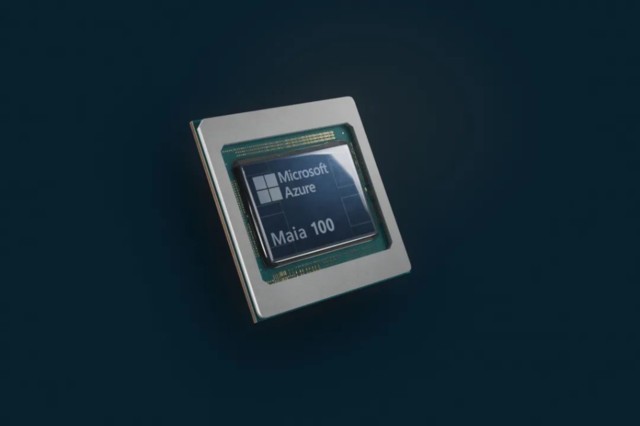 Azure Maia 100 美顏照|Microsoft
微軟自己的 DPU——Azure Boost 也已全面上市。微軟在今年早些時候收購了 DPU 公司 Fungible,以提高 Azure 數據中心的效率。通過 Azure Boost,虛擬化、網絡管理、存儲管理和安全等軟件功能被卸載到專用硬件上,使 CPU 可以將更多的週期用於工作負載而不是系統管理。由於繁重的工作被轉移到專用處理器上,這種卸載大大提高了雲基礎設施的性能。
納德拉稱,“硅多樣性(sillicon diversity)是我們能夠支持世界上最強大的基礎模型和所有 AI 工作負載的關鍵因素”,在本次 Ignite 技術大會上,微軟不僅發佈了兩款自研芯片,也納入了更多行業合作伙伴的最新 AI 優化芯片,包括 AMD Instinct MI300X,以及英偉達 H100 和 H200。
在上述超級計算機之上,微軟還提供參數量從數十億到數萬億不等的基礎模型,來滿足不同開發者構建 AI 應用程序時的成本、延遲和性能需求。
自研和開源基礎模型
雖然目前 Azure 依然是企業使用 OpenAI 模型的首選平台,但微軟也在投資建設自己的大模型。
華爾街見聞此前曾介紹,微軟正在開發自有的 “小模型”。
與傳統的大型語言模型相比,微軟 Phi-1.5 和 Phi-2 是輕量級的小型語言模型,需要的資源更少。Phi-1.5 有 13 億個參數,Phi-2 有 27 億個參數,與 Llama 2(起始參數為 70 億個,最高可達 700 億個參數)相比小得多。
因此,這些小模型非常適合嵌入到 Windows 中,以提供本地 Copilot 體驗,而無需往返雲端。微軟還發布了 Visual Studio Code 的擴展,允許開發人員在雲中微調這些模型,並將其部署到本地進行離線推理。
此外,微軟研究院還開發了 Florence 模型,允許用户分析和理解圖像、視頻和語言;微軟的模型平台 Azure ML 現在還支持包括 Llama、Code Llama、Mistral 7B、Stable Diffusion、Whisper V3、BLIP、CLIP、Flacon 和 NVIDIA Nemotron 在內的其他開源基礎模型,為客户提供了最全面、最廣泛的基礎模型選擇。
