The winter of the British automotive industry intensifies, with November production hitting a 44-year low
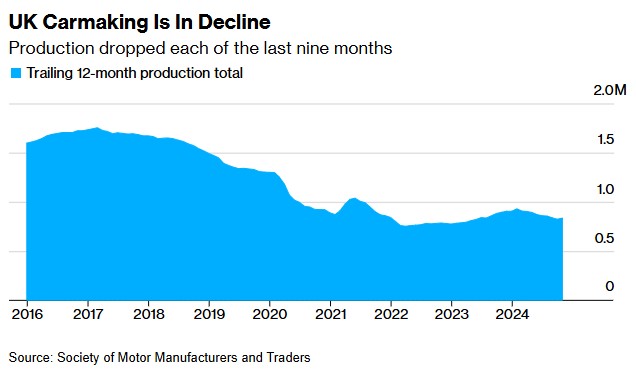
In November, the UK's car production fell to its lowest level in 44 years, affected by weak demand in the UK and Europe, with a year-on-year decline of 30%, totaling approximately 64,200 vehicles, marking the ninth consecutive month of decline. The Society of Motor Manufacturers and Traders (SMMT) reported that production from all manufacturers in November failed to exceed the same period last year, reflecting a general downturn in the industry. For a long time, UK car production has been impacted by rising costs and trade barriers following Brexit, coupled with the challenges of transitioning to electric vehicles, exacerbating the industry's difficulties. Stellantis NV plans to close its Vauxhall plant in Luton, which has a 120-year history, signaling a further downward trend in the industry. SMMT data shows that as of November, the UK has produced nearly 734,600 vehicles this year, a year-on-year decrease of 13%, far below the 1.23 million vehicles produced in the same period in 2019 before the pandemic. In the face of the automotive industry's challenges, policymakers indicated last month that they would review electric vehicle sales regulations, but car manufacturers expressed dissatisfaction, believing that the government has not done enough to stimulate market demand. The future of the UK automotive industry seems to be shaped by these internal and external factors, facing a dual test of transformation and survival
According to the Zhitong Finance APP, the UK's car production in November fell to its lowest level in 44 years, affected by weak demand in the UK and Europe, with production decreasing by 30% year-on-year to approximately 64,200 vehicles, marking the ninth consecutive month of decline. The Society of Motor Manufacturers and Traders (SMMT) reported that production from all manufacturers in November failed to exceed the same period last year, reflecting a general downturn in the industry.

For a long time, UK car production has been impacted by rising costs and trade barriers following Brexit, coupled with the challenges of transitioning to electric vehicles, exacerbating the industry's difficulties. Stellantis NV plans to close its Vauxhall plant in Luton, which has a 120-year history, a move that signals a further downward trend in the industry.
SMMT data shows that as of November, the UK has produced nearly 734,600 vehicles this year, a year-on-year decrease of 13%, far below the 1.23 million vehicles produced in the same period in 2019 before the pandemic.
In the face of the automotive industry's challenges, policymakers indicated last month that they would review electric vehicle sales regulations, but automakers expressed dissatisfaction, believing the government has not done enough to stimulate market demand. The future of the UK automotive industry seems to be shaped by these internal and external factors, facing a dual test of transformation and survival