Two major factors support the future of gold, Goldman Sachs warns that one trigger could push gold prices towards 4500!

mitrade
2025.04.21 00:59
portai
I'm PortAI, I can summarize articles.

Goldman Sachs warns that gold prices could rise to $4,500 due to a U.S. economic recession. Recently, the U.S. suspended reciprocal tariffs for 90 days, pushing gold prices to break through $3,300, reaching a high of $3,357.9. Although gold prices have retreated later, they are still consolidating around $3,326. Analyst Peter Schiff warns that if tariffs are not lifted, the economy will face a severe recession, and the Federal Reserve's intervention could lead to a collapse of the dollar. Nearly 900 people have signed an anti-tariff declaration, warning that tariff policies could trigger a self-inflicted recession

Investment Insights -

Market bets on U.S. economic recession, gold breaks through $3,300

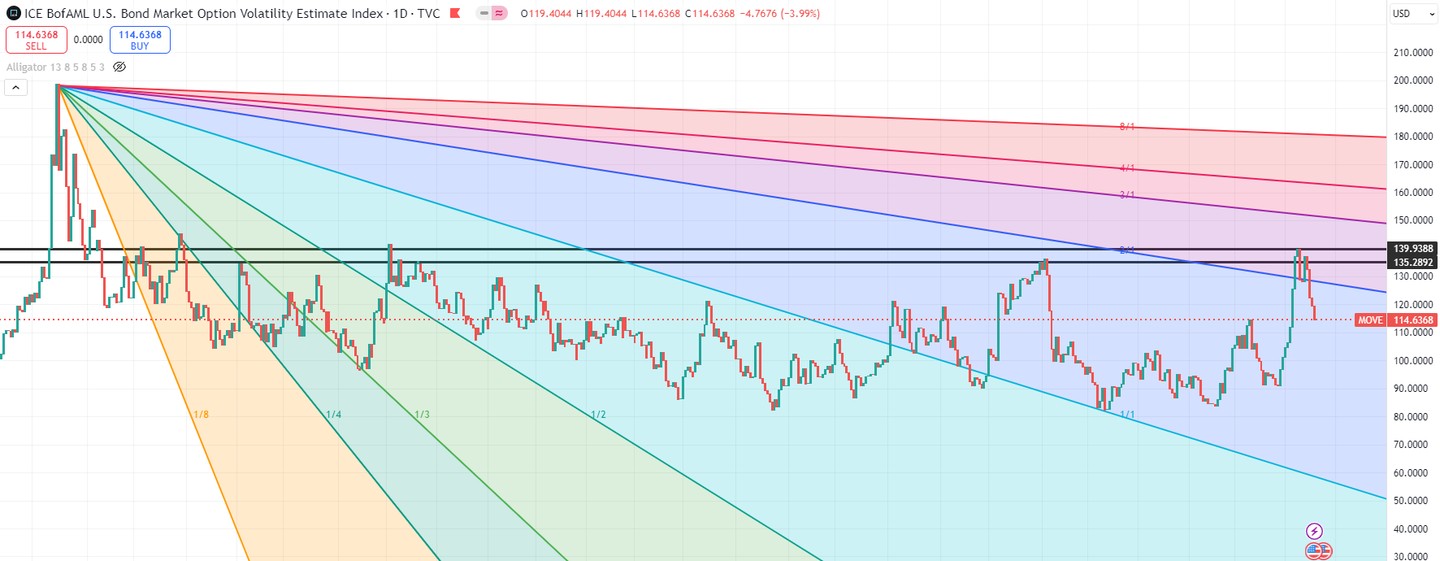
On April 9, the United States announced a 90-day suspension of reciprocal tariffs and began intensive trade negotiations with multiple countries. Additionally, the Federal Reserve has more clearly demonstrated its monetary policy path—"The current primary task of the Federal Reserve is to maintain price stability, and it will only accelerate interest rate cuts if inflation falls faster than the labor market." The panic over the sell-off of U.S. Treasuries has temporarily come to an end, with the MOVE index, which measures implied volatility in the U.S. Treasury market, falling for four consecutive days, down 16.48% last week, marking the largest weekly decline since November 2024. A series of factors indicate this.

MOVE Index:

Image source: tradingview

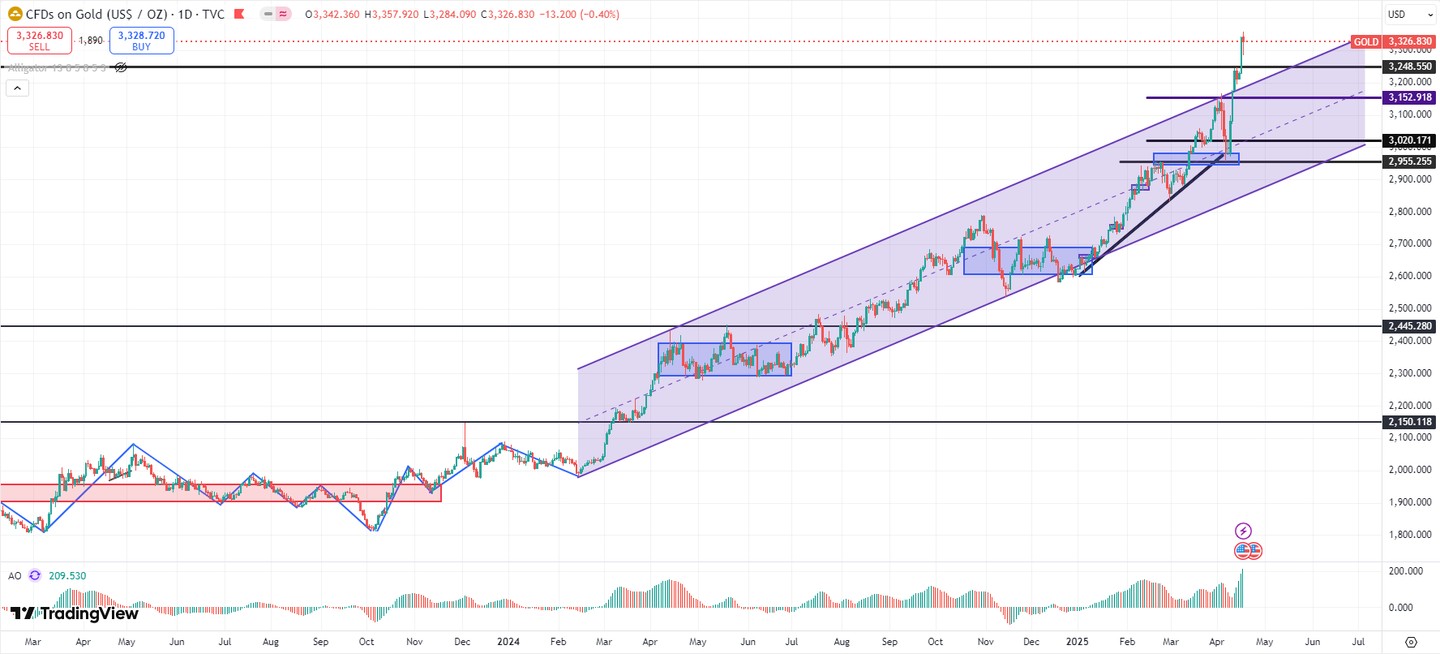
However, gold has not experienced a significant pullback during this period, even breaking through the $3,300 mark to a historical high of $3,357.9 on April 17. Although gold prices temporarily fell below $3,300 afterward, they ultimately recovered most of the losses and are currently consolidating around $3,326.

The reason lies in the unexpectedly high tariffs, which have increased the likelihood of a U.S. economic recession. Wall Street heavyweight and SchiffGold Chairman Peter Schiff issued a stern warning last Friday (April 18), stating that unless tariffs are lifted and the government retreats, the situation will evolve into a recession worse than the Great Depression.

Schiff dismissed recent employment data as a signal of economic growth, arguing that labor force growth is misleading. He claimed that all the jobs created last year were part-time positions filled by individuals who could not meet expenses with a single job, and that tariffs would exacerbate inflation by raising the prices of imported goods, leading to a collapse in retail spending.

Moreover, he believes the worst outcome would be for the Federal Reserve to intervene and return to quantitative easing to save the economy and the bond market, thereby preventing an impending financial crisis. If the Federal Reserve does this, the dollar will collapse, potentially falling another 20%-30% soon.

Coincidentally, last Saturday (April 19), nearly 900 people, including two Nobel laureates, signed an "anti-tariff declaration," stating that U.S. tariff policy is "misleading" and warning that it could lead to a "self-inflicted recession." In addition, the "new bond king" Jeffrey Gundlach warned that the United States may be facing a new subprime crisis, with risks in the private equity market being severely underestimated. He pointed out that many institutional investors, including some large funds, find themselves in trouble due to a lack of liquidity when facing market volatility.

Gundlach further revealed that there are significant discrepancies in asset valuations in the private equity market, and some institutions may overstate asset values to cover up the true situation, only to face reality when bankruptcy notices arrive. These issues indicate that the U.S. financial market may be facing a new crisis, with risks and scale potentially exceeding those of the 2008 subprime crisis.

Goldman Sachs stated that over the past ten days, gold has mainly been purchased by Asian officials, with limited speculative trading, and it remains a buying point. They expect gold to rise to $3,700 per ounce by the end of the year.

The White House is attempting to strengthen control over financial regulatory agencies, and Goldman Sachs warned that this could push gold towards $4,500.

Another factor keeping gold's strong momentum is the ongoing escalation of the Trump administration's efforts to remove Powell. Bloomberg reported that starting Monday, independent agencies, including the U.S. Securities and Exchange Commission (SEC), the U.S. Commodity Futures Trading Commission (CFTC), and the Federal Deposit Insurance Corporation, will fall under the regulatory scope of the White House, requiring U.S. government approval before any rules are introduced.

According to the latest policy, any rules from the Federal Reserve as a banking regulatory agency must also be submitted for White House review, although its monetary functions remain independent. The situation regarding Trump's efforts to replace Powell is escalating, and Trump and his team are studying whether Powell can be removed. However, in reality, the Fed Chair only has one vote in deciding interest rates, so merely replacing Powell will not have a decisive impact on changing the policy path.

Goldman Sachs warned that once the Federal Reserve loses its independence, the market will face extreme volatility. They predict that in extreme tail risk scenarios, such as increased market concerns about the Fed's subordination or changes in U.S. reserve policy, leading to central bank demand rising to 110 tons/month, and a rebound in ETF holdings to pandemic levels due to a U.S. recession, speculative positions reaching historical peaks, gold prices may break through the $4,500 per ounce mark by the end of 2025.

Gold: Welcoming an important time point, beware of the risk of a pullback after a surge.

Gold daily chart:

Image source: tradingview

Gold has built a weekly central range between January 2023 and November 2023, after which it climbed above $3,300, forming three daily central points during this period, while the upward slope continued to rise, with multiple indicators showing oversold conditions It is especially important to note that gold is currently at a significant time point. Although this does not mean that the upward trend in gold prices will change, investors still need to be vigilant about gold entering a larger cycle of central construction after a sustained rise, which may indicate increased short-term volatility and the need to be cautious of the risk of pullbacks after reaching new highs