CICC 2025 Second Half Outlook: Optimistic about Investment Opportunities in Non-US Regions, Relatively Optimistic about the European Market

Zhitong
2025.06.15 23:58
portai
I'm PortAI, I can summarize articles.

CICC released a research report outlook for the second half of 2025, believing that investment opportunities in non-U.S. regions are relatively good, holding an optimistic attitude towards the European market, and increasing the weight of emerging markets. Despite increased policy uncertainty, the global economy remains overall stable, with non-U.S. regions having advantages due to loose monetary policy and the potential for output gap recovery. CICC analysts' industry preferences are sequentially technology, industrials, and finance, while remaining cautious about consumer and related manufacturing sectors

According to the report from CICC, in the first half of 2025, although policy uncertainty has significantly increased, the global economy is operating smoothly overall, with major central banks, except for the Federal Reserve, continuing to cut interest rates. CICC believes that in the second half of the year, the economic momentum in the U.S. and non-U.S. regions will converge, mainly driven by the slowdown in the U.S. economy. Non-U.S. regions have certain advantages due to relatively loose monetary policies and still have room for output gap recovery, but the extent of recovery in the second half faces high policy uncertainty and constraints from earlier exports and growth. Against this backdrop, CICC is more optimistic about opportunities in non-U.S. regions in the second half of the year, maintaining a relatively optimistic outlook for the European market and increasing the weight of emerging markets.

In addition, CICC believes that the regional performance divergence may be smaller than in the first half of the year and recommends a balanced allocation. In terms of industry outlook for the second half of the year, CICC analysts' preferences for the covered industries, from bottom to top, are: Technology (Communication, Software, Advertising > Electronics > Content), Industrial (Power Equipment > Automation), Finance, and CICC remains cautious about consumption and consumer-related manufacturing (Home Appliances, Automotive), and bulk raw materials.

CICC's views are as follows:

Global Investment under Trade Shocks and Economic Restructuring

CICC believes that in the second half of the year, the economic momentum in the U.S. and non-U.S. regions will converge, mainly driven by the slowdown in the U.S. economy. Against the backdrop of a resilient private sector balance sheet in the U.S., CICC believes the risk of the U.S. falling into recession is low, but growth is marginally slowing, and inflation remains somewhat resilient due to tariffs (see CICC Macro "U.S. Macroeconomic Outlook for the Second Half of 2025: U.S.-Style Rebalancing"). Compared to the U.S., non-U.S. regions benefit from a more accommodative monetary policy environment (non-U.S. policy rates fell more in the first half of the year) and also have the impact of base effects. According to IMF estimates, the GDP output gap in non-U.S. regions has not yet turned positive. However, it is important to note that the recovery of economic momentum in non-U.S. regions in the second half still faces several constraints. On one hand, uncertainty brought about by tariffs and geopolitical changes remains high; on the other hand, some regions' exports and growth were brought forward due to tariffs.

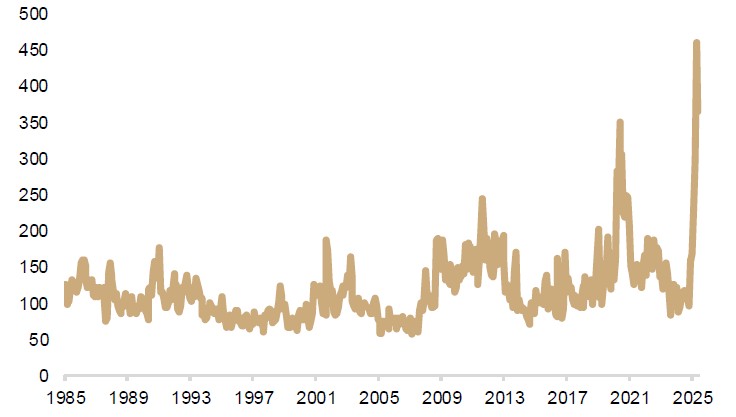
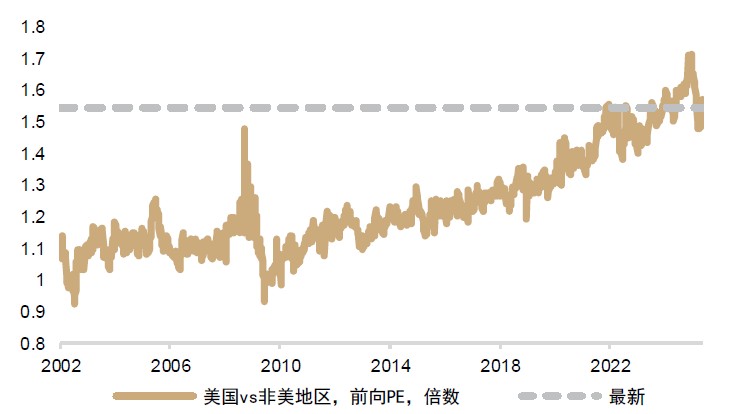
Regionally, CICC is optimistic about opportunities in non-U.S. regions in the second half of the year, maintaining a relatively optimistic outlook for the European market and marginally increasing the weight of emerging markets. On one hand, cyclically, the economic momentum in the U.S. and non-U.S. regions is expected to further converge; on the other hand, structurally, the continuous fluctuations in U.S. policies keep policy uncertainty high, and it may only be a matter of time before investors demand higher risk compensation (similar to emerging markets with high policy uncertainty). Currently, the valuation gap between the U.S. and other markets remains high.

However, the divergence in asset performance between the U.S. and non-U.S. regions may be smaller than in the first half of the year, and a balanced allocation is recommended. The relative performance of non-U.S. regions is mainly influenced by two factors: first, the overall economic momentum is still tending to slow down, and uncertainty remains high, constraining the absolute performance of each region; second, CICC analysts remain optimistic about the U.S. technology sector in the second half of the year, and the relative performance of technology stocks has shown a strong correlation with the relative performance of the U.S. in the past.

European Market: Benefiting from the convergence of economic growth momentum between Europe and the U.S., CICC is relatively optimistic about the performance of the European market in the second half of the year. From an economic perspective, although Europe also faces economic downturn risks brought about by uncertainty, the shift in Germany's fiscal policy and EU defense spending can boost investor and consumer confidence, driving a recovery in risk appetite From the perspective of capital flows, Europe is the biggest beneficiary of global capital regional rebalancing. However, it should be noted that if global risk appetite does not show a significant rebound in the second half of the year, Europe's absolute performance may be limited by profit prospects.

Emerging Markets: Marginally upward, but overall absolute performance may be limited, requiring regional selection. Positive factors include: (1) Policy-wise, policy interest rates may continue to decline, and the Federal Reserve may cut interest rates in the second half of the year. The US dollar is weakening; (2) The worst news on the trade front may have already passed and has been priced in by the market; (3) Emerging markets can also benefit from the rebalancing of global capital allocation. Challenges include: first, in the second half of the year, due to policy uncertainty, CICC believes that the overall improvement in risk appetite is limited (emerging markets benefit more in a high-risk appetite environment); second, US Treasury yields remain at a high level.

Japan: Cautious in the short term, but still worth attention after the policy headwinds. Headwind factors: (1) Weak US dollar, which has suppressed the Japanese market that relies heavily on overseas revenue; (2) There has not yet been a clear catalyst for global risk appetite, while Japan is one of the markets with the greatest elasticity globally; (3) Politically, the Shigeru Ishiba government lacks support for the domestic economy and capital markets; (4) Economic data has not shown significant improvement. However, overall, Japan's current valuation is only at a historically neutral level, and relative valuation remains attractive. Additionally, as Japan emerges from deflation and the ongoing narrative of Japanese special valuation continues, CICC is structurally optimistic about the Japanese market and suggests paying attention to investment opportunities (see "Global Research: Where to Invest in a Century of Change? Characteristics and Commonalities of Global Equity Markets").

Chart: US Policy Uncertainty at Historical Highs

Note: Data as of June 3

Source: LSEG, CICC Research Department

Chart: US Relative Valuation Still at High Levels

Note: Data as of June 3

Source: LSEG, CICC Research Department

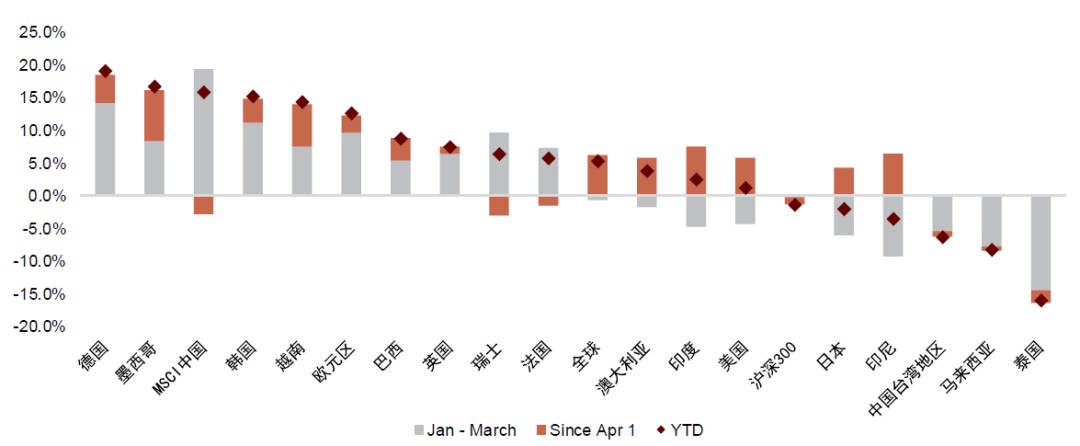
Chart: Performance Split of Major Global Markets Year-to-Date

Note: Data as of June 6

Source: LSEG, CICC Research Department

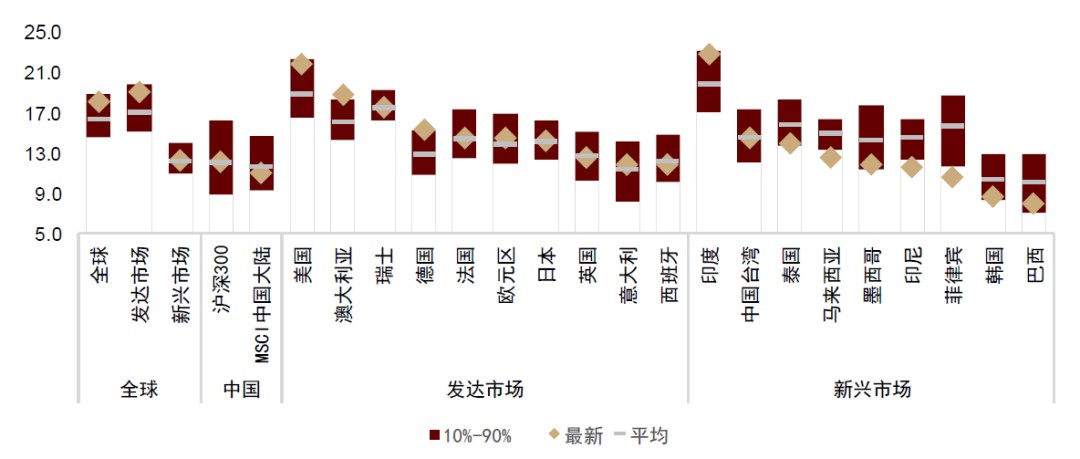
Chart: Valuation Performance of Major Global Markets

Note: Data as of May 23

Source: LSEG, EPFR, CICC Research Department