


When Reform Meets Politics: Can Intel's Revival Strategy Still Work?

Intel CEO Pat Gelsinger faces pressure to resign after being criticized by Trump, with shareholder support for his reform measures being questioned. Although the stock price fell 3.1% due to Trump's remarks, it rebounded in pre-market trading, indicating a cautiously optimistic attitude among investors regarding Gelsinger's future. Intel stated that it will continue to advance significant investments related to U.S. national security interests
Intel (NTC.US) shareholders have failed to catch a breath, as the company's reform dilemma is not yet over and has encountered new setbacks—CEO Chen Liwu has become a target of criticism from Trump.
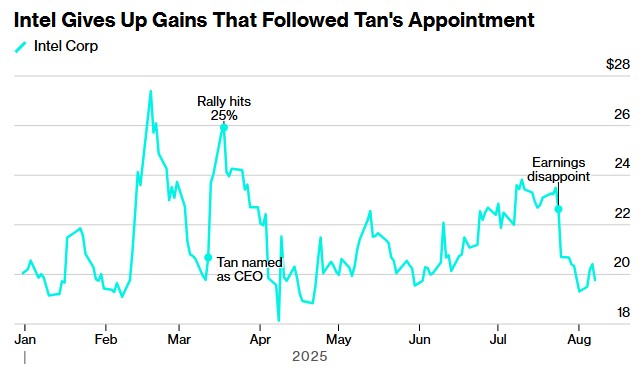
According to Zhitong Caijing APP, Chen Liwu was appointed earlier this year to lead the troubled chip manufacturer, aiming to help it emerge from years of difficulties. This move was met with applause from Wall Street and boosted the company's stock price. However, just five months into his role as Intel's CEO, he has drawn the ire of President Trump, who called for Chen to resign on Thursday, citing perceived conflicts of interest.
Although Trump did not provide any evidence to support his accusations, this attack has reignited questions about the transformation initiatives Chen has been implementing. These initiatives include targeted product development, cost-cutting, and asset sales. After years of disappointment, shareholders have expressed support for these measures.
Tim Ghriskey, senior investment strategist at Ingalls & Snyder, stated, "This situation makes the future path even more difficult; too many unfortunate events have occurred, one after another."
Following Trump's remarks, Intel's stock price fell by only 3.1% on Thursday. However, it rebounded in pre-market trading on Friday—indicating that investors do not believe Chen will leave Intel anytime soon.
In a statement released later on Thursday, the company said, "Intel and Chen Liwu are 'firmly committed to advancing America's national security interests and are making significant investments aligned with the President's 'America First' agenda.'"
However, Trump's actions have indicated a tendency to force companies to bend to his will. Just this week, Apple pledged to invest $100 billion in domestic production, another move to appease Trump. For months, Trump has criticized Apple for producing its products overseas.
This move seems to have positively impacted Apple's investors. In a speech in the Oval Office on Wednesday, Trump stood alongside CEO Tim Cook, stating that companies like Apple investing in the U.S. would not be affected by his comprehensive tariff policies. Over the past two days, Apple's stock price has risen by more than 8%, marking its largest increase since April.
On the other hand, Intel finds itself in a rather awkward position. In the days following the announcement of Chen Liwu's appointment in March, the company's stock price rose by 25%, but that optimism quickly faded. According to data, the company's stock price is on track for a second consecutive year of decline, a situation not seen in at least 40 years Investors originally hoped to gain the latest information on Intel's progress toward profitability from the second-quarter earnings report released last month, but the results left them even more confused. During the earnings call, Chen Liwu criticized the investment initiatives undertaken by former CEO Pat Gelsinger, raising concerns that he seemed more focused on cost-cutting rather than developing cutting-edge products to compete with rivals NVIDIA (NVDA.US) and AMD (AMD.US).
A key part of Gelsinger's plan for Intel to produce chips for external customers was a shift to a more advanced manufacturing technology—14-nanometer technology. However, during the earnings call, Chen Liwu stated that Intel would only launch this technology when it was confident that enough customers were willing to adopt it.
According to Dave Mazza, CEO of Roundhill Investments, Trump's involvement is a distraction for Intel, as the company has many important matters to address.
Previously, investors were already uneasy due to the recent pessimistic market expectations leading to a decline in stock prices, and changing the CEO at this time would only further exacerbate the uncertainty facing this yet-to-be-fully-launched recovery plan
