


Geopolitics Reshapes Global Biotechnology Landscape, Singapore Becomes Investment Hotspot | Lianhe Zaobao

Geopolitics and cuts to the U.S. research budget are reshaping the global biotechnology landscape. Singapore, with its intellectual property protection and legal transparency, has become a hot investment destination for biotechnology companies. Reports from institutions such as Bain indicate that NIH funding cuts may lead to a loss of research talent, prompting pharmaceutical companies to shift their focus to the Asia-Pacific region. Giants like Pfizer and Astrazeneca have committed to investing billions of dollars in China. Since 2019, over 75% of regional biotechnology investment has flowed into China, but capital is gradually moving into emerging markets such as Singapore and South Korea
The geopolitical situation, combined with cuts to the U.S. research budget, is reshaping the global biotechnology landscape. The Asia-Pacific market, especially Singapore, is gradually becoming a strategic hub and a popular investment destination for biotechnology companies, thanks to its strong intellectual property protection and legal transparency.
A recent report jointly released by global management consulting firm Bain & Company, the Singapore Agency for Science, Technology and Research, the Singapore Economic Development Board, JP Morgan, and strategic investment platform SG Growth Capital points out that the reduction in funding from the National Institutes of Health (NIH) in the U.S. may impact early-stage research development, leading to talent loss and a slowdown in innovation.
This has prompted global pharmaceutical companies to shift their focus to the Asia-Pacific region in search of innovative opportunities while expanding their R&D capabilities. Industry giants like Pfizer and AstraZeneca have committed to investing billions of dollars to build R&D facilities in China.
The report mentions that since 2019, over 75% of regional biotechnology venture capital (VC) and private equity (PE) investments have been in China. However, due to ongoing geopolitical and policy uncertainties, capital is gradually flowing into emerging markets such as Singapore and South Korea.
This is because Singapore is committed to innovation, maintains political neutrality, has robust intellectual property protection, legal transparency, and regulatory coordination, which not only attracts top research talent but also encourages major pharmaceutical companies to establish regional headquarters locally.
The report states: "These companies are adopting geographic diversification and intellectual property dispersion strategies to enhance investment resilience and manage international risks."
Surveys show that from 2019 to 2024, the compound annual growth rate of early-stage investments in the Asia-Pacific region has decreased by 11%, while late-stage biotechnology transaction volumes have significantly increased, reflecting investors' heightened risk aversion and a preference for mature, clinically validated, and commercially viable projects.
Further Reading
Global Foreign Direct Investment Inflows: Our country ranks second with 182.5 billion
[The Rise of China's Biotechnology: U.S. Political and Business Circles See It as a Potential Threat
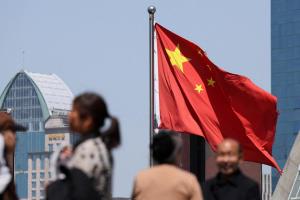 has committed to investing USD 1.6 billion (approximately SGD 2.05639 billion) into over 1,200 drug development projects by 2030. Japan also plans to deploy USD 366 million to support biotechnology startups.
The U.S. Imposes 39% Tariff, Swiss Companies May Shift to Singapore
On the other hand, the U.S. has imposed a 39% tariff on Swiss imports, forcing some Swiss companies to seek alternative markets, including turning to Singapore and other regions in Asia to mitigate business impacts.
According to The Straits Times, Swiss injection molding machine manufacturer Netstal exports about 15% of its output to the U.S., totaling CHF 25 million (approximately SGD 39.77 million).
Netstal CEO Renzo Davatz stated that if the tariffs persist, the company will have to reduce its reliance on the U.S. market and focus on growth in Asian markets such as Singapore, India, and Thailand.
However, Jean-Philippe Kohl, vice president of the Swiss Mechanical, Electrical and Metal Industries Association (Swissmem), said that small and medium-sized enterprises in the machinery sector are delaying major actions, such as relocating production lines to low-tariff countries or exiting the U.S. market, in case Washington suddenly changes its policy
