Why TUI AG (ETR:TUI1) Looks Like A Quality Company

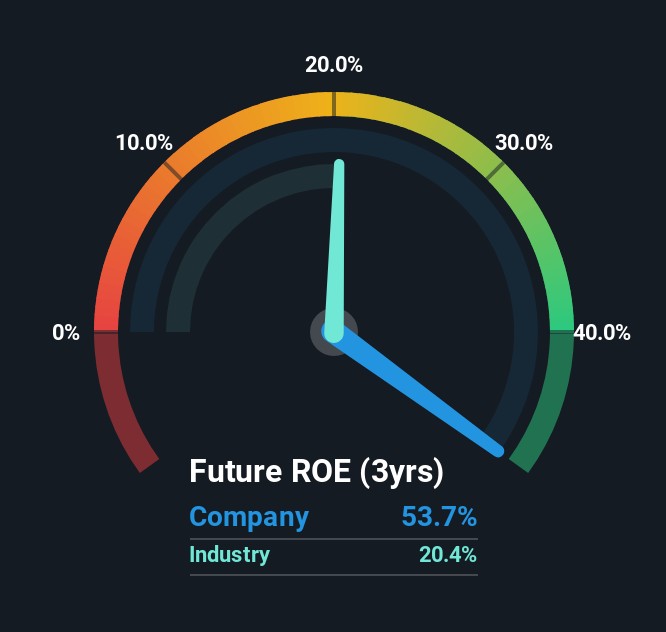
The article analyzes TUI AG's Return on Equity (ROE), which stands at 54%, significantly higher than the hospitality industry average of 20%. While a high ROE indicates efficient capital use, TUI's debt-to-equity ratio of 1.27 suggests increased risk. The article emphasizes that a high ROE can result from high debt, and it advises caution when considering TUI as an investment. It concludes that while TUI shows strong ROE, potential investors should also look for companies with high ROE and low debt for better quality investments.
One of the best investments we can make is in our own knowledge and skill set. With that in mind, this article will work through how we can use Return On Equity (ROE) to better understand a business. To keep the lesson grounded in practicality, we'll use ROE to better understand TUI AG (ETR:TUI1).
Return on equity or ROE is a key measure used to assess how efficiently a company's management is utilizing the company's capital. In short, ROE shows the profit each dollar generates with respect to its shareholder investments.
AI is about to change healthcare. These 20 stocks are working on everything from early diagnostics to drug discovery. The best part - they are all under $10bn in marketcap - there is still time to get in early.
How Is ROE Calculated?
The formula for return on equity is:
Return on Equity = Net Profit (from continuing operations) ÷ Shareholders' Equity
So, based on the above formula, the ROE for TUI is:
54% = €866m ÷ €1.6b (Based on the trailing twelve months to June 2025).
The 'return' is the profit over the last twelve months. So, this means that for every €1 of its shareholder's investments, the company generates a profit of €0.54.
View our latest analysis for TUI
Does TUI Have A Good ROE?
By comparing a company's ROE with its industry average, we can get a quick measure of how good it is. Importantly, this is far from a perfect measure, because companies differ significantly within the same industry classification. Pleasingly, TUI has a superior ROE than the average (20%) in the Hospitality industry.
That's what we like to see. With that said, a high ROE doesn't always indicate high profitability. Aside from changes in net income, a high ROE can also be the outcome of high debt relative to equity, which indicates risk.
The Importance Of Debt To Return On Equity
Most companies need money -- from somewhere -- to grow their profits. That cash can come from retained earnings, issuing new shares (equity), or debt. In the first and second cases, the ROE will reflect this use of cash for investment in the business. In the latter case, the use of debt will improve the returns, but will not change the equity. Thus the use of debt can improve ROE, albeit along with extra risk in the case of stormy weather, metaphorically speaking.
TUI's Debt And Its 54% ROE
It's worth noting the high use of debt by TUI, leading to its debt to equity ratio of 1.27. There's no doubt the ROE is impressive, but it's worth keeping in mind that the metric could have been lower if the company were to reduce its debt. Debt does bring extra risk, so it's only really worthwhile when a company generates some decent returns from it.
Summary
Return on equity is useful for comparing the quality of different businesses. A company that can achieve a high return on equity without debt could be considered a high quality business. If two companies have the same ROE, then I would generally prefer the one with less debt.
But when a business is high quality, the market often bids it up to a price that reflects this. The rate at which profits are likely to grow, relative to the expectations of profit growth reflected in the current price, must be considered, too. So I think it may be worth checking this free report on analyst forecasts for the company.
But note: TUI may not be the best stock to buy. So take a peek at this free list of interesting companies with high ROE and low debt.