Samsung Fire & Marine Insurance's third-largest shareholder exits, Midea announces entry into the insurance industry

The "home appliance giant" is aiming to expand its financial territory. Recently, Samsung Property Insurance (China) Co., Ltd. (hereinafter referred to as "Samsung Property Insurance") announced the company's equity…
"Home appliance giant" is aiming to expand its financial territory.
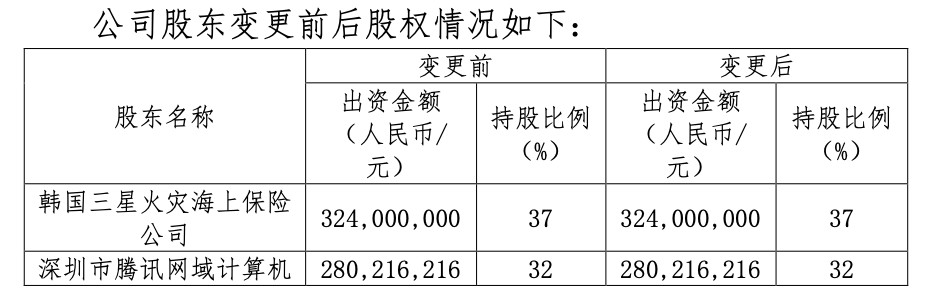
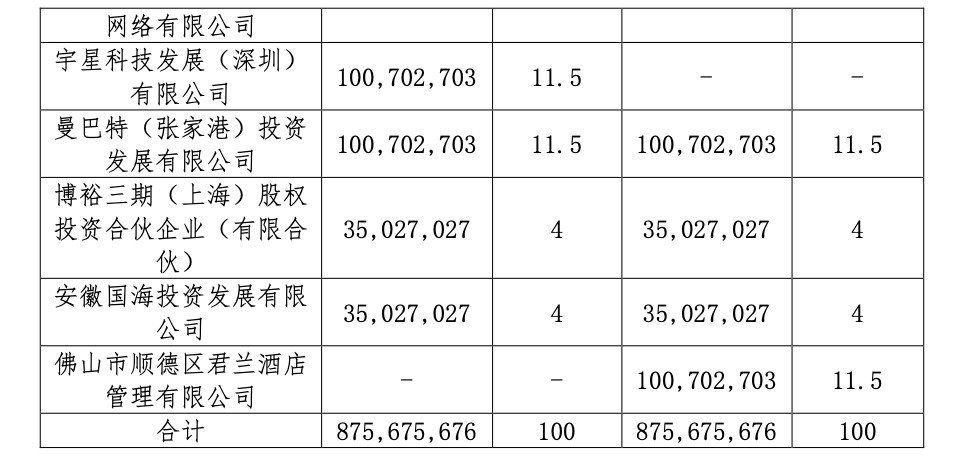
Recently, Samsung Property Insurance (China) Co., Ltd. (hereinafter referred to as "Samsung Property Insurance") announced a change in its shareholding structure, revealing that its third-largest shareholder, Yuxing Technology Development (Shenzhen) Co., Ltd. (hereinafter referred to as "Yuxing Technology"), intends to liquidate its 11.5% stake, which will be taken over by the new shareholder, Shunde Junlan Hotel Management Co., Ltd. (hereinafter referred to as "Junlan Hotel").
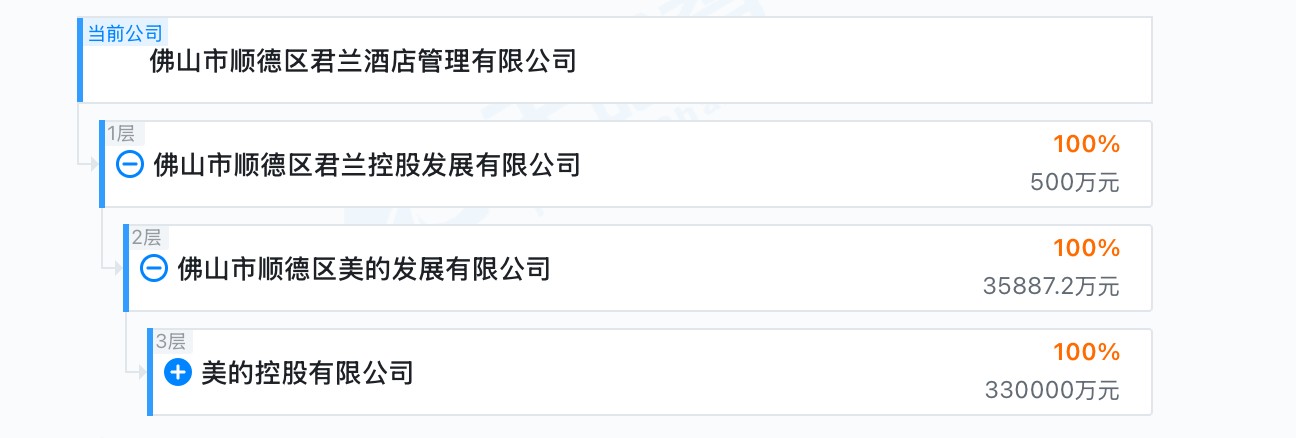
The results of the shareholding penetration show that the actual holder behind Junlan Hotel is Midea Group's major shareholder, Midea Holdings.

Compared to its industry peer Haier, the "Midea system" has a relatively conservative layout in the financial sector. Although it previously held shares in a bank, it has not ventured into securities, insurance, trust, or consumer finance.
In 2014, Midea Group, along with its subsidiary Midea Group Finance, jointly invested 810 million yuan to participate in the private placement of Shunde Rural Commercial Bank. To this day, the "Midea system" still holds a 9.69% stake, firmly occupying the position of the largest shareholder of the bank.
Five years after Midea Group's investment, Shunde Rural Commercial Bank applied to the China Securities Regulatory Commission for an IPO on the Shenzhen Main Board, later shifting to review by the Shenzhen Stock Exchange. By July 2025, after six years of waiting without results, the bank proactively withdrew its IPO application.
After 2018, there were frequent reports of Midea Group entering the consumer finance sector. Midea Finance had also recruited a deputy general manager for consumer finance, whose responsibilities included formulating and executing the development strategy for the consumer finance company (under preparation).
However, as of now, Midea Group has still not obtained a consumer finance license with higher financing leverage, holding only three small loan licenses: Midea Microfinance, Chongqing Midea Microfinance, and Ningbo Midea Microfinance.
It is worth mentioning that the "Midea system" previously entered the financial sector through shareholding by Midea Group and its subsidiaries; however, this time, the investment in Samsung Property Insurance is made through a company under Midea Holdings.
The aforementioned shareholding change is still pending approval from regulatory authorities. If Midea is approved to enter, the shareholder strength of Samsung Property Insurance will also be further enhanced.
The predecessor of Samsung Property Insurance can be traced back to the establishment of the Beijing representative office of Korea's Samsung Fire & Marine Insurance in 1995.
In 2005, the representative office completed its transformation and became China's first wholly foreign-owned property insurance company.
In 2022, Samsung Property Insurance introduced Tencent and four other new shareholders to complete its joint venture transformation.
The current chairman of Samsung Property Insurance, Ren Huichuan, held dual roles as an executive at Ping An Group and a senior advisor at Tencent before taking office; General Manager Li Hao has nearly 30 years of experience in the insurance industry, having worked at several subsidiaries under Ping An.
After the capital increase, Korea's Samsung Fire & Marine Insurance maintains a 37% shareholding, making it the largest shareholder; Shenzhen Tencent Network Computing holds 32%, making it the second-largest shareholder; Junlan Hotel and Manbat (Zhangjiagang) Investment Development each hold 11.50%, ranking as the third-largest shareholders.

In the first half of the year, Samsung Fire & Marine Insurance recorded premium income of 1.298 billion yuan and a net profit of 69 million yuan, both showing significant growth; as of the end of the second quarter, the core and comprehensive solvency adequacy ratios were 685.36% and 692.92%, respectively, far exceeding regulatory requirements