CITIC Construction Investment: During the slow bull consolidation period, continue to focus on prosperous sectors and pay attention to inflation improvement

Zhitong
2025.09.14 11:19
portai
I'm PortAI, I can summarize articles.

CITIC Construction Investment Securities released a research report stating that the current market liquidity and sentiment are in a high-level consolidation, with the prosperous sectors continuing to catalyze, and the AI computing power main line has not been falsified. As market valuations recover, fundamental factors may return to the spotlight, and improvements in inflation will attract overseas funds to allocate to Chinese assets. The industry should focus on AI, pig farming, new energy, and other sectors. Recently, market trading volume has declined, but the net inflow of margin financing has significantly improved, and individual investors are gradually entering the market

According to the Zhitong Finance APP, CITIC Construction Investment Securities released a research report stating that in recent months, investors' focus on fundamentals has dulled. However, as market valuations have completed their repair and entered a slow bull consolidation period, fundamental factors may return to the spotlight. The slow bull pattern requires a prosperous sector as a vanguard, but it is also difficult to form without overall fundamental support. Specifically, at least a reversal of deflationary tendencies needs to be observed, which may become a key factor in attracting overseas funds to further allocate Chinese assets. Overall, the current market liquidity and sentiment are in a high-level consolidation phase without collapsing, and the prosperous sectors continue to catalyze. The core logic of AI computing power has not been disproven, and attention should be paid to high-low switching during the market consolidation period. Key industries to focus on: AI, pig farming, new energy, new consumption, innovative drugs, non-ferrous metals, basic chemicals, and non-bank financials.

Summary

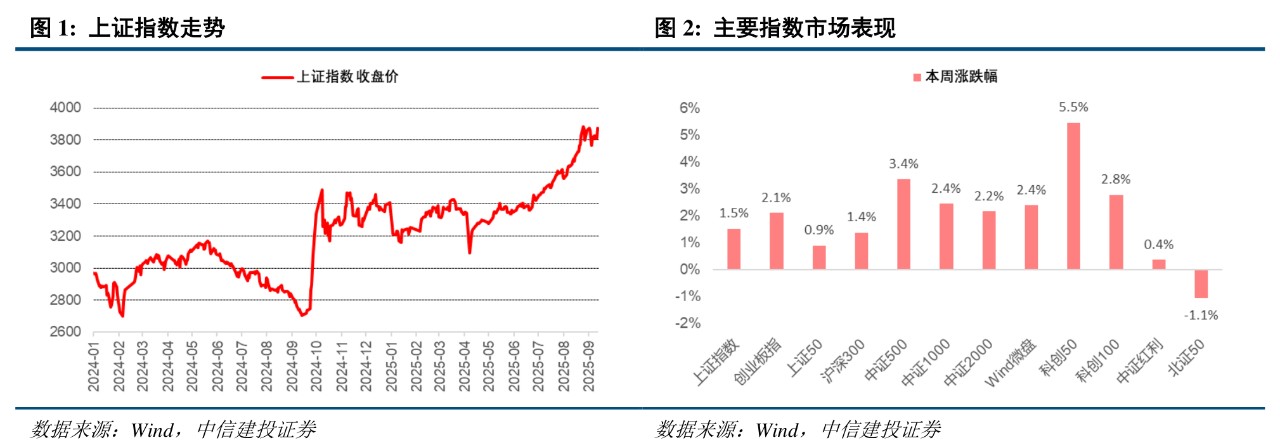
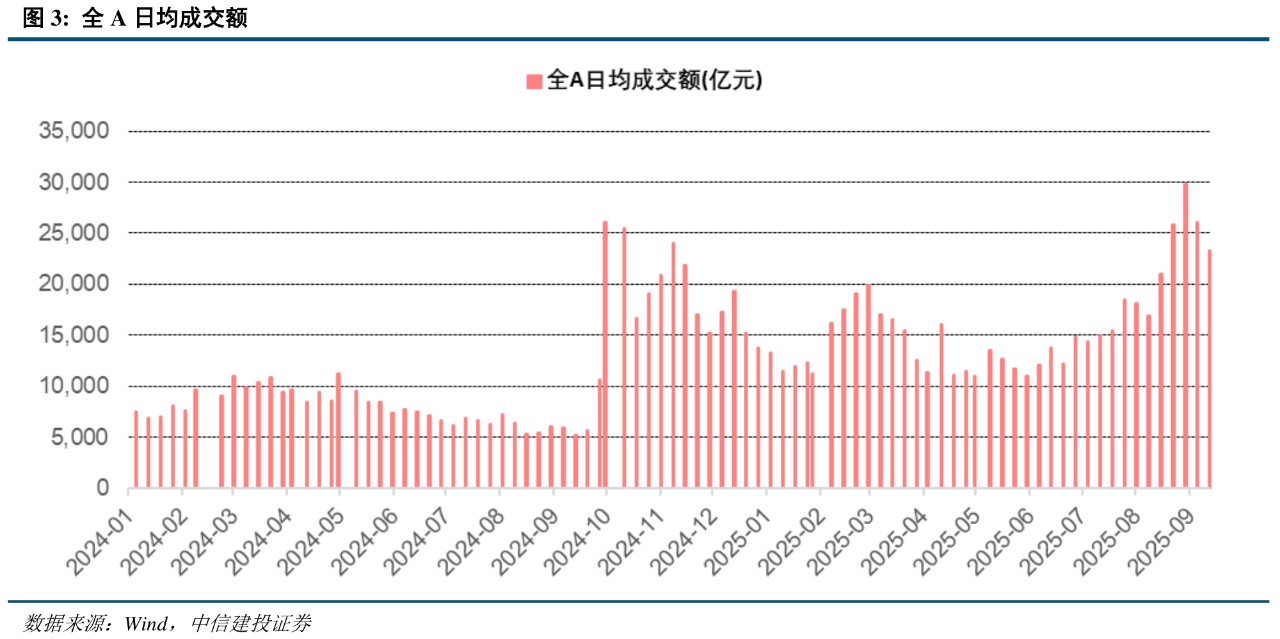
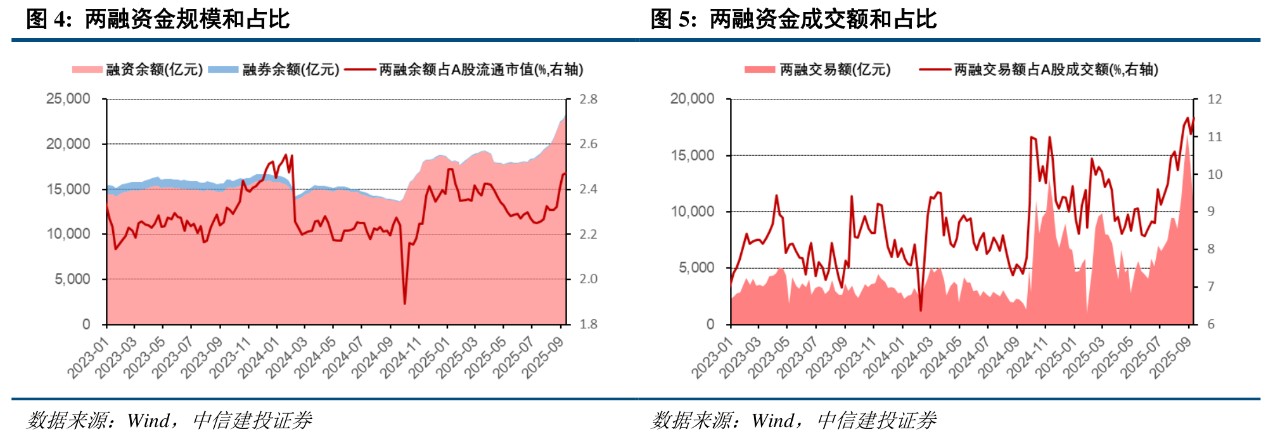
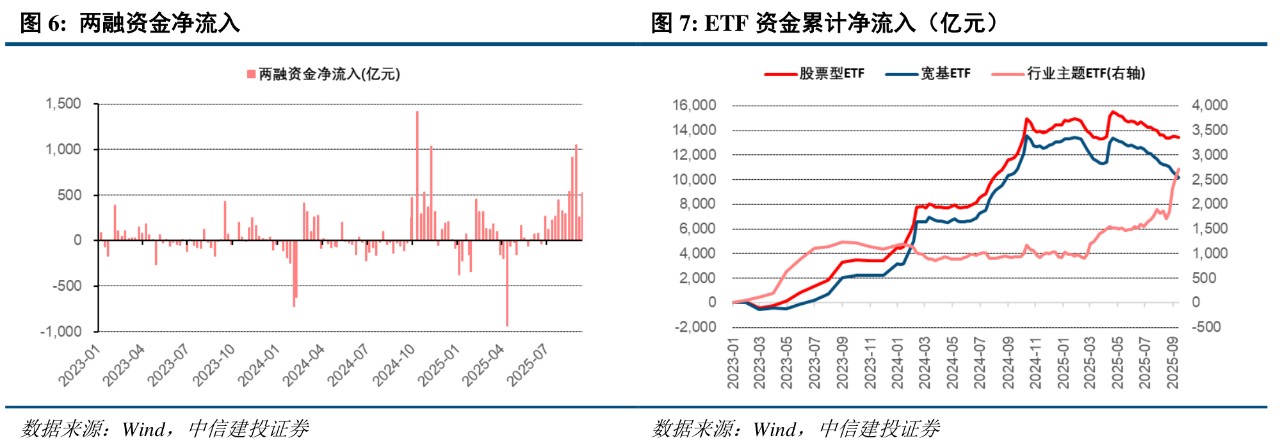
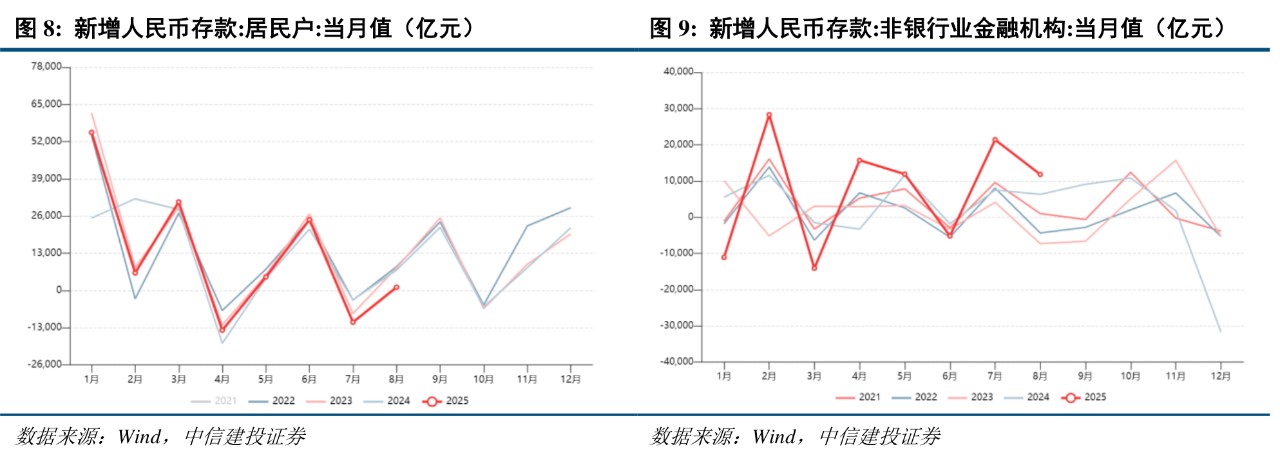
The main line of AI computing power has returned, funding sentiment has somewhat recovered, and the trend of deposit migration continues. The Shanghai Composite Index rose by 1.5%, briefly breaking through previous highs during Friday's trading; global AI prosperity resonated, and the main line of AI computing power returned, with the STAR 50 Index soaring by 5.5%. After reaching an average daily trading volume of nearly 3 trillion yuan in the last week of August, the first week of September fell to around 2.6 trillion yuan, and this week is around 2.3 trillion yuan. As of Thursday this week, the proportion of margin trading transaction volume has rebounded to 11.5%, matching previous highs, with a net inflow of 51.8 billion yuan in margin trading funds, showing significant improvement compared to last week's 25.6 billion yuan. The overall incremental ETF funds have been limited recently, but in the past four weeks, industry-themed ETFs have seen a net inflow of 101 billion yuan, indicating that individual investors are steadily entering the market. On the other hand, in August, new RMB deposits from households amounted to 110 billion yuan, weaker than historical seasonality, while non-bank institutions saw new RMB deposits of 1.18 trillion yuan, stronger than historical seasonality.

Inflation factors may return to the market's focus. In recent months, investors' attention to fundamentals has dulled, but as market valuations have completed their repair and entered a slow bull consolidation period, fundamental factors may return to the spotlight. The slow bull pattern requires a prosperous sector as a vanguard, but it is also difficult to form without overall fundamental support. Specifically, at least a reversal of deflationary tendencies needs to be observed, which may become a key factor in attracting overseas funds to further allocate Chinese assets.

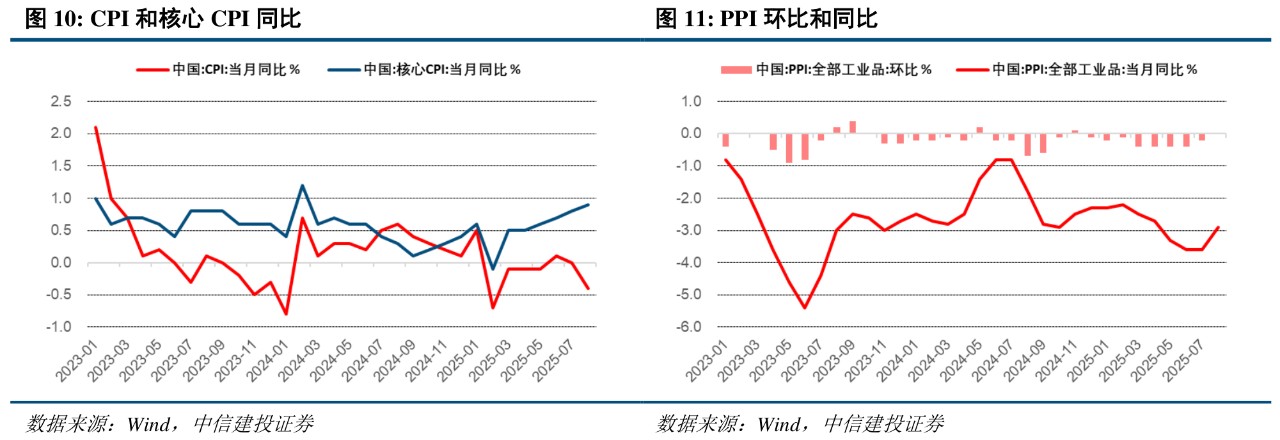
In August, the CPI fell by 0.4% year-on-year, showing a significant decline compared to previous periods, mainly due to the high base caused by last year's pork prices, with the negative drag from food items intensifying; the core CPI rose by 0.9% year-on-year, stabilizing for six consecutive months and continuing to rebound, indicating that the current downward risk of domestic demand is controllable.

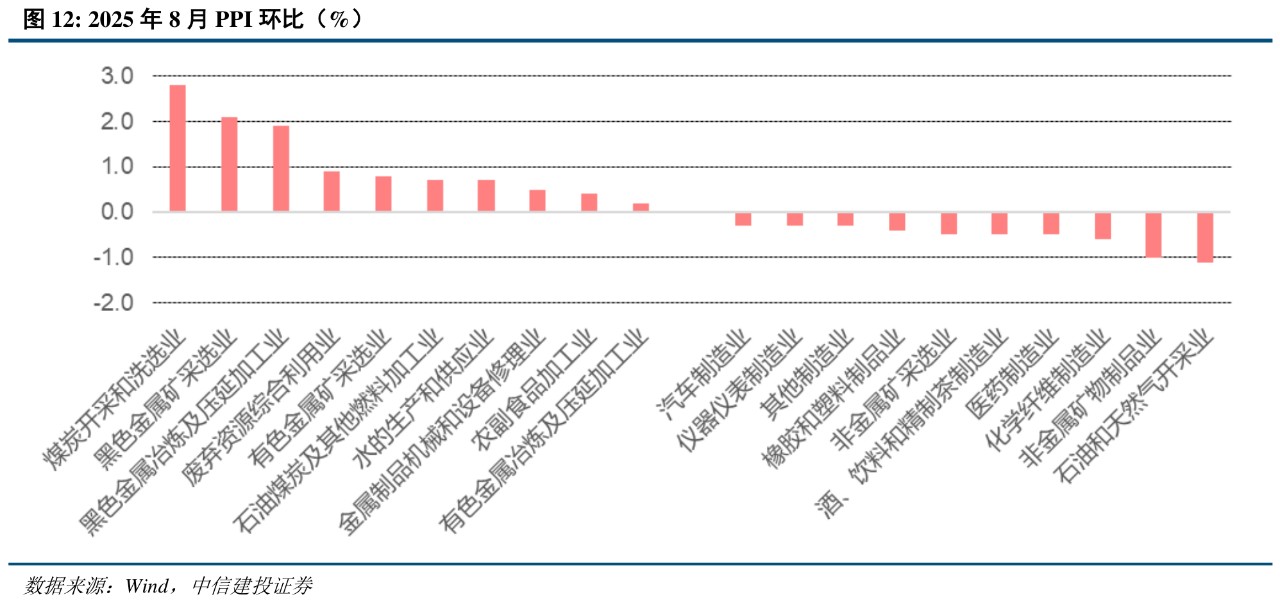
In August, the PPI remained flat month-on-month, ending a previous streak of eight consecutive months of negative growth; the PPI fell by 2.9% year-on-year, showing a significant rebound compared to the -3.6% of the previous two months. By industry, the PPI for upstream sectors such as coal, oil, steel, and non-ferrous metals showed significant improvement month-on-month in August, suggesting that anti-involution policies may have begun to take effect gradually. With continued policy efforts, the effects are expected to further spread.

Expectations for overseas interest rate cuts have risen again. The current inflation situation in the United States is relatively stable, while the labor market shows signs of weakness, prompting institutions to increase their bets on the Federal Reserve's interest rate cuts. Currently, a 25 basis point rate cut in September is almost a certainty, with the market expecting two more cuts totaling 50 basis points later this year The slow bull market consolidation period focuses on prosperous sectors. Overall, the current market's capital and sentiment are in a high-level consolidation without collapsing, and the prosperous sectors continue to catalyze. The core logic of the AI computing power main line has not been disproven, and attention should be paid to high-low switching during the market consolidation period.

Main Text

AI computing power main line returns, capital sentiment improves

This week, the A-share market experienced a V-shaped rebound, with the Shanghai Composite Index rising by 1.5%, briefly breaking through the previous high on Friday, reaching 3892.7 points. In terms of market trading volume, there has been a recent decrease. After creating an average daily trading volume of nearly 3 trillion yuan in the last week of August, it fell to around 2.6 trillion yuan in the first week of September, and this week it is around 2.3 trillion yuan, indicating that market sentiment is consolidating at a high level and has not collapsed.

Global AI prosperity resonates, AI computing power main line returns, and the Sci-Tech Innovation 50 Index surged by 5.5%. In terms of news, Oracle's cloud infrastructure revenue surged by 55% to $3.3 billion in the first fiscal quarter, with expectations for a 77% growth in cloud infrastructure revenue by fiscal year 2026; unfulfilled performance obligations have reached $455 billion, a year-on-year increase of 359%; the company signed a $300 billion computing power agreement with OpenAI last quarter to jointly develop a data center in the U.S. with a capacity of 4.5 gigawatts. Oracle's stock surged by 25% this week, with its founder briefly surpassing Musk to become the world's richest person.

This week, capital sentiment has also improved, and the trend of deposit migration continues. As of Thursday this week, the proportion of margin trading transaction volume rose to 11.5%, consistent with previous high levels, with a net inflow of 51.8 billion yuan in margin trading funds, showing significant improvement compared to last week's 25.6 billion yuan. In terms of ETF funds, the overall incremental increase has been limited recently, but in the past four weeks, industry-themed ETFs have seen a net inflow of 101 billion yuan, indicating that individual investors are steadily entering the market. On the other hand, in August, new RMB deposits from households amounted to 110 billion yuan, weaker than historical seasonality, while new RMB deposits from non-bank institutions reached 1.18 trillion yuan, stronger than historical seasonality

Inflation factors may return to market focus

In recent months, investors' attention to fundamentals has dulled, but as market valuations have been repaired and entered a slow bull consolidation period, fundamental factors may return to focus. While a slow bull pattern certainly requires a prosperous sector as a vanguard, it is also difficult to form without overall fundamental support. Specifically, it is necessary to see at least a reversal of deflationary tendencies, which may also become a key factor in attracting overseas funds to further allocate Chinese assets.

In August, the CPI fell by 0.4% year-on-year, showing a significant decline compared to previous periods, mainly due to the high base caused by last year's pork prices, with the negative drag from food items intensifying. Pork prices will also be a core focus for subsequent inflation recovery; the core CPI rose by 0.9% year-on-year, stabilizing for six consecutive months and continuing to rise, indicating that the current risks of declining domestic demand are controllable.

In August, the PPI remained flat month-on-month, ending a previous streak of eight consecutive months of negative growth; the PPI fell by 2.9% year-on-year, showing a significant rebound from -3.6% in the previous two months. By industry, the PPI for upstream sectors such as coal, oil, steel, and non-ferrous metals showed significant month-on-month improvement in August, suggesting that anti-involution policies may have begun to take effect gradually. As subsequent policies continue to exert force, the effects are expected to further spread.

Historically, overseas institutional investors pay more attention to fundamental factors, and their reactions often lean towards the right side. After the improvement of inflation, it may become a key factor in attracting overseas funds to further allocate Chinese assets. If inflation turns positive month-on-month subsequently, foreign capital is expected to increase its allocation to Chinese assets, benefiting sectors such as Hong Kong stocks internet, A-shares finance, consumption, and new energy.

Expectations for Overseas Interest Rate Cuts Heat Up Again

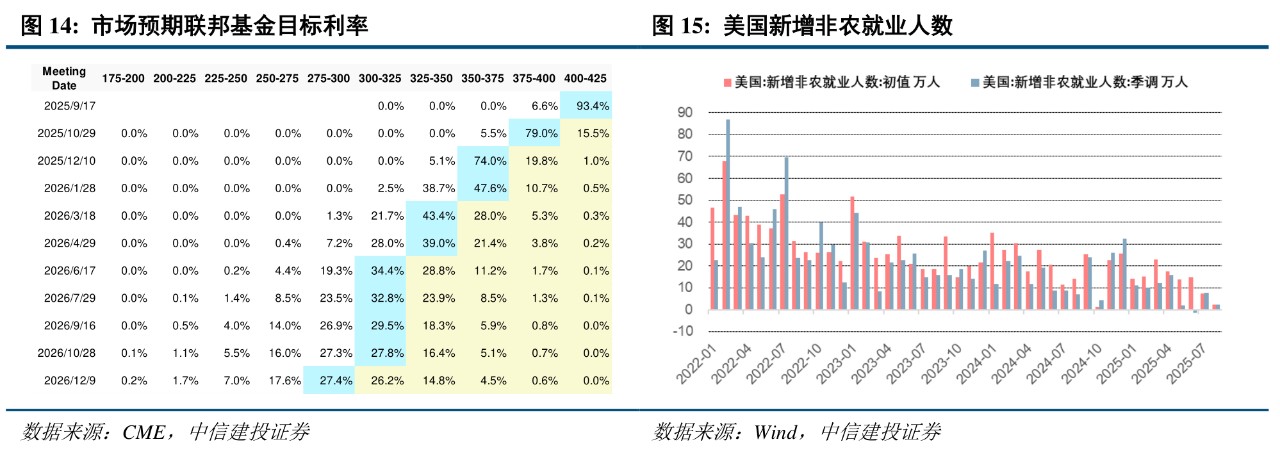
Currently, the inflation situation in the United States is relatively stable, while the labor market shows signs of weakness, leading institutions to increase their bets on the Federal Reserve cutting interest rates. Currently, a 25BP rate cut in September is basically a done deal, and the market expects there may be 2 more cuts totaling 50BP within the year.

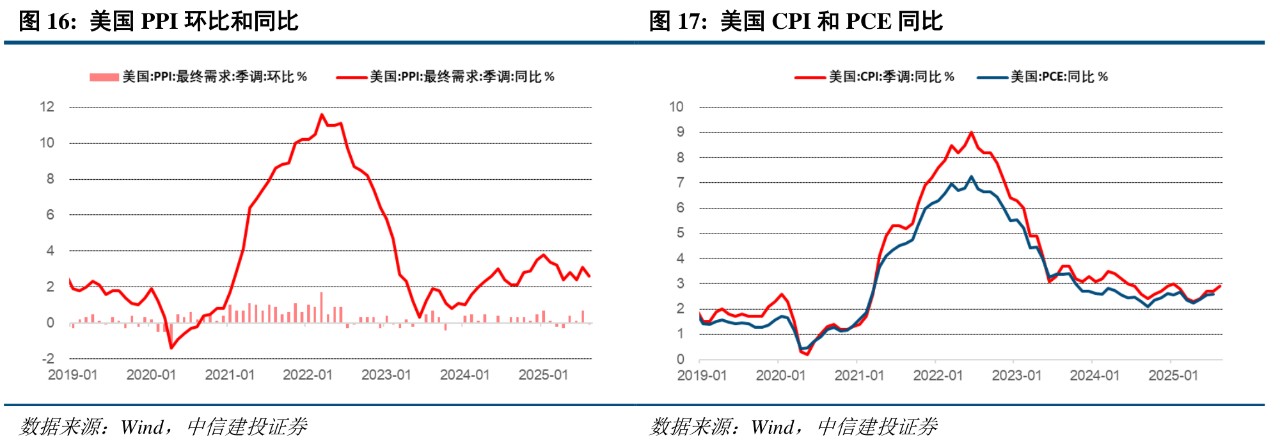
This Tuesday, the U.S. government released non-farm payroll data that was revised down more than expected, increasing pressure on the Federal Reserve to cut rates. The non-farm employment number for the year ending in March was revised down by 910,000, the largest downward revision since 2000, while the market had expected a revision of 682,000.

The PPI data fell short of expectations, further supporting the case for the Federal Reserve to cut rates. The U.S. August PPI unexpectedly decreased by 0.1% month-on-month, while the market expected an increase of 0.3%, and the previous value was an increase of 0.7%. The PPI year-on-year only grew by 2.6%, while the market expected 3.3%, and the previous value was 3.1%; the August CPI rose by 2.9% year-on-year, which, although higher than the previous value of 2.7%, met market expectations.

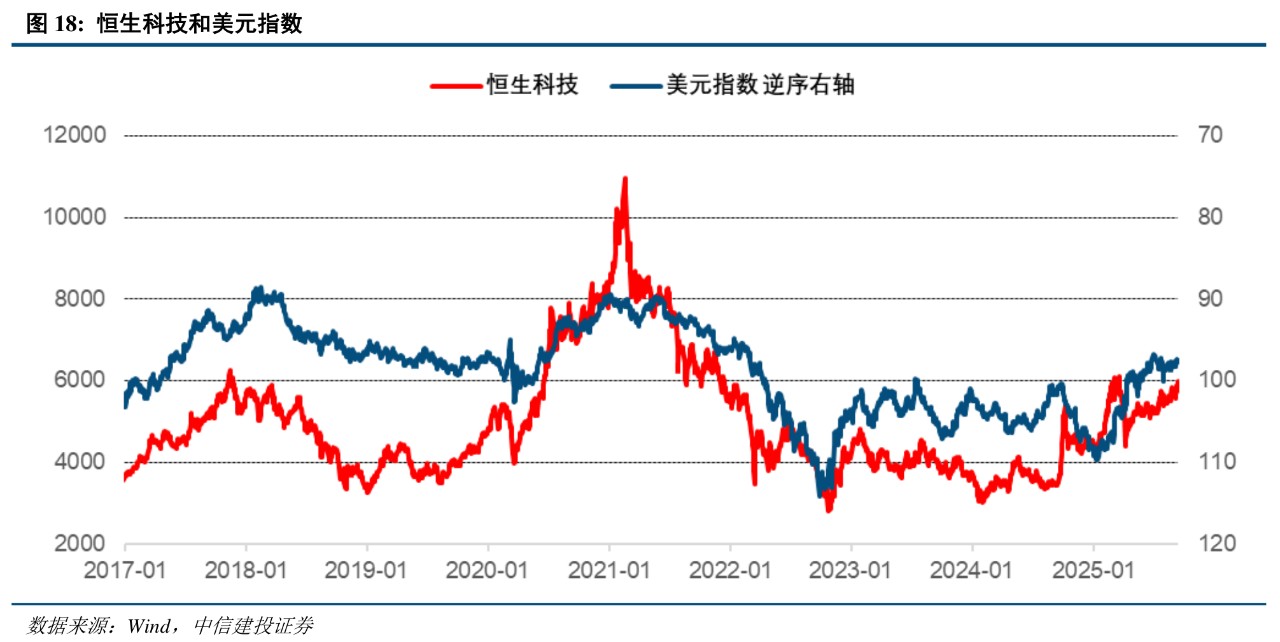
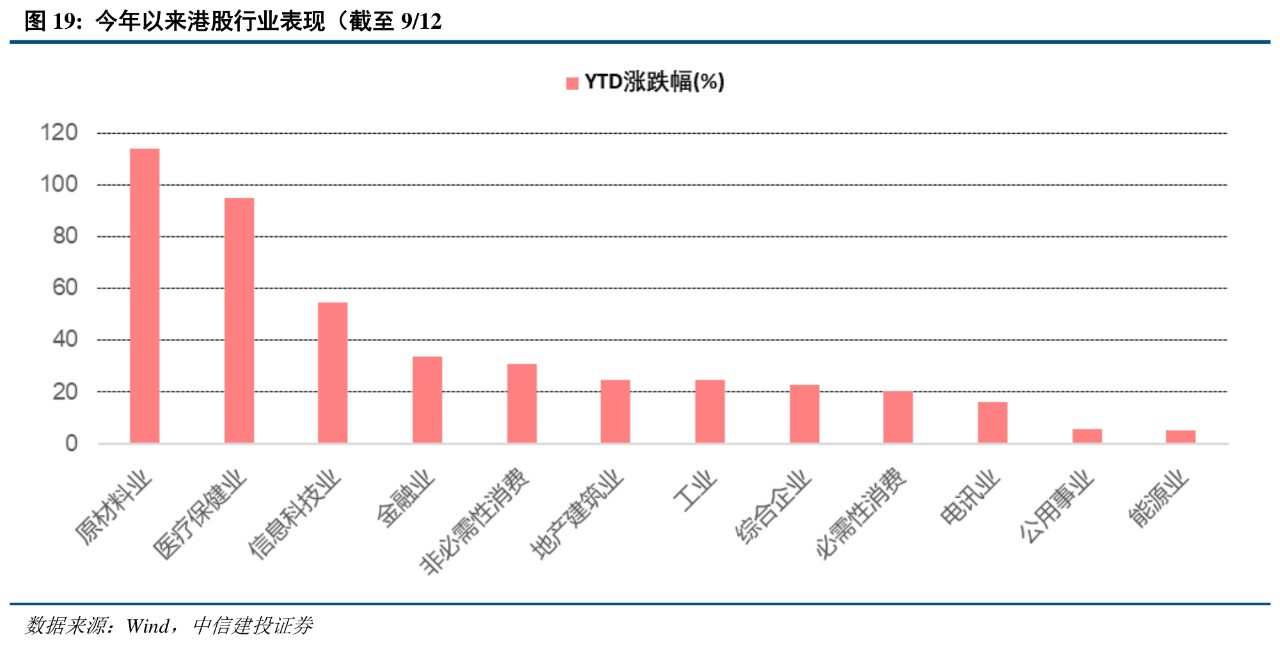
After the Federal Reserve's interest rate cuts, the weakening of the US dollar, and the ample liquidity of overseas funds, the Hong Kong stock market is expected to absorb some of the liquidity spillover. The performance of the Hang Seng Tech Index is closely related to the movements of the US dollar index. Since the beginning of this year, the US dollar index has weakened from 110 to below 100, with sectors such as non-ferrous metals, innovative pharmaceuticals, and the internet reacting more sensitively. The performance of Hong Kong stocks in the raw materials, healthcare, and information technology sectors has been prominent.

Focus on Prosperous Tracks During the Slow Bull Consolidation Period

Overall, the current market's liquidity and sentiment are in a high-level consolidation phase and have not collapsed. The prosperous tracks continue to catalyze, and the core logic of the AI computing power mainline has not been disproven. During the market consolidation period, attention should be paid to the switching between high and low.

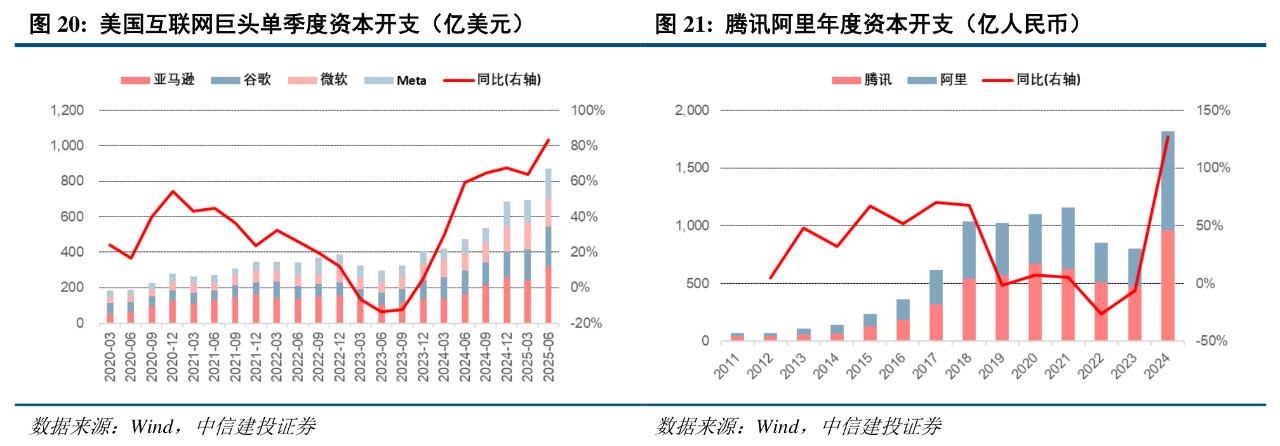
Global AI infrastructure investment is entering an acceleration phase, with leading chip and cloud companies continuously exceeding expectations, confirming the explosive growth in computing power demand. NVIDIA's revenue for the second quarter of fiscal year 2026 reached $46.7 billion (up 56% year-on-year), with data center revenue increasing by 56% year-on-year. Its newly released Rubin CPX GPU is designed for massive contextual processing, further strengthening computing power supply capabilities; Oracle's remaining performance obligations for its AI business reached $455 billion (up 359% year-on-year), with cloud business expected to grow by 77% this fiscal year; domestic companies like Tencent and Alibaba also maintain high growth in capital expenditures. At the same time, the process of domestic chip self-control is accelerating, with the DeepSeek-V3.1 model adapting to the new generation of domestic chips, forming a "chip-model" ecological closed loop, effectively alleviating overseas supply chain disruptions.

The National Development and Reform Commission and the National Energy Administration issued the "Implementation Opinions on Promoting High-Quality Development of 'Artificial Intelligence + ' Energy." The goal is to initially establish an innovative system for the integration of energy and artificial intelligence by 2027, continuously solidifying the foundation for the coordinated development of computing power and electricity, achieving significant breakthroughs in core technologies empowered by artificial intelligence in the energy sector, and expanding applications more widely and deeply. Promote the in-depth application of more than five professional large models in industries such as power grids, power generation, coal, and oil and gas, explore more than ten replicable, easily promoted, and competitive key demonstration projects, and explore hundreds of typical application scenario empowerment paths The Ministry of Industry and Information Technology stated that it is studying the implementation plan for the special action of artificial intelligence + manufacturing. The next step for the Ministry will be to promote the high-quality development of the artificial intelligence industry, accelerate the high-level empowerment of new industrialization, research and issue the implementation plan for the special action of artificial intelligence + manufacturing, deploy tasks for key industries, key links, key areas, and intelligent transformation, formulate the transformation route for artificial intelligence + manufacturing, and release guidelines for the application of artificial intelligence in manufacturing enterprises.

The new energy vehicle market remains highly prosperous. According to Rho Motion data, global sales of new energy vehicles reached 9.1 million units in the first half of 2025, a year-on-year increase of 28%, with China contributing 5.5 million units, a year-on-year increase of 32%. This is attributed to technological advancements, continuous improvement in vehicle performance and cost-effectiveness, as well as the continuation of the old-for-new policy. Meanwhile, the electrification penetration rate of commercial vehicles is rapidly increasing, becoming an important increment.

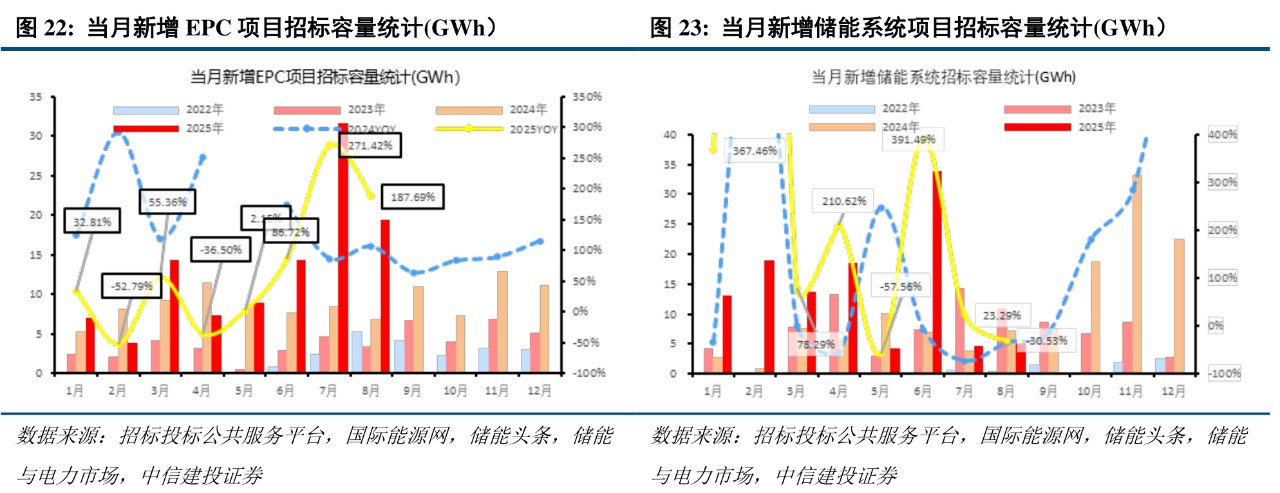
Domestic energy storage bidding sees high growth. From January to August, a total of 218.54 GWh of new bidding was added, a year-on-year increase of 125.37%, including 106.71 GWh for EPC and 111.83 GWh for energy storage systems. On one hand, many provinces have introduced revenue policies such as capacity compensation and capacity electricity prices, enhancing the certainty of energy storage project revenues; on the other hand, the full market entry of new energy has widened the price difference between peak and valley, and matching storage can improve project economics.

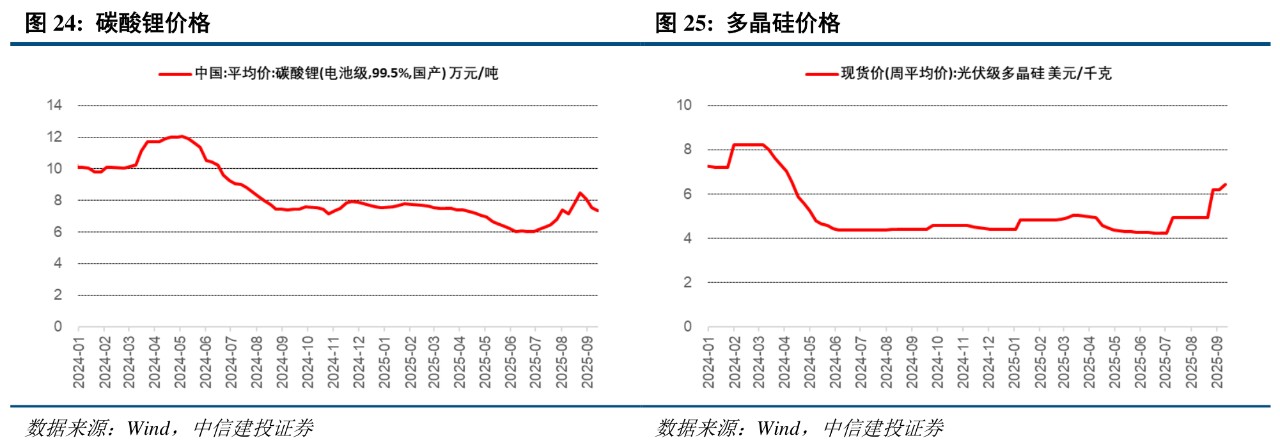
Power batteries are opening up a new growth curve. Demand is driven by both new energy vehicles and energy storage. Guanzhi Hainei Consulting predicts that global demand for power batteries will grow by 35% to 1,313 GWh by 2025. Meanwhile, leading companies are intensifying technological breakthroughs, and the mass production progress of solid-state batteries is accelerating. The market currently expects that all-solid-state batteries are likely to achieve small-scale mass production in 2027 and realize cost-reduction and large-scale production by 2030.

The photovoltaic industry chain prices stabilize and recover. The Ministry of Industry and Information Technology and five other departments held a symposium on the photovoltaic industry in August, clearly stating the need to "govern low-price disorderly competition in accordance with laws and regulations," "guide enterprises to improve product quality," and "promote the exit of backward production capacity," directly addressing the profitability pressure caused by the previous price war in the industry chain.

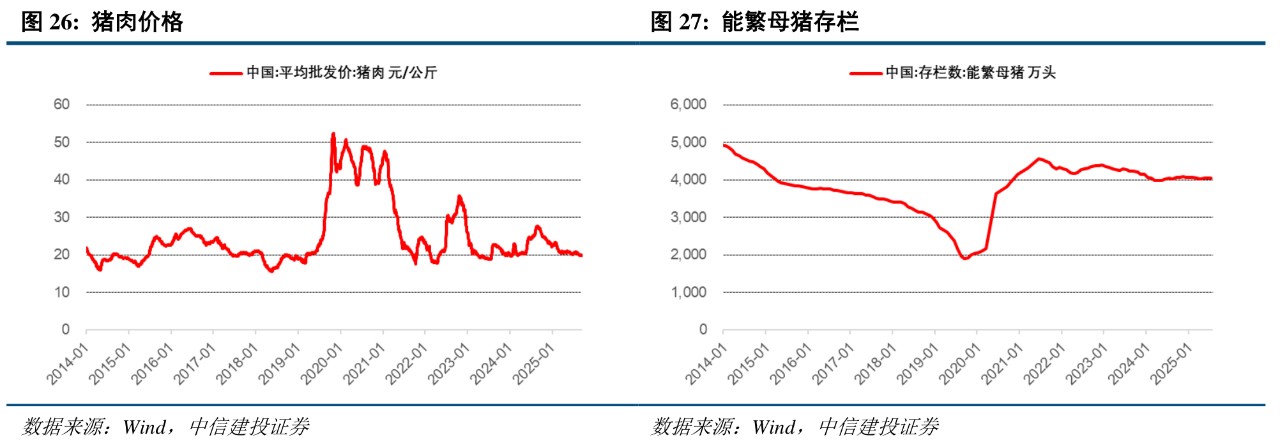
![f93247dcfa4f9f07c00f21f3e69eb364.png](https://img.zhitongcaijing.com/image/20250914/1757848345398850.png? Policy strong regulation, the reduction of live pig production capacity has become the core focus. On August 10, the Ministry of Agriculture and Rural Affairs stated that the current live pig production capacity is too high, guiding the reduction of one million breeding sows; on August 26, 15,400 tons of frozen pork were stored in the central reserve; on September 16, the Ministry of Agriculture and Rural Affairs, in conjunction with the National Development and Reform Commission, plans to hold a symposium for enterprises on live pig production capacity regulation in Beijing, and the subsequent supply and demand of live pigs and pork prices are expected to improve.