


How Does Nuveen Nasdaq 100 Dynamic Overwrite Fund (QQQX) Work?

The Nuveen Nasdaq 100 Dynamic Overwrite Fund (QQQX), established in 2007, is a conservative covered call fund that utilizes a strategy on 35-75% of its portfolio. It aims to generate income while mitigating volatility, tracking the Nasdaq 100 Index, which includes high-performing tech stocks. Unlike newer funds, QQQX offers a stable approach to wealth building, appealing to both younger and institutional investors. Its performance is contrasted with the more aggressive strategies of newer funds, highlighting the value of established investment methods.
- The Nuveen Nasdaq 100 Dynamic Overwrite Fund was founded in 2007 and is one of the oldest covered call funds, and has been a consistent wealth building tool since its inception.
- With only 35-75% of its portfolio subject to covered call writing at any given time, QQQX is decidedly more conservative than some of its younger rivals in the covered call fund space.
- Changes in distribution frequency may appeal to a younger demographic of investors in addition to institutional ones.
- Are you ahead or behind on retirement? SmartAsset’s free tool can match you with a financial advisor in minutes to help you answer that today. Each advisor has been carefully vetted and must act in your best interests. Don’t waste another minute – learn more here.(Sponsor)
The popular Netflix series Cobra Kai revived The Karate Kid film franchise and served to fully flesh out previously established characters as well as introduce new ones. One of the more fascinating and honest elements of the series’ depiction of martial arts is its respect and appreciation for the value of the old-school training methods and teachings, both the positive aspects taught my Mister Miyagi (Pat Morita), Daniel LaRusso (Ralph Macchio) and Choze Toguchi (Yuji Okumoto) and the negative ones, as taught by Kim Sun Young (portrayed by C.S. Lee and Don Lee), John Kreese (Martin Kove), and Terry Silver (Thomas Ian Griffith).
The story involves how their students need to take the positive elements from their old-school training without succumbing to modern society’s pressures that undermine many old-school principles and favor the negative ones. Impressive short-cut success with modern methods, as exemplified by Lewis Tan’s Wolf antagonist, eventually loses out to old-school training that synthesizes the range of positive elements while eschewing the negative ones, as demonstrated by Johnny Lawrence (William Zabka), who lost the tournament in the first Karate Kid film nearly four decades ago.
While new ideas and breakthroughs often capture the public’s fascination with the latest fads, there is something to be said about prior established methods and their inherent value, which is often quickly forgotten. The huge surge of popularity and interest in the ultra-high dividend YieldMax ETFs have wowed investors, especially Gen-Z DIY ones, who became captivated over the monthly or weekly dividends generated by the YieldMax offerings. Focused on highly volatile tech stocks and predicated on their inherent fat premiums available for covered call options, they have become key to dividend compounding strategies for wealth building due to their payout frequency.
That said, it’s easy to overlook and dismiss the successes of older coveted call funds that have solid track records with considerably lower risk. Case in point: The Nuveen NASDAQ 100 Dynamic Overwrite Fund (NASDAQ: QQQX).
A Conservative Approach

Like “O.G.” Hip-Hop legend Ice Cube, QQQX can be considered an OG of the covered call fund arena, having debuted in 2007, just 3 years after the first one launched in 2004.
Founded in 2007, QQQX can be considered an “O.G.” (Original Gangsta) covered call fund, with an inception only a few years after the very first one debuted in 2004. QQQX tracks the Nasdaq 100 Index, which is loaded with technology stocks and other fast moving securities listed on Nasdaq. Unlike the S&P 500, which features large cap NYSE listed behemoths like JP Morgan Chase, Pfizer, and Boeing, the Nasdaq 100 contains all of the Magnificent 7 tech stocks without the drag from slower moving industries.
As a result the Nasdaq 100 routinely outperforms the S&P 500 in the long run, although the interim ride can be a roller coaster ill suited for those with weaker stomachs. QQQX is designed to take advantage of the inherent higher volatility of the Nasdaq 100 by utilizing a covered call strategy on 35-75% of its portfolio. This generates substantial income for its shareholders and helps to mitigate volatility. The trade off is a more stable, albeit less aggressive tracking of the Nasdaq 100.
To give an example, $10,000 invested in the Nasdaq 100 directly or with a fund that simply tracks it like QQQ in 2015 would be worth $37,662 in 2025, at the time of this writing. Conversely, $10,000 invested in QQQX at the same time would be sitting on $32,283, but the investor would have been receiving $2.24 per share annually in dividends during that time as well for their risk offset. Additionally, QQQX trades at a nearly nine percent (9%) discount to NAV, which is an added risk mitigation component.
An overview of QQQX includes the following details:
| Yield | 8.23% | Expense Ratio | 0.89 |
| Number of Stocks | 207 | Avg. Daily Volume | 118,309 shares |
| Mkt. Price | 27.22 | Avg. Option Coverage | 56% |
| NAV | 29.86 | 1-year return | 18.05% |
| Mkt Price/NAV discount | -8.84% | 5-year return | 8.11% |
| Net Assets | $1.423 billion | 10-year return | 12.06% |
Old-School vs. New School Risks and A Combination Strategy
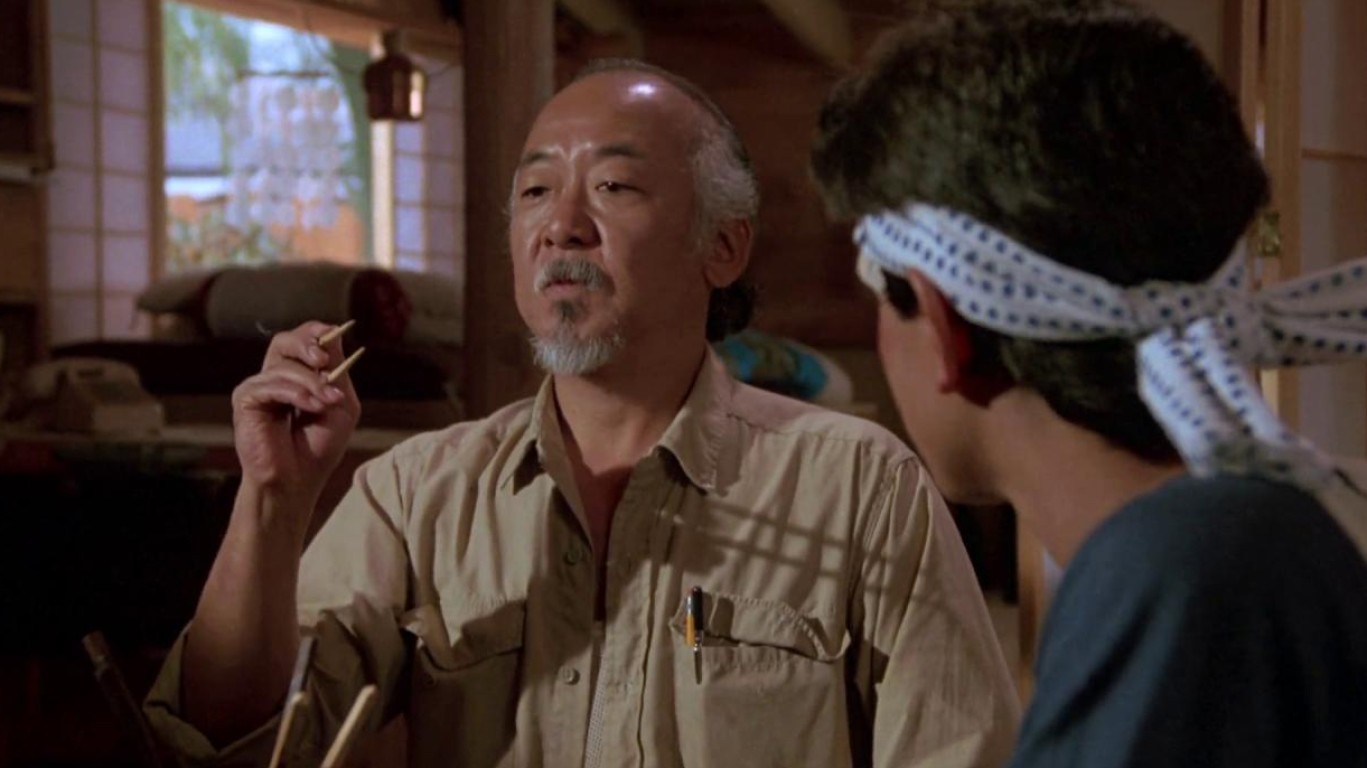
The “Cobra Kai” series breathed new life into “The Karate Kid” franchise by exploring the virtues and iniquities of old-school karate teachings with those of modern martial arts to combine the best aspects of both.
Some of the YieldMax ETFs, such as the YieldMax Ultra Option Income Strategy ETF (NYSEARCA: ULTY), deliver eye-popping yield distributions of 80-90%, payable weekly. However, this comes at a considerably elevated risk:ULTY’s NAV has dropped precipitously by approximately 70%, and a significant amount of the dividends has been return of capital. From a price appreciation perspective, ULTY has lost roughly the same amount of market price of nearly 70%.
ULTY’s managers are trying to stabilize its stock price and improve its prospects for climbing back up, QQQX has been faced with marketing challenges, given the appeal of its rivals, and its perception of being too antiquated for Gen-Z.
An article last month in Seeking Alpha mentioned that Nuveen was considering changing its quarterly dividend payout to monthly. This would allow QQQX to better compete with its newer rivals. While individual investor reaction has yet to be quantified in a comprehensive fashion, overall market reaction, especially from institutional investors appeared positive:
- Short interest in QQQX by 22.7%, starting in mid-August, according to Market Beat.
- Harbour Investments, Bell Investment Advisors, Eastern Bank, Geneos Wealth Management, and ORG Partners, LLC all increased their holdings of QQQX from 66% to 980%. Going into September, over 23% of QQQX was owned by institutions.
Like Cobra Kai’s Johnny Lawrence, It would appear that an old dog can learn new tricks and still compete effectively in the financial world too.
The post How Does Nuveen Nasdaq 100 Dynamic Overwrite Fund (QQQX) Work? appeared first on 24/7 Wall St..
