Private equity firms in Kalaris Therapeutics, Inc. (NASDAQ:KLRS) are its biggest bettors, and their bets paid off as stock gained 24% last week

Simplywall
2025.09.28 15:00
portai
I'm PortAI, I can summarize articles.

Private equity firms, led by Samsara BioCapital LLC with 61% ownership, significantly influence Kalaris Therapeutics, Inc. (NASDAQ:KLRS). Their investment paid off as the stock surged 24% last week, increasing the company's market cap by $20 million. Institutional investors also hold a notable portion of shares, indicating credibility, while the general public owns 14%. Insider ownership stands at $9.5 million, suggesting alignment with shareholder interests. The dynamics of ownership could impact future company decisions and performance, warranting further analysis of risks and analyst forecasts.

Key Insights

  • Kalaris Therapeutics' significant private equity firms ownership suggests that the key decisions are influenced by shareholders from the larger public
  • Samsara BioCapital LLC owns 61% of the company
  • Using data from analyst forecasts alongside ownership research, one can better assess the future performance of a company

Trump has pledged to "unleash" American oil and gas and these 15 US stocks have developments that are poised to benefit.

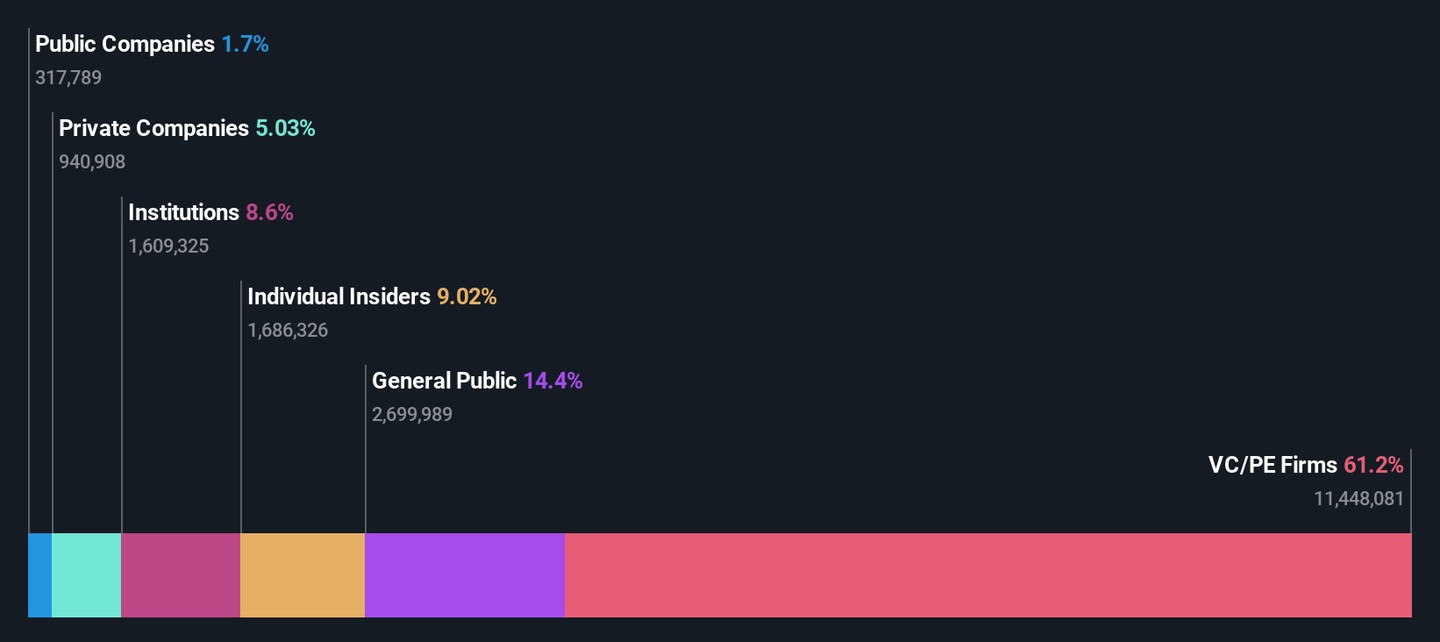
A look at the shareholders of Kalaris Therapeutics, Inc. (NASDAQ:KLRS) can tell us which group is most powerful. We can see that private equity firms own the lion's share in the company with 61% ownership. Put another way, the group faces the maximum upside potential (or downside risk).

Clearly, private equity firms benefitted the most after the company's market cap rose by US$20m last week.

In the chart below, we zoom in on the different ownership groups of Kalaris Therapeutics.

Check out our latest analysis for Kalaris Therapeutics

NasdaqGM:KLRS Ownership Breakdown September 28th 2025

What Does The Institutional Ownership Tell Us About Kalaris Therapeutics?

Institutional investors commonly compare their own returns to the returns of a commonly followed index. So they generally do consider buying larger companies that are included in the relevant benchmark index.

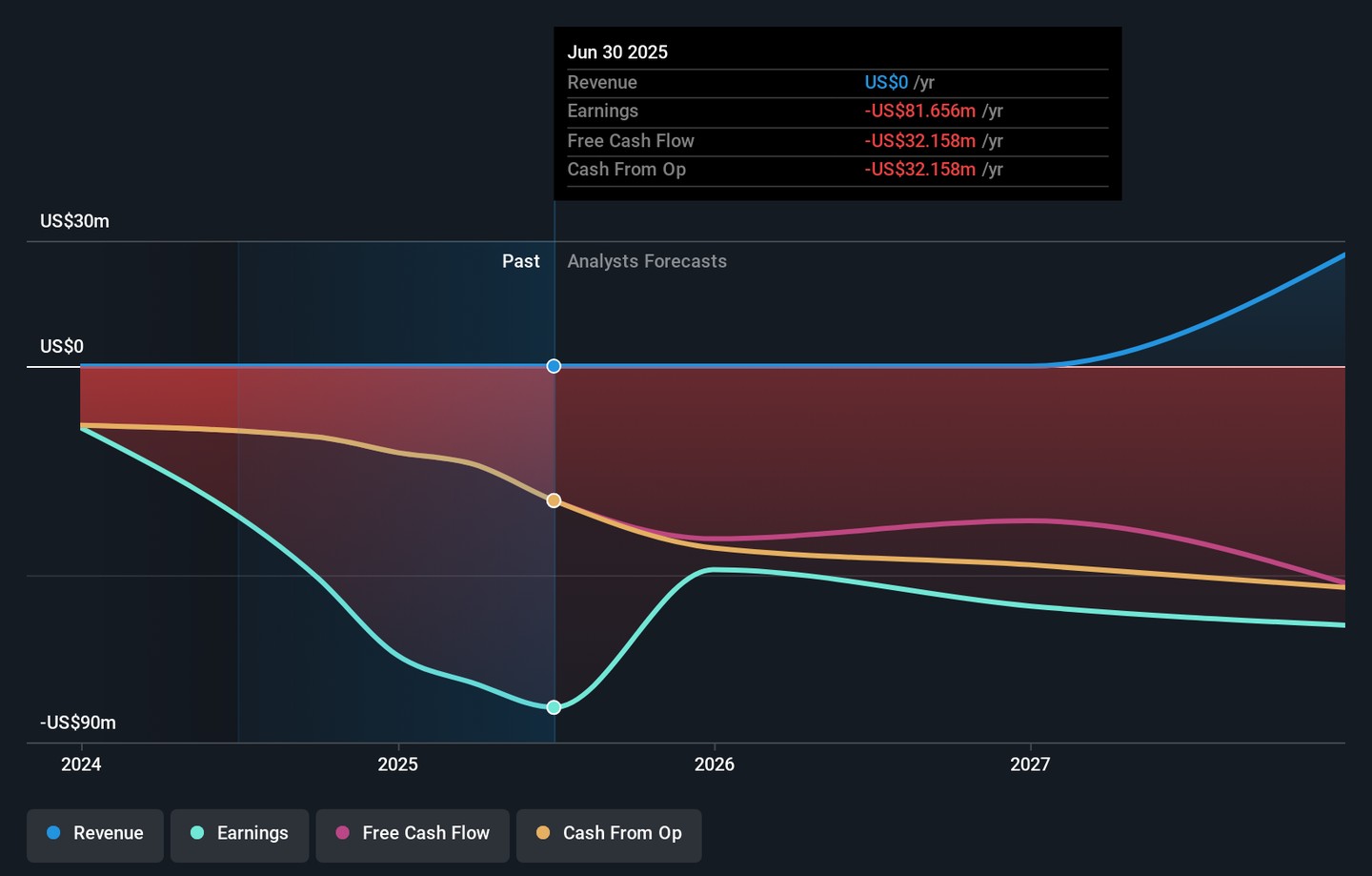
We can see that Kalaris Therapeutics does have institutional investors; and they hold a good portion of the company's stock. This suggests some credibility amongst professional investors. But we can't rely on that fact alone since institutions make bad investments sometimes, just like everyone does. If multiple institutions change their view on a stock at the same time, you could see the share price drop fast. It's therefore worth looking at Kalaris Therapeutics' earnings history below. Of course, the future is what really matters.

NasdaqGM:KLRS Earnings and Revenue Growth September 28th 2025

Kalaris Therapeutics is not owned by hedge funds. Samsara BioCapital LLC is currently the company's largest shareholder with 61% of shares outstanding. This implies that they have majority interest control of the future of the company. With 3.9% and 2.8% of the shares outstanding respectively, ElevateBio, LLC and Samir Patel are the second and third largest shareholders.

Researching institutional ownership is a good way to gauge and filter a stock's expected performance. The same can be achieved by studying analyst sentiments. There are plenty of analysts covering the stock, so it might be worth seeing what they are forecasting, too.

Insider Ownership Of Kalaris Therapeutics

While the precise definition of an insider can be subjective, almost everyone considers board members to be insiders. The company management answer to the board and the latter should represent the interests of shareholders. Notably, sometimes top-level managers are on the board themselves.

Most consider insider ownership a positive because it can indicate the board is well aligned with other shareholders. However, on some occasions too much power is concentrated within this group.

Our most recent data indicates that insiders own some shares in Kalaris Therapeutics, Inc.. As individuals, the insiders collectively own US$9.5m worth of the US$105m company. Some would say this shows alignment of interests between shareholders and the board, though we generally prefer to see bigger insider holdings. But it might be worth checking if those insiders have been selling.

General Public Ownership

The general public-- including retail investors -- own 14% stake in the company, and hence can't easily be ignored. While this size of ownership may not be enough to sway a policy decision in their favour, they can still make a collective impact on company policies.

Private Equity Ownership

With a stake of 61%, private equity firms could influence the Kalaris Therapeutics board. Sometimes we see private equity stick around for the long term, but generally speaking they have a shorter investment horizon and -- as the name suggests -- don't invest in public companies much. After some time they may look to sell and redeploy capital elsewhere.

Private Company Ownership

It seems that Private Companies own 5.0%, of the Kalaris Therapeutics stock. Private companies may be related parties. Sometimes insiders have an interest in a public company through a holding in a private company, rather than in their own capacity as an individual. While it's hard to draw any broad stroke conclusions, it is worth noting as an area for further research.

Next Steps:

I find it very interesting to look at who exactly owns a company. But to truly gain insight, we need to consider other information, too. Like risks, for instance. Every company has them, and we've spotted 4 warning signs for Kalaris Therapeutics (of which 2 are potentially serious!) you should know about.

But ultimately it is the future, not the past, that will determine how well the owners of this business will do. Therefore we think it advisable to take a look at this free report showing whether analysts are predicting a brighter future.

NB: Figures in this article are calculated using data from the last twelve months, which refer to the 12-month period ending on the last date of the month the financial statement is dated. This may not be consistent with full year annual report figures.