Trump's new sanctions reshape the oil market: India's exit may lead to a phased withdrawal of 1.5 million barrels per day from the market, with refineries turning to the Middle East and Latin America for bidding

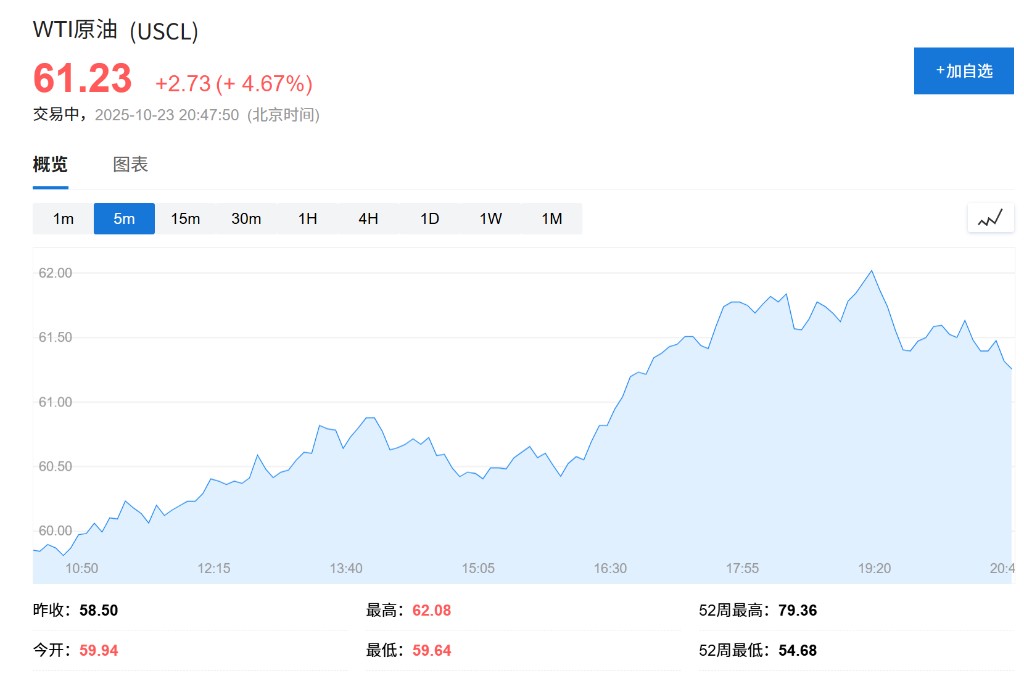
The sanctions imposed by the United States on two major Russian oil giants have made it difficult for Indian refineries to continue purchasing 1.5 million barrels of Russian oil daily, triggering a more than 5% surge in oil prices. The market is concerned that this batch of crude oil will be phased out, forcing global refineries to turn to the Middle East and Latin America for alternatives, intensifying competition and supporting oil prices
The new sanctions imposed by the United States on two major Russian oil giants are threatening to push a large amount of crude oil out of the global market. This move could not only reshape the flow of global energy trade but also inject new upward momentum into oil prices.
According to CCTV News, on the 22nd local time, the U.S. Department of the Treasury announced sanctions against two large Russian oil companies, including Rosneft and Lukoil. The U.S. Treasury also sanctioned a series of subsidiaries of these two companies in Russia, with all entities directly or indirectly owned 50% or more by these two companies being sanctioned.
Additionally, media reports indicate that executives from Indian refineries stated that Washington's latest sanctions will make it "almost impossible" for them to continue purchasing Russian oil. This is a significant shift, as despite the Trump administration previously imposing tariffs on India to pressure it to reduce its energy ties with Moscow, ship tracking data compiled by the media shows that India is still importing about 1.5 million barrels of Russian crude oil daily.
This development immediately triggered significant fluctuations in oil prices. Crude oil prices surged more than 5%, marking the largest single-day increase in four months, with international benchmark Brent crude futures prices surpassing $65 per barrel. The market is concerned that the recent narrative of oversupply may quickly reverse due to the potential disruption of Russian oil supplies, prompting traders to adjust their positions in response to the new market landscape.

If India Exits, Where Will Russian Oil Go?
If Indian refineries ultimately stop purchasing, the 1.5 million barrels of crude oil per day will have to find new buyers.
Moscow will face significant challenges in finding alternative markets for this crude oil. This could lead to a substantial amount of crude oil being forced out of the market temporarily. Previously, Western countries such as the U.S. and Europe attempted to limit Russia's oil revenue by setting price caps while maintaining stable supplies, but the new sanctions signify a sharp policy shift towards more stringent measures that could directly disrupt supplies.
The potential disruption of Russian oil supplies forces global refineries to rethink their procurement strategies. Analysts believe they will be compelled to seek alternatives in the open market, with a primary focus on oil-producing countries in the Middle East and Latin America. This will almost certainly intensify competition for crude oil in these regions, thereby providing strong support for global oil prices.
"This is a big deal," commented Ole Hansen, Head of Commodity Strategy at Saxo Bank A/S:
"It could force the market to change the recent narrative of oversupply, prompting traders to adjust their positions to neutral or even bullish."
This viewpoint reflects the prevailing sentiment in the market that risks on the supply side are becoming the core factor in pricing once again. Meanwhile, the European Union is also increasing pressure on the Kremlin by passing a new sanctions plan targeting Russian energy infrastructure, further exacerbating expectations of supply tightness
Under the "Excess" Cushion, the Effectiveness of Sanctions Remains Uncertain
Although sanctions have brought significant supply shock risks, the market response has been "considerable but not extreme." The rise in oil prices has only partially offset the approximately 13% decline since late September, with Brent and West Texas Intermediate (WTI) benchmark prices still hovering in the range of over $60 per barrel, below the average level for this year.
Part of the reason is that the timing of the sanctions coincides with expectations of a supply surplus in the global oil market. The International Energy Agency (IEA) predicts that global oil production is expected to increase by 550,000 barrels per day this quarter, and next year global supply will exceed demand by nearly 4 million barrels per day. Additionally, there are currently over 1 billion barrels of oil in transit at sea. This massive supply cushion may alleviate some of the shocks from the sanctions in the short term.
The market is still assessing the final impact of the new sanctions imposed by the Trump administration. Warren Patterson, head of commodity strategy at ING Groep NV in Singapore, stated:
"This marks a shift in President Trump's attitude towards Russia and opens the door for more severe measures in the future."
However, he also added, "The uncertainty lies in how effective these sanctions will be and what their actual impact on exports will be."
Russia has extensive experience in evading sanctions. For example, Nayara Energy, supported by Rosneft, may still be a potential export channel for Russian oil. Ultimately, to what extent the new sanctions can cut off Russia's oil exports remains to be seen, but it has undoubtedly introduced the biggest variable to the global oil market in months