


Goldman Sachs raises next year's iron ore price forecast but maintains a bearish stance

I'm PortAI, I can summarize articles.
高盛上調了 2026 年鐵礦石價格預測至每噸 93 美元,但仍維持看跌立場,預計明年價格將下跌。分析師指出,受宏觀經濟支持、庫存收緊和中國鋼鐵產量強勁等因素影響,鐵礦石市場供應緊張。儘管鐵礦石期貨價格已反彈約 15%,但需求依然承壓,預計到 2026 年最後一個季度,價格將跌至每噸 88 美元。
智通財經 APP 獲悉,受宏觀經濟支持、庫存收緊和中國鋼鐵產量強勁等因素影響,高盛上調了 2026 年鐵礦石價格預測,但仍預計明年價格較當前水平將下跌。包括 Aurelia Waltham 在內的分析師在一份報告中表示,高盛預計 2026 年鐵礦石的平均價格為每噸 93 美元,比之前的預測高出 5 美元。
分析師在報告中表示:“近幾個月鐵礦石市場供應比我們預期的更加緊張。” 他們表示,中國鍊鋼生產強勁,過去兩個季度港口庫存保持平穩,加上人民幣升值,支撐了鐵礦石價格。
鐵礦石期貨連續第三天上漲,截至發稿,上漲 0.7%,至每噸 106.45 美元。隨着中國採取措施減少工業過剩產能,鐵礦石期貨價格已較 6 月中旬的低點反彈約 15%。
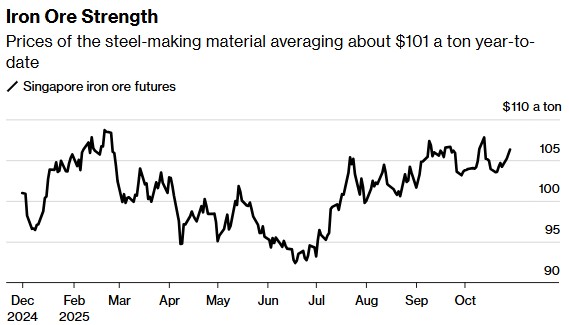
儘管鋼鐵出口強勁,但需求依然承壓。高盛表示,前景依然不容樂觀,預計到 2026 年最後一個季度,鐵礦石價格將跌至每噸 88 美元,儘管這一數字高於此前預測的 80 美元。
供應方面,高盛表示,本季度迄今為止全球鐵礦石出貨量同比增長 15%,這可能會加劇港口庫存的季節性增加,並使庫存在 2026 年全年持續上升。
Source: 智通財經 The copyright of this article belongs to the original author/organization.
The views expressed herein are solely those of the author and do not reflect the stance of the platform. The content is intended for investment reference purposes only and shall not be considered as investment advice. Please contact us if you have any questions or suggestions regarding the content services provided by the platform.
Post your comment

No Comments