Cui Dongshu: In the period from January to September 2025, China will account for 68% of the world's new energy vehicle market share

Zhitong
2025.11.03 11:53
portai
I'm PortAI, I can summarize articles.

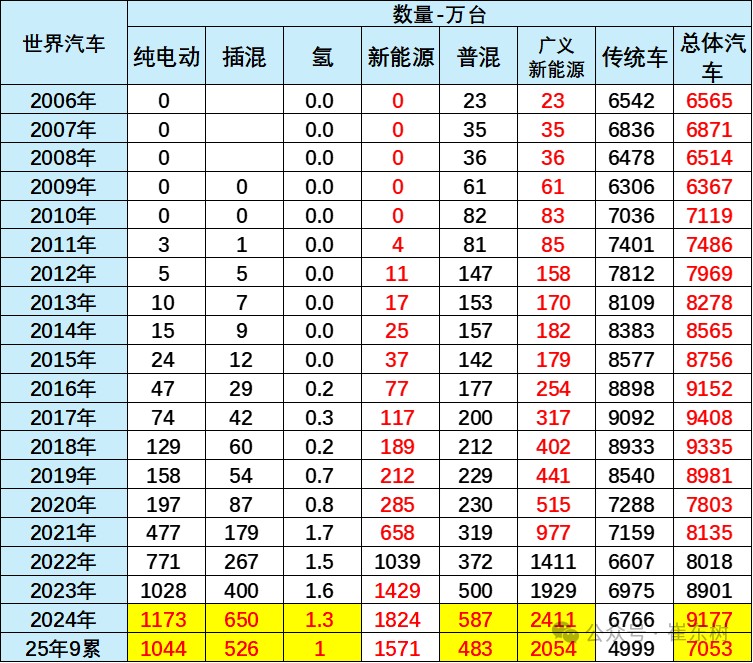
Cui Dongshu stated that global automobile sales will reach 70.53 million units from January to September 2025, of which 15.71 million units will be new energy vehicles, accounting for 22.3%. China contributes 68% to the global increase in new energy vehicles, demonstrating China's core position in the global new energy vehicle market

According to the Zhitong Finance APP, Cui Dongshu, Secretary-General of the Passenger Car Association, stated that in the contribution of the increase and decrease of 3.73 million units of world new energy vehicles from January to September 2025, China accounted for 68%, while Germany and the United States contributed 5% and 4%, respectively. Therefore, the overall contribution of new energy vehicles in the world is primarily from China. In recent years, China has contributed about 80% of the world's increase, making the Chinese car market the core focus of global new energy vehicle competition.

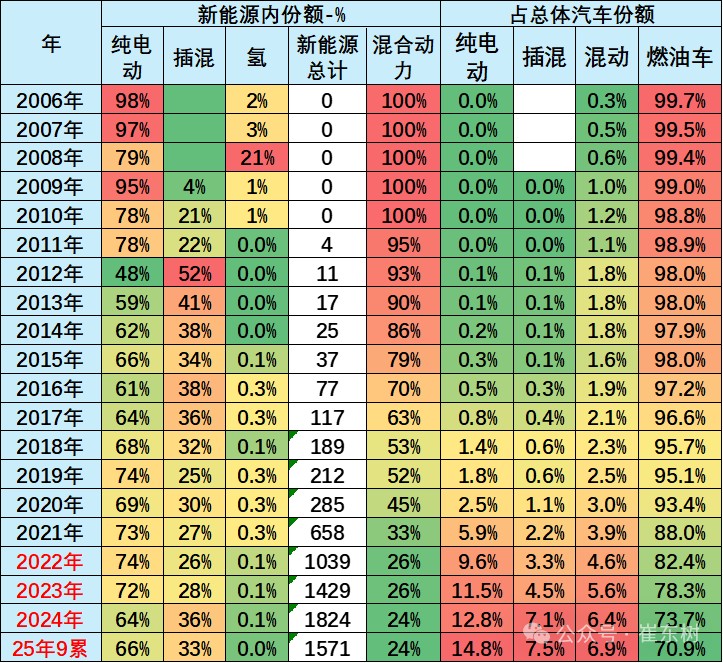
From January to September 2025, global automobile sales reached 70.53 million units, with new energy vehicles accounting for 15.71 million units. The sales ratio of broadly defined new energy vehicles reached 29.2% of global automobile sales, an increase of 2.9 percentage points compared to the entire year of 2024, while narrowly defined new energy vehicles reached 22.3%, showing a relatively strong performance. The share of new energy vehicles from January to September 2025 reached 22.3%, with pure electric vehicles accounting for 14.8% and plug-in hybrids accounting for 7.5%, demonstrating excellent performance in new energy.

The penetration rate of new energy vehicles worldwide is showing a rapid upward trend, reaching 13% in 2022, 16% in 2023, 19.5% in 2024, and projected to reach 24.5% in the third quarter of 2025. By September 2025, China's new energy penetration rate is expected to reach 46%, Germany 27%, Norway 80%, the UK 32%, while the US only reaches 13% and Japan just 2%, highlighting the significant imbalance in the development of new energy worldwide.

I. Global New Energy Vehicle Trends

  1. Performance of Global New Energy Vehicles in 2025

In 2024, global automobile sales reached 91.77 million units, with new energy vehicle sales at 18.24 million units, while the sales ratio of fuel vehicles decreased. From January to September 2025, global automobile sales reached 70.53 million units, with new energy vehicles at 15.71 million units.

  1. Global Automobile Energy Structure

From January to September 2025, the sales ratio of broadly defined new energy vehicles reached 29.2% of global automobile sales, an increase of 2.9 percentage points compared to the entire year of 2024, while narrowly defined new energy vehicles reached 22.3%, showing a relatively strong performance.

The share of new energy vehicles from January to September 2025 reached 22.3%, with pure electric vehicles accounting for 14.8% and plug-in hybrids accounting for 7.5%, demonstrating excellent performance in new energy.

II. Global New Energy Passenger Vehicle Trends

  1. Global New Energy Passenger Vehicle Market Trends

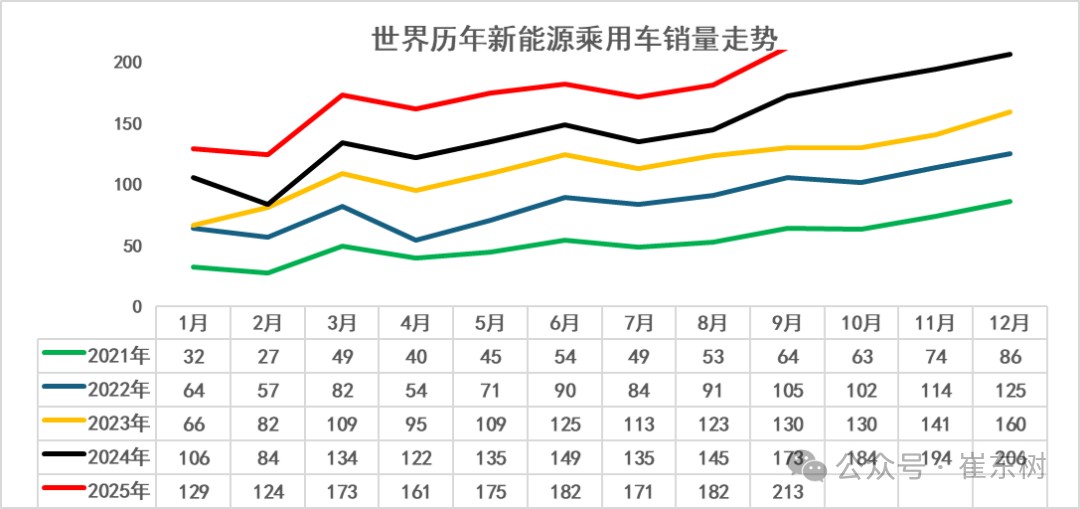
In the first half of 2020, the global new energy vehicle market faced high base pressure. Starting from the second half of the year, it entered a low base phase, establishing a new growth cycle for new energy that continues to this day. From 2021 to 2024, there is an accelerating upward trend, with stronger growth under the low base.

In 2025, the global new energy vehicle market starts from a low point, and then recovers high growth from February to September. Due to the early Spring Festival, China's new energy sales at the beginning of the year are low. After the Spring Festival, from February to September, high growth is restored relying on national scrapping and replacement policies, driving high growth in the global new energy vehicle market.

  1. Performance of Global New Energy Passenger Vehicles in 2024

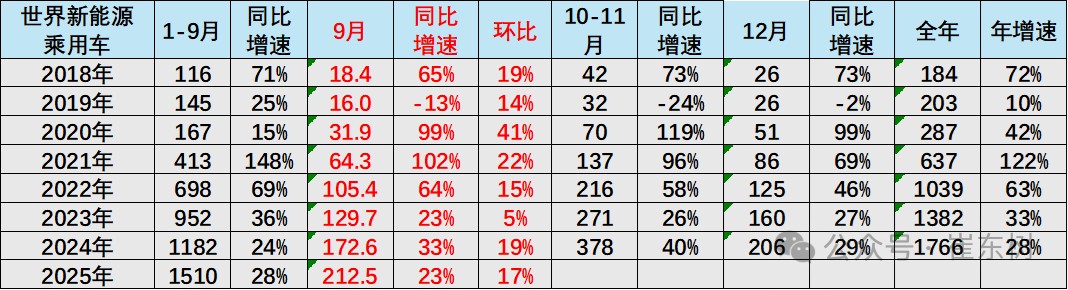
In 2020, new energy passenger vehicle sales reached 2.87 million units, an increase of 42% compared to the same period in 2019.

In 2021, new energy passenger vehicle sales reached 6.37 million units, a super-strong performance with a growth of 122%, exceeding expectations.

In 2022, the global new energy passenger vehicle market showed strong performance, reaching 10.39 million units for the year, a year-on-year increase of 63%.

In 2023, the global new energy passenger vehicle market remained strong, reaching 13.82 million units for the year, a year-on-year increase of 33%.

In 2024, global new energy passenger vehicles are expected to reach 17.66 million units, a year-on-year increase of 28%. Due to the slowdown in new energy trends in Europe and the United States, the global new energy market has slowed significantly compared to previous years.

From January to September 2025, global new energy passenger vehicles are expected to reach 15.1 million units, a year-on-year increase of 28%. In September, global new energy passenger vehicles reached 2.125 million units, a year-on-year increase of 23% and a month-on-month increase of 17%.

  1. Overseas New Energy Passenger Vehicle Market Trends

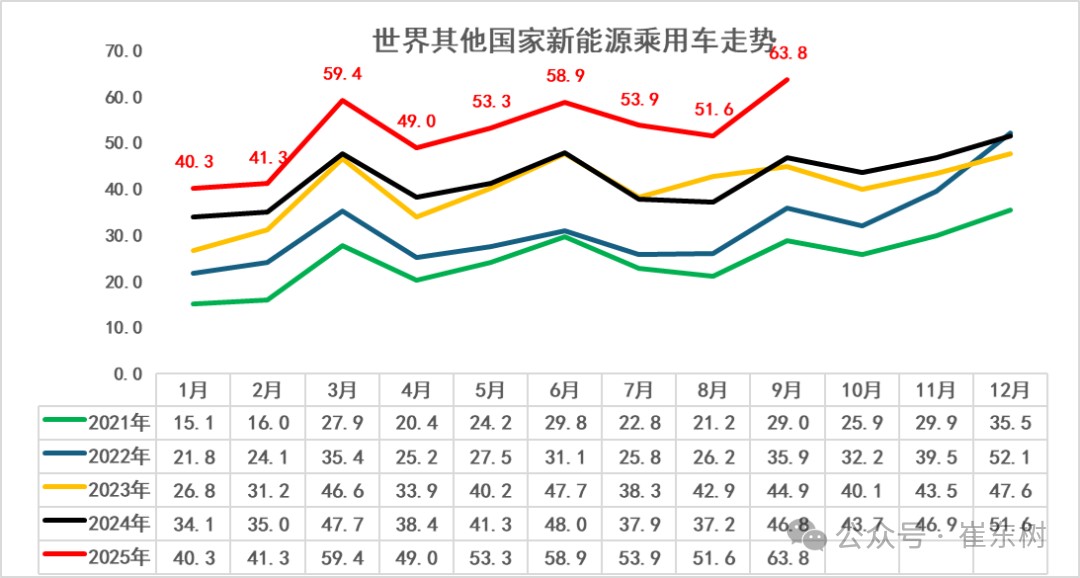
The overseas market from January to September this year has shown relatively stable and strong trends, forming a relatively good performance in the overseas new energy market.

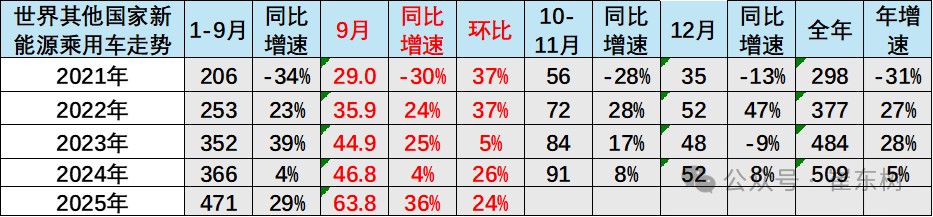
The new energy trends outside of China are generally good. The new energy market in the United States has gradually improved this year. Due to the unusual recovery of new energy trends in Europe and the United States, the growth rate from January to September reached 29%, better than the performance in 2024

Currently, in the mainstream markets that can be statistically analyzed overseas, the overall performance of domestic brand new energy vehicles in the overseas market continues to strengthen. In 2021, the market share of Chinese domestic brand new energy vehicles in overseas markets was 1.8%; in 2022, it rose to 4.0%, an increase of 2.2 percentage points; in 2023, it rose to 7.2%, an increase of 3.2 percentage points; and in 2024, the overseas sales share of domestic new energy passenger vehicles is expected to be 8.9%.

By September 2025, the overseas market sales share of domestic new energy passenger vehicles is projected to be 14.5%. Due to the strong performance of domestic new energy exports, the overseas market sales share of domestic new energy passenger vehicles has significantly increased from 8.9% in 2024 to 13.2% in the first nine months of this year.

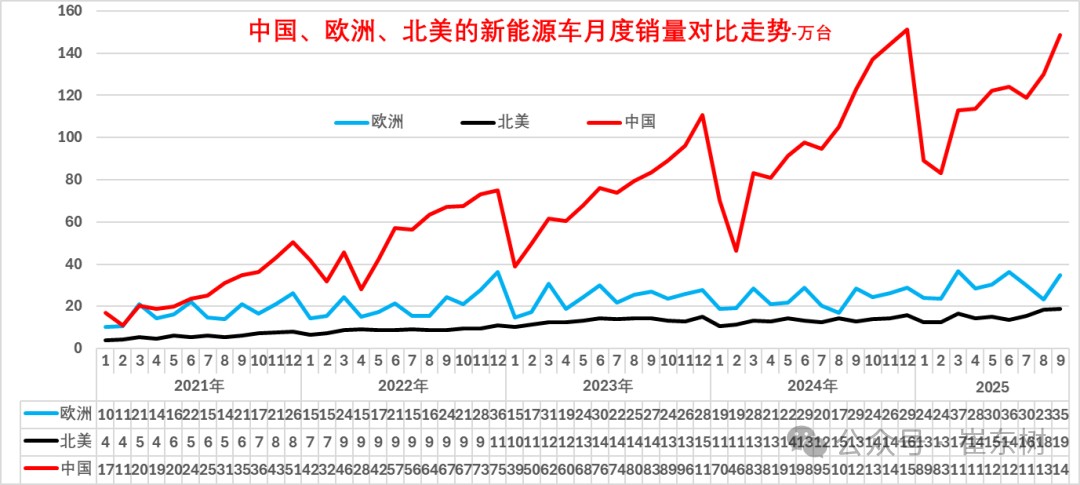
From the regional market trends of new energy vehicles, Europe has consistently accelerated since 2020, surpassing China. The European new energy vehicle market is expected to maintain steady growth at a high level from 2021 to 2025, while the Chinese new energy vehicle market has shown strong performance in recent years.

The decline in China during January and February this year is temporary, with recovery expected from March to September. This year, China's new energy market is stabilizing and strengthening, while Europe and North America are performing significantly weaker than China.

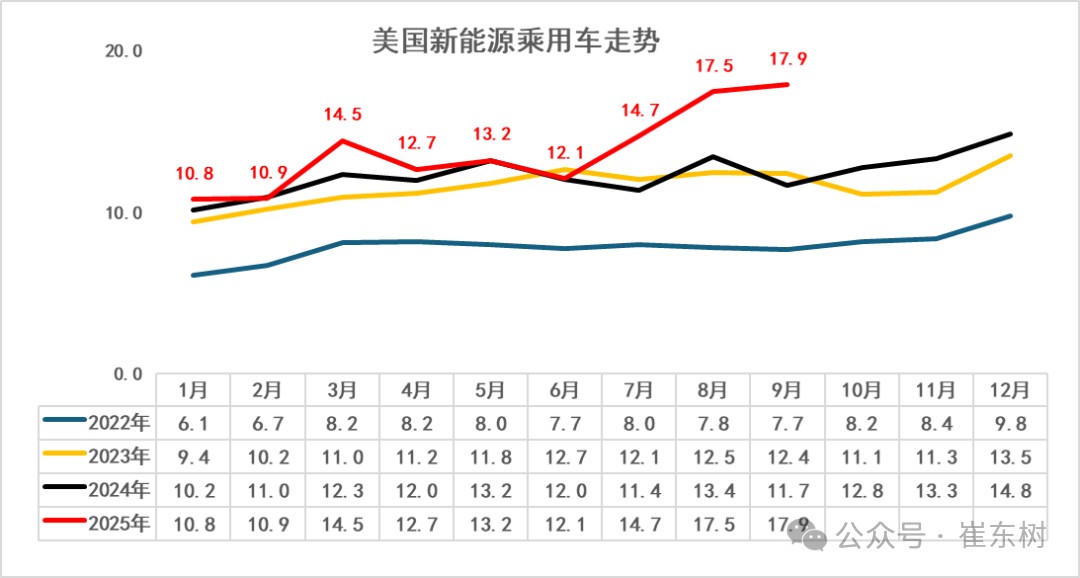
The data for new energy passenger vehicles in the United States includes pickup trucks. In March, due to tariff factors, the overall trend warmed up, but it fell back from April to July and strengthened in September. Early adopters and environmentalists in Europe and the United States have already purchased electric vehicles, while the U.S. government has canceled subsidies for new energy vehicles, which has a significant impact on the U.S. new energy market. Even though Tesla has relaxed the use of autonomous driving, the increase in sales penetration has not met expectations.

From January to September this year, U.S. new energy vehicle sales reached 1.24 million units, with a growth rate of 16%, which is relatively good compared to recent years. Due to the impending implementation of high tariffs and concerns over the cancellation of new energy subsidies, U.S. new energy vehicle sales in September reached 180,000 units, an increase of 54%, with a month-on-month increase of 2%.

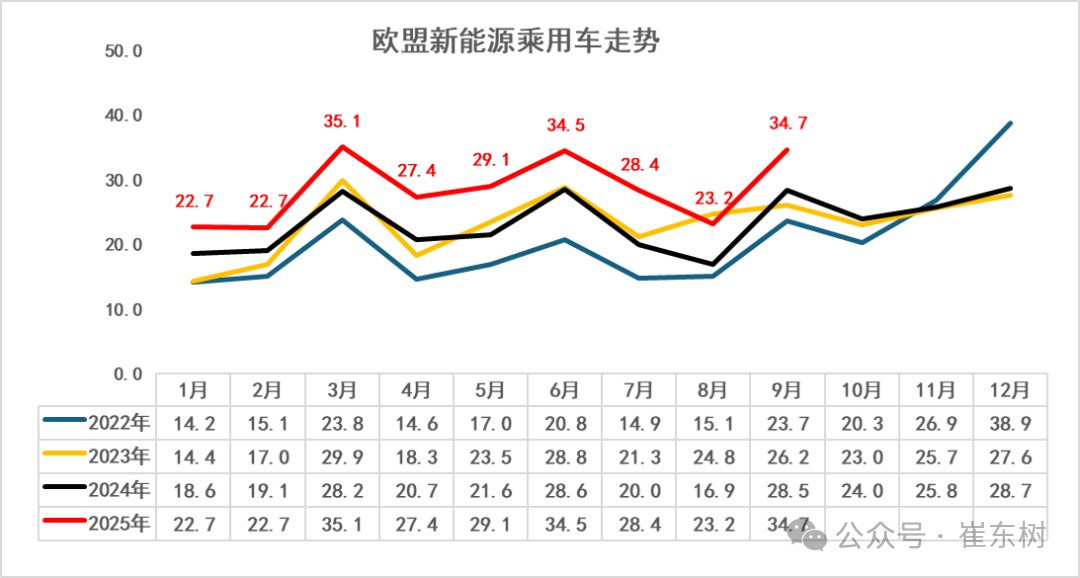
The sales of new energy vehicles in Europe from January to September in previous years have been relatively low. This year, the market is gradually recovering, and despite the backdrop of economic and consumer sluggishness, the growth of new energy in Europe remains significant.

In the first nine months of this year, sales of new energy passenger vehicles in Europe reached 2.58 million units, an increase of 560,000 units or 28% compared to the same period last year. Preliminary statistics show that sales of new energy passenger vehicles in September were 350,000 units, up 22%.

France will adjust its low-emission vehicle ecological bonus in December 2024, reducing the subsidy cap from €4,000-€7,000 to €2,000-€4,000. In the Netherlands, starting in 2025, the tax exemption for zero-emission vehicles will decrease from 100% to 75%. In the UK, significant tax changes are expected; starting in April 2025, new energy vehicles will be subject to a vehicle excise duty (VED), starting at £10 per year in the first year and gradually increasing to £165 per year; vehicles priced over £40,000 will incur an additional service fee of £355 per year.

Due to high interest rates, slowing economic growth, and the gradual elimination of financial subsidies for new energy vehicles, coupled with insufficient charging infrastructure, which remains a significant constraint on widespread development, market demand is weak.

  1. New Energy Penetration Rate in Various Countries

The global penetration rate of new energy vehicles is showing a rapid upward trend, reaching 13% in 2022, 16% in 2023, and projected to reach 19.5% in 2024, with a penetration rate of 24.5% by the third quarter of 2025. In the third quarter of 2025, the penetration rate of new energy in China is expected to reach 46%, Germany 27%, Norway 80%, the UK 32%, while the US only reaches 13% and Japan just 2%. Therefore, the imbalance in the development of new energy worldwide is very evident.

As China continues to strengthen the development of new energy, Europe and the US are weakening their encouraging policies for new energy, leading the world of new energy vehicles into a new phase of differentiated development.

  1. Contribution of New Energy Vehicle Sales in Various Countries

In 2024, China's contribution to the global increase in new energy passenger vehicles is expected to be 95%, while the UK, Brazil, and the US contribute around 2% each, and Indonesia 1%. From January to September 2025, China accounted for 68% of the global increase of 3.73 million new energy vehicles, while Germany and the US contributed 5% and 4%, respectively. Thus, the overall contribution to the increase in new energy vehicles globally is primarily from China. In recent years, China has contributed about 80% of the world's increase, making the Chinese car market the focal point of global competition in new energy vehicles III. Structural Characteristics of the Global New Energy Passenger Vehicle Market

  1. Trends in the Global New Energy Passenger Vehicle Market

In 2021, the European new energy market was affected by the pandemic, resulting in weak growth in new energy. In 2022, the pandemic continued to impact the market, leading to a significant decline in Europe's share compared to 2021. From 2023 to 2024, Europe's share continued to decline slightly. In the first nine months of 2025, Europe's share of the global new energy market reached 17%, remaining basically flat compared to the same period last year.

Recently, the growth rate of China's new energy passenger vehicles has outpaced the global average growth rate, with a significant reversal in China's global share of new energy passenger vehicles in 2020. In 2021, China maintained a strong level of 52.4% for the entire year; in 2022, China's share of the global new energy passenger vehicle market exceeded 62%; in 2023, China's share reached 64%; in the third quarter of 2024, it continued to surge to a 71% share; in 2025, China's share of the global new energy passenger vehicle market is projected to be 67%, with the third quarter maintaining a high share of 68%, remaining basically flat compared to the same period last year.

  1. Trends in New Energy Vehicle Shares by Manufacturer

From the historical sales share, China's BYD leads the world, while Geely is rapidly rising, and Tesla's performance has weakened, dropping to third place. Recently, SAIC Motor's passenger vehicles and SAIC-GM-Wuling have shown relatively stable overseas performance.

Geely Auto and Changan New Energy have recently shown significant strength. Volkswagen's new energy vehicles have performed strongly, while BMW Group and South Korea's Hyundai have dropped to the third tier.

The competition in the luxury car new energy wave is relatively intense, with Tesla's performance in the U.S. slowing down. Currently, the performance of BMW and Mercedes-Benz's performance cars is average.

The overall performance of traditional Chinese new energy vehicle companies has strengthened, especially with Changan and Leapmotor performing particularly well.

IV. Market Trends of Pure Electric New Energy Vehicles

  1. Global Structure of Pure Electric Vehicles

China's share in the global pure electric vehicle market has remained relatively stable, with a share of around 60% from 2017 to 2018; the share slightly declined in 2019-2020, dropping to 48.5% in 2020; in 2022, it rebounded to 64.8%; the share for 2023-2024 is expected to be below 65%; in the first nine months of 2025, China's share in the global pure electric vehicle market is 62.8%, remaining basically flat compared to the share in 2024 The share of pure electric vehicles in Europe rose from 16% in 2018 to 23% in 2019, increased to 35% in 2020, and then dropped to 20% by 2023. In the first nine months of 2025, the share has relatively retreated to 17.4%. This year, the share of electric vehicles in the United States has risen to 10.2%, showing a decline in performance.

  1. Automotive Company Share Trends

From the perspective of pure electric shares among automotive companies, BYD's share has generally continued to rise. From 2017 to 2021, it maintained a share level of over 7%, but in 2022, the share rose to 12%, and in 2023, it increased to 17%. The share is expected to reach 19% in 2024-2025, showing good performance.

The share of Tesla among pure electric vehicles has performed relatively strong, but BYD's pure electric share has surpassed Tesla. Tesla's share was around 23% in 2020 and has currently declined to a lower level of 13%.

Geely Group's share rose from 4% in 2019 to 11% in 2025. SAIC's pure electric share has recently seen a slight decline, while GAC Group and Changan's pure electric shares have remained relatively stable.

V. Market Trends of Plug-in Hybrid New Energy Vehicles

  1. Global Structure of Plug-in Hybrids

China's share in the global plug-in hybrid market has continued to strengthen. From 2017 to 2018, it was between 30% and 50%. In 2020, it dropped to 25%, but in 2021, China's share in the global plug-in hybrid market reached 33%. It rose to 56% in 2022, 69% in 2023, and is expected to reach 79% in 2024. In the first nine months of 2025, China's share in the global plug-in hybrid market reached an extremely high level of 75%, demonstrating China's strong performance in the global plug-in hybrid market.

Europe's share of plug-in hybrids rose from 28% in 2018 to 65% in 2020, but then dropped to 17% by 2025.

  1. Automotive Company Share Trends

From the perspective of plug-in hybrid shares among automotive companies, BYD has performed the most outstanding. BYD's global plug-in hybrid share dropped to a low of 6% in 2020, but rose to 16% in 2021, and reached 36% in the global plug-in hybrid share in 2023. BYD's plug-in hybrid share is expected to be 39% in 2024, and in the first nine months of this year, it has maintained a share of 33.5%, reflecting BYD's leading performance in the plug-in hybrid market Volkswagen's share of plug-in hybrids rose significantly to 16% in 2020, but then fell to 5% by 2025. BMW's share of plug-in hybrids has also seen a noticeable decline in the past two years, dropping to 2.6% by 2025, while Geely Volvo's share of plug-in hybrids accounts for 9% of the global market.

VI. Market Trends of Hybrid Vehicle Structure

  1. Global Structure of Conventional Hybrids

China experienced rapid development of hybrids in the first two years, becoming the largest hybrid market in the world by 2022. However, with the rise of plug-in hybrids, China's share of hybrids in the global market has declined since 2023, while the U.S. hybrid market has rebounded.

  1. Trends in Corporate Shares of Conventional Hybrids

The hybrid market is strongly dominated by Japan and South Korea, with Toyota, Honda, Nissan, and Hyundai showing strong hybrid performance, accounting for 94% by 2025. Most other companies have hybrid shares of no more than 1%. Recently, Toyota and Mazda have performed well in the hybrid market share for 2025. SAIC MG's hybrids have also performed well in the European market