


Eli Lilly showcases its strength at the Expo: Tirzepatide and Donanemab lead the way, accelerating the localization of the entire industry chain
At this year's China International Import Expo, Eli Lilly showcased several global innovative drugs, including tirzepatide, donanemab injection; as well as the oral SERD Imlunestrant for breast cancer, which will debut at the expo pending approval in China, and the inflammatory bowel disease treatment drug interleukin 23 inhibitor Mirikizumab
The 8th China International Import Expo (CIIE) officially opened in Shanghai on November 5, 2025. The multinational pharmaceutical company Eli Lilly once again made an appearance, with its booth theme "Innovative Journey, Infinite Future" and design inspiration from "8" to "∞", clearly reflecting the long-term commitment of this century-old pharmaceutical company in China.
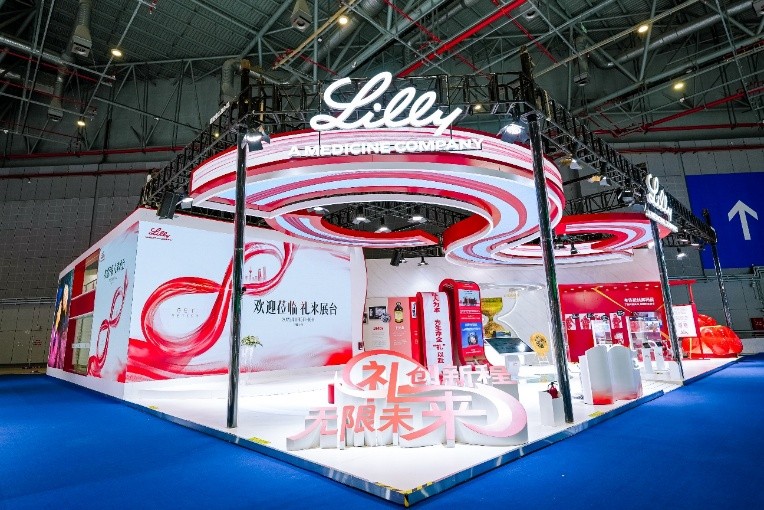
Through Eli Lilly's booth, one can see its clear strategic focus: to leverage its globally competitive blockbuster pipeline to precisely address China's most severe public health challenges, and to firmly bind the future through a deep layout of "full industry chain localization."
"Ace" Pipeline Precisely Positioned
The core of Eli Lilly's display is its "ace" products that have already made waves in the global market.
In the cardiovascular and metabolic field, Tirzepatide injection is undoubtedly the focus. This drug has been approved in China for type 2 diabetes, long-term weight management, and obstructive sleep apnea (OSA), precisely covering China's large population of diabetes and obesity patients.
In the "unmanned area" of neuroscience, Eli Lilly holds the groundbreaking therapy for Alzheimer's disease (AD), Donanemab injection. This drug fully embodies the "CIIE speed"—it was approved in China just over a month after its debut at last year's expo.
Additionally, Eli Lilly also brought the oral SERD drug Imlunestrant for breast cancer, which is expected to be approved in China, as well as the inflammatory bowel disease (IBD) treatment drug Mirikizumab. These two products have not yet been approved in China, and their "first appearance" aims to warm up for subsequent market access and commercialization.
Reshaping Perception: From Public Issues to Medical Market
Complementing the products are two interactive experience zones carefully crafted by Eli Lilly, aimed at reshaping public perception of the two diseases, backed by enormous market potential.
- Alzheimer's Disease (AD): In response to "healthy aging," Eli Lilly set up a "Memory Café" and exhibited the public welfare artwork "Disturbed Time." The backdrop is that there are nearly 17 million existing AD and other dementia patients in China. Eli Lilly's actions aim to raise public awareness of the early symptoms of AD and promote "early diagnosis and early treatment," which undoubtedly paves the way for its AD drug Donanemab.
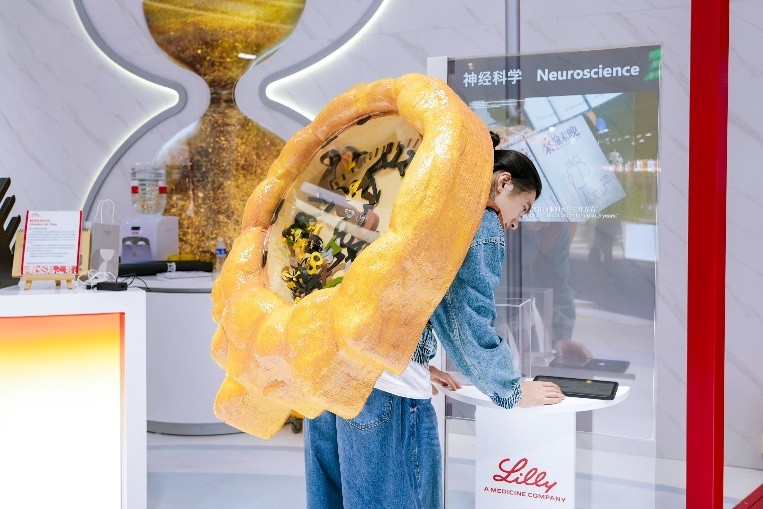
- Obesity: In response to the "Weight Management Year," Eli Lilly launched the "Body Resistance Decoding Exhibition." The core of this exhibition is to break the prejudice that "weight loss failure is due to weak willpower," emphasizing that obesity is a chronic disease with complex physiological mechanisms such as "metabolic adaptation" behind it. The overweight and obesity rate among Chinese adults has reached 50.7%, and medicalizing obesity is a key step in unlocking the market potential for weight loss drugs like Tirzepatide
Localization "Ramp-Up": From R&D, Production to Incubation
If heavyweight products are the "bullets," then Eli Lilly's full-chain layout in China is the "arsenal." Deheran, Vice President and General Manager of Eli Lilly China, candidly stated that the China International Import Expo has a strong "spillover effect," and Eli Lilly will continue to "ramp up" its investment in the Chinese market.
The "ramp-up" is reflected in substantial investments and strategic layouts:
- Production Side: In October 2024, an investment of 1.5 billion yuan will be made to upgrade the Suzhou factory, specifically to expand the production scale of innovative drugs for type 2 diabetes and obesity.
- R&D Side: In October 2024, a China Medical Innovation Center will be established in Beijing, aimed at improving the efficiency of clinical trials.
- Incubation Side: Following the operation of the Beijing Innovation Incubator in March 2025 (Eli Lilly's first incubation platform established outside the U.S.), Eli Lilly announced the establishment of a Shanghai Innovation Incubator at this year's Import Expo.
From R&D, clinical trials, production to commercialization, Eli Lilly has invested over 20 billion yuan in China to date. Through this series of "combined punches," Eli Lilly is transforming from a mere product importer to a localized co-builder deeply involved in the construction of "Healthy China," with the goal of ensuring that its innovative drugs can "quickly land" and "take root" in the Chinese market
