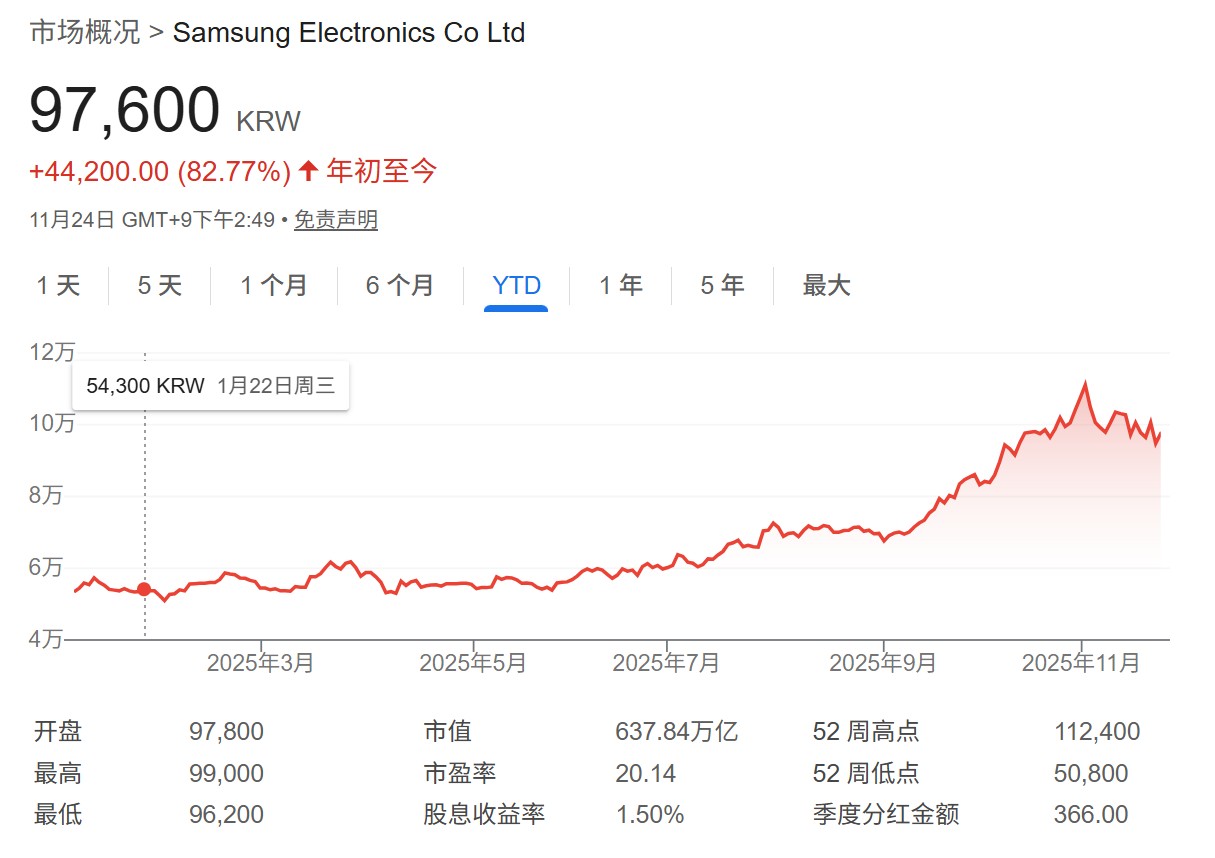
The King of Storage Returns? Morgan Stanley: Samsung's HBM business has fully surpassed competitors, with profits expected to surge by 150% in 2026
Morgan Stanley believes that Samsung has achieved comprehensive catch-up in the high bandwidth memory (HBM) field, with HBM4 products undergoing multiple qualification certification tests, and the first results are expected to be announced in early December. The company currently has an effective production capacity of 500,000 DRAM chips, far exceeding its competitors. The company is expected to regain dominance in the storage market, with profits in 2026 projected to surge over 150% compared to 2025. The market is unprepared for Samsung's specific positive developments, and the transition from relative profit corrections to a technological leadership position (HBM4) could serve as a catalyst for stock price
Morgan Stanley believes that Samsung Electronics is regaining control of the storage market dominance with its "technology leadership first" strategy, with earnings per share expected to surge over 150% in 2026 compared to 2025.
According to the Wind Trading Desk, Morgan Stanley analysts stated in a report on November 23 that Samsung has fully caught up in the high bandwidth memory (HBM) sector. Samsung's HBM3e products have now been shipped to all AI computing customers, while HBM4 products are undergoing multiple qualification tests, with initial results expected to be announced in early December.
Unlike its competitors, Samsung does not need to modify design requirements and maintains a leading advantage in product quality and specifications with its 1c DDR5 front-end technology, 4nm logic base die, and low power characteristics. Its unique advantage in the high-speed >11 Gbps field, along with its end-to-end solution capabilities from DRAM to foundry to packaging, is expected to significantly enhance its market share.
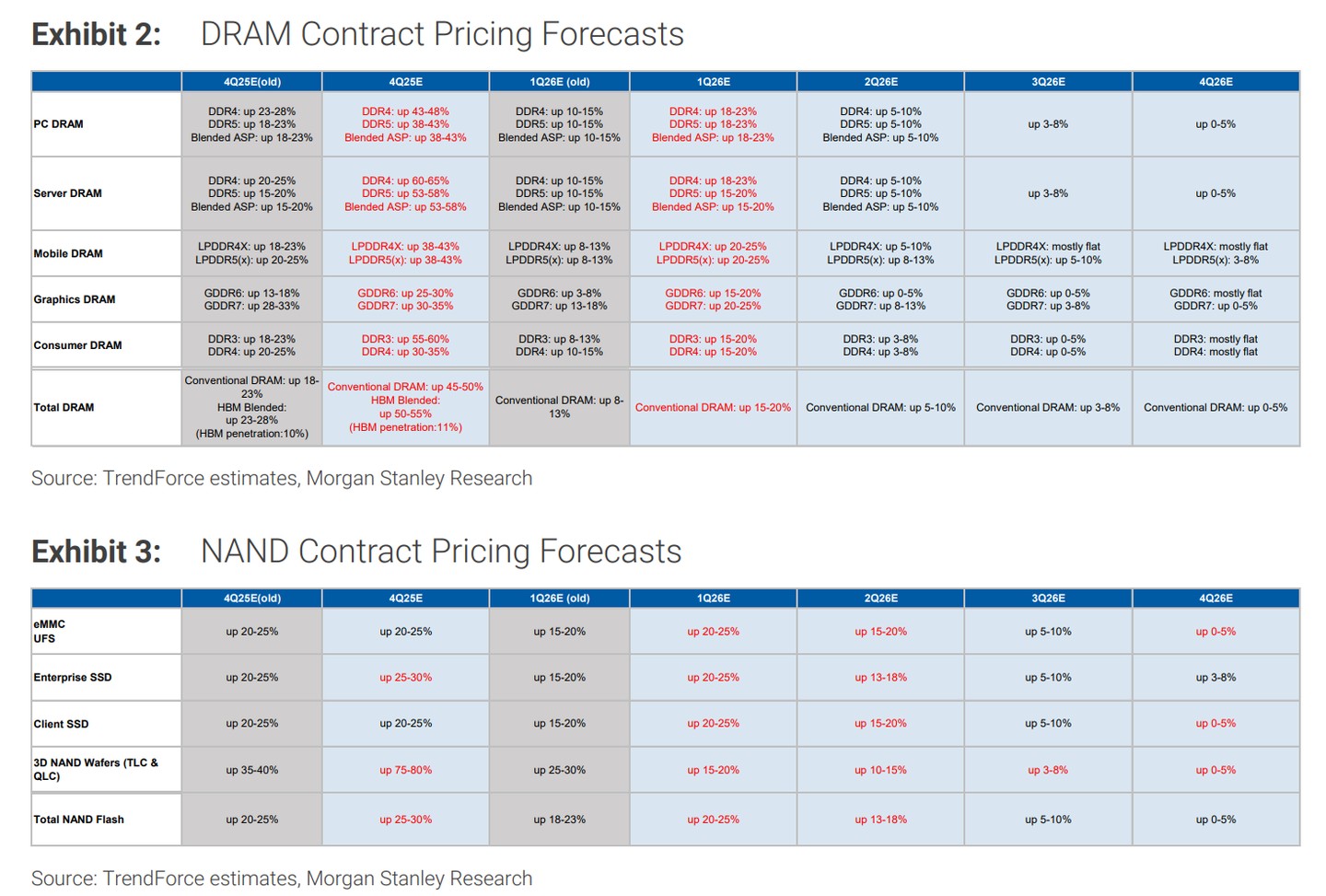
Analysts emphasize that as a key controller of the DRAM industry's fate, Samsung currently has an effective DRAM capacity of 500,000 wafers (totaling about 650,000 wafers/month), far exceeding its competitors. The DRAM order fulfillment rate has dropped to about 70% of customer demand, with visibility extending into the first half of 2026.
However, Samsung's management has adopted a more rational strategy—choosing not to chase market trends but to collaborate with key customers to achieve sustainable profitability based on real demand. The P4 plant's design capacity of over 100,000 wafers/month provides ample room for expansion in memory and foundry businesses.
The worst moment for the foundry business has passed, and 2nm process has won multiple orders
Analysts believe that Samsung's foundry business is seeing the dawn of recovery. Increased utilization and improvements in advanced process performance will drive profit recovery. Samsung's customer-centric cultural shift has begun to show results, winning multiple orders in the 2nm process field. Although production still needs to be ramped up, finding major customers beyond Tesla remains a priority, but the overall outlook has clearly improved.
Based on strong pricing power in a supply-constrained environment, Morgan Stanley expects Samsung's earnings per share to reach 14,464 KRW in 2026, nearly 50% higher than the current market consensus expectation of 9,800 KRW. This profit growth is expected to drive improvements in the price-to-earnings ratio. Analysts particularly point out that the market is unprepared for Samsung's specific positive developments, and the transition from relative profit correction to technological leadership (HBM4) could serve as a catalyst for stock price.