


The cryptocurrency market that is "crazy falling": conspiracy theories are everywhere: the U.S. government is "robbing money," Wall Street is "shorting," and even "JP Morgan is at war with Trump"
JPMorgan Chase's research report warns that MicroStrategy may be removed from the MSCI index due to its large Bitcoin holdings, facing a potential outflow of up to $8.8 billion. The report has sparked anger in the cryptocurrency community, with supporters launching a boycott against JPMorgan Chase, accusing it of short selling and calling for a "short squeeze" counterattack. Conspiracy theories have spread: some claim the U.S. government is orchestrating the crash to buy in at low prices, while others interpret it as a power struggle between the "old financial order" represented by JPMorgan Chase and the "new Bitcoin system" supported by the Trump administration
A report from JP Morgan has ignited anger in the cryptocurrency community, which was already on edge due to the plummeting price of Bitcoin. This report acted like a bomb dropped into a deep pool, with the ripples quickly evolving into a "conspiracy theory" storm sweeping through the crypto space, accusing Wall Street of malicious short selling, the U.S. government of "manufacturing a crash," and even escalating into a power struggle concerning the future of currency.
This Wall Street giant—JP Morgan's warning about MicroStrategy facing the risk of being removed from indices unexpectedly became the trigger for various conspiracy theories. According to an article from Wall Street Journal, JP Morgan pointed out in the report that MSCI is considering removing companies with significant Bitcoin holdings from its indices, which could lead to MicroStrategy facing up to $8.8 billion in passive fund outflows.
The risk warning from this Wall Street investment bank report was interpreted by the crypto community as a "deliberate attack" against the backdrop of Bitcoin falling below the $94,000 "production cost" and market panic spreading. Angry investors quickly directed their ire at the report's publisher, JP Morgan. Firm advocates of Bitcoin launched a "Boycott JP Morgan" campaign on social media, accusing the bank of shorting MicroStrategy and calling on investors to buy Bitcoin and MicroStrategy stock to launch a "GameStop-style" short squeeze against the Wall Street giant.
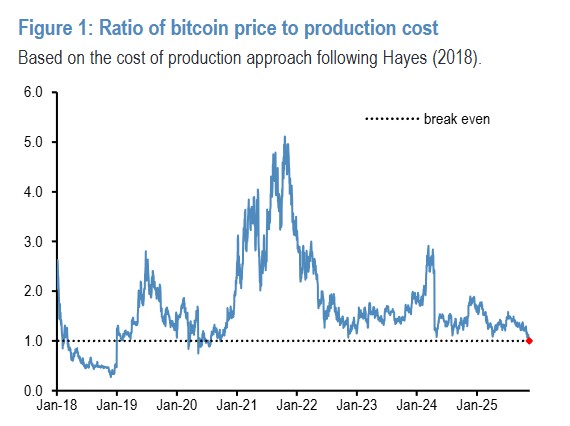
(Bitcoin price fell below JP Morgan's estimated production cost of $94,000 for the first time since July 2020)
As market sentiment fermented, various narratives began to grow increasingly grand and complex. Rumors suggest that the U.S. government orchestrated the recent market crash to buy Bitcoin and MicroStrategy at low prices. More imaginative versions depict this as an ultimate showdown: on one side is the "old currency order" represented by JP Morgan and the Federal Reserve, and on the other side is the "new digital architecture" centered around the Trump administration, the U.S. Treasury, and Bitcoin, with MicroStrategy serving as the key "bridge" in this century's battle.
Trigger: JP Morgan's Report Stirs the "Hornet's Nest"
The cause of the incident seems simple: JP Morgan's analyst team shared news in the report about MSCI's policy proposal to remove "digital asset treasury companies" from its indices.
According to this proposal, any company with cryptocurrency accounting for 50% or more of its balance sheet will lose its index eligibility, with the new policy expected to take effect in January 2026 As a major holder of Bitcoin, MicroStrategy is at the forefront. JP Morgan estimates that of MicroStrategy's approximately $59 billion market value, about $9 billion comes from investment tools tracking various indices.
If excluded from the MSCI index alone, it could trigger a $2.8 billion passive fund sell-off; if other index providers follow suit, the total outflow could reach $8.8 billion.
This warning is not unfounded. Data shows that MicroStrategy's stock price has recently performed even worse than Bitcoin itself, and its valuation premium relative to the Bitcoin it holds has significantly narrowed. JP Morgan believes that the decline in stock price has largely reflected the market's concerns about the risk of index exclusion.
Subsequently, MicroStrategy's stock price fell in response, closing down over 3% last Friday at $170, having peaked at $450 in mid-July, with a year-to-date decline of 41%.
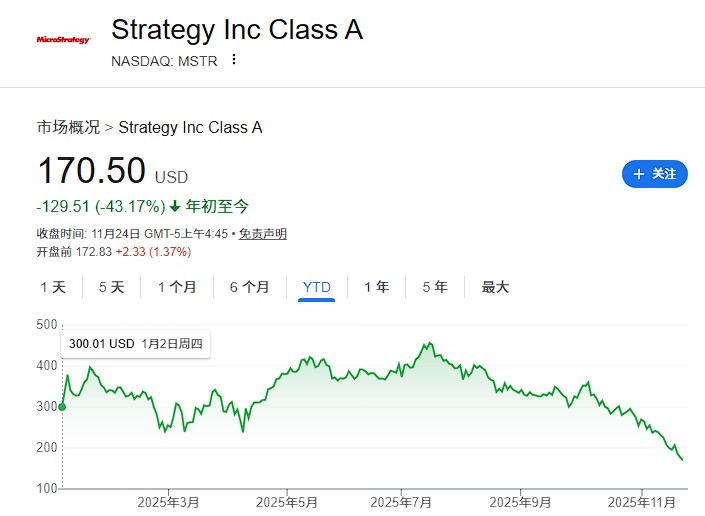
In the face of skepticism, MicroStrategy founder Michael Saylor responded that the company is not a passively held fund or trust, but a "Bitcoin-backed structured financial company" that "creates, builds, issues, and operates."
The Crypto Community Strikes Back: From "Boycott JP Morgan" to "Squeeze Wall Street"
However, JP Morgan, merely conveying this message, unexpectedly became the focal point of anger from the crypto community.
According to an article from Wall Street Insight, real estate investor and Bitcoin advocate Grant Cardone stated on social media: "I just withdrew $20 million from JP Morgan and am suing them for credit card misconduct." Bitcoin advocate Max Keiser called out: "Take down JP Morgan, buy MicroStrategy and Bitcoin."
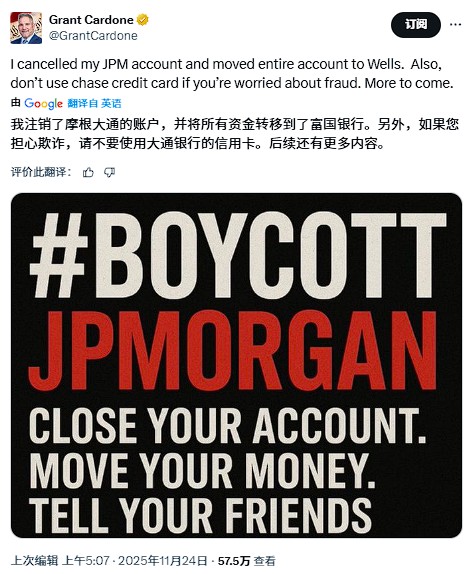
This online boycott movement quickly escalated, with reports indicating that a large number of users are flocking to JP Morgan demanding to close their accounts. Furthermore, rumors have begun circulating in the crypto community that JP Morgan holds a "threateningly large short position" on MSTR, claiming that if MSTR's stock price rises by 50% from last Friday's closing price, it could lead to JP Morgan's bankruptcy.
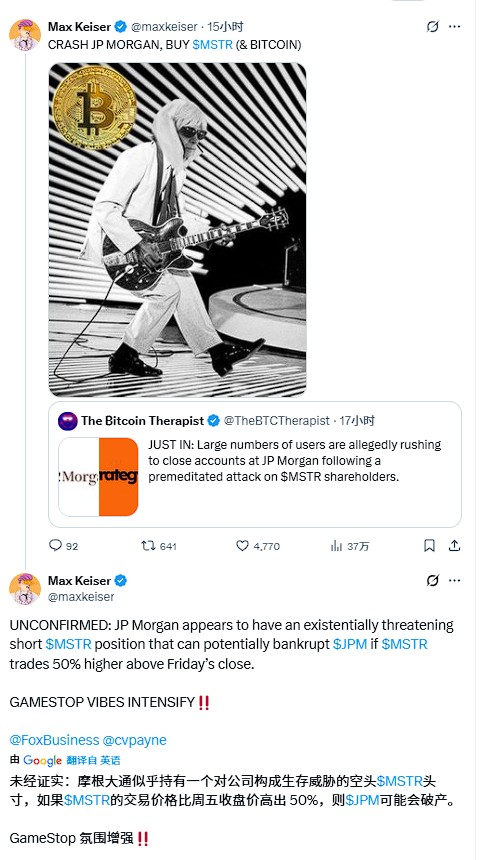
More radical voices are calling for a repeat of the 2021 "GameStop" incident. Lawyer John Deaton, a supporter of Ripple (XRP), stated, if retail investors believe JP Morgan is shorting MicroStrategy, they may act just like they did against short-selling institutions back then. Unite to push up stock prices.**
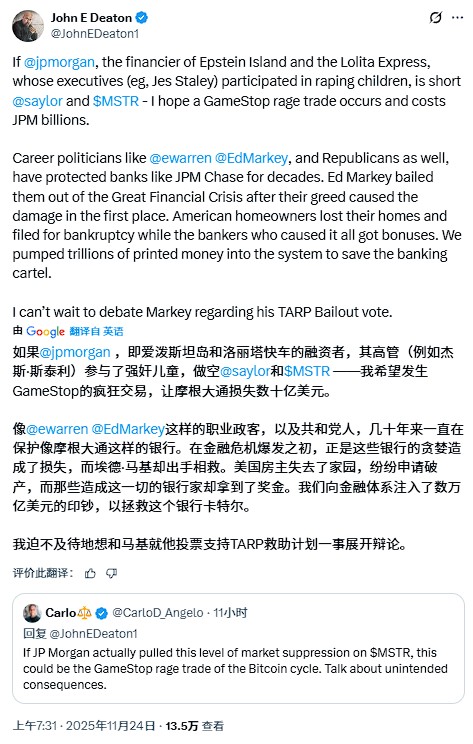
At the same time, critics have also unearthed JPMorgan's historical connections with Jeffrey Epstein, accusing the bank of facing congressional scrutiny and subpoenas for overseeing Epstein's accounts and financial activities. Bitcoin supporters are attempting to link these historical issues with current market trends, creating a narrative of JPMorgan's "deliberate attack."
"Conspiracy Theory" Escalates: Is the U.S. Government "Manufacturing a Crash" to Buy the Dip?
As JPMorgan becomes the target of criticism, a grander conspiracy theory begins to spread in the crypto community.
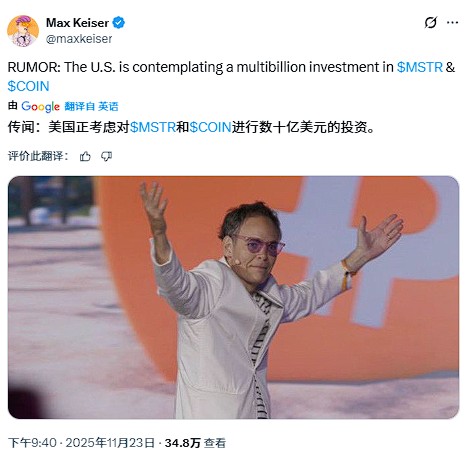
Bitcoin advocates like Max Keiser claim that the U.S. government may be planning to acquire MicroStrategy and Coinbase, and the recent Bitcoin sell-off is part of this plan.
According to this theory, U.S. government officials want MicroStrategy's price-to-book ratio to approach 1.0, thus "manufacturing" the Bitcoin crash to compress its premium. Supporters claim:
"The U.S. is considering a multi-billion dollar investment in MSTR, and they need the price-to-book ratio to reach 1 for it to make investment sense, so they manufactured the Bitcoin crash."
Some analyses point out that Bitcoin's price pattern shows significant regional differences: Bitcoin declines during U.S. trading hours, while the Asian market continues to buy. This difference is interpreted as "evidence" of organized selling by the U.S. government.
Blockchain data shows that the U.S. government holds over 326,000 Bitcoins through previous asset seizures, providing more imagination space for the "government accumulation theory." Supporters claim that the government is trying to achieve a "1 million Bitcoin reserve goal" by suppressing prices.
The Grand Narrative of "JPMorgan vs. Trump and the Treasury"
Among all the circulating "conspiracy theories," the most complex and dramatic version interprets the current market turmoil as a showdown between the "old financial order" and the "new political forces":
The "old order," centered around JPMorgan, Wall Street, and the Federal Reserve, is in conflict with the "new order," based on the U.S. Treasury, stablecoins, and Bitcoin, which allegedly represents the strategic direction of the Trump administration.
It is claimed that Trump and the U.S. Treasury's plan is to support Bitcoin, MicroStrategy, and stablecoins while weakening JPMorgan, the Federal Reserve, and the traditional banking system.
Although there are no official statements or regulatory documents confirming these claims, related speculations have spread widely on social media, adding more dramatic color to the market's violent fluctuations.
This narrative logic suggests that JPMorgan, as the defender of the traditional dollar settlement system, views Bitcoin and plans aimed at incorporating it into the national reserve system as a threat Therefore, JP Morgan is attempting to maintain the old Federal Reserve monopoly position through liquidity squeeze and narrative suppression by shorting MicroStrategy, a "bridge" connecting traditional capital with Bitcoin, before the Trump administration officially takes over and establishes a new monetary framework.
In this script, Bitcoin has become a victim of the struggle for monetary dominance between both sides and is also the cornerstone of the future new system. Some even speculate that the U.S. government may ultimately make a strategic investment in MSTR, exchanging ownership for the injection of U.S. Treasury bonds.
Supporters claim that Trump needs to actually take control of the Federal Reserve's governance before Chairman Powell steps down, and the current monetary power struggle is part of this larger strategy
