U.S. stock markets closed for Thanksgiving, UK stocks and currencies under pressure, the dollar weakened as interest rate cut expectations rose, and cryptocurrencies rebounded
European stock indices were mixed, while most Asian stock indices closed higher, and the US dollar index weakened. After the UK budget announcement, the British pound surged before retreating. Morgan Stanley announced the end of its bullish stance on the British pound, believing it may have recently entered a state of "bearish exhaustion." Commodity prices were mixed, with silver rising and gold and oil weakening
As market expectations for a Federal Reserve interest rate cut continue to heat up, coupled with a pause in the sell-off triggered by investor concerns over the artificial intelligence bubble, global stock markets have generally rebounded, with major indices nearing a recovery of all losses from November, while the dollar index has correspondingly weakened.
On November 27, U.S. stocks and bonds were closed for Thanksgiving, European stock indices were mixed, and Asian stock markets collectively strengthened. The dollar and yen were under pressure, while the pound retreated. Commodity prices were mixed, with silver rising, while gold and oil prices were weak, and cryptocurrencies rebounded.
After the UK budget announcement, the pound became the market focus. On Wednesday local time, the UK Chancellor of the Exchequer released the autumn budget report, increasing the fiscal buffer to £22 billion and significantly lowering the GDP growth forecast for 2026 to 1.4%. The details were unexpectedly leaked in advance, leading to a strong market reaction and a rise in the pound's exchange rate. Currently, the pound has slightly retreated against the dollar, erasing some of its gains.
Morgan Stanley announced the end of its bullish stance on the pound, believing it may have recently reached a state of "bearish exhaustion." The team led by strategist David Adams pointed out in a report on Thursday that although the budget may trigger a technical rebound in the pound, its gains are unlikely to be sustained. They analyzed that due to the near-zero correlation between the pound-dollar exchange rate and the stock market, along with a lack of positive local economic drivers in the short term, the overall attractiveness of this currency pair is clearly diminishing.
Here are the movements of core assets:
- The Nikkei 225 index closed up 1.2%, at 50,167.10 points. The Tokyo Stock Exchange index closed up 0.4%. The Seoul Composite Index closed up 0.7%.
- Major European stock indices opened mixed. The Euro Stoxx 50 index fell 0.14%, the UK FTSE 100 index fell 0.12%, the French CAC 40 index rose 0.03%, and the German DAX 30 index rose 0.16%.
- The pound against the dollar was basically flat, at $1.3245; the dollar index was also flat, at 99.596.
- The yield on Japan's 10-year government bonds was basically flat, at 1.795%.
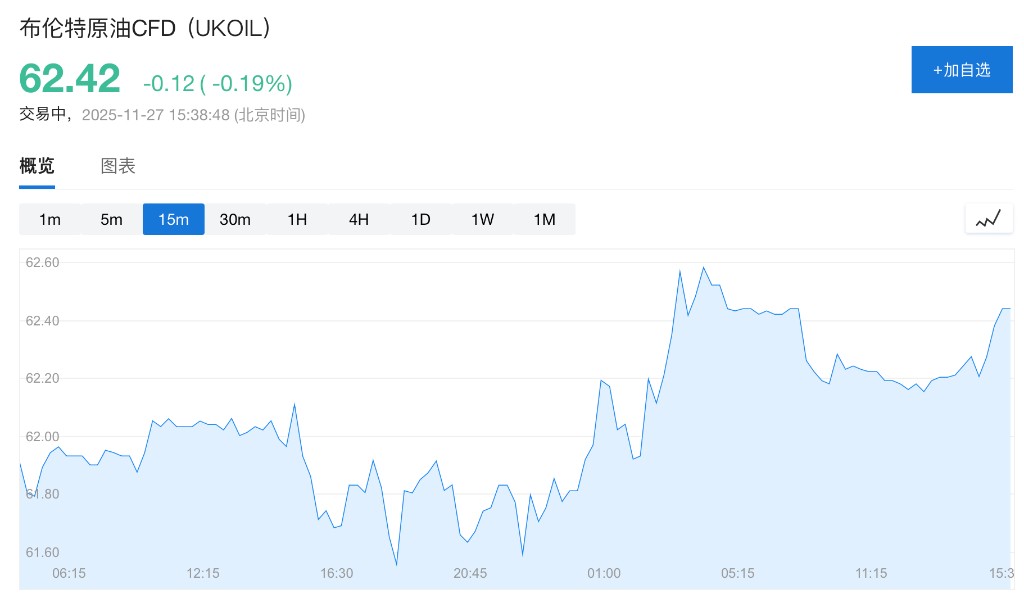
- Spot silver rose nearly 0.7% to $53.69 per ounce; spot gold fell 0.05% to $4,151.69 per ounce; Brent crude oil fell nearly 0.2% to $62.42 per barrel.
- Bitcoin rose 1.1% to $91,208.2.
As market expectations for a Federal Reserve interest rate cut continue to heat up, the dollar index is under pressure and declining. The U.S. macroeconomic data released on Wednesday local time showed robust performance, with September durable goods orders growth meeting expectations, and initial jobless claims also falling. The Federal Reserve's Beige Book released on the same day indicated that the current economic environment features a weak labor market alongside inflationary pressures.
Regarding the outlook for the dollar, Caitlin Buharivala, a strategist at Westpac Banking Corporation, pointed out: "The main risks facing the dollar come from potential weakness in the labor market on one hand, and renewed challenges to the independence of the Federal Reserve on the other." The market is closely watching the developments regarding the selection of the Federal Reserve Chair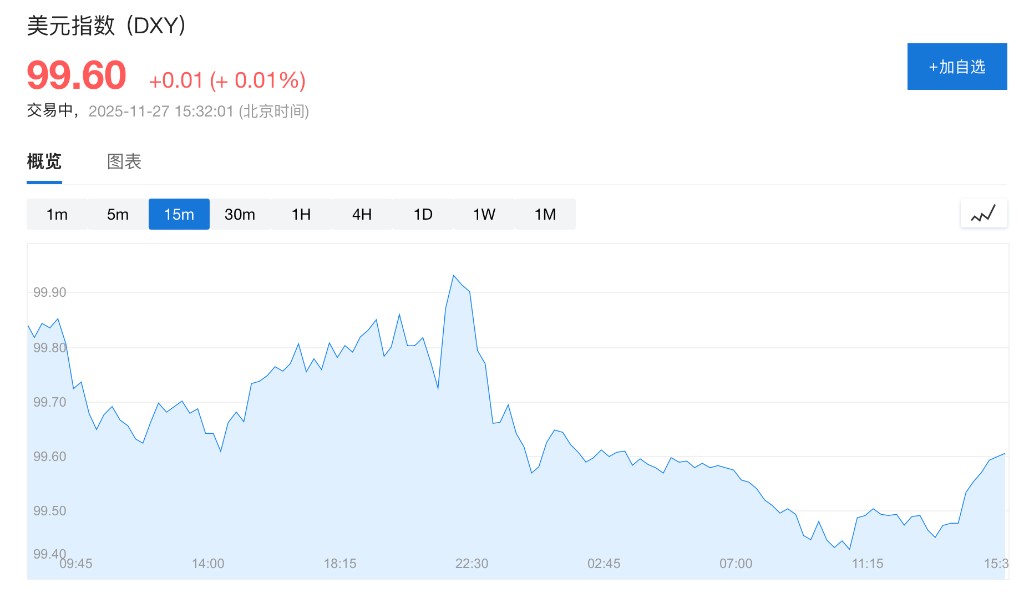
The British pound fell slightly, reported at 1.3238. 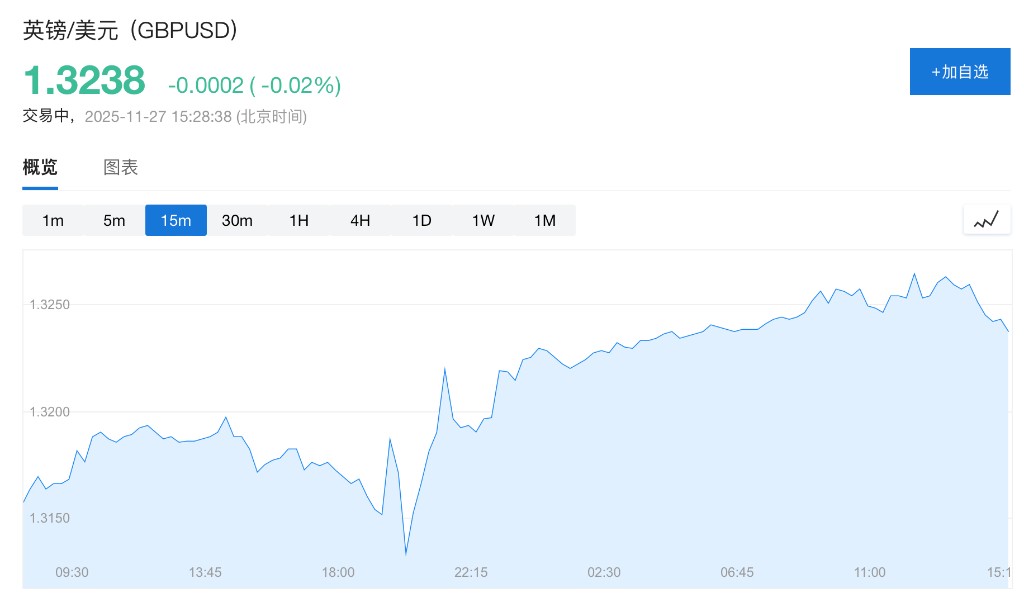
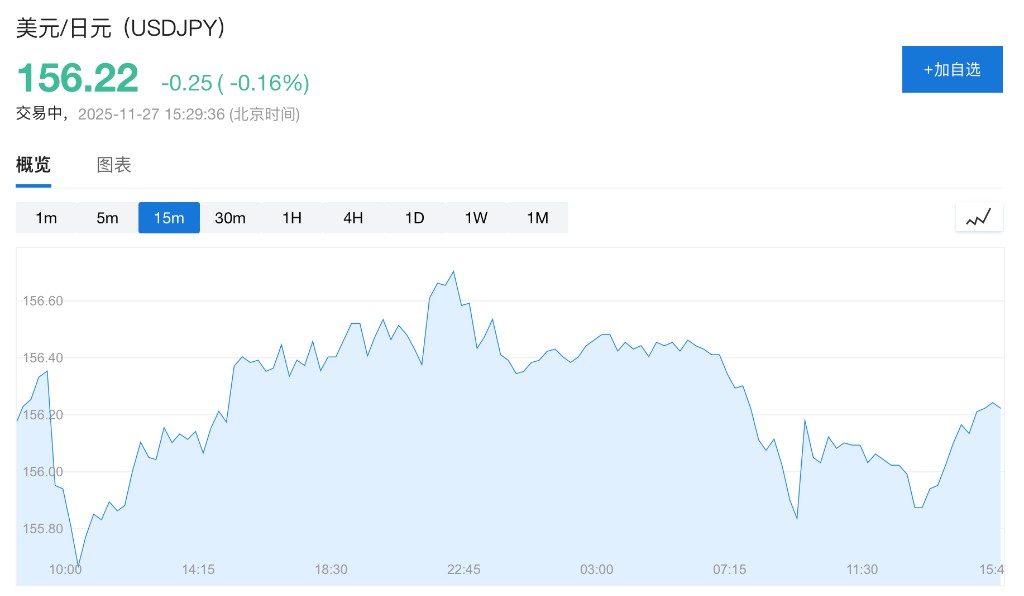
After verbal intervention by Japanese Prime Minister Fumio Kishida, the yen remains weak, with the yen trading at 156.22 against the US dollar.
Oil prices fell slightly, as the market is watching the Russia-Ukraine situation while looking forward to this weekend's OPEC+ meeting.