


A series of negative news follows one after another, and the crypto sell-off tide returns!
Under the dual pressure of macroeconomic headwinds and negative news within the industry, the cryptocurrency market is facing a new round of selling pressure. Bitcoin once fell by 6%, dropping below the $86,000 mark; Ethereum's decline exceeded 7%, reaching around $2,800. The market foundation remains unstable, with investors showing little interest in buying Bitcoin ETFs, and dip buyers are absent. On the macroeconomic front, global liquidity may tighten, as Bank of Japan Governor Kazuo Ueda has signaled interest rate hikes, and U.S. economic data is also under close scrutiny
Under the dual pressure of macroeconomic headwinds and negative news within the industry, the cryptocurrency market is facing a new round of selling pressure.
On Monday, the cryptocurrency market suffered a heavy blow. Bitcoin fell by as much as 6%, dropping below the $86,000 mark; Ethereum saw a decline of over 7%, reaching around $2,800. This round of selling swept across the entire market, with other tokens like Solana recording a drop of 7.8%, marking the start of December trading with a significant "risk-off" tone.
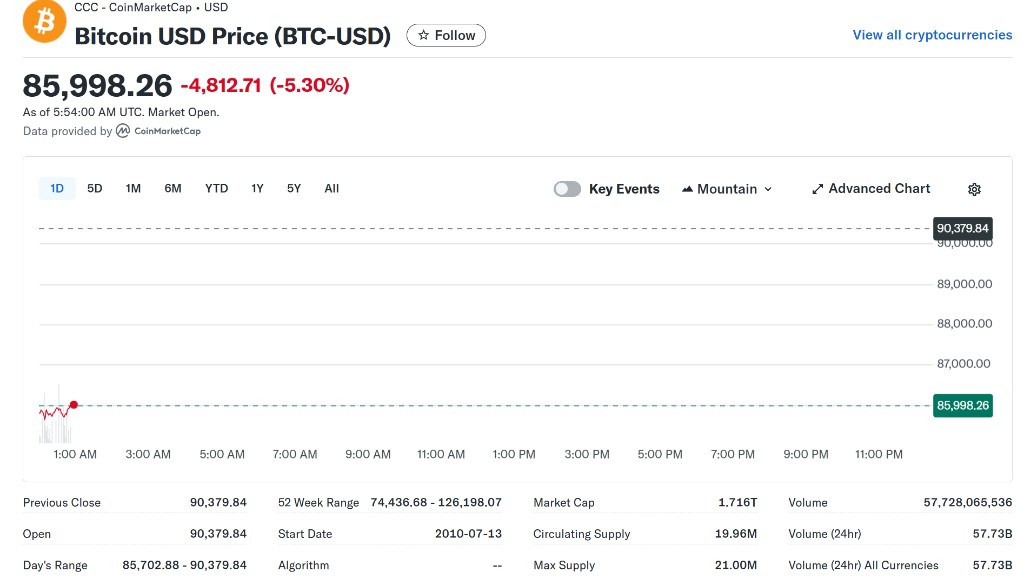
This decline reversed the brief warming trend seen last week. Previously, Bitcoin's price had dropped 16.7% in November but stabilized and rose above $90,000 last week. However, the market remains unstable; shortly after reaching a historical high of $126,251 in early October, a round of leveraged bets worth approximately $19 billion was liquidated, triggering weeks of continued selling.
After the latest selling pressure on Monday, traders are preparing for the possibility of a larger decline. Sean McNulty, Head of Derivatives Trading for Asia Pacific at FalconX, stated, "Investor interest in buying Bitcoin exchange-traded funds (ETFs) is low, and dip buyers are absent, which is the biggest concern. We expect structural headwinds to persist this month." He pointed out that $80,000 is the next key support level to watch for Bitcoin.
Macroeconomic Headwinds Intensify, Global Liquidity Faces a Turning Point
The primary cloud hanging over the market comes from the macroeconomic level, particularly expectations of tightening global liquidity. Bank of Japan Governor Kazuo Ueda has issued the clearest signal yet regarding a possible interest rate hike this month, pushing Japan's two-year government bond yield above 1% for the first time since 2008.
According to analysis from StockMarket.News, this suggests that the era of ultra-cheap money may be coming to an end. As this macro backdrop shifts, global risk assets will be repriced, with liquidity assets like Bitcoin being the first to feel the impact.
At the same time, the market is closely monitoring economic developments in the United States. Key economic data to be released this week may provide important clues about the Federal Reserve's interest rate path before 2026. Last Sunday, U.S. President Trump stated that he has selected the next Federal Reserve Chair and clearly expects them to implement interest rate cuts. These developments collectively exacerbate the uncertainty surrounding global interest rate prospects.
Continuous Negative News Within the Industry, Market Confidence Eroded
In addition to macro pressures, a series of negative news within the cryptocurrency industry has also emerged, further eroding investor confidence.
Investors are digesting comments from Phong Le, CEO of Strategy Inc., a corporate software company and a Bitcoin whale. In a podcast last Friday, he stated, if the company's mNAV ratio (the ratio of enterprise value to Bitcoin holdings) falls below zero, the company may sell Bitcoin to pay dividends, although he added that this would be a last resortAccording to data from its official website, this company holding $56 billion worth of Bitcoin has seen its mNAV ratio drop to 1.19.
In addition, the world's largest stablecoin USDT is also facing new scrutiny. S&P Global Ratings downgraded its assessment of USDT's stability to the lowest rating last week and warned that the decline in Bitcoin's value could lead to insufficient collateral for the token.
Jeff Ko, Chief Analyst at CoinEx, stated, "A series of bearish developments over the weekend has put pressure back on cryptocurrencies."
Leverage Liquidation Intensifies Downward Trend, Bitcoin's "Macro Asset" Attributes Highlighted
The severity of this round of decline is closely related to the leverage structure within the market. According to analysis from StockMarket.News, the initial macro-driven decline was sufficient to break some short-term technical support levels and trigger stop-loss orders, leading to the liquidation of crowded perpetual contract long positions. Once exchanges begin to forcibly liquidate hundreds of millions of dollars in leveraged longs during thin liquidity overnight periods, it can trigger a "straight-line decline," with each liquidation consuming buy orders and dragging the next batch of margin-tight traders into a trap.
More notably, Bitcoin's performance during this event resembles that of a macro asset highly sensitive to interest rate expectations and global liquidity, rather than an independent "digital gold" immune to external systemic influences. Analysts believe that as long as the mainstream narrative in the market remains that yields may rise and safe asset returns are more attractive, Bitcoin will face headwinds and continue to trade as a high-risk asset.
Risk Warning and Disclaimer
The market carries risks, and investment should be approached with caution. This article does not constitute personal investment advice and does not take into account the specific investment goals, financial situation, or needs of individual users. Users should consider whether any opinions, views, or conclusions in this article align with their specific circumstances. Investment based on this is at one's own risk
