The AI war in China will "intensify comprehensively" in 2026: "traffic entry" will become a "must-fight" area for major companies, and AI going overseas will also accelerate

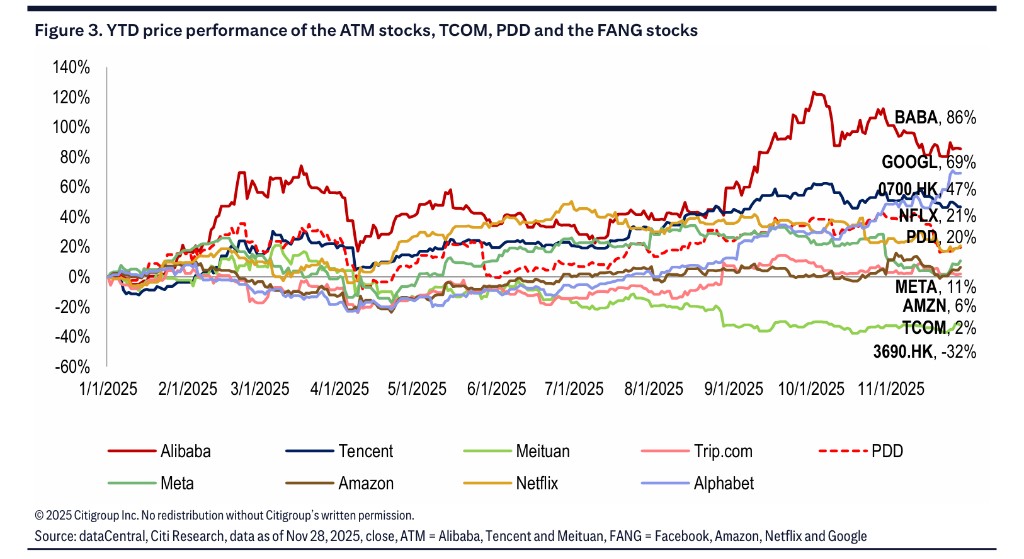
Citi stated that the Chinese internet sector will surge by 36.5% in 2025, but the real battleground will be the comprehensive AI competition in 2026. Alibaba, Tencent, and ByteDance will compete around AI cloud, chatbots, and vertical intelligent agents. ByteDance's AI applications have already risen to third place globally in monthly active users. The efficiency improvements brought by AI will also benefit stable profit industries such as gaming and tourism
In 2025, China's internet sector will lead the world with an astonishing return rate of 36.5%, but the real story will unfold in 2026 around artificial intelligence.
According to news from the Chasing Wind Trading Desk, Citigroup's report titled "China Internet Outlook for the First Half of 2026," released on December 1, states that competition in China's AI field in 2026 will revolve around three major themes: AI cloud infrastructure, AI chatbots, and AI applications. The report believes that major players such as Alibaba, ByteDance, and Tencent are competing to capture user traffic through their AI chatbots, aiming to secure key entry points for the commercialization of future ecosystems in the AI era.
Analysts Alicia Yap and others emphasize that this "user traffic turf war" will be crucial for China's internet giants in 2026, with Alibaba and Tencent seen as core AI investment targets, while ByteDance, with its rapid global expansion in AI applications, has become a disruptive force that cannot be ignored, as its AI chat application has reached a total of 3rd place globally in monthly active users (MAU).
At the same time, the productivity improvements brought by AI will release more leisure and entertainment demand, benefiting industries with stable profitability such as gaming and tourism. Citigroup believes that due to geopolitical risks and AI supply chain constraints, the valuations of Chinese internet companies may continue to be lower than their global peers.

2026 AI Competition: Three Major Themes Fully Unfold
The report predicts that competition in China's AI field will be very intense in 2026, focusing on three levels. This is not only a technological competition but also a struggle for dominance in the future business ecosystem.
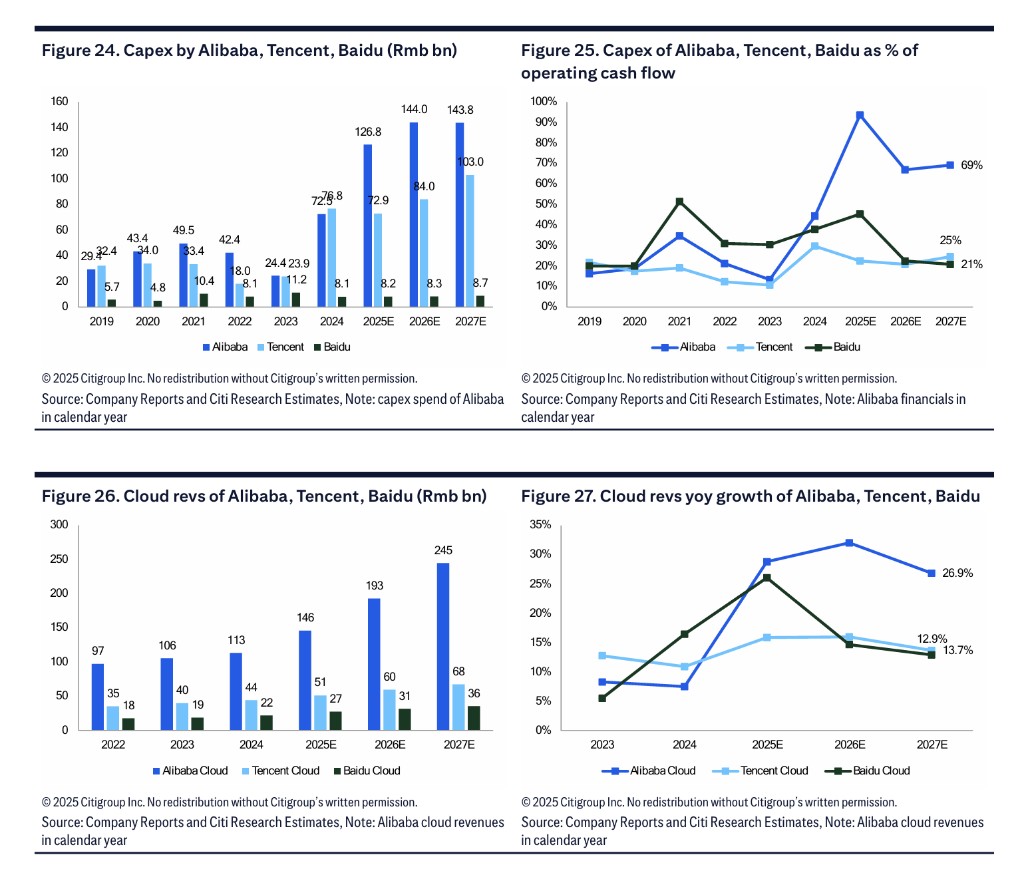
- Capital Competition for AI Cloud Infrastructure: Giants led by Alibaba and Baidu are making large-scale capital investments. The report shows that in the past four quarters, Alibaba's capital expenditure on AI and cloud infrastructure has reached approximately 120 billion RMB, with plans to invest 380 billion RMB over the next three years. Its cloud business revenue grew by 34% year-on-year in the third quarter of 2025. Baidu's AI cloud revenue also achieved a year-on-year growth of 21% in the third quarter of 2025, reaching 6.2 billion RMB. This "arms race" aims to provide the computational power foundation for the impending explosion of AI application demand.
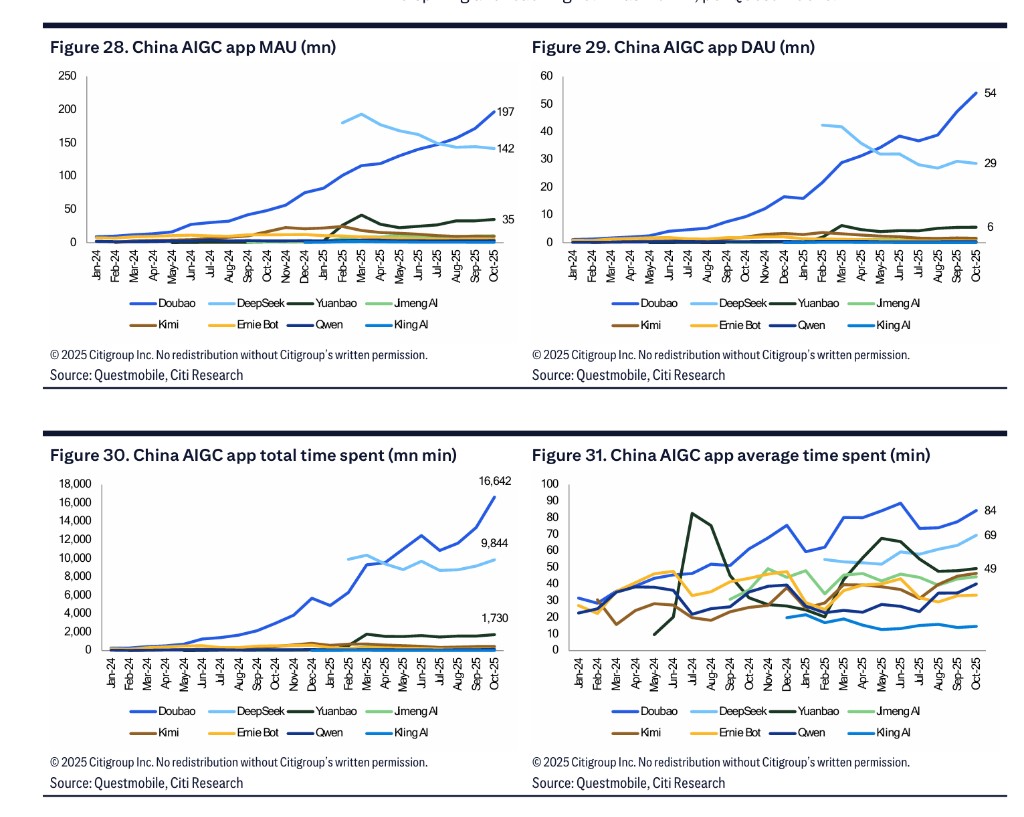
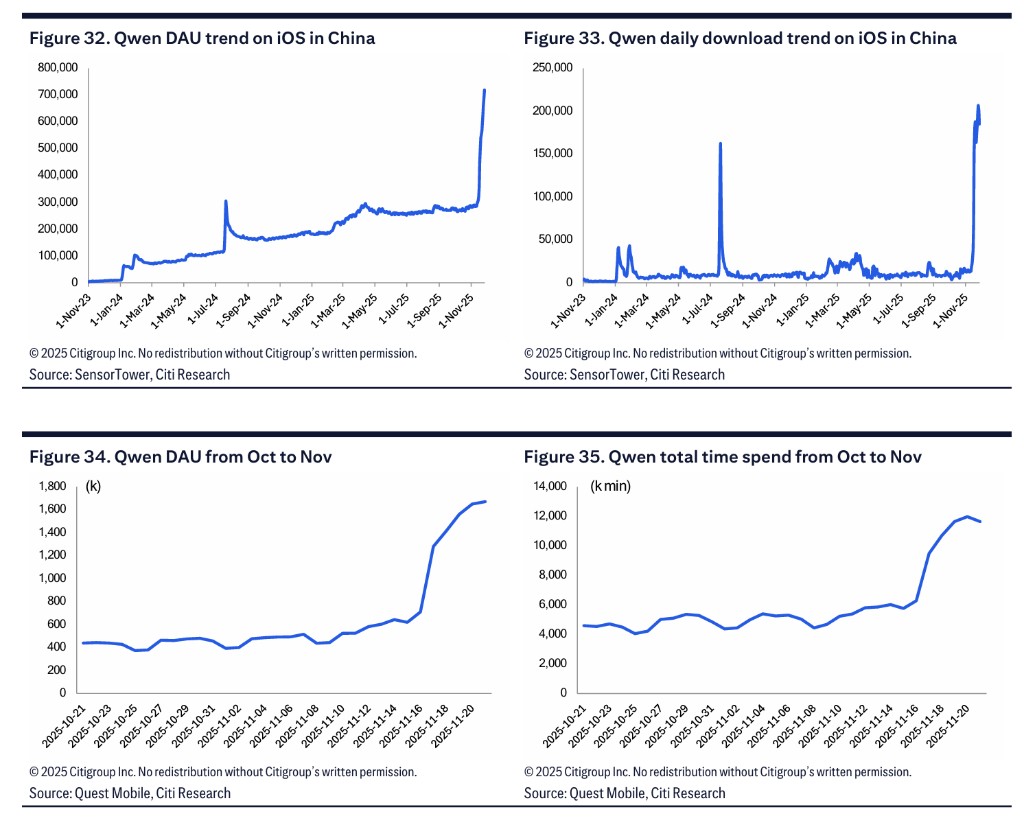
- Battle for "Traffic Entry" of AI Chatbots: The report defines AI chatbots as the "traffic entry point of the AI era," which is a must-fight area for internet giants to monetize their future ecosystems. Alibaba (with "Tongyi Qianwen"), ByteDance (with "Doubao"), and Tencent (with "Hunyuan"/"Yuanbao") are all fully committed to this user competition Data shows that ByteDance's "Doubao" is leading the Chinese market, with monthly active users (MAU) reaching 197 million as of October 2025.
- Application penetration of vertical AI agents: Companies in vertical fields such as Meituan, Ctrip, and Didi are leveraging their proprietary data to train their own AI agents. The goal is to prevent disruption by general AI while enhancing user stickiness through AI and exploring new monetization possibilities. For example, Ctrip's AI travel assistant "TripGenie" saw a year-on-year increase of over 200% in related users in the first half of 2025.
Accelerating AI Global Expansion: ByteDance Ranks Among the Top Three Worldwide
As competition in the domestic market intensifies, Chinese AI applications are accelerating their global reach and achieving breakthroughs in certain markets. A Citigroup report emphasizes that the global penetration rate of Chinese AI chat applications is on the rise.
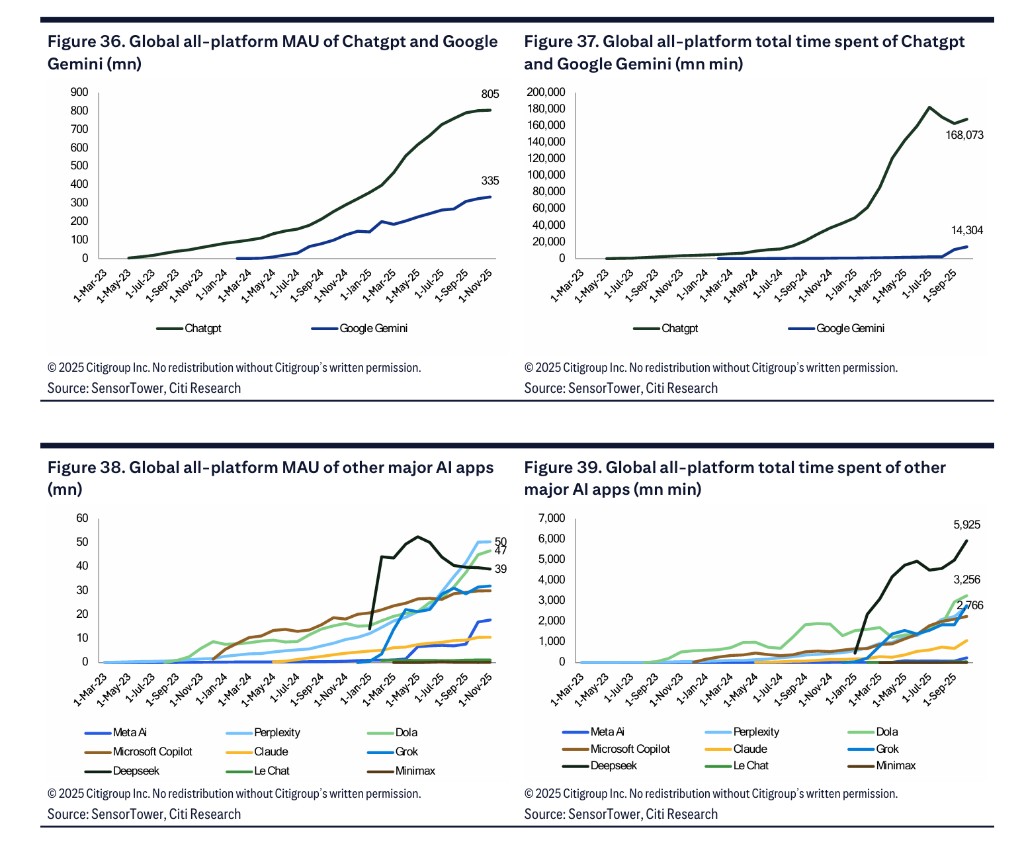
According to SensorTower data as of November 2025, in the global market, ChatGPT leads with 800 million MAU, followed by Google's Gemini with 335 million MAU. Notably, ByteDance's product Dola and another Chinese company DeepSeek rank fourth and fifth globally with 47 million and 39 million MAU, respectively.
Citigroup analysts point out that if Dola's overseas users (47 million) are combined with "Doubao's" Chinese users (197 million), the total MAU of ByteDance's AI chat products would reach approximately 250 million, elevating its global ranking to third. The report describes this as an "important milestone," indicating the rapid growth potential of Chinese AI applications globally, especially in emerging markets such as Latin America and Southeast Asia.

Performance Review and Outlook: AI Enhances Productivity, Benefiting Gaming and Tourism
The report reviews the performance of the third quarter of 2025, noting that among the 44 internet companies surveyed, 27 exceeded profit expectations, while only 18 surpassed revenue expectations. The report attributes this mainly to ongoing cost optimization and the "potential savings or productivity improvements brought by AI."
Looking ahead, the proliferation of AI tools will enhance consumer efficiency in work and life, thereby freeing up more time and spending capacity for leisure and entertainment. Based on this, the report is optimistic about two major sectors:
- Gaming Industry: This industry not only benefits from the development efficiency improvements brought by AI (such as art design and content generation) but is also favored for its robust profitability. Data shows that the monthly ARPU (Average Revenue Per User) of Chinese gamers rebounded to 41 RMB in the first half of 2025, a year-on-year increase of 13.3%. The innovative application of AI NPCs (non-player characters) in games like NetEase's "Nirvana in Fire" has garnered significant attention from players in overseas markets.
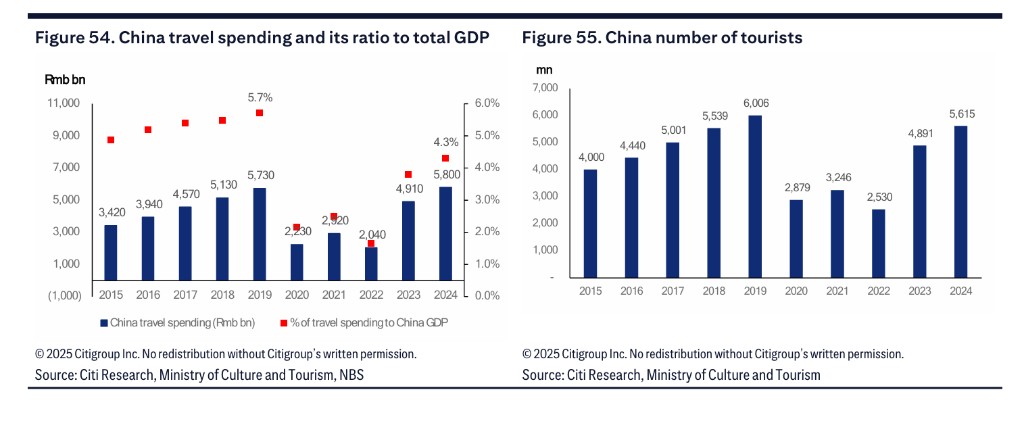
- Tourism Industry: The report indicates that China's tourism demand remains resilient. In 2024, tourism expenditure accounted for 4.3% of GDP, still below the 5.7% seen before the pandemic in 2019, indicating further growth potential. Meanwhile, international flight passenger volume is expected to return to pre-pandemic levels by the third quarter of 2025.