


Federal Reserve rate cut VS Japan rate hike? The US market faces shockwaves, and US Treasury yields break 4% again

Faced with the policy divergence between the Federal Reserve's interest rate cuts and the unexpected interest rate hikes by the Bank of Japan, the U.S. Treasury market has suffered a direct impact, with the benchmark 10-year Treasury yield rising above 4%. The core concern in the market is that if Japan, as the largest foreign holder of U.S. debt (holding approximately $1.2 trillion in U.S. Treasuries), begins its interest rate hike cycle, it could trigger a massive capital inflow, thereby continuously weakening the demand for U.S. Treasuries and pushing up global borrowing costs
As the market generally expects the Federal Reserve to continue cutting interest rates, the Bank of Japan, across the Pacific, unexpectedly released signals that it may raise rates, breaking the market's calm and pushing key U.S. Treasury yields back above 4%, forcing investors to reassess the risks of global capital flows.
The catalyst for this wave of market turbulence was the latest statement from Bank of Japan Governor Kazuo Ueda. He unexpectedly hinted on Monday that a rate hike could occur later this month, surprising investors who believed the Bank of Japan would remain inactive under the economic stimulus pressure from the new Prime Minister.
Ueda's remarks immediately triggered a sell-off in the global government bond market. According to Dow Jones market data, the yield on Japan's 10-year government bonds rose to 1.879%, marking the highest closing level since June 2008. This shockwave quickly transmitted to the U.S., with the benchmark 10-year U.S. Treasury yield also climbing back up from below 4% mid-last week to 4.095%.
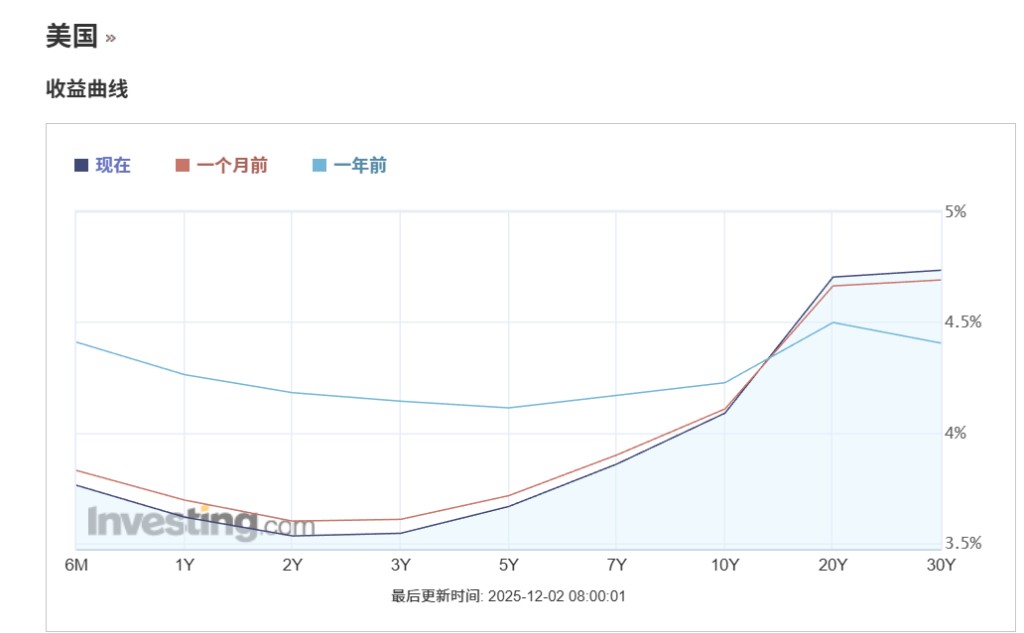
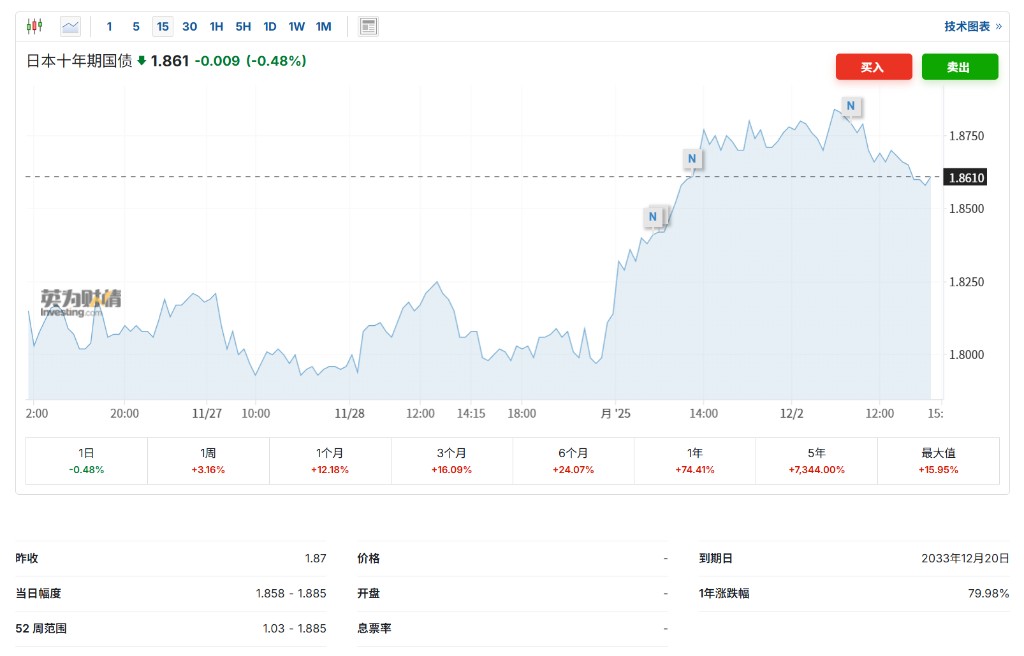
Wall Street's concern is that Japan's rising bond yields may attract funds away from U.S. investments, thereby triggering an increase in U.S. Treasury yields. As the "pricing anchor" of the global economy, U.S. Treasury yields play a crucial role in determining borrowing costs for consumers and businesses, as well as the prices of various financial assets.
Risk of Capital Repatriation to Japan
The U.S. market is particularly sensitive to the Bank of Japan's policy shift due to Japan's status as the largest foreign creditor of the U.S. According to data from the U.S. Treasury, as of September, Japan held approximately $1.2 trillion in U.S. Treasury securities. Additionally, in search of higher returns than those available domestically, Japanese private investors have poured hundreds of billions of dollars into U.S. and other foreign bond markets in recent years.
Wall Street fears that once domestic bond yields in Japan become more attractive, these massive funds may turn back to Japan, thereby reducing demand for U.S. Treasuries and pushing up their yields.
Zach Griffiths, head of investment-grade and macro strategy at research firm CreditSights, stated, "The market had previously assumed that U.S. yields would decline along a predetermined path and felt very comfortable with that. Today's events remind us that there are many factors that could challenge that path."
Market Outlook Amid Policy Divergence
This year, the divergence in monetary policy between the U.S. and Japan has become increasingly apparent. In the U.S., due to a cooling labor market, the Federal Reserve has shifted to a more accommodative stance, having implemented rate cuts in its last two meetings. The market widely expects the Federal Reserve to cut rates again at its meeting on December 9-10. This has driven down U.S. Treasury yields, lowered mortgage rates, and provided support for the stock market In Japan, facing persistent inflationary pressures, the Bank of Japan has been gradually moving towards tightening. The bank raised interest rates from negative territory at the beginning of 2024, followed by two more rate hikes, the most recent in January. Additionally, the Japanese Ministry of Finance recently announced plans to increase government bond issuance to fund economic stimulus programs, which has also put further upward pressure on bond yields.
Although this divergence in U.S. and Japanese government bond yields (Japan rising, the U.S. falling) has not caused serious issues for most of this year, analysts warn that there may be limits to this divergence.
U.S. Stocks Under Pressure, but Investor Sentiment Remains Stable
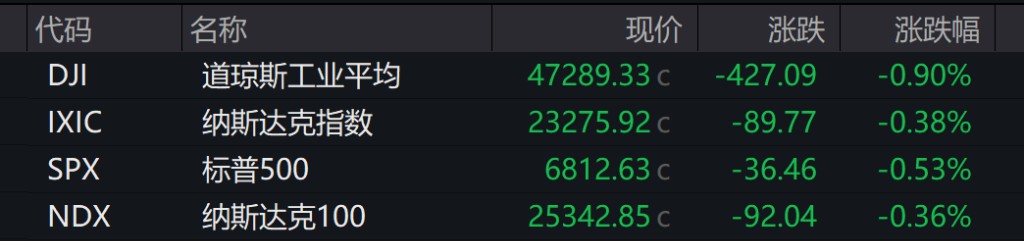
The impact of the Bank of Japan's rate hike outlook has also affected the U.S. stock market. On Monday, the S&P 500 index fell 0.5%, the Dow Jones Industrial Average dropped 0.9% (about 427 points), and the NASDAQ Composite Index decreased by 0.4%.
However, some investors believe that the recent pullback, after months of steady gains, is healthy.
Nancy Tengler, Chief Investment Officer of Laffer Tengler Investments, stated, "It's always healthy to let some air out of the balloon." For the year, the S&P 500 index is still up 16%. Many investors had previously been optimistic that the U.S. economy was in an almost perfect position: economic growth is moderate enough to support further rate cuts by the Federal Reserve, but not weak enough to raise recession concerns, which is favorable for both stocks and bonds.
Behind the "Hawkish" Statements of the Bank of Japan Governor
The remarks that triggered market turbulence have revised some analysts' views. Previously, some questioned whether the Bank of Japan would raise interest rates amid new Prime Minister Kishi Sanae's efforts to boost the economy. However, when Ueda Kazuo publicly stated that the Bank of Japan would "thoroughly discuss the possibility of raising interest rates" at the next meeting, many began to adjust their perspectives.
At a press conference in Nagoya, Ueda explained the source of his confidence. He noted that the country's economic outlook has improved following a recent trade agreement with the Trump administration in Tokyo. "The uncertainties surrounding U.S. tariff policies and the U.S. economy that we have been particularly focused on have significantly decreased compared to a few months ago," he said
